Eggplant Parmesan
The first time I pulled a bubbling tray from the oven, the kitchen smelled like Sunday afternoons at my grandmother’s house. That deep, savory aroma of tomatoes and melted cheese clinging to something substantial — that’s when I knew Eggplant Parmesan deserved a permanent spot in my rotation.
My Nonna never wrote anything down. She’d slice eggplants on her wooden board, salt them without measuring, and somehow they always emerged from the fryer crisp and never bitter. I spent years trying to decode her method, failing more times than I’ll admit.
What I landed on isn’t traditional, exactly. But it honors that memory while fitting real life — the kind of recipe that turns a Wednesday into something worth lingering over. If you’re building a collection of cozy vegetarian dinners, my roasted baby potatoes make an excellent companion dish.
What You Need to Make This Recipe
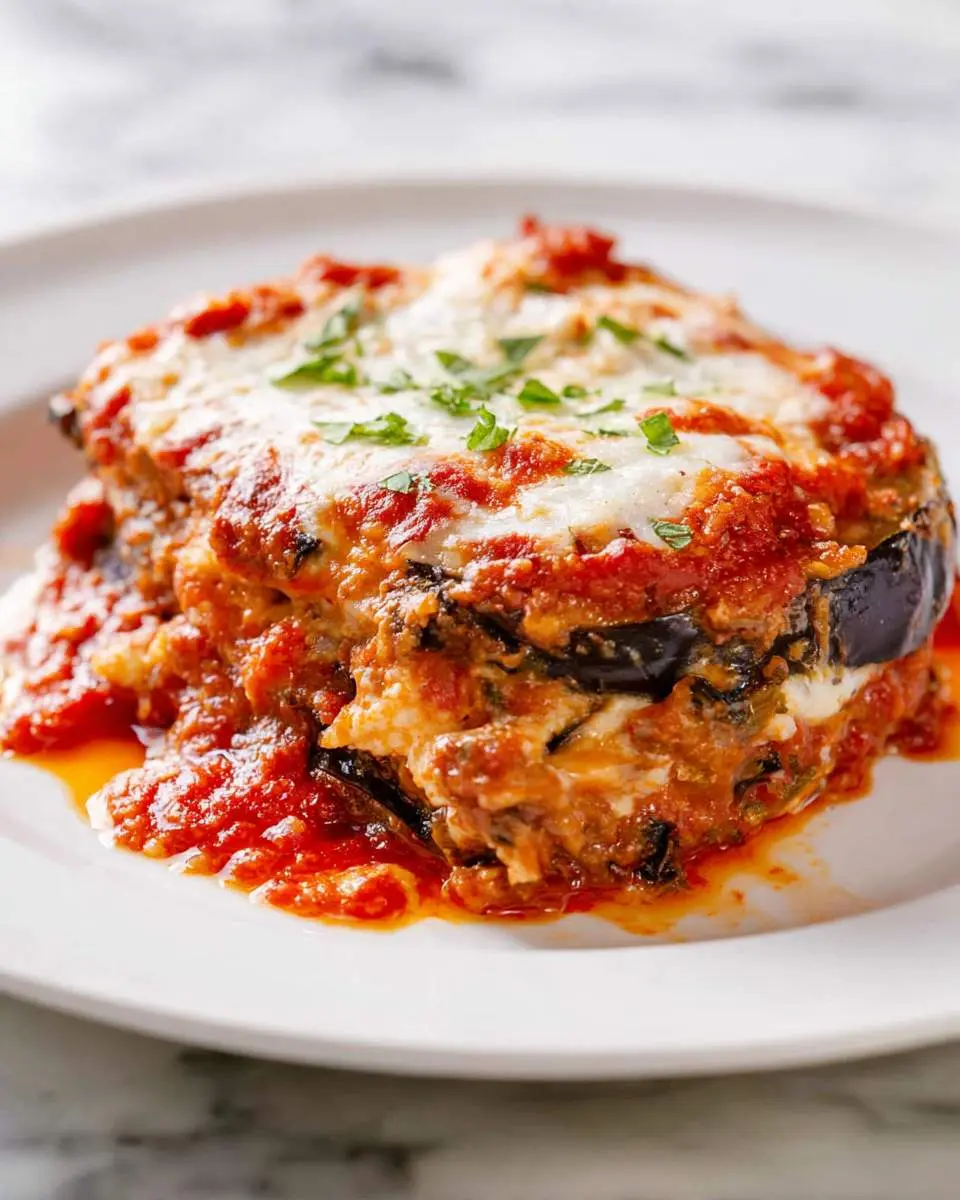
The eggplant itself demands attention — I use globe eggplants, sliced thick enough to hold their structure but thin enough to cook through without turning mushy. Salting them draws out bitterness and excess moisture; skip this and you’ll have soggy layers no amount of cheese can save. For the sauce, I reach for whole San Marzano tomatoes, crushed by hand so they retain some texture. And please, splurge on a block of low-moisture mozzarella you grate yourself — the pre-shredded bags contain anti-caking agents that refuse to melt properly. The combination creates that perfect Eggplant Parmesan experience: tender vegetable, bright sauce, and cheese that stretches with every forkful. For another potato side that balances this richness, try my Greek lemon potatoes.
How to Make Eggplant Parmesan
I start early, salting the slices and leaving them to weep on paper towels for at least thirty minutes. The beads of moisture that form always surprise me — that’s the bitterness leaving, and the eggplant thanking you later.
The frying happens in batches, olive oil shimmering until a test breadcrumb sizzles immediately. Each slice gets a light dredge in flour and egg, then a quick swim until golden. The sound is unmistakable: that aggressive bubbling that softens to a gentle murmur as the crust sets.
Layering becomes meditative. Sauce, eggplant, cheese, repeat. I finish with a heavy hand of Parmesan and a drizzle of oil that creates those coveted crispy edges. The oven does the final transformation, melding everything into something greater than its parts. If you’re an eggplant enthusiast like me, my roasted eggplant pasta uses similar techniques with a weeknight-friendly twist.
Pro Tips
Don’t rush the salting. Thirty minutes is my minimum, but an hour transforms even older eggplants into something silky and sweet. The texture difference is dramatic.
Let fried slices drain vertically. Standing them on their edges in a wire rack prevents the bottom from steaming against paper towels, preserving that hard-won crispness.
Rest before serving. Twenty minutes allows the layers to settle and the cheese to firm slightly — cutting too early creates a molten slide instead of clean squares.
My Secret Trick: I add a thin layer of ricotta mixed with lemon zest and black pepper between two middle layers. It introduces brightness and creaminess that cuts through the richness without overwhelming the eggplant.
How to Store Eggplant Parmesan
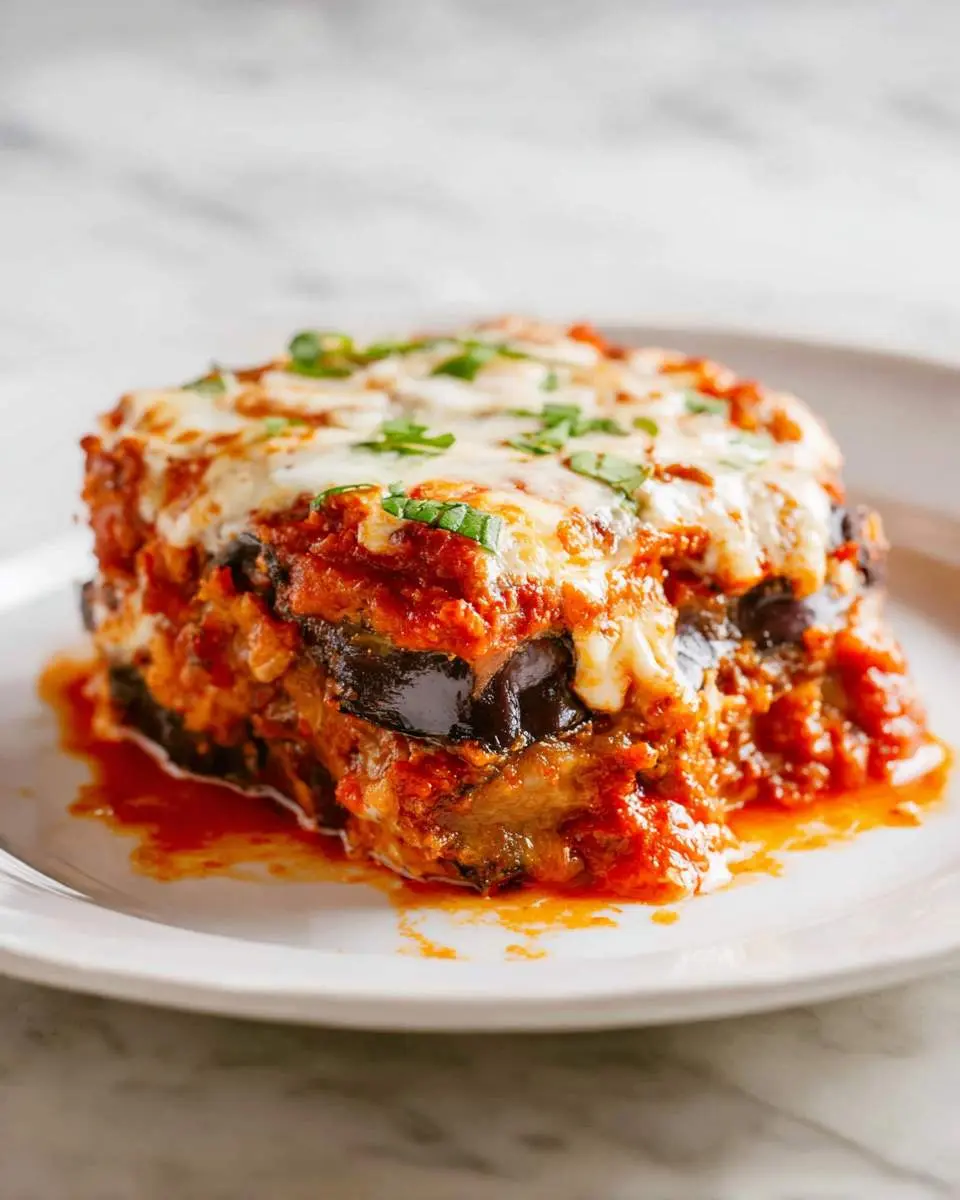
- Refrigerate cooled portions in airtight containers for up to 4 days — the flavors actually improve on day two as the layers meld
- Freeze individual squares wrapped in parchment then foil, stored in freezer bags for up to 2 months — thaw overnight in refrigerator before reheating
- Reheat in a 375°F oven for 20-25 minutes covered with foil, removing cover for final 5 minutes to restore crisp top; microwave works but sacrifices texture
- Do not freeze unbaked assembled dish — the raw eggplant releases too much water upon thawing
Nutritional Benefits
Eggplant brings meaningful fiber and nasunin, that deep purple antioxidant concentrated in the skin — I never peel mine for this reason. The olive oil, used generously but not excessively, contributes heart-healthy monounsaturated fats that help your body absorb the fat-soluble nutrients in the tomatoes. This Eggplant Parmesan satisfies deeply while delivering vegetables as the star, not an afterthought.
FAQs
Why is my eggplant parmesan soggy?
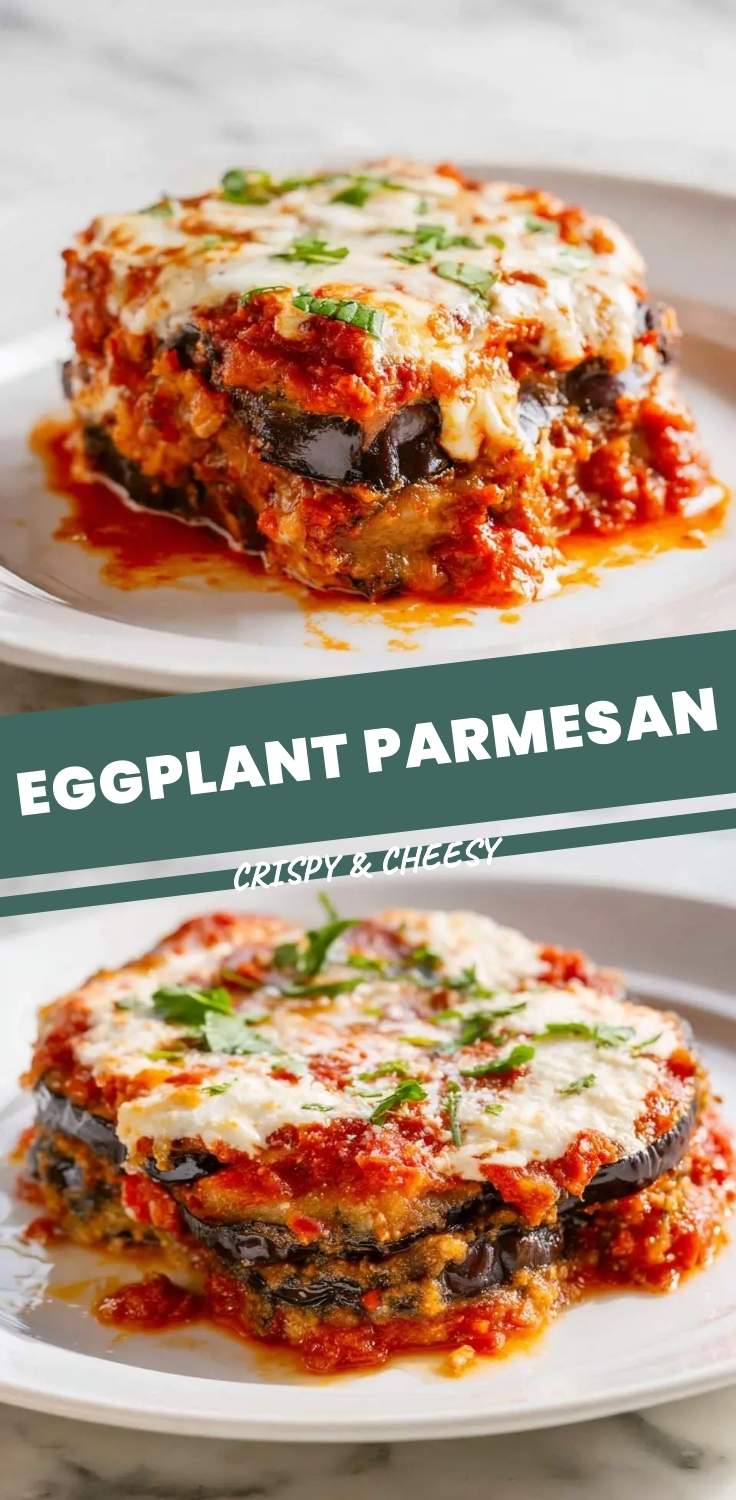
Insufficient salting and draining is the usual culprit — moisture left in the slices steams during baking instead of evaporating. Under-frying also fails to create the protective barrier that keeps sauce from soaking in.
Can I bake the eggplant instead of frying?
Yes, brush slices with oil and roast at 425°F until deeply golden, about 25 minutes. The result is lighter but lacks the traditional crust; I compensate with extra cheese between layers.
Do I need to peel the eggplant?
The skin contains valuable antioxidants and helps slices hold together during frying. For very large or older eggplants with tough skin, partial peeling in stripes works well.
What cheese works best for Eggplant Parmesan?
Low-moisture mozzarella provides stretch without excess water, while aged Parmesan adds savory depth. Avoid fresh mozzarella — its high moisture content creates pools of liquid.

Eggplant Parmesan
Ingredients
Equipment
Method
- Lay eggplant slices in a single layer on a baking sheet and sprinkle both sides with kosher salt. Let sweat for 30 minutes to draw out bitterness. Pat completely dry with paper towels - this is crucial for crispiness.
- Set up a dredging station: flour in one shallow dish, beaten eggs in another, and panko mixed with 1/2 cup Parmesan in a third. Dredge each slice in flour, shake off excess, dip in egg, then press into panko mixture. Place on a wire rack.
- Heat 1/4 inch of olive oil in a large skillet over medium-high heat until shimmering. Fry eggplant in batches for 2-3 minutes per side until deep golden brown. Transfer to a paper towel-lined plate. Add more oil between batches as needed.
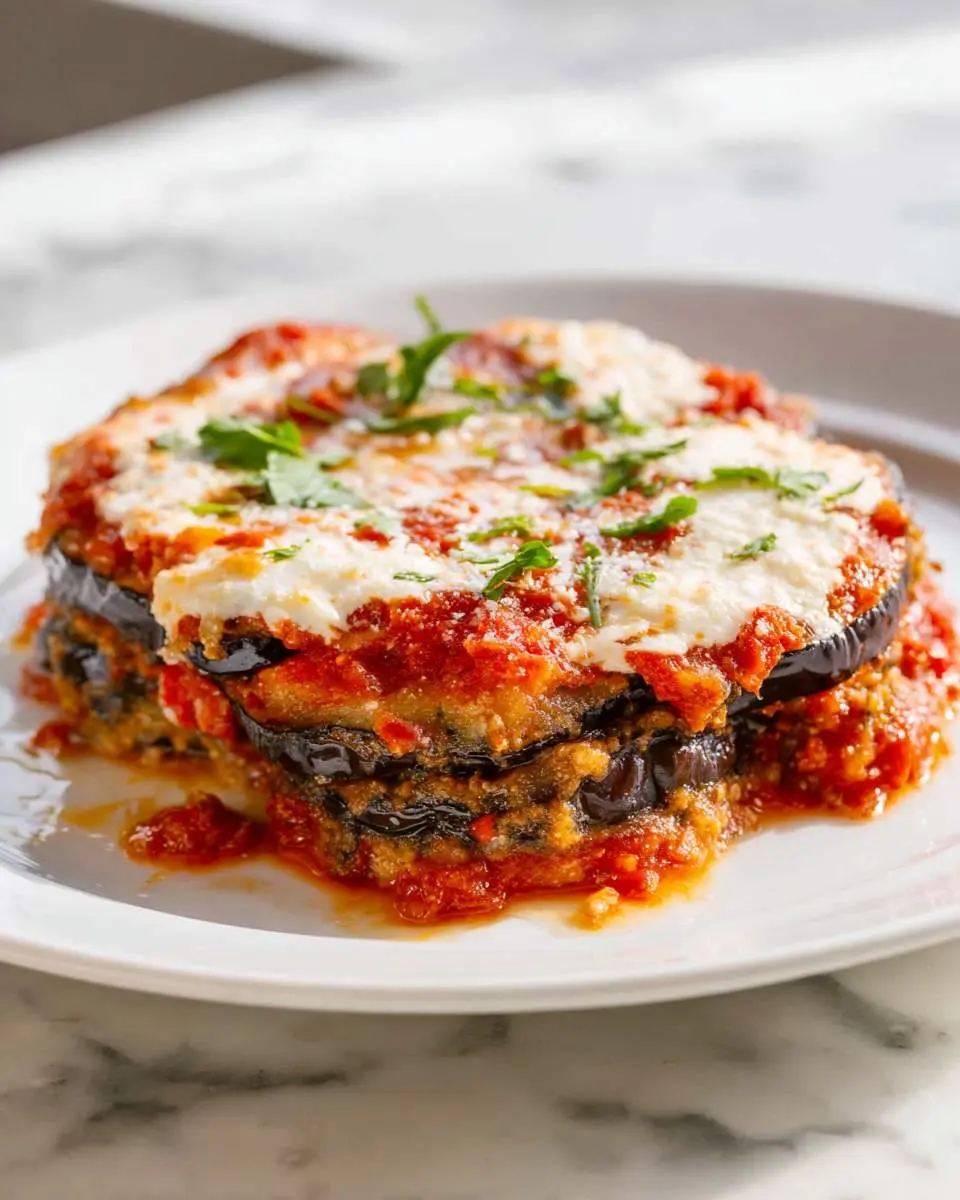
- Preheat oven to 375 degrees F. Spread 1 cup marinara in the bottom of a 9x13 inch baking dish. Arrange half the fried eggplant in a single layer, overlapping slightly. Top with 1 cup sauce and half the mozzarella. Repeat layers, finishing with remaining 1 cup sauce and reserved 1/2 cup Parmesan.
- Cover with foil and bake for 25 minutes. Remove foil and bake 10-15 minutes more until cheese is melted and sauce is bubbling at the edges. Let rest 10 minutes before serving - this helps the layers set so they don't slide apart.
- Scatter torn fresh basil over the top and serve hot. Extra sauce on the side is never a bad idea.
Notes
Conclusion
This dish taught me that patience with vegetables rewards you endlessly. The salting, the frying, the layering — each step builds toward something worth the effort. Serve it to people you love, or save it for yourself on a night that needs transforming. For another way to celebrate this remarkable vegetable, my grilled eggplant with harissa offers a completely different mood with equally satisfying results.