Gnocchi Bolognese
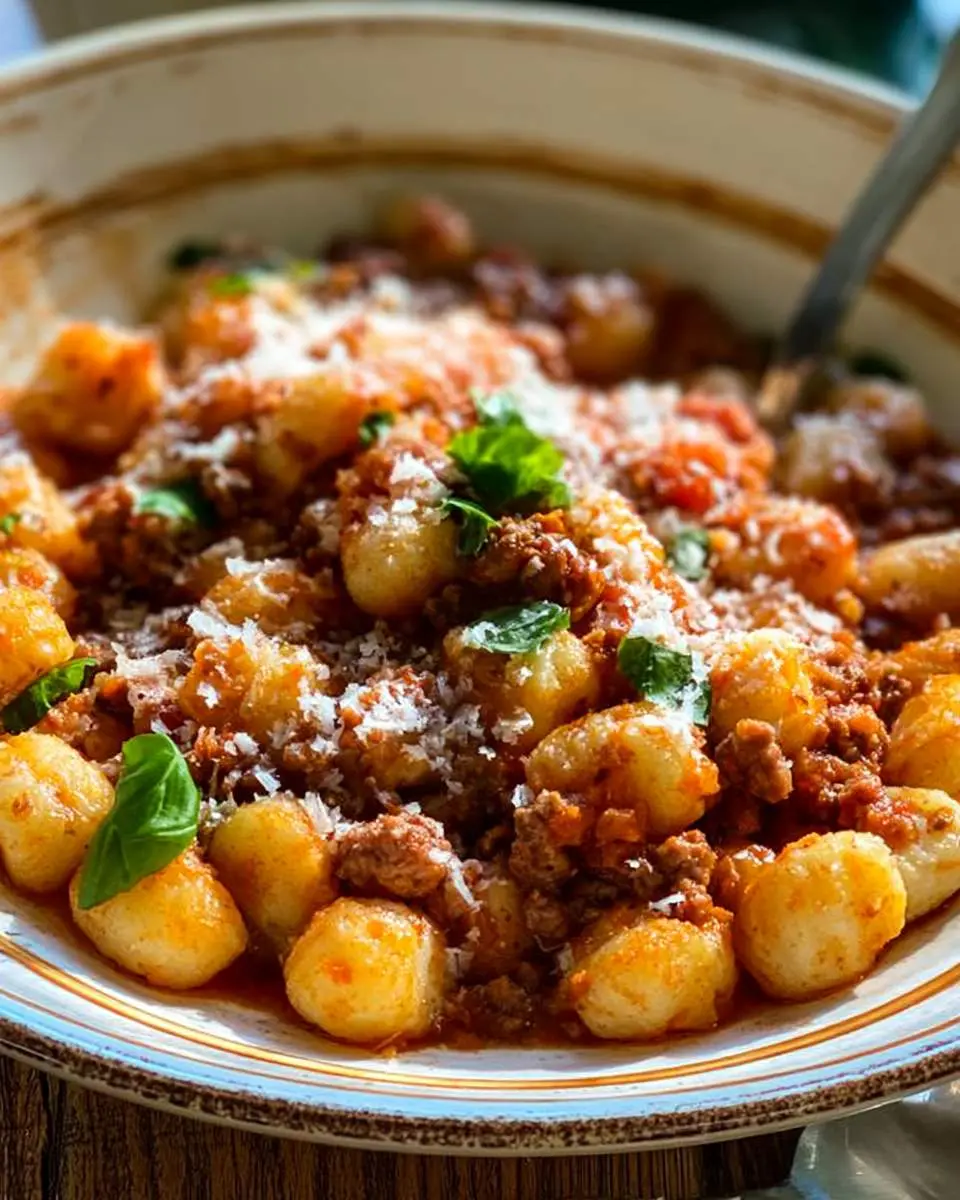
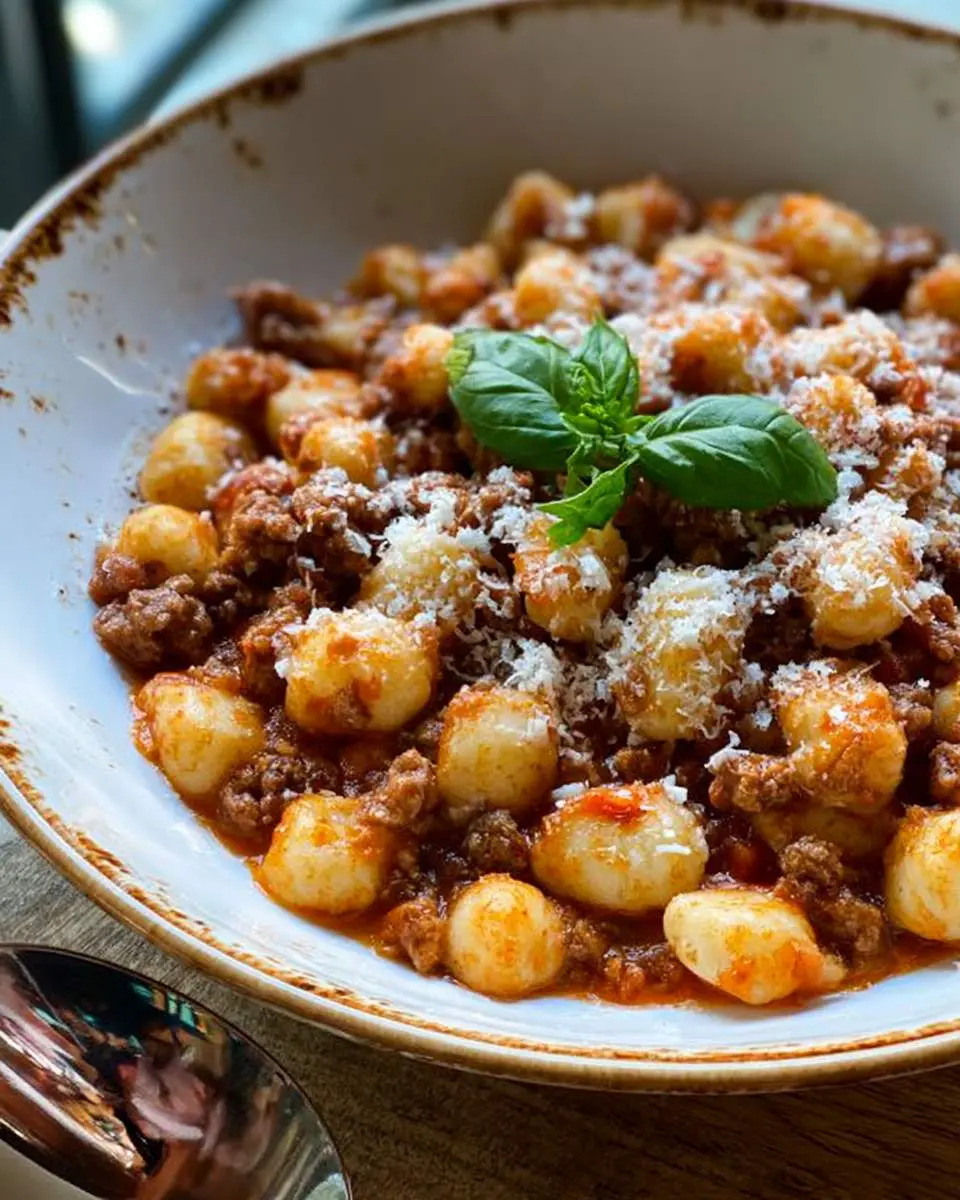
The first time I pulled a pan of gnocchi bolognese from the stove, my kitchen smelled like Sunday at my grandmother’s house , that deep, meaty warmth that wraps around you before you even take a bite. I stood there for a moment, wooden spoon in hand, wondering how something so simple could feel so completely satisfying. That’s the thing about this dish , it sneaks up on you, humble and unassuming, then delivers something that makes you close your eyes on the first forkful.
Last October, I made this for my neighbor after she’d had surgery. She’d mentioned craving “something that tastes like home,” and I panicked slightly because I’d never actually cooked for her before. I watched her take that first bite, saw her shoulders drop, and she said, “I forgot food could do this.” We ate in comfortable silence, and I knew this recipe had earned its permanent spot in my rotation.
What I love most is how the pillowy gnocchi transforms in the sauce , they don’t just sit there, they absorb every bit of flavor. If you’re new to cooking with gnocchi, my chicken pesto gnocchi was actually my gateway recipe into this whole world of potato dumpling magic.
What You Need to Make This Recipe
The ground beef matters more than you’d think , I use 85/15 because the fat carries flavor without making the sauce greasy, and that little bit of rendered fat builds the foundation everything else cooks in. San Marzano tomatoes are my non-negotiable; their sweetness and low acidity mean you don’t need to add sugar to balance the sauce, and they break down into this velvety texture that cheap canned tomatoes never quite achieve. The gnocchi themselves should be the refrigerated kind, not shelf-stable , they hold their shape better and have that proper potato density that makes gnocchi bolognese feel like a proper meal rather than a pasta shortcut. For another cozy baked option, my seafood pasta bake uses a similar approach to building layered flavor.
How to Make Gnocchi Bolognese
I start by letting the beef sit in the hot Dutch oven without touching it , that sizzle and eventual crust formation is where the flavor lives, and if you stir too soon, you steam instead of sear. The onions go in next, scraping up those fond bits with a wooden spoon, and the kitchen fills with this sweet, savory steam that makes anyone wandering through immediately ask what’s for dinner.
The sauce simmers low and slow, bubbling gently with that occasional thick plop that tells you it’s reducing properly. I add the gnocchi right into the sauce rather than boiling separately , they release just enough starch to thicken everything slightly, and each little pillow drinks in the meaty tomato goodness. About three minutes in, they start to float and plump, and that’s when I know to pull the pot off the heat before they turn gummy. The whole thing gets finished with a pat of cold butter stirred off-heat, which gives the sauce this impossible silkiness. If you want to see how this same slow-simmer philosophy works with traditional pasta, my bolognese pasta recipe walks through the sauce-building process in more detail.
Pro Tips
Don’t rush the soffritto. That mixture of onion, carrot, and celery needs a full eight to ten minutes to soften and sweeten properly , undercooked, it gives the sauce a raw, sharp edge that no amount of simmering will fix.
Save your pasta water, even though you’re not boiling the gnocchi separately. I keep a cup nearby because the gnocchi can absorb more liquid than expected, and that starchy water brings everything back together without diluting flavor.
Grate your Parmigiano on the finest hole of a Microplane. It melts into the sauce almost instantly rather than sitting in sandy clumps, creating this seamless umami boost throughout rather than salty pockets.
My Secret Trick: I fold in a spoonful of mascarpone right at the end, off the heat , it doesn’t make the sauce taste cheesy, but it adds this subtle roundness and body that makes people ask what your secret is.
How to Store Gnocchi Bolognese
- Refrigerate in an airtight container for up to 3 days at 40°F or below , the gnocchi will continue absorbing sauce, so expect a thicker texture when reheating.
- Freeze portions in flat, freezer-safe bags for up to 2 months at 0°F; squeeze out all air to prevent freezer burn, and thaw overnight in the refrigerator before reheating.
- Reheat gently on the stovetop over medium-low heat with a splash of water or broth, stirring frequently to prevent the gnocchi from breaking apart , microwave reheating tends to make them rubbery and unevenly heated.
Nutritional Benefits
This gnocchi bolognese delivers more than comfort , the lycopene in those San Marzano tomatoes becomes more bioavailable through the long simmer, and the beef provides heme iron that your body actually absorbs efficiently, especially important if you’re prone to feeling run down. The potato-based gnocchi offer a decent potassium boost too, which helps balance the sodium from the cheese and cured elements in the sauce.
FAQs
Can I use dried shelf-stable gnocchi instead of refrigerated?
You can, but they behave differently , shelf-stable gnocchi are denser and chewier, more like pasta. Refrigerated gnocchi have that light, pillowy interior that makes this dish special, so seek them out if possible.
How do I keep the gnocchi from getting mushy?
The key is timing , add them to the simmering sauce and watch for floating, which happens in about two to three minutes. Pull the pot off heat immediately; residual cooking will finish them perfectly without tipping into gummy territory.
Can I make the sauce ahead and add gnocchi later?
Absolutely, and I often do , the bolognese base actually improves after a day in the refrigerator. Reheat gently, then add fresh gnocchi and simmer until they float, so you get that just-cooked texture.
What wine pairs best with this dish?
A medium-bodied Sangiovese or Chianti Classico works beautifully , the acidity cuts through the richness while the earthy notes echo the meat and tomato. Avoid anything too tannic or oak-heavy, which can overwhelm the gnocchi’s delicate potato flavor.

Gnocchi Bolognese
Ingredients
Equipment
Method
- Heat your Dutch oven over medium-high heat. Add the ground beef and pork, breaking it up with a wooden spoon. Cook until deeply browned and crispy in spots, about 8 minutes. You want fond (those stuck brown bits) on the bottom - that's flavor. Transfer meat to a plate, leaving the fat behind.
- Reduce heat to medium. Add onion and carrot to the pot with the rendered fat. Cook, stirring occasionally, until soft and starting to turn golden at the edges, about 6 minutes. Add garlic and cook 1 minute more until fragrant.
- Push vegetables to the side, add tomato paste to the empty spot, and cook until it turns a deep brick red, about 2 minutes. This caramelizes the sugars and removes the raw taste.
- Return meat to pot. Add milk and simmer until mostly absorbed, about 3 minutes. Pour in crushed tomatoes, oregano, and Parmesan rind if using. Bring to a gentle bubble, then reduce heat to low. Simmer uncovered, stirring occasionally, until thickened and the oil separates slightly at the edges, 25 to 30 minutes. The sauce should coat a spoon.
- Bring a large pot of salted water to a boil. Add gnocchi and cook according to package directions, usually 2 to 3 minutes until they float. Reserve 1 cup pasta water, then drain.
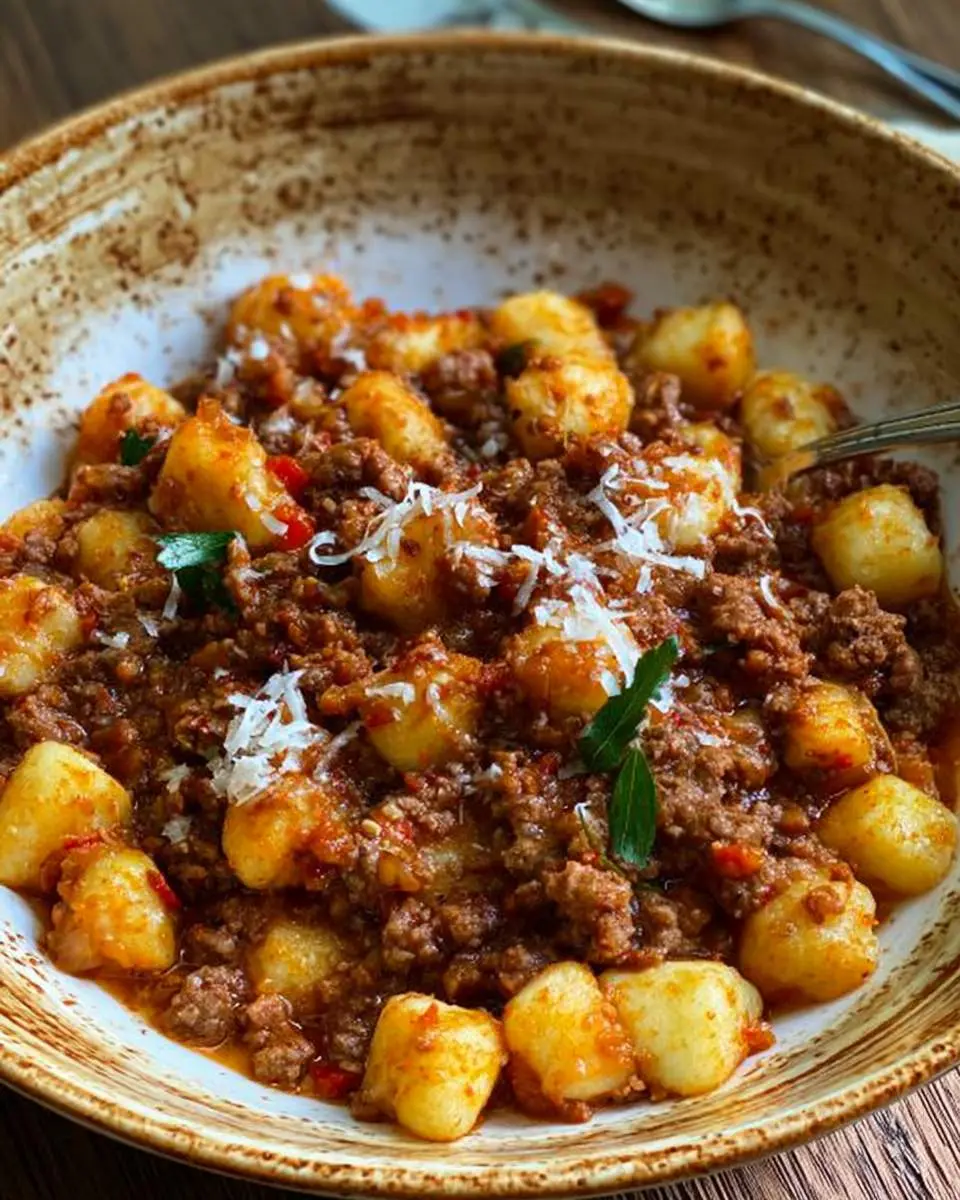
- Remove Parmesan rind from sauce. Add gnocchi to the pot along with 1/2 cup pasta water and the grated cheese. Toss vigorously over medium heat for 1 minute until glossy and coated. The sauce should cling rather than pool. Divide among bowls, top with torn basil and more cheese.
Notes
Conclusion
I hope you make this gnocchi bolognese on a night when you need something that genuinely feeds more than hunger , the kind of meal that slows everything down for a little while. If you fall for the gnocchi technique here, my gnocchi carbonara takes that same potato-dumpling comfort in a completely different, equally irresistible direction. Cook, taste, adjust, and make it yours.