Hollandaise Sauce Recipe
The first time I drizzled real hollandaise over poached eggs, I understood why brunch lines snake around city blocks on Sunday mornings. That silky, buttery cascade with its subtle lemon tang felt like something I shouldn’t be able to make at home. Yet here I am, years later, whisking up this hollandaise sauce recipe on random Tuesday mornings just because I can.
My grandmother never made hollandaise. She was a gravy woman, a cream-of-mushroom casserole woman. I discovered this sauce in a cramped diner in New Orleans, watching a line cook work two pans with the confidence of someone who had made peace with egg yolks long ago. The smell of warm butter and bright citrus hit me before the plate even landed.
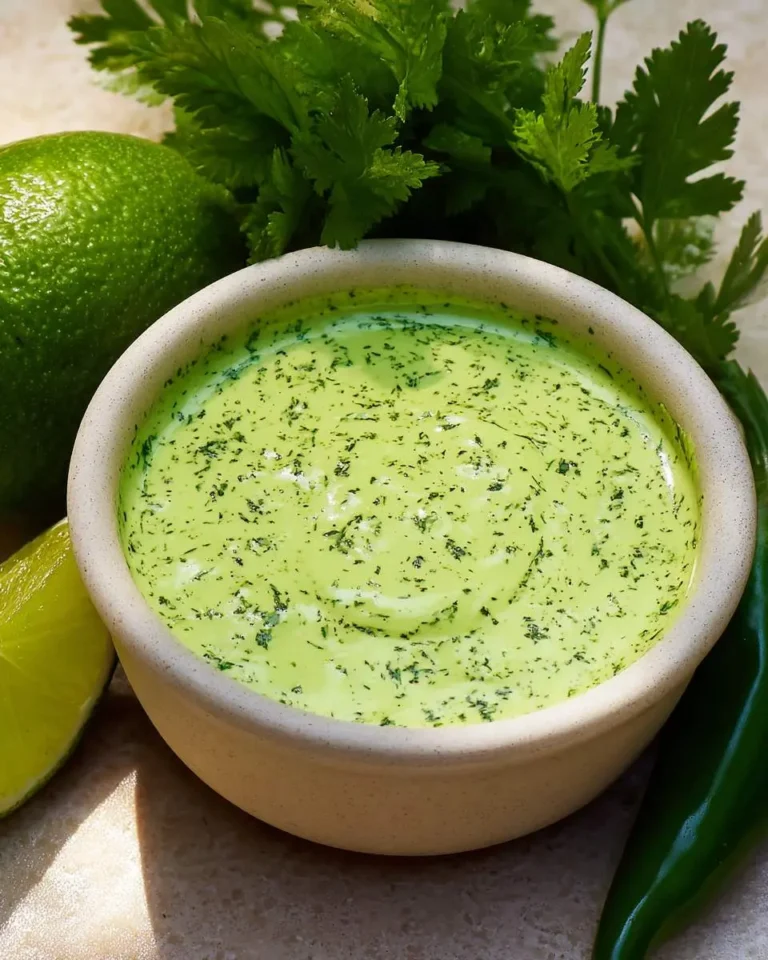
What surprised me most was how few ingredients create something so luxurious. If you are just starting to explore homemade sauces, my creamy avocado yogurt dip was my gateway recipe before I worked up the courage for this one.
What You Need to Make This Recipe
Egg yolks are the quiet heroes here, providing the structure that transforms liquid butter into something that coats the back of a spoon. I use large room-temperature yolks because cold ones fight the emulsion every step of the way. Unsalted butter matters more than you’d think, salt content varies wildly between brands, and you want control over the final seasoning. Fresh lemon juice cuts through all that richness with a brightness that makes you reach for another bite. I keep a jar of fresh mint chimichurri in my fridge for similar reasons, sharp flavors that balance heavier dishes.
How to Make Hollandaise Sauce Recipe
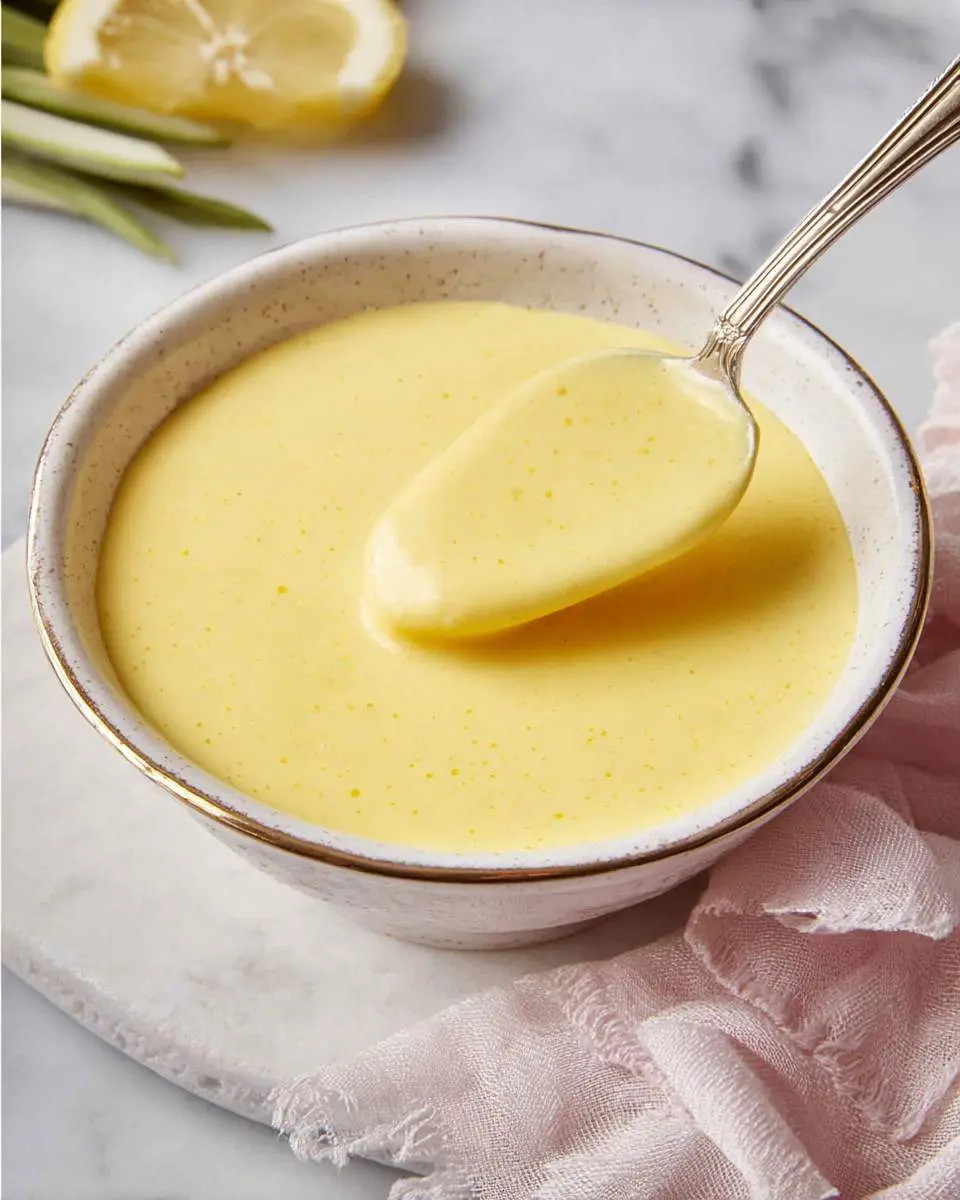
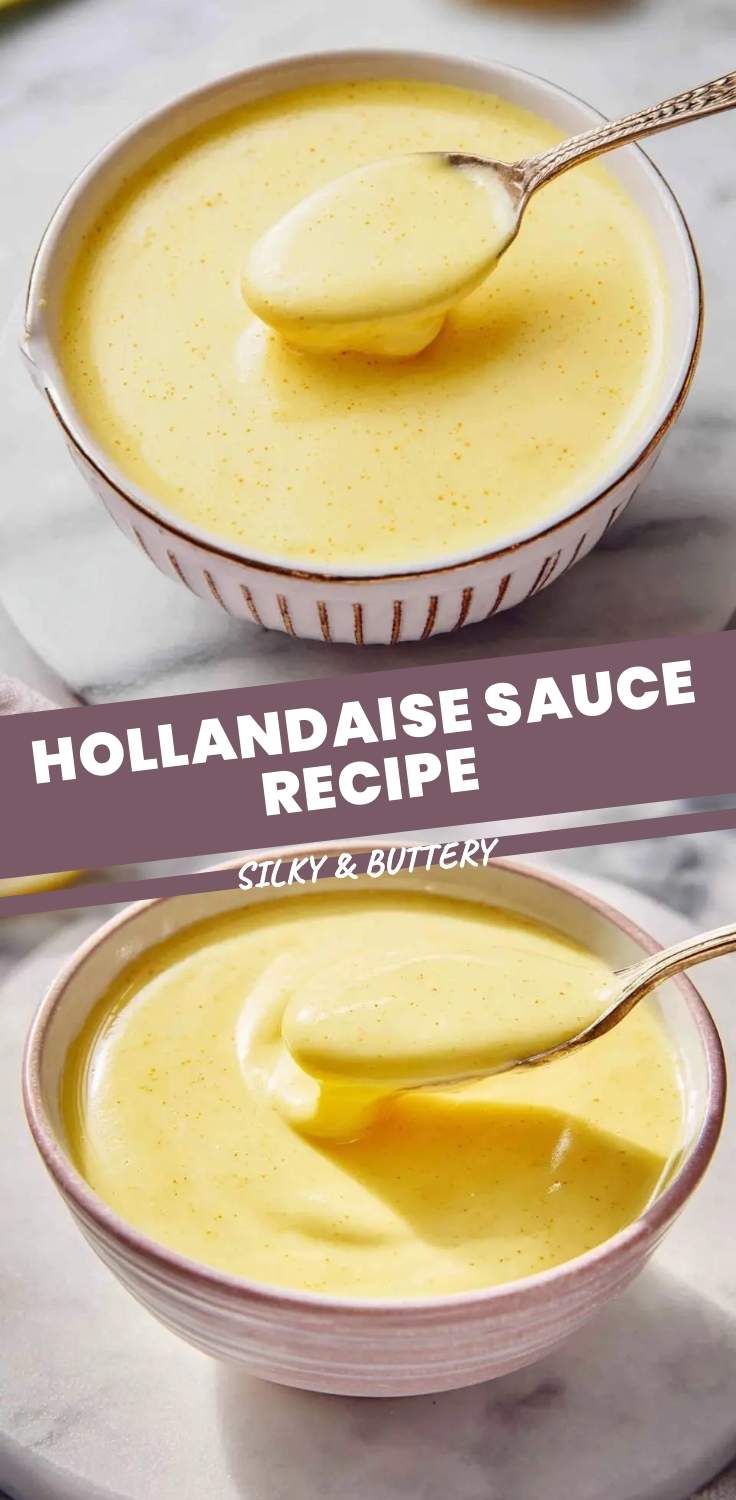
I start by melting my butter slowly in a small saucepan until it foams and the milk solids settle, that quiet sizzling sound means the water is cooking off and pure butterfat remains. While that happens, I whisk yolks with lemon juice and a pinch of cayenne in a heatproof bowl set over barely simmering water, the gentlest bath you can manage. The transformation happens gradually, the yolks thicken from bright yellow to pale and creamy, and when I lift the whisk, the mixture falls in a slow ribbon that folds back on itself. That’s when I know we’re ready for the butter.
I pour in that warm clarified butter drop by drop at first, whisking furiously, feeling the sauce tighten and emulsify under my hand. Once the foundation holds, I stream faster, watching satin gloss replace any trace of graininess. The bowl should feel warm, never hot, against my palm. If it gets too hot, the eggs scramble and I have to start over, no rescue possible. My creamy tarragon sauce taught me similar patience with gentle heat, though this one demands even more attention.
Pro Tips
Clarify your own butter even if recipes say otherwise. Those milk solids will break your emulsion every single time, and skimming them off takes two extra minutes that save twenty minutes of heartbreak.
Use the freshest eggs you can find, not for safety reasons, but because older yolks lose their lecithin strength, the natural emulsifier that holds everything together. I buy mine from the farmers market and use them within four days.
Keep a small bowl of ice water nearby. If your sauce starts to tighten too quickly or the bowl feels too warm, dip the bottom in ice water for ten seconds. It stops the cooking instantly without shocking the emulsion.
My Secret Trick: I add a single teaspoon of very cold water right at the end, off the heat, whisking it in hard. It sounds backwards, but that shock of cold tightens the emulsion one final time and gives the sauce an almost impossibly silky finish that holds longer than any hollandaise I’ve made without it.
How to Store Hollandaise Sauce Recipe
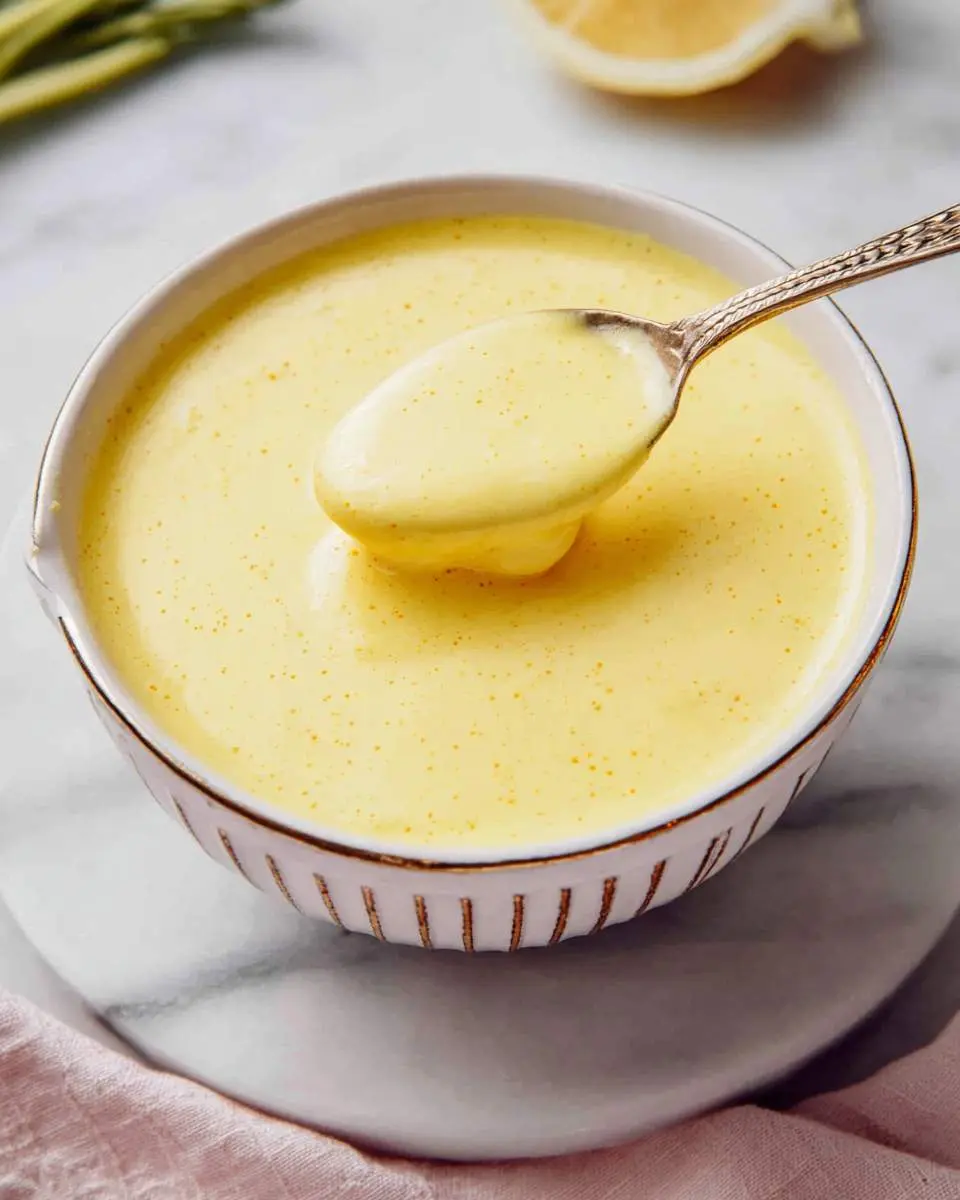
- Refrigerate in an airtight glass container for up to 2 days maximum, the emulsion weakens quickly and separation becomes inevitable.
- Press plastic wrap directly onto the surface before sealing to prevent a skin from forming, that skin becomes grainy lumps when stirred back in.
- Do not freeze, the emulsion shatters completely upon thawing and cannot be restored.
- Reheat gently in a double boiler over barely simmering water, whisking constantly until just warm to the touch, about 100°F, never microwave which destroys the texture instantly.
Nutritional Benefits
This hollandaise sauce recipe delivers meaningful nutrition despite its indulgent reputation, the egg yolks provide choline for brain health and vitamin A for immune function, while the butter contributes fat-soluble vitamins D and K2 that many modern diets lack. I don’t make health claims lightly, but these are whole food ingredients my grandmother would have recognized, not processed substitutes.
FAQs
Why did my hollandaise sauce break and become oily?
Your butter was too hot or you added it too quickly, the emulsion can only absorb fat gradually when the temperatures match. Start with drops, not streams, and keep that bowl warm but never hot.
Can I make hollandaise sauce ahead of time for a brunch party?
You can hold it warm for about an hour in a thermos or over very low heat, but it truly shines when made fresh. I prep my mise en place the night before and whisk it up while the coffee brews.
Is there a blender method that actually works?
Yes, blend hot clarified butter into yolks with lemon juice on low speed, but the texture lacks the silkiness of hand-whisked and it cools faster than you’d expect. I only use this shortcut for weeknight emergencies.
What can I do with leftover hollandaise besides eggs?
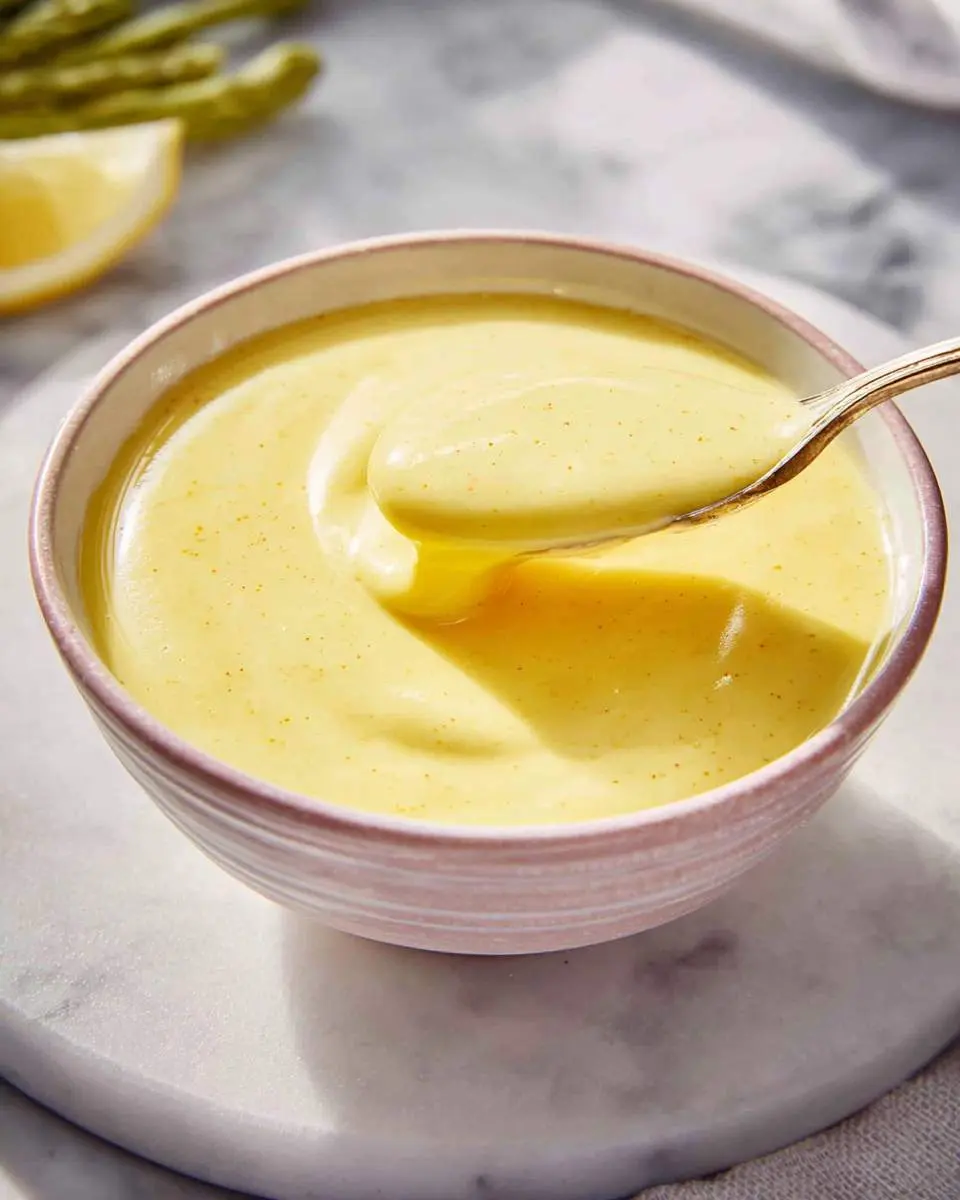
I spoon it over roasted asparagus, grilled salmon, or even steamed artichoke leaves. This hollandaise sauce recipe transforms simple vegetables into something that feels restaurant-worthy without the reservation.

Hollandaise Sauce
Ingredients
Equipment
Method
- Melt butter in a small saucepan over medium-low heat until foamy and just starting to turn golden, about 3-4 minutes. Do not let it brown. Keep warm on lowest heat.
- Fill a medium saucepan with 1 inch of water and bring to a bare simmer over medium heat. Reduce to low. Place a heatproof bowl over the pot, ensuring the bottom does not touch the water.
- Add egg yolks and water to the bowl. Whisk vigorously until mixture is pale yellow, thick, and has doubled in volume, about 2-3 minutes. The whisk should leave visible trails. If mixture gets too hot and starts to scramble, immediately lift bowl off heat while continuing to whisk.
- Remove bowl from heat. Whisk in melted butter a few drops at a time at first, then in a thin steady stream as the sauce thickens. Add lemon juice halfway through. The sauce should coat the back of a spoon and hold a line when you run your finger through it.
- Whisk in salt and cayenne. Taste and adjust with more lemon juice or salt as needed. Serve immediately while warm, or hold for up to 30 minutes in a thermos or over the warm water bath off heat, whisking occasionally.
Notes
Conclusion
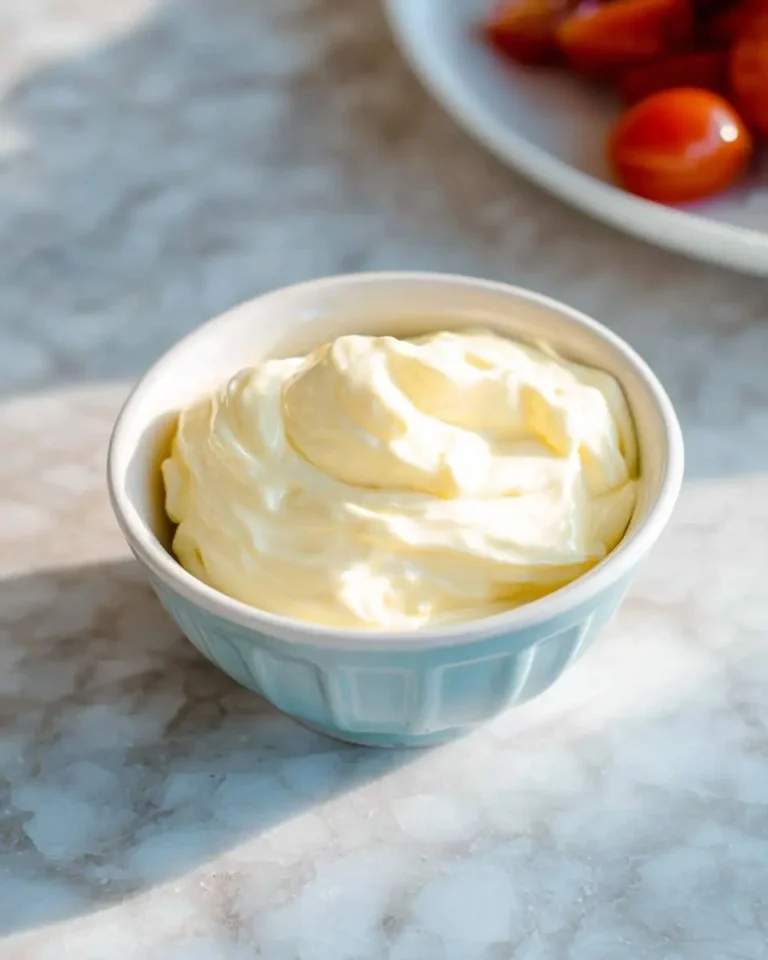
Mastering this hollandaise sauce recipe changed how I think about my own kitchen capabilities, what once felt like restaurant alchemy became a ten-minute ritual I genuinely enjoy. The first broken batch will frustrate you, the second will encourage you, and by the third, you’ll be drizzling with confidence. If you are ready to expand your sauce skills even further, my homemade mayonnaise uses similar techniques with equally rewarding results.