Oven Baked Texas Beef Brisket
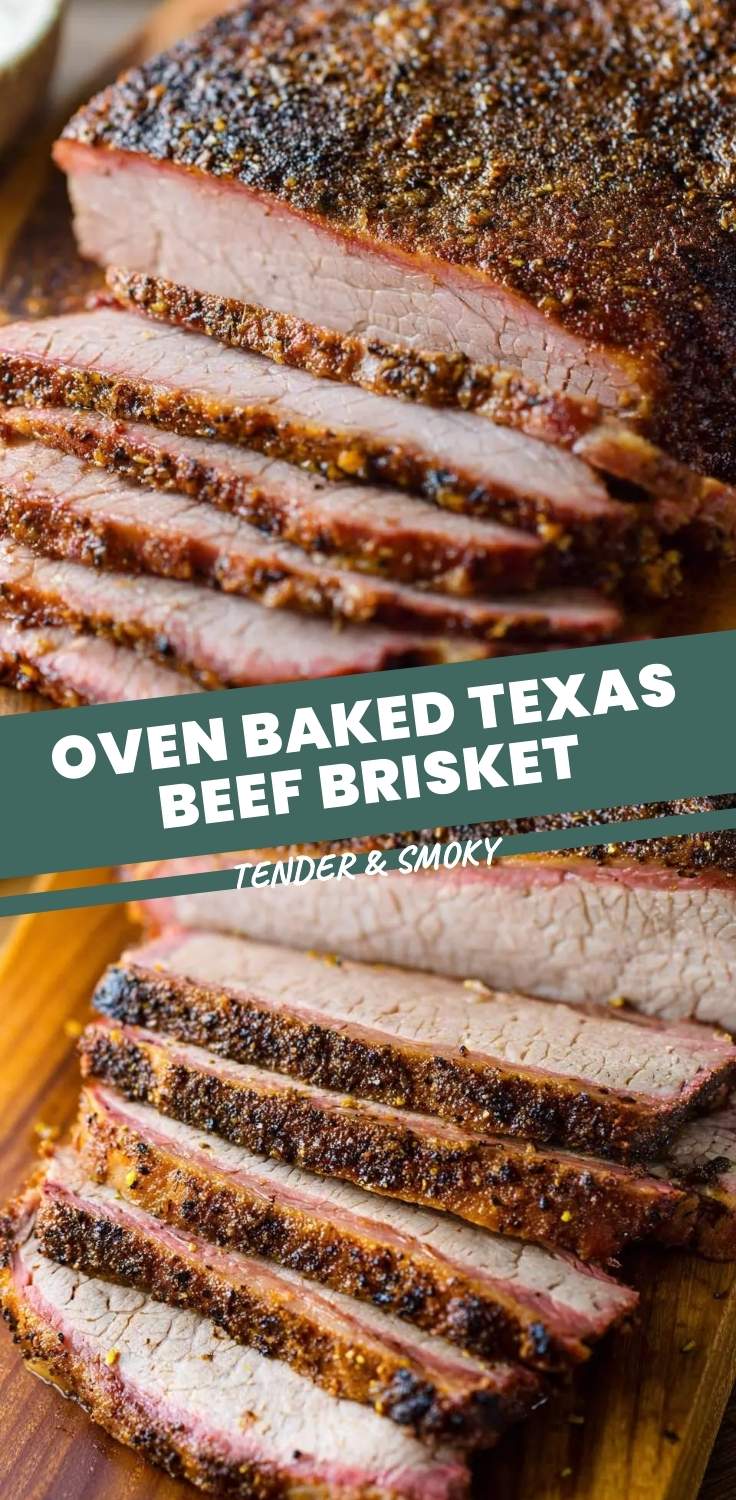
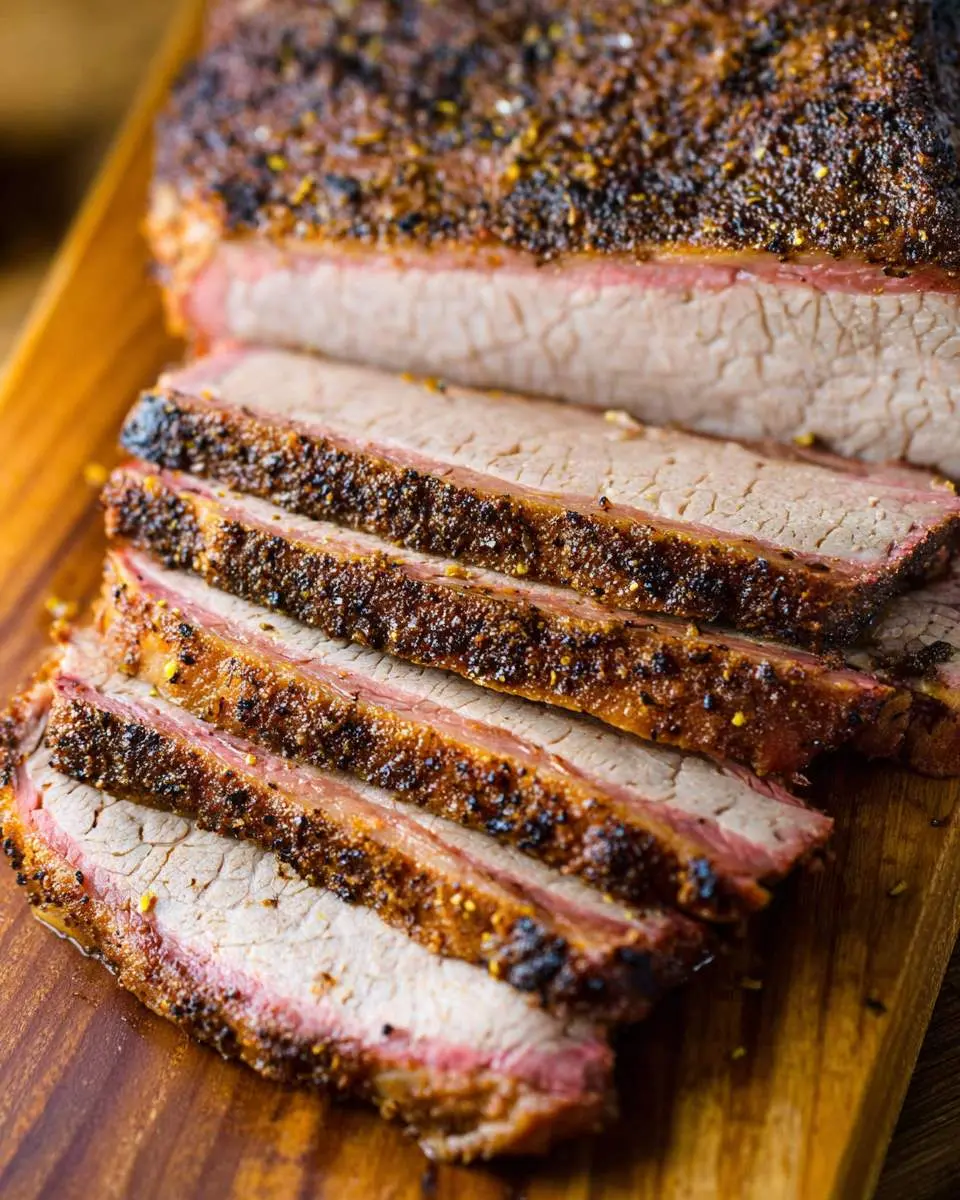
The first time I pulled a brisket from my oven and it actually jiggled like the ones I’d seen in Texas smokehouses, I stood there in my kitchen and laughed out loud. That deep mahogany bark, the fat cap rendered to silk, the smell of black pepper and post oak that had filled my house for eight hours , I finally cracked the code for oven baked Texas beef brisket without a smoker. No backyard rig required, no tending coals at 3 a.m., just patience and a few hard-won tricks.
My grandfather used to drive us three hours to Lockhart for brisket on his birthday. He’d wear his good boots and refuse to talk until he’d had his first bite. Last October, I made this recipe for his 82nd birthday at my apartment in Chicago. He took one bite, set down his fork, and said, “Well, damn.” That’s when I knew.
This is the kind of cooking that demands your Saturday but gives you something unforgettable. If you’re craving more hands-on beef projects, my Mexican steak tacos are a weeknight-friendly way to scratch that itch.
What You Need to Make This Recipe
The magic starts with a whole packer brisket, that gorgeous hunk of point and flat together, because separating them robs you of the fat that self-bastes the leaner flat during the long cook. I use coarse black pepper and kosher salt in a true Central Texas ratio, roughly half and half, which builds that signature crackly bark without sweetness or distraction. A little post oak liquid smoke , and I mean a little, barely a teaspoon , bridges the gap between oven and pit without tasting fake. For another beef dish where simple seasoning shines, try my steak tostada salad with its crispy tortilla base and charred edges.
How to Make Oven Baked Texas Beef Brisket
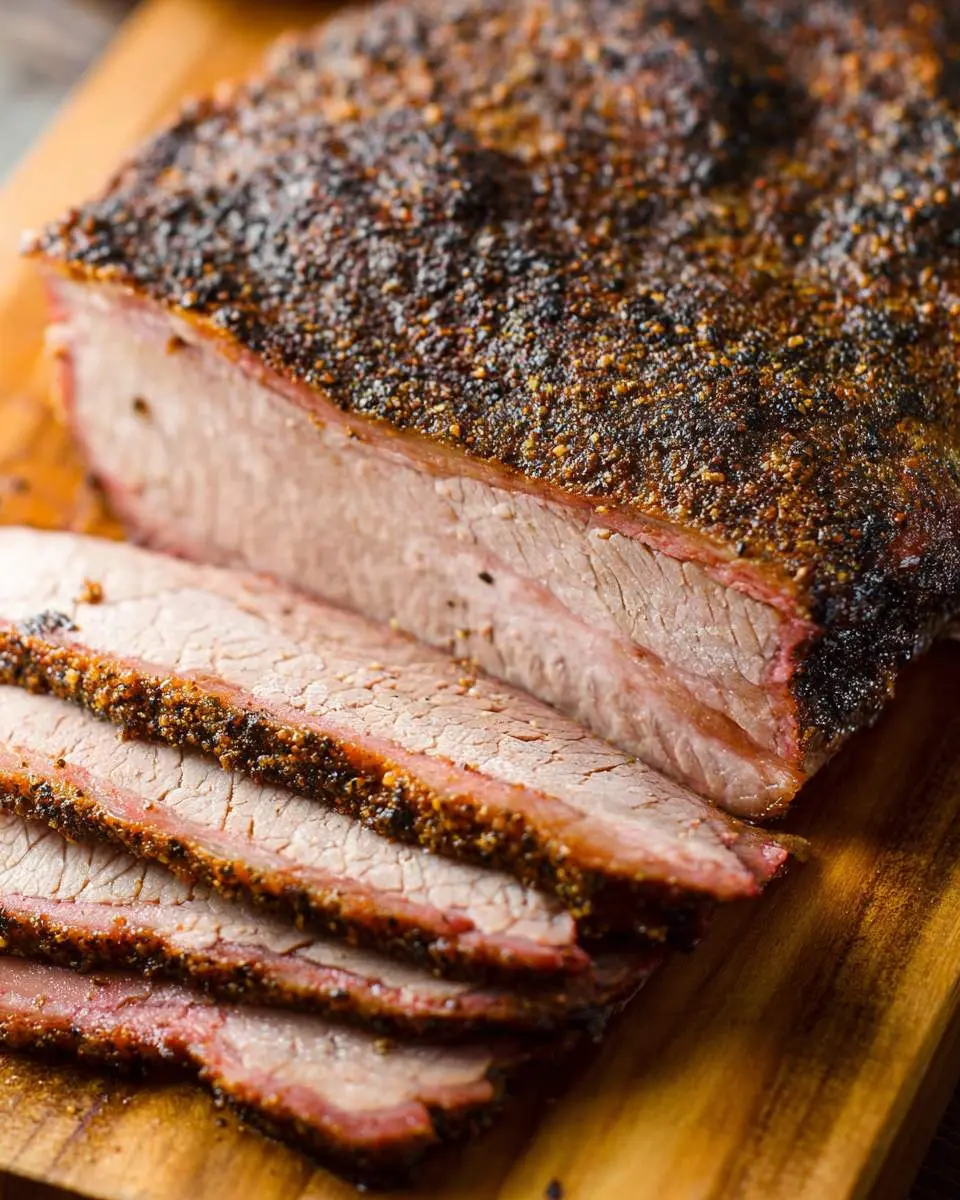
I start the night before, rubbing the brisket all over and letting it sit uncovered in the fridge , the cold air dries the surface, which is your secret weapon for bark formation. The next morning, I pull it out while the oven preheates to 250°F, low and patient, because rushing this is how you end up with pot roast instead of barbecue. Into a heavy roasting pan it goes, fat side up, and I cover it tight with foil for the first six hours.
Around hour four, your kitchen starts smelling like a Texas roadhouse. The fat begins to render, pooling in the pan, and the meat softens from the inside out. At hour six, I peel back that foil and let it ride uncovered, basting every thirty minutes with those collected drippings. The bark transforms from pale to deep chestnut, the pepper crust tightening like leather. When a probe slides in like warm butter, usually around hour eight or nine, I wrap the whole thing in butcher paper , or unwaxed parchment in a pinch , and let it rest in a cooler for at least an hour. That rest is non-negotiable; it’s when the juices redistribute and the texture settles into something you can actually slice instead of shred. For another low-and-slow beef project, my BBQ flanken short ribs use a similar patience-rewarded approach.
Pro Tips
Trim to a quarter-inch fat cap, no more: Too much fat and the bark never forms; too little and the flat dries out before the point is ready. I use a sharp boning knife and work slowly, following the contour like I’m sculpting.
Let the rubbed brisket dry overnight uncovered: This pellicle , that tacky, dried surface , is what catches smoke and pepper and builds real bark. Skip this and you’re steaming, not roasting.
Save every drop of rendered fat: I strain the pan drippings into a jar and use that tallow for roasting potatoes for weeks. It smells like brisket every time you open it, which is either wonderful or dangerous depending on your self-control.
My Secret Trick: I place a small oven-safe bowl of water in the corner of the roasting pan, not touching the meat. It keeps the air humid enough to prevent the flat from drying but not so wet that the bark turns mushy. That balance took me four briskets to find.
The oven baked Texas beef brisket method rewards this kind of obsessive attention.
How to Store Oven Baked Texas Beef Brisket
- Refrigerate sliced brisket in its own juices or wrapped tightly in butcher paper, then foil, for up to 4 days at 40°F or below.
- Freeze whole or sliced in vacuum-sealed bags with a tablespoon of reserved tallow for up to 3 months; thaw overnight in the refrigerator.
- Reheat gently in a 225°F oven, wrapped in foil with a splash of beef broth, until internal temperature reaches 140°F , about 45 minutes for sliced, 2 hours for a whole chunk.
- Never microwave brisket; the fat separates and the texture turns rubbery beyond saving.
Nutritional Benefits
Brisket delivers serious protein and iron from that well-worked muscle, and when you trim thoughtfully and let the fat render out, you’re left with flavor without excess. The black pepper isn’t just traditional , it contains piperine, which may help your body absorb nutrients from the meat itself. This oven baked Texas beef brisket proves that mindful cooking of rich ingredients beats processed alternatives every time.
FAQs
Can I make this with just the flat instead of a whole packer?
You can, but the flat is lean and prone to drying. If that’s all you can find, keep the fat cap thick and start checking for doneness an hour earlier. Wrap it sooner too.
Why is my bark soft instead of crispy?
Soft bark usually means too much moisture during cooking. Skip the water bowl if your oven runs humid, and always let the rubbed meat dry overnight in the fridge uncovered.
How do I know when oven baked Texas beef brisket is done without a thermometer?
A probe or skewer should slide through the thickest part of the flat with no resistance, like pushing through warm butter. If it catches or feels springy, give it more time.
Can I use a different wood flavor instead of post oak?
Hickory or pecan work, but use half as much , they’re stronger. Mesquite goes bitter fast in an oven. Post oak is traditional for its mellow, almost sweet smoke character.

Oven Baked Texas Beef Brisket
Ingredients
Equipment
Method
- Pat brisket completely dry with paper towels. Coat all sides with mustard - this helps the rub stick and adds no flavor. Mix salt, pepper, smoked paprika, garlic powder, onion powder, and cayenne in a small bowl. Rub generously over entire surface, pressing into any crevices. Let sit at room temperature for 30 minutes while oven preheats.
- Position oven rack in lower third and preheat to 300°F. Set wire rack inside rimmed baking sheet. Place brisket fat side up on rack. Roast uncovered for 3 hours until a dark crust (bark) forms and internal temperature reaches about 160°F. The exterior should look deeply browned and slightly crusty.
- Remove brisket from oven. Mix beef broth with 1 tablespoon liquid smoke. Lay out two long sheets of heavy-duty foil, overlapping. Place brisket in center, pour broth mixture around (not over) the meat. Add remaining 1 tablespoon liquid smoke drizzled on top. Wrap tightly, crimping edges to seal completely. Return to oven, still at 300°F.
- Continue roasting wrapped for 2 to 3 more hours, until internal temperature reaches 200-205°F and a probe or skewer slides in with little resistance like butter. This is more important than temperature - the connective tissue must fully break down. Total cook time will be 5 to 6 hours depending on thickness.
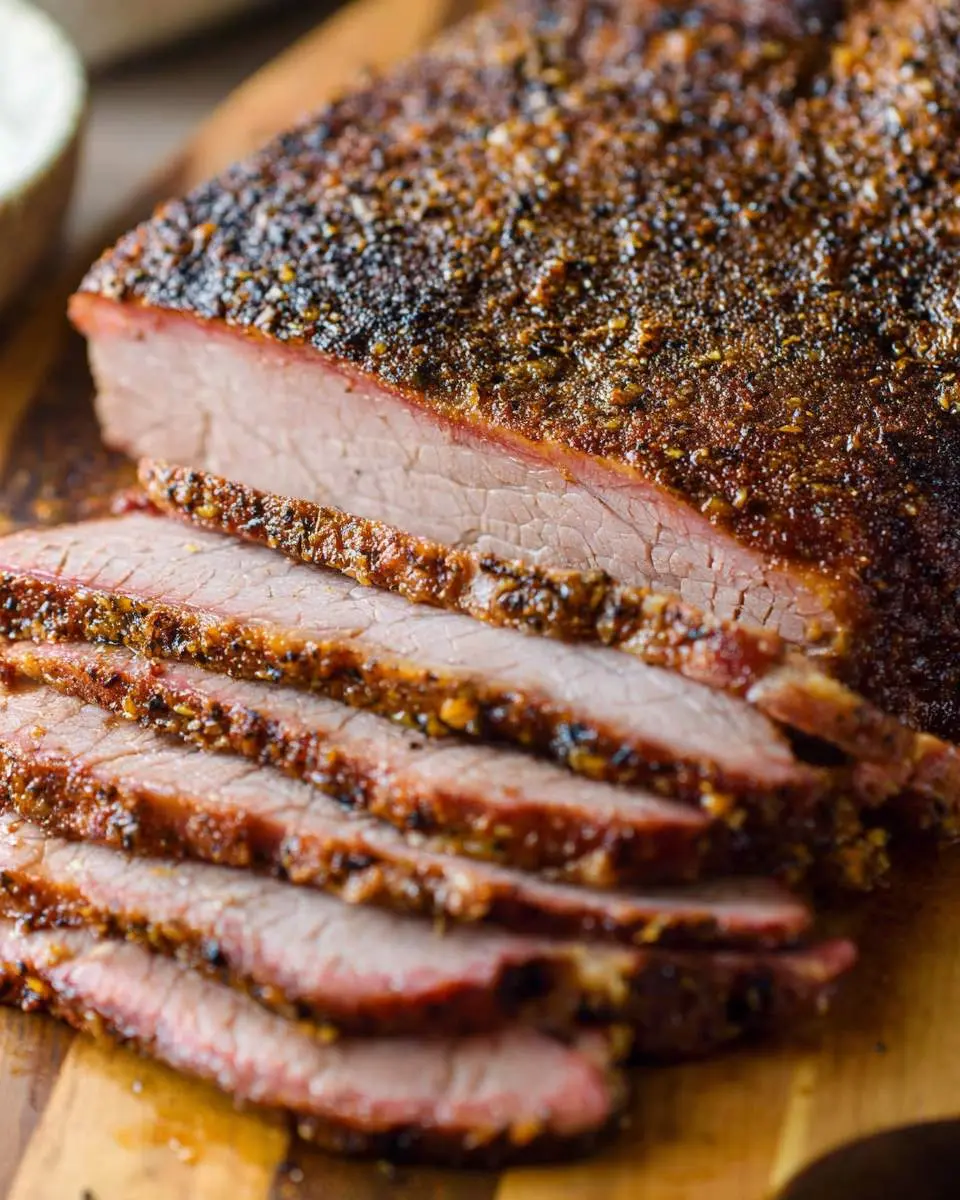
- Transfer wrapped brisket to a cutting board, still sealed in foil. Let rest for at least 30 minutes, up to 1 hour. This allows juices to redistribute. Unwrap, reserving any juices in the foil to pour over sliced meat. Slice against the grain into 1/4-inch thick slices. Serve immediately with your favorite BBQ sauce on the side.
Notes
Conclusion
This oven baked Texas beef brisket changed how I think about what’s possible in a home kitchen. It asks for your time, your attention, your Saturday , and gives back something that tastes like memory and patience and smoke. Slice it thick against the grain, don’t you dare sauce it first, and watch your people’s eyes go wide. For another beef celebration, my grilled ribeye steak brings that same reverence to a quicker cook. You can do this. I promise.