Singapore Rice Noodles
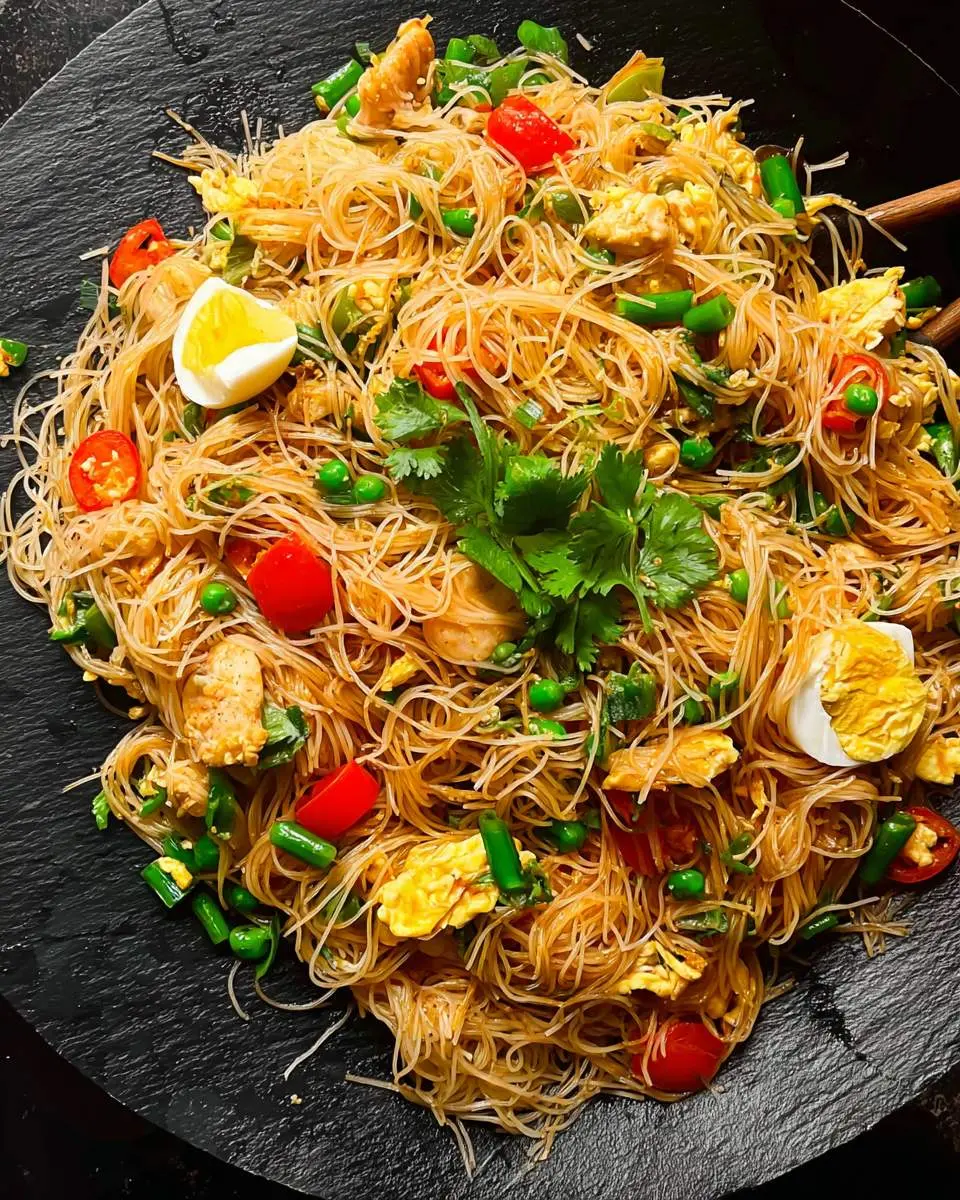
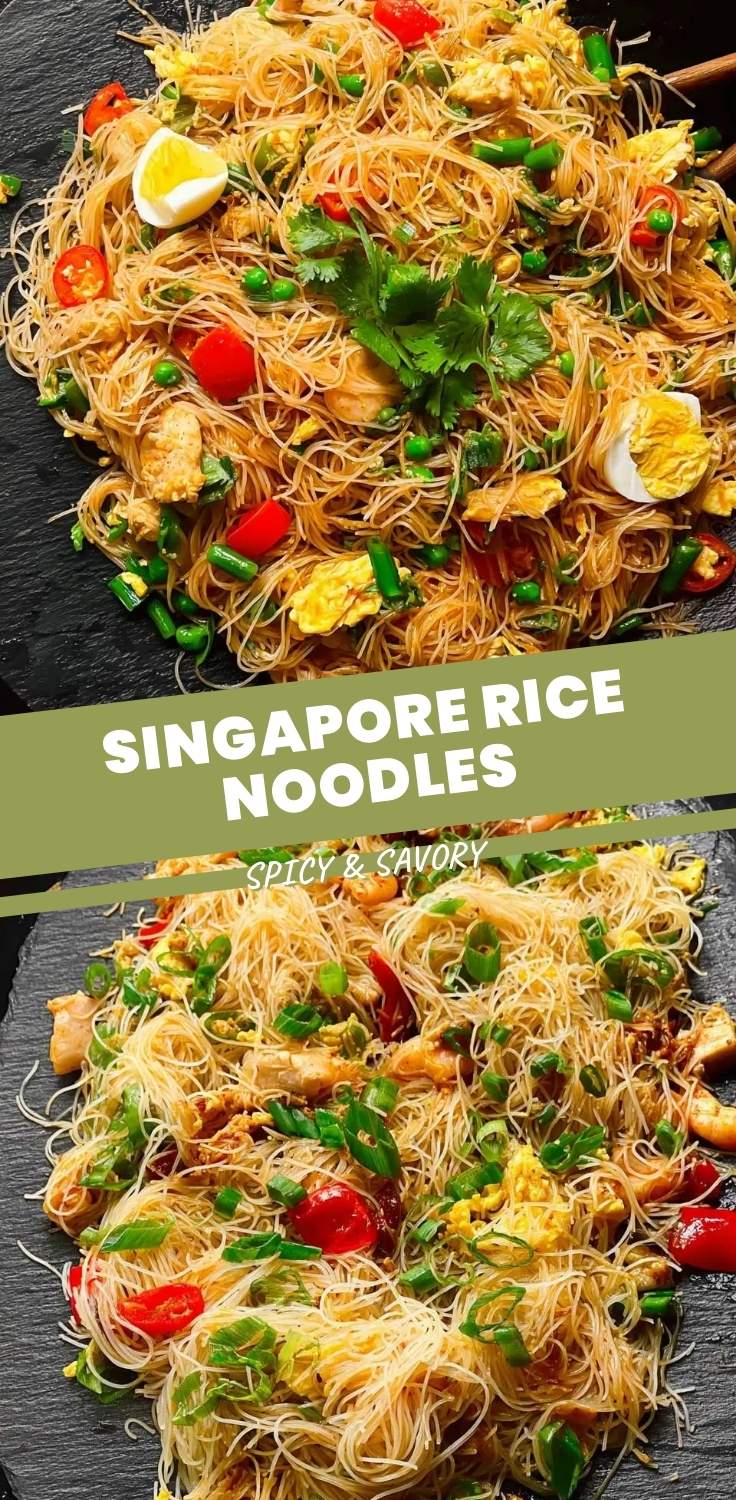
The first time I smelled curry powder hitting hot oil in my kitchen, I was transported straight to a steamy hawker stall I once visited in my dreams. That warm, golden aroma with its whisper of turmeric and cumin is what drew me to Singapore Rice Noodles , a dish that looks humble but carries serious flavor magic in every strand.
My grandmother never made this. She was strictly Midwestern casseroles and Sunday pot roast. But I remember watching a neighbor, Mrs. Chen, toss translucent rice noodles in her wok while I waited for my school bus. The sound of metal on metal, the way the noodles seemed to dance and separate rather than clump , I wanted to understand that kitchen alchemy.
Years later, after plenty of sticky, broken noodle disasters, I finally cracked the code. This version lands somewhere between takeout nostalgia and something I genuinely love cooking on Tuesday nights. If you are craving more bold pasta flavors, my creamy Cajun steak penne pasta hits the same comfort zone with a completely different accent.
What You Need to Make This Recipe
The rice vermicelli matters more than you’d think , those thin, almost fragile threads need to be the right width to soak up sauce without turning to mush. I buy mine from the Asian market down the street; the brand with the red rooster on the package has never failed me. Curry powder is the heartbeat here, and I beg you to check the freshness date on your jar , stale curry tastes like dusty cardboard, while fresh stuff practically glows. Shrimp and char siu pork are traditional, but I’ve made this with just eggs and vegetables when my fridge was bare, and it still worked because the noodles carry the story. For another weeknight pasta that leans on a surprising star ingredient, my sweet potato mac and cheese uses roasted sweet potato to create the silkiest sauce.
How to Make Singapore Rice Noodles
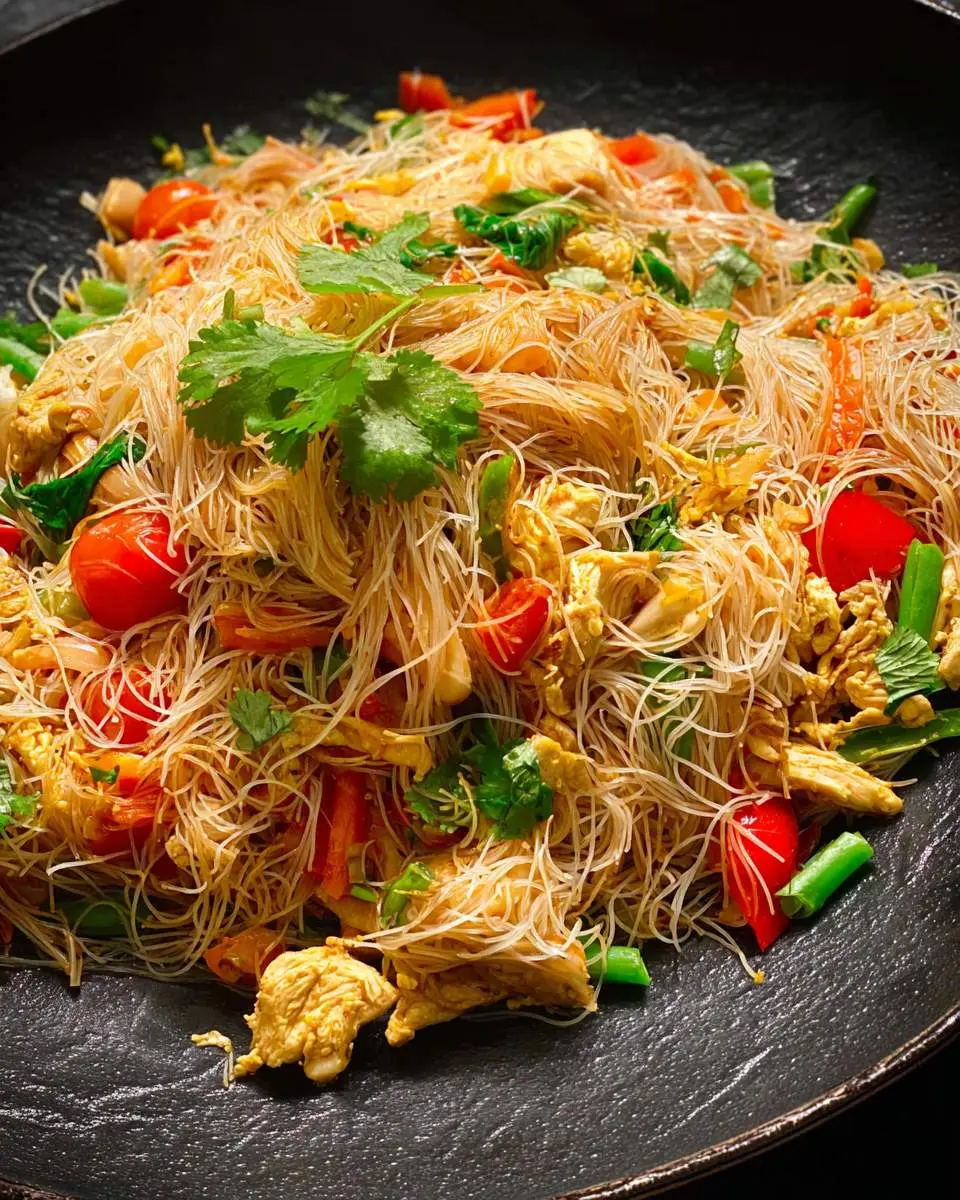
I start by soaking the vermicelli in warm water, not boiling , this is crucial. Boiling makes them eager to dissolve into nothing. Warm water keeps them slightly resistant, ready to finish cooking in the wok where they’ll drink up the sauce. While they soften, I prep everything else because once the heat goes on, this moves fast. The shrimp hit the hot oil first, curling and pinkening in about ninety seconds, then I scoop them out before they turn rubbery.
The aromatics come next , garlic, ginger, maybe a thin-sliced shallot if I have one , and this is when that curry powder joins the party. The oil turns sunset-orange and the smell fills my whole downstairs. I add the drained noodles now, tossing constantly with my tongs, watching them separate and glisten rather than clump. The sauce , soy, a touch of rice wine, maybe a whisper of sugar , goes in along the edges of the wok where it sizzles and reduces immediately. The shrimp tumble back in, along with whatever vegetables I’m using, and everything gets one final chaotic toss until the noodles look almost dry and intensely flavored. If you enjoy this kind of wok rhythm, my pad see ew uses similar high-heat techniques with wider, chewier noodles.
Pro Tips
Soak your noodles until they bend easily but still have a white, opaque core , they’ll finish in the wok without falling apart. I learned this the hard way after one batch turned into curry-flavored porridge.
Use a carbon steel or well-seasoned wok if you have one. The high sides let you toss without sending noodles flying, and the heat retention gives you that slight char on some strands that makes the dish taste like restaurant cooking.
Cut your proteins and vegetables into uniform, thin pieces. Everything cooks in minutes, so a thick chunk of pork or a fat carrot coin won’t tenderize in time , you’ll end up with raw crunch or overcooked shrimp.
My Secret Trick: I drizzle a tiny bit of toasted sesame oil onto my serving plate before piling the noodles on top. The residual heat releases the aroma as you eat, so every bite starts with that nutty fragrance even though the cooking oil stays neutral.
Singapore Rice Noodles reward patience in prep and boldness in execution , hesitate at the wok and you’ll get steamed noodles instead of seared ones.
How to Store Singapore Rice Noodles
- Refrigerate in an airtight glass container for up to 3 days , the noodles will absorb more sauce as they sit, so they taste even more concentrated on day two.
- Freeze in individual portions wrapped tightly in plastic wrap, then placed in a freezer bag, for up to 1 month. Thaw overnight in the refrigerator before reheating.
- Reheat in a hot skillet with a splash of water or broth to revive the texture , the microwave steams them into a sad, sticky mass that I personally cannot recommend.
- Store proteins separately if possible; shrimp gets tough when reheated multiple times, so I usually eat the shrimp first and save the noodle portion.
Nutritional Benefits
Singapore Rice Noodles bring more to the table than comfort. The turmeric in curry powder carries curcumin, which my nutritionist friend always mentions for its anti-inflammatory properties, and the rice vermicelli itself is naturally gluten-free , a happy accident for my cousin who visits and never makes a fuss about her dietary needs. The protein from shrimp or pork keeps this satisfying without heaviness, and I always load mine with bell peppers for the color and the vitamin C that somehow makes me feel virtuous even when I’m eating noodles at ten pm.
FAQs
Why are my rice noodles sticky and clumping together?
You likely soaked them too long or in water that was too hot. They should bend but still resist biting. In the wok, use high heat and toss constantly , crowded noodles steam instead of sear.
Can I make this vegetarian or vegan?
Absolutely. I skip the shrimp and pork, double the eggs or add pressed tofu, and use mushroom sauce instead of oyster sauce. The curry powder carries so much flavor that you won’t miss the meat.
What kind of curry powder should I buy?
Look for Singapore or Madras curry powder , these tend warmer and more aromatic than Thai curry pastes. I avoid generic “yellow curry” blends that taste mostly of turmeric without complexity.
How do I get that restaurant-style wok hei flavor at home?
Crank your burner to maximum and let your wok or skillet preheat until it barely smokes. Work in smaller batches than you think necessary , Singapore Rice Noodles need room to char slightly, not stew in their own steam.

Singapore Rice Noodles
Ingredients
Equipment
Method
- Place rice vermicelli in a large bowl and cover with very hot tap water. Let soak until pliable but still firm, about 8 minutes. Drain well and snip into shorter lengths with kitchen shears if very long. Meanwhile, whisk together curry powder, soy sauce, Shaoxing wine, sesame oil, sugar, and white pepper in a small bowl.
- Heat 1 tablespoon vegetable oil in a wok over high heat until smoking. Add eggs and scramble quickly until just set, about 30 seconds. Transfer to a plate. Add another tablespoon oil, then shrimp. Stir-fry until pink and curled, about 90 seconds. Remove to the plate with eggs.
- Add remaining tablespoon oil to the wok. Add onion and stir-fry until edges char slightly, about 2 minutes. Add garlic and pork; stir-fry until pork edges crisp, about 1 minute. Add bell pepper and cook 30 seconds more.
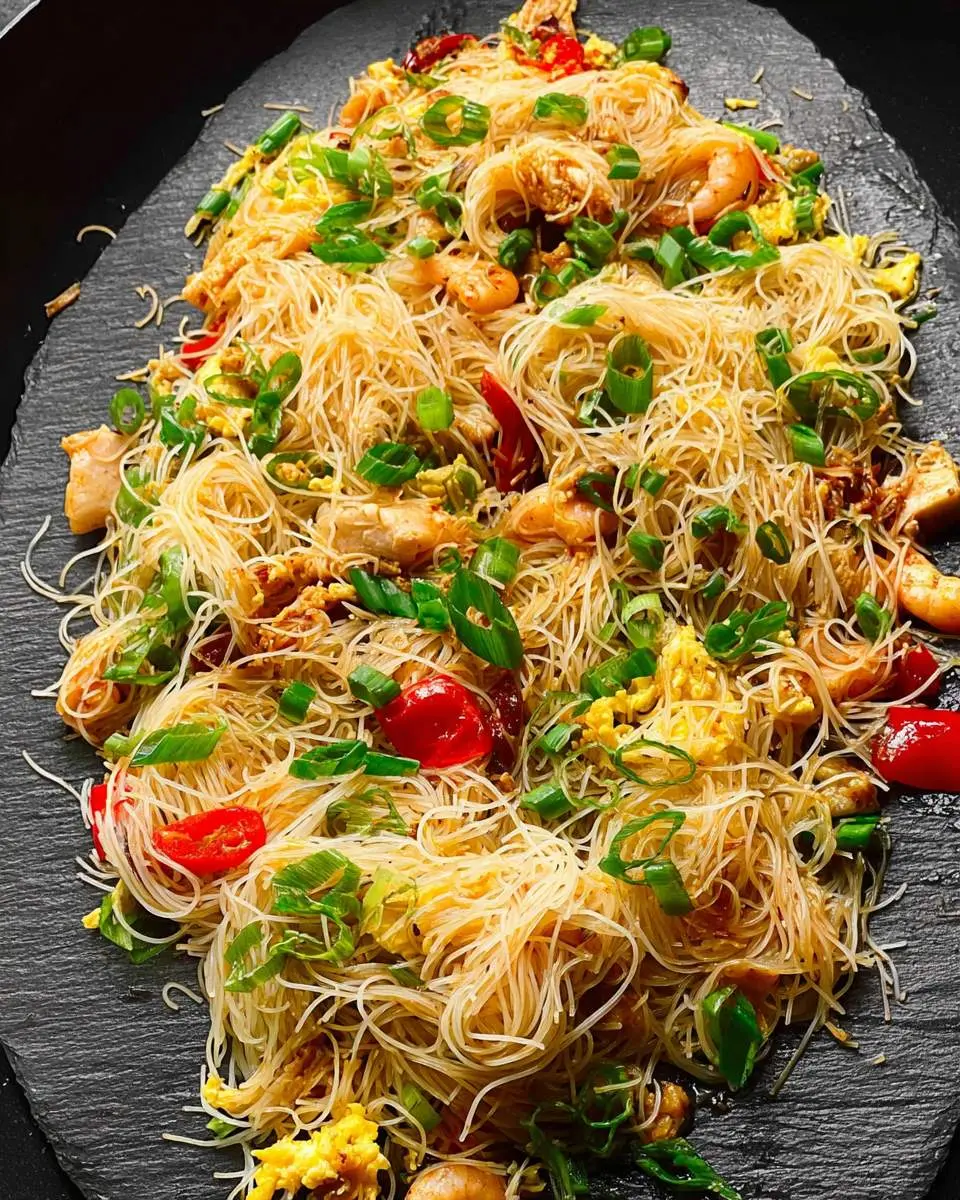
- Add drained noodles to the wok. Pour curry sauce over everything and toss constantly with tongs, using a scooping motion to lift noodles from the bottom. The noodles should take on a uniform golden color and some edges should get slightly crisp, about 3 minutes.
- Return eggs and shrimp to the wok. Add bean sprouts and scallions. Toss just until bean sprouts wilt slightly, about 30 seconds. The sprouts should keep their crunch. Transfer immediately to a serving platter and serve hot.
Notes
Conclusion
This dish taught me that technique matters more than expensive ingredients. Singapore Rice Noodles reward the hands that move confidently, that prep carefully, that don’t fear high heat. Make them once and you’ll understand why I keep curry powder in my pantry like a promise. For another noodle night with completely different energy, my plain lo mein noodles recipe strips everything back to pure, slurpable simplicity.