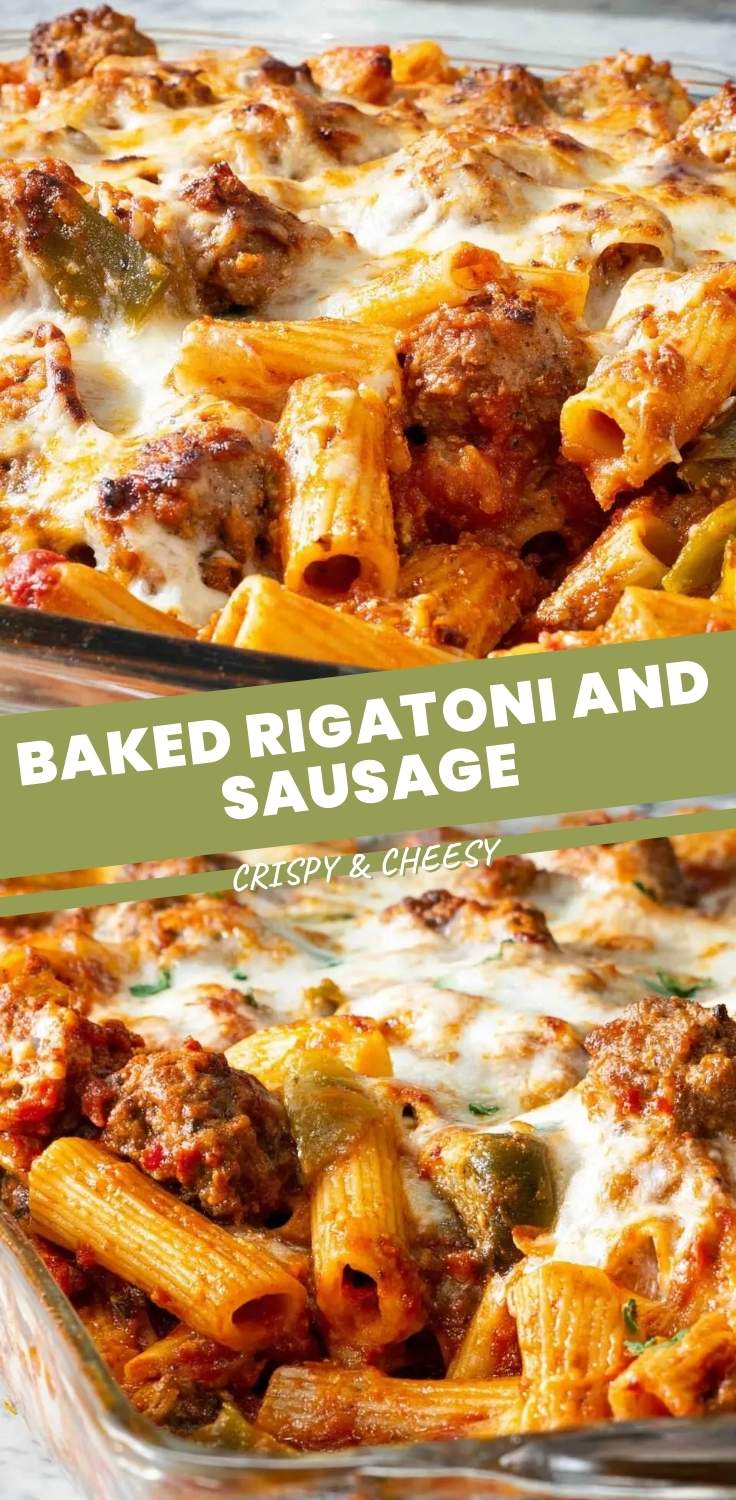
Baked Rigatoni and Sausage
The first time I pulled a bubbling casserole from the oven and heard that crackle of cheese settling into itself, I knew I’d found my Sunday rhythm. That dish was baked rigatoni and sausage, and it changed how I think about comfort food entirely. There’s something almost therapeutic about the way the sauce clings to those ridged tubes, the way the kitchen fills with fennel and tomato and something else you can’t quite name.
My grandmother never wrote her recipes down, but I remember standing on a step stool watching her break sweet Italian sausage with a wooden spoon. She’d let me sneak a piece of mozzarella before it disappeared into the dish. I make baked rigatoni and sausage differently now, but that feeling of being exactly where I’m supposed to be? That never left.
This is the kind of recipe that gathers people around your table without you having to ask. If you’re craving more Sunday-night energy, my steak and shrimp scampi hits the same notes of indulgence and ease.
What You Need to Make This Recipe
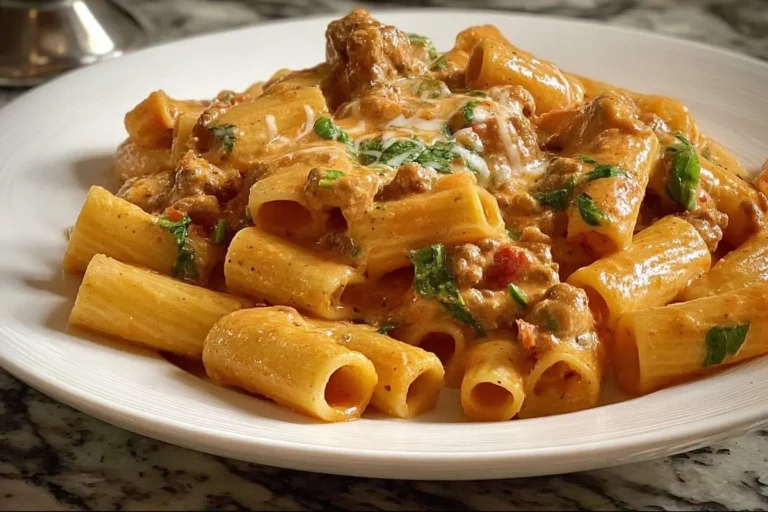
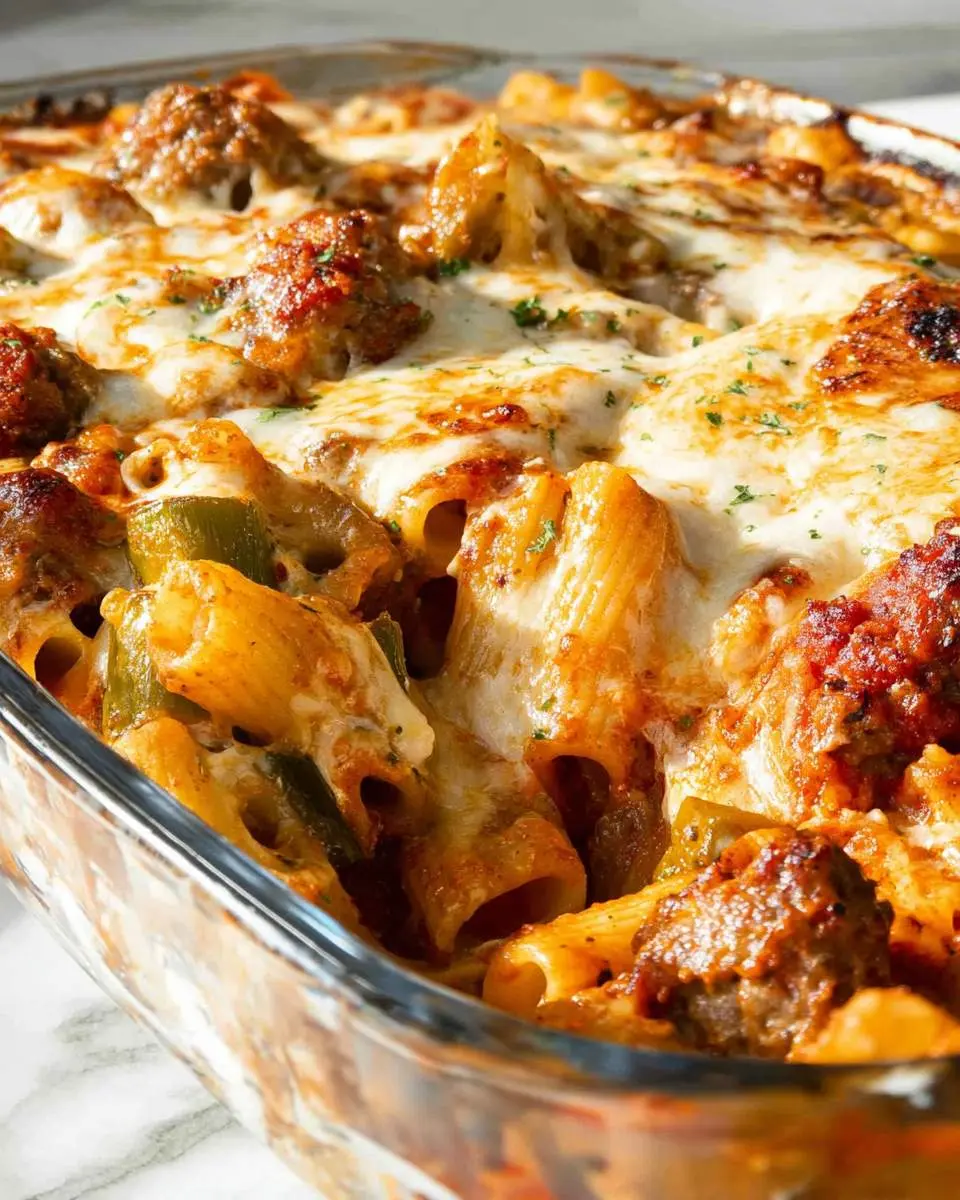
The rigatoni matters more than you’d think. Those ridges and that hollow center aren’t just for looks, they trap sauce like little edible pockets, so every bite carries real flavor. I use sweet Italian sausage with a decent fat content, it renders down into the sauce and builds something you can’t get from ground beef alone. The mozzarella situation is non-negotiable: low-moisture whole milk, shredded yourself, because pre-shredded bags have cellulose that keeps the cheese from melting into that stretchy, glorious tangle we all want. For another pasta night built around sausage, my chicken scampi pasta uses a completely different technique worth exploring.
How to Make Baked Rigatoni and Sausage
I start by browning the sausage hard, really pushing it against the pan until the fond builds up almost to the point of worry. That’s where the depth lives. The onions go in next, softening in the rendered fat, and the garlic follows for just thirty seconds until the smell turns sweet and insistent. The tomato sauce simmers while the pasta water comes up, and I pull the rigatoni two minutes before the package says, because that final bake will finish the job.
Here’s where I get particular: I toss the drained pasta with a cup of sauce before layering anything. Every tube gets coated, so there’s no dry bites hiding in the center of your casserole. The assembly goes fast, sauce, pasta, ricotta dotted in little clouds, mozzarella, repeat. Into a 375 degree oven until the top spots and the edges pull away slightly, about twenty-five minutes. The wait is the hardest part. If sausage and pasta is your comfort zone too, my Italian sausage rigatoni skips the bake but keeps that same soul.
Pro Tips
Undercook the pasta aggressively. Two minutes shy of al dente sounds extreme, but rigatoni continues absorbing moisture in the oven. Mushy baked pasta is a tragedy that no amount of cheese can fix.
Let the sausage fond develop. Those dark bits stuck to your pan aren’t burned, they’re concentrated flavor. Deglaze with a splash of pasta water before adding your tomatoes, and you’ll taste the difference in every spoonful.
Rest before serving. I know, the smell is torture. But ten minutes out of the oven lets the layers settle so your first scoop actually holds together instead of sliding into a saucy puddle.
My Secret Trick: I mix a spoonful of the starchy pasta water into my ricotta with an egg yolk. It transforms that layer from a bland requirement into something almost custardy, a hidden richness that makes people pause mid-bite and ask what you did differently.
How to Store Baked Rigatoni and Sausage
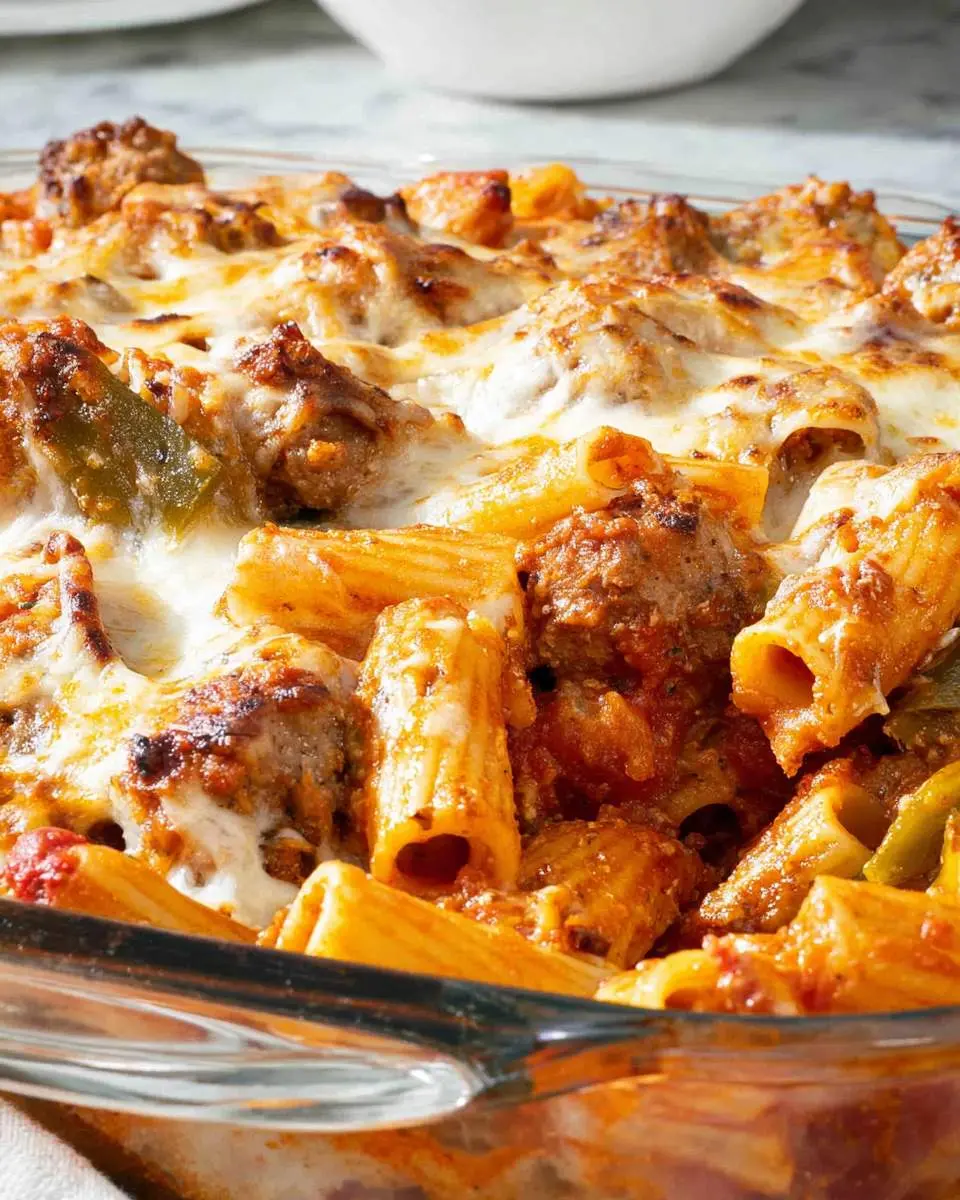
- Refrigerate in an airtight glass container for up to 4 days. The flavors actually improve on day two as the sauce penetrates deeper into the pasta.
- Freeze individual portions wrapped tightly in foil, then placed in a freezer bag, for up to 3 months at 0 degrees Fahrenheit. I prefer this to freezing the whole casserole, which reheats unevenly.
- Reheat refrigerated portions covered with foil in a 350 degree oven for 20 minutes, adding a tablespoon of water to the dish to revive the sauce. Microwave works in a pinch, 60 second bursts at 70 percent power, stirring between each.
Nutritional Benefits
Baked rigatoni and sausage delivers real substance beyond its comfort reputation. The sweet Italian sausage brings complete protein and significant B12, while the tomato sauce contributes lycopene that becomes more bioavailable through cooking. I don’t make this dish for health reasons, but I appreciate that the protein and fat from the sausage actually keep me satisfied for hours, not reaching for snacks by nine o’clock.
FAQs
Can I use ziti instead of rigatoni?
Absolutely, though you’ll lose those sauce-trapping ridges. Ziti’s smoother surface means more sauce pools at the bottom of your dish. If that’s what you have, just toss extra thoroughly before baking.
What sausage works best for baked rigatoni and sausage?
Sweet Italian with fennel seeds is my standard, but hot Italian brings welcome heat. I’ve even used chicken sausage in a pinch, though you’ll want to add a tablespoon of olive oil since it renders less fat.
Can I assemble this ahead of time?
Yes, and I often do. Build the entire casserole, cover tightly, and refrigerate up to 24 hours. Add ten minutes to the covered baking time since you’re starting from cold.
Why does my baked pasta come out dry?
Usually overbaking or under-saucing. The pasta continues absorbing liquid in the oven, so your unbaked casserole should look almost too wet. Trust what you see before it goes in.
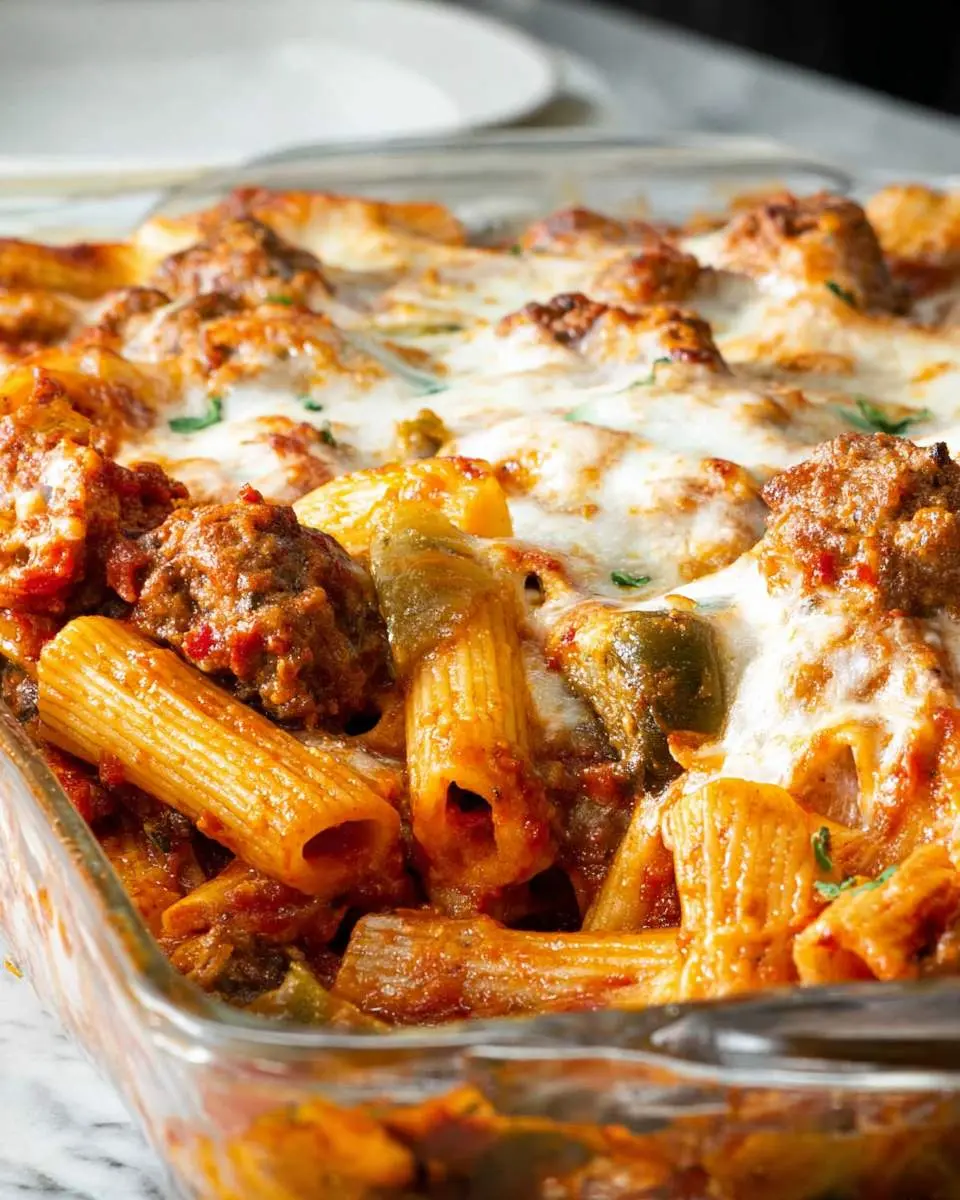

Baked Rigatoni and Sausage
Ingredients
Equipment
Method
- Bring a large pot of water to a rolling boil. Add 2 tablespoons kosher salt - it should taste like the sea. Add rigatoni and cook 2 minutes less than package directions for al dente (usually about 10 minutes). The pasta will finish cooking in the oven. Drain well, do not rinse, and set aside.
- Heat a large oven-safe skillet or Dutch oven over medium-high heat. Add the sausage, breaking it into walnut-sized chunks with a wooden spoon. Cook without stirring for 3 minutes to develop a crust, then continue cooking and breaking apart until browned and cooked through, about 6 minutes total. Transfer to a plate with a slotted spoon, leaving the rendered fat behind.
- Reduce heat to medium. Add onion to the fat in the pan and cook, scraping up any browned bits, until softened and translucent at the edges, about 5 minutes. Add garlic and red pepper flakes (if using) and cook until fragrant, 30 seconds to 1 minute - do not let the garlic brown.
- Add crushed tomatoes, oregano, and half the torn basil. Season with 1 teaspoon salt and several grinds of black pepper. Return sausage to the pan, stir to combine, and bring to a gentle simmer. Cook uncovered for 10 minutes, stirring occasionally, until slightly thickened. Taste and adjust seasoning.
- Preheat oven to 400 degrees F. Add the drained rigatoni to the sauce and toss until every tube is coated. If your skillet isn't oven-safe, transfer to a 9x13 inch baking dish now.
- Dollop ricotta evenly over the surface, then use the back of a spoon to nestle some of it down into the pasta. Scatter shredded mozzarella and half the Parmigiano over top. Drizzle with olive oil.
- Bake uncovered until the cheese is melted, spotty brown, and the edges are bubbling vigorously, 20 to 25 minutes. Let rest 10 minutes before serving - this sets the cheese and prevents mouth burns. Scatter remaining basil and Parmigiano over top.
Notes
Conclusion
This baked rigatoni and sausage has become my answer to too many questions: what feeds a crowd, what comforts a hard week, what smells like home. I hope it finds a place in your rotation too. For another baked pasta that carries the same generous spirit, my baked ziti waits with open arms.