Fish Sandwich
The smell of hot oil and cornmeal hitting the pan takes me straight back to my grandmother’s cramped kitchen in coastal Carolina. She never called it anything fancy, but her fish sandwich was the stuff of family legend , crispy, messy, and somehow always served on the softest white bread she’d hidden from the rest of us.
I was twelve when she first let me stand on a step stool and watch the fillets curl and turn golden. “Patience,” she’d say, though she had none herself. That first bite , the shatter of crust giving way to flaky white fish, the tang of homemade sauce dripping down my wrist , ruined me for all others.
Years later, after countless failed attempts and one memorable grease fire, I finally cracked her code. This version honors her memory while borrowing the bold sandwich energy I love from my Banh Mi Turkey Burgers. It’s become my weekend ritual, and I think she’d approve.
What You Need to Make This Recipe
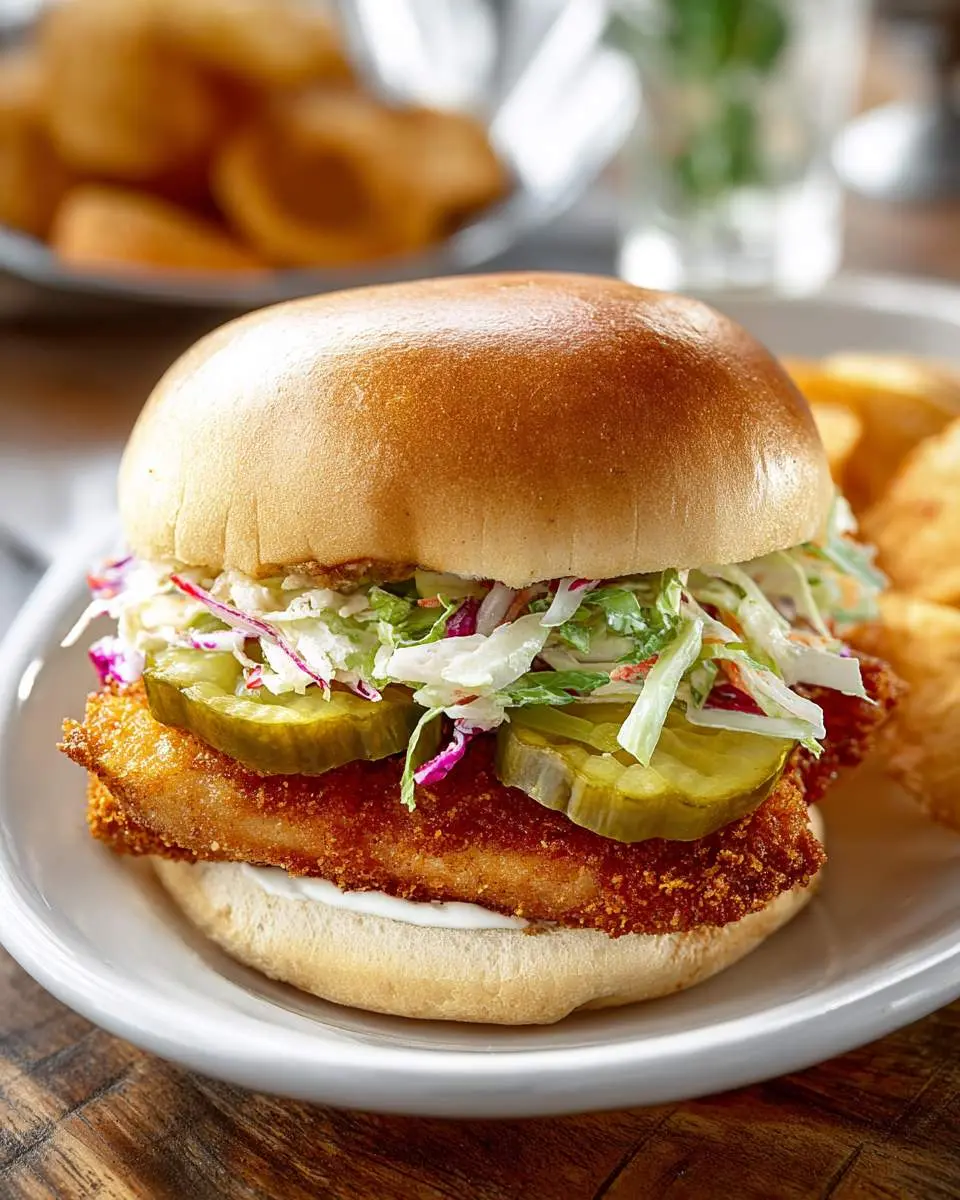
The foundation of any great fish sandwich starts with the fish itself , I use thick-cut cod or haddock, something that won’t fall apart when it meets hot oil. The cornmeal dredge is non-negotiable; it creates that audible crunch you want, not the sad, soggy coating that flour alone delivers. For the tartar sauce, I splurge on good cornichons and real mayonnaise , the bright, briny pop against the rich fried fish is what separates homemade from drive-thru. A soft brioche bun, barely toasted, completes the architecture without competing. If you’re building a sandwich spread, my California Burrito uses the same principle of balancing richness with fresh crunch.
How to Make Fish Sandwich
I start by making the tartar sauce early, letting it sit in the fridge while everything else comes together , the flavors need time to marry, and cold sauce against hot fish is part of the magic. The fish gets a quick buttermilk bath, just long enough to tenderize and help the dredge cling. When I mix the cornmeal with spices, I use my fingers to break up any clumps; uneven coating means uneven crunch.
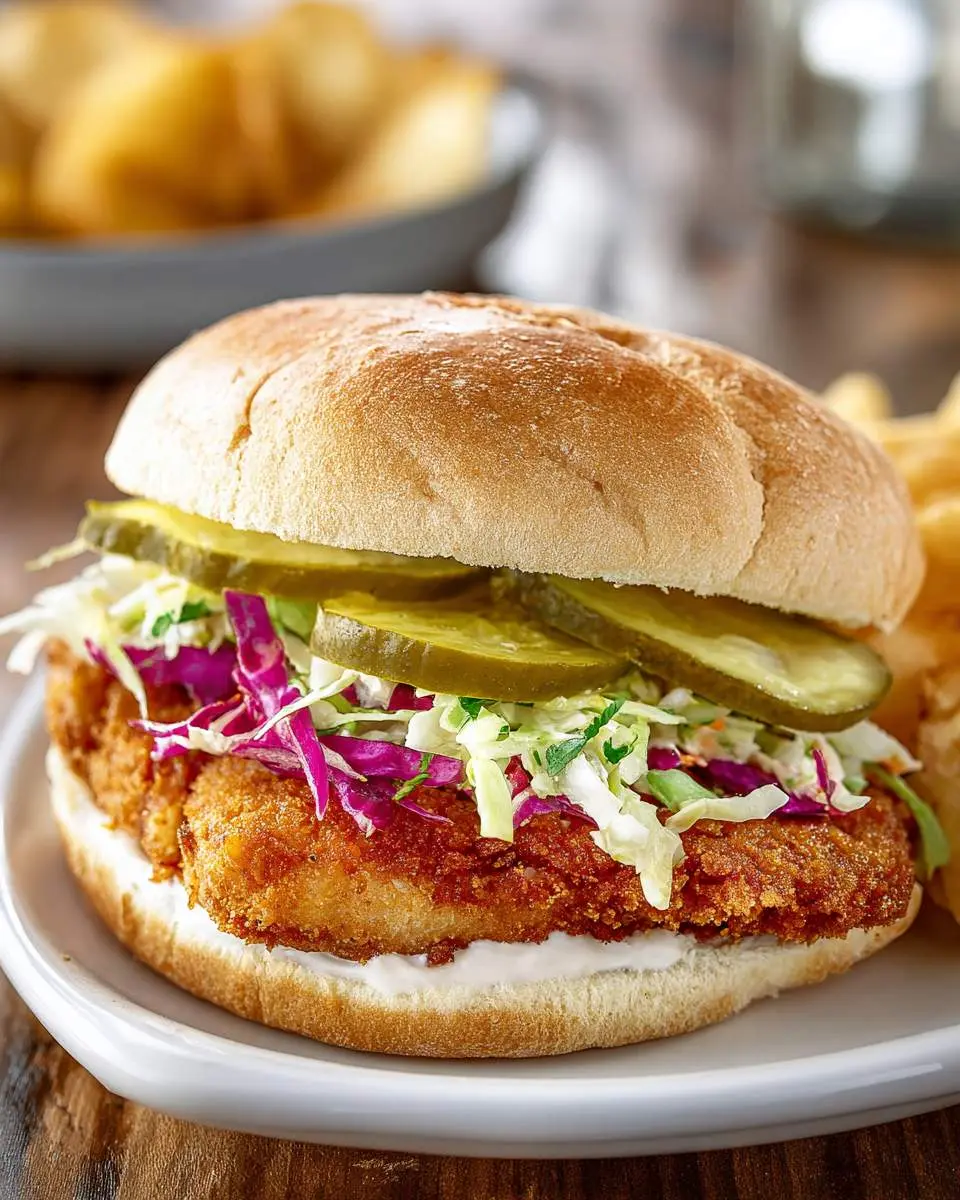
The oil hits 375°F, and I mean exactly , my instant-read thermometer lives for this moment. The fillets slide in with a satisfying hiss, and I don’t touch them for a full three minutes. That undisturbed contact with the hot oil builds the crust. Flip once, watch the edges turn the color of autumn wheat, then onto a wire rack. Never paper towels; they steam the bottom into sadness. The assembly happens fast: warm bun, a swipe of sauce, lettuce for structural integrity, the fish, more sauce, the crown. I’ve served these alongside my Lobster Roll Sandwich at summer gatherings, and the fish sandwich always disappears first.
Pro Tips
Chill your dredge station. I keep the cornmeal mixture in the freezer for twenty minutes before coating. Cold particles hit hot oil more aggressively, creating a lacier, shatter-prone crust that stays crisp longer.
Score thick fillets lightly. A few shallow cuts across the grain prevent the fish from curling in the oil, ensuring even cooking and a flat surface that sits properly on the bun.
Rest your sauce overnight. The tartar sauce reaches its peak after eight hours. The shallot mellows, the capers bloom, and what was good becomes genuinely memorable.
My Secret Trick: I add a teaspoon of the hot frying oil to my tartar sauce right before serving. It sounds wrong, but that whisper of seasoned fat bridges the gap between condiment and fish in a way nothing else does.
How to Store Fish Sandwich
- Store assembled sandwiches in the refrigerator for up to 24 hours in an airtight container, though the bread will soften.
- Store components separately for best results: fish in one container, sauce in another, buns at room temperature in a bread bag.
- Refrigerate cooked fish fillets for up to 3 days at 40°F or below, wrapped loosely in foil to maintain some airflow.
- Freeze cooked fillets on a baking sheet until solid, then transfer to freezer bags with parchment between layers for up to 1 month.
- Reheat frozen or refrigerated fish in a 400°F oven on a wire rack for 12-15 minutes until crisp again; avoid the microwave entirely.
- Do not freeze assembled sandwiches; the sauce degrades and the lettuce becomes irreversibly wilted.
Nutritional Benefits
This fish sandwich delivers real nutritional value beneath its indulgent reputation. The cod provides lean protein and substantial omega-3 fatty acids, particularly EPA and DHA, which support heart and cognitive health in ways that land-based proteins simply cannot match. The cornmeal crust, when fried at proper temperature, absorbs minimal oil and contributes whole grain fiber that keeps the meal satisfying longer than a standard breading would.
FAQs
What type of fish works best for a crispy fish sandwich?
Mild, firm white fish like cod, haddock, or catfish hold their shape and provide clean flavor. Avoid delicate varieties like sole or tilapia, which fall apart during frying and lack the meaty texture that stands up to tartar sauce and bun.
Can I bake the fish instead of frying it?
You can, but the result is fundamentally different. Baked versions work with a light oil spray at 425°F for 18-20 minutes, turning once. The crust becomes cracker-like rather than shatteringly crisp, and the overall sandwich feels lighter but less decadent.
Why does my tartar sauce taste bland?
Under-seasoning and insufficient acid are the usual culprits. Taste aggressively after mixing, then let it rest. The flavors concentrate and bloom as the shallot and pickle brine permeate the mayonnaise base.
How do I keep the fish crispy until serving?
A wire rack set over a baking sheet in a 200°F oven works perfectly. Never stack fillets or rest them on absorbent surfaces. Circulating dry heat preserves the crust’s integrity for up to 30 minutes without meaningful degradation.

Crispy Fish Sandwich with Homemade Tartar Sauce
Ingredients
Equipment
Method
- In a small bowl, stir together mayonnaise, pickle relish, lemon juice, Dijon mustard, and black pepper until well combined. Cover and refrigerate until ready to use. This gets better after 15 minutes of resting.
- In a shallow dish, whisk together flour, cornmeal, and Old Bay. In another shallow dish, combine buttermilk and hot sauce if using. Pat fish fillets completely dry with paper towels - this is crucial for crispiness.
- Working with one piece at a time, dredge fish in the flour-cornmeal mixture, shaking off excess. Dip into buttermilk, letting excess drip off, then return to the flour mixture and press firmly to coat. Place breaded fish on a wire rack and let rest for 10 minutes - this helps the coating adhere.
- Pour oil into a large skillet to a depth of about 1 inch. Heat over medium-high until it reaches 350°F on a thermometer. The oil should shimmer and a pinch of flour should sizzle immediately.
- Carefully add 2 fillets to the oil, laying them away from you. Fry for 3-4 minutes per side, turning once, until deep golden brown and the internal temperature reaches 145°F. Transfer to a clean wire rack set over a baking sheet. Repeat with remaining fillets, letting the oil return to 350°F between batches.
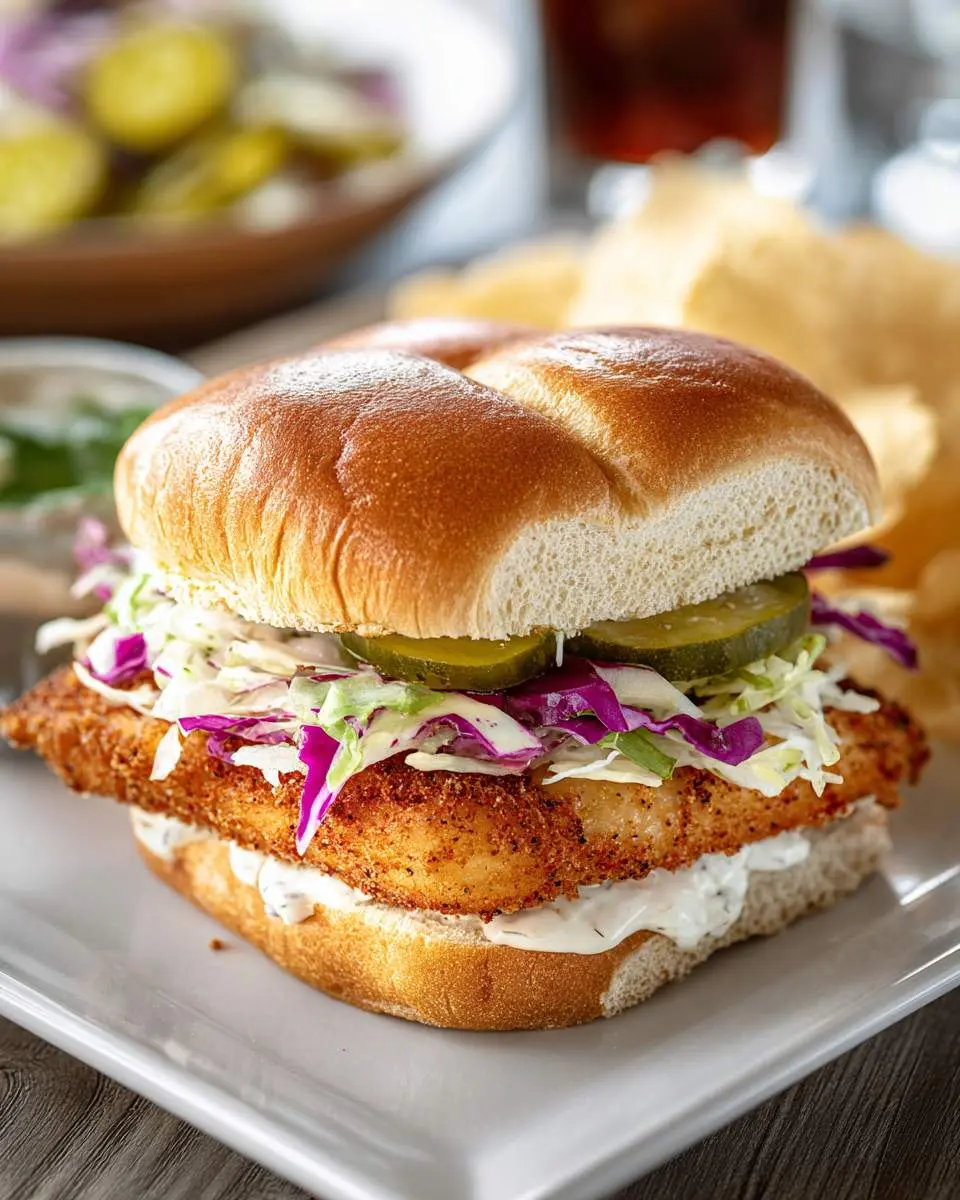
- Spread tartar sauce on both cut sides of each bun. Layer lettuce on the bottom bun, add the hot fish fillet, top with pickle slices, and close with the top bun. Serve immediately while the fish is crisp.
Notes
Conclusion
This fish sandwich has earned its place in my regular rotation not because it’s easy , though it is , but because it delivers something genuine. Every crunch connects me back to that kitchen, that patient impatience, that first perfect bite. Make it for someone you love, or just for yourself on a quiet Friday. And if you’re craving more sandwich inspiration, my Tuna Melt Sandwich carries that same comfort-forward energy into weeknight territory.