
Ingredients
Equipment
Method
- In a small bowl, combine the 1/4 cup warm water with rolled oats, flax seeds, sunflower seeds, pumpkin seeds, and chia seeds. Stir well and set aside to soak for at least 15-20 minutes while you prepare the rest of the dough. This softens the grains and prevents them from absorbing too much moisture from the dough later.
- In a large mixing bowl (or stand mixer bowl), combine the 1 1/2 cups warm water, active dry yeast, and honey. Stir gently and let sit for 5-10 minutes until the mixture becomes foamy, indicating the yeast is active.
- In a separate bowl, whisk together the bread flour, whole wheat flour, rye flour, vital wheat gluten (if using), and salt.
- Add the soaked grain mixture (including any remaining water) and the olive oil to the activated yeast mixture. Gradually add the dry flour mixture to the wet ingredients, mixing with a wooden spoon or a dough hook on low speed until a shaggy dough forms and all flour is incorporated.
- Turn the dough out onto a lightly floured surface and knead by hand for 8-10 minutes, or use a stand mixer with a dough hook on medium-low speed for 6-8 minutes, until the dough is smooth, elastic, and passes the windowpane test (you should be able to stretch a small piece thin enough to see light through it without tearing).
- Lightly grease a clean large bowl with olive oil. Place the dough in the bowl, turning it once to coat the entire surface with oil. Cover the bowl with plastic wrap or a clean kitchen towel and let it rise in a warm, draft-free place for 1 to 1.5 hours, or until doubled in size.
- Gently punch down the risen dough to release the air. Turn it out onto a lightly floured surface. Flatten the dough into a rectangle, about 9x12 inches. Fold the short ends towards the middle, then roll the dough tightly from one long end to the other to form a log. Pinch the seam closed.
- Lightly grease a 9x5-inch loaf pan. Place the shaped dough seam-side down into the prepared loaf pan. Cover the pan loosely with plastic wrap or a clean kitchen towel and let it rise in a warm, draft-free place for another 45-60 minutes, or until the dough has nearly doubled in size and crests over the edge of the pan.
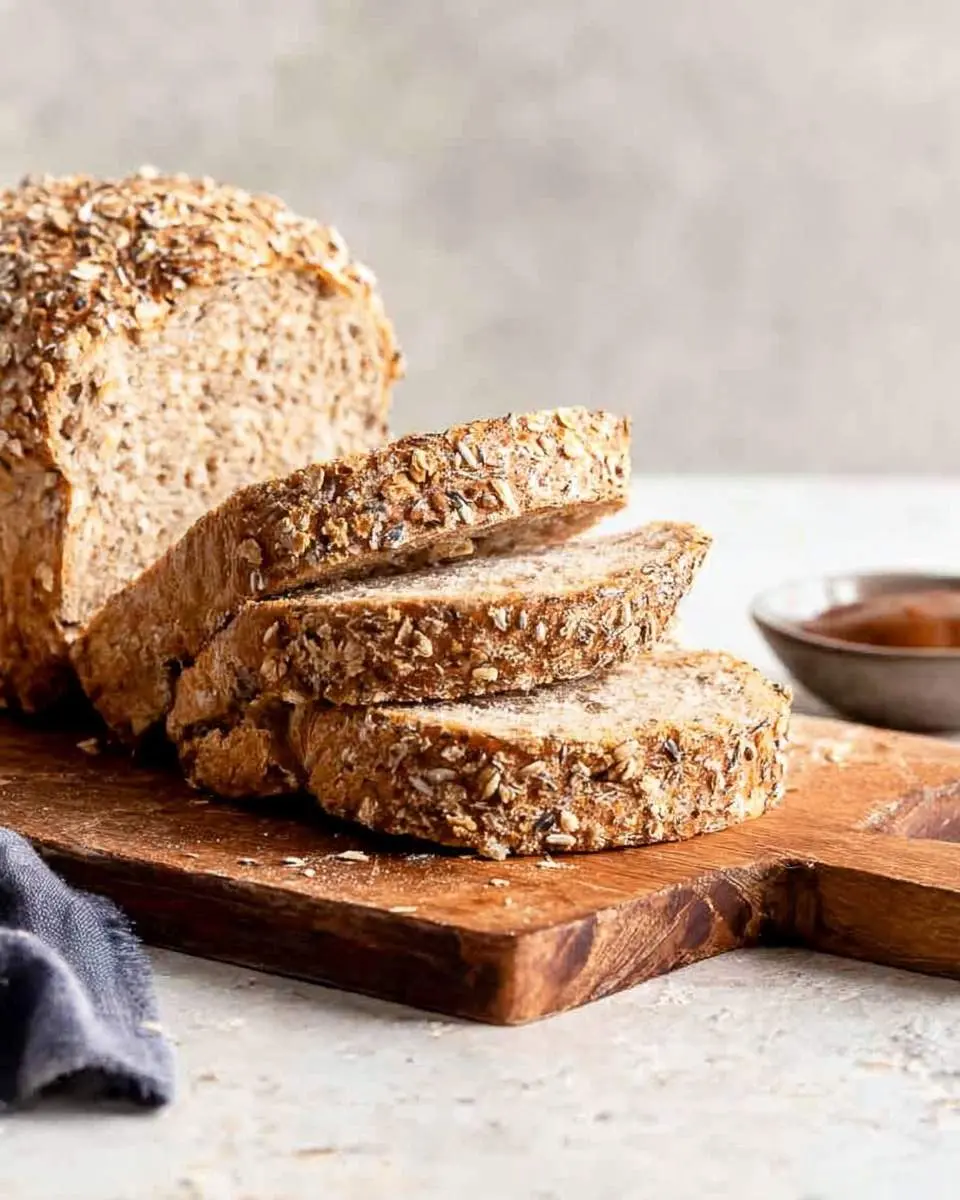
- About 15 minutes before the end of the second rise, preheat your oven to 375°F (190°C). If desired, lightly brush the top of the risen loaf with water and sprinkle with extra rolled oats, flax seeds, and sunflower seeds for a decorative and textured crust.
- Place the loaf pan in the preheated oven. Bake for 30-35 minutes, or until the crust is golden brown and the internal temperature reaches 200-210°F (93-99°C) when measured with an instant-read thermometer. If the top browns too quickly, you can loosely tent it with aluminum foil.
- Carefully remove the bread from the oven and immediately turn it out onto a wire rack to cool completely before slicing (about 1.5-2 hours). Slicing hot bread can make it gummy.
Notes
Storage: Store leftover Multigrain Bread at room temperature in an airtight container or bread bag for up to 3-4 days. For longer storage, slice the cooled bread and freeze in a freezer-safe bag for up to 3 months.
Variations: Feel free to experiment with different grains and seeds! You can add sesame seeds, millet, or even a tablespoon of cooked quinoa to the soak.
Vital Wheat Gluten: While optional, vital wheat gluten helps give whole grain breads a better rise and a lighter, chewier texture by boosting the protein content.
Variations: Feel free to experiment with different grains and seeds! You can add sesame seeds, millet, or even a tablespoon of cooked quinoa to the soak.
Vital Wheat Gluten: While optional, vital wheat gluten helps give whole grain breads a better rise and a lighter, chewier texture by boosting the protein content.