
Ingredients
Equipment
Method
Prepare the Levain (8-12 hours prior)
- In a small jar or bowl, combine the 20g active sourdough starter, 40g bread flour, 10g whole wheat flour, and 50g water for the levain. Mix thoroughly until no dry spots remain. Cover loosely and let it sit at room temperature (70-75°F / 21-24°C) for 8-12 hours, or until it has doubled in size, is very bubbly, and passes the float test (a small spoonful floats in water).
Mixing the Dough
- In a large mixing bowl, combine the 400g bread flour, 50g whole wheat flour, and 320g lukewarm water for the main dough. Mix with your hands or a dough scraper until no dry flour remains and a shaggy dough forms. Cover the bowl with a clean kitchen towel or plastic wrap and let it rest for 30 minutes. This process, called autolyse, allows the flour to fully hydrate.
- After the autolyse, add the 100g active levain and 30g honey to the dough. Incorporate them into the dough by gently squeezing and folding until evenly distributed. This may take a few minutes and feel a bit messy.
- Sprinkle the 10g fine sea salt over the dough. Work the salt into the dough by folding and squeezing for another 2-3 minutes until fully incorporated. The dough will become smoother and more cohesive.
- Gently spread the 50g rolled oats over the surface of the dough. Carefully fold the oats into the dough, trying to distribute them as evenly as possible without overworking the dough. Cover the bowl.
Bulk Fermentation (First Rise)
- Over the next 3-4 hours (depending on your kitchen temperature, aiming for a total bulk fermentation of 4.5-5.5 hours at 75-78°F / 24-25°C), perform 4-5 sets of stretch and folds at 30-minute intervals. For each set, wet your hands slightly, grab a portion of the dough from one side, stretch it upwards, and fold it over to the opposite side. Rotate the bowl and repeat this 3-4 times until all sides have been stretched and folded. Cover the bowl between sets.
- After the last set of stretch and folds, let the dough rest for the remainder of the bulk fermentation period until it has increased in volume by about 20-30% and shows signs of activity (some bubbles, jiggly texture).
Shaping the Loaf
- Lightly flour your work surface. Gently turn the dough out onto the surface. Using a dough scraper and light hands, gently pre-shape the dough into a loose round (boule). Allow it to rest, uncovered, for 20 minutes to relax the gluten.
- Lightly dust your banneton basket with rice flour and some extra rolled oats. Gently flour the top of your pre-shaped dough. Flip the dough over so the floured side is on the work surface. Shape the dough into your desired final loaf shape (round or oval), creating tension on the surface. Place the shaped dough, seam-side up, into the prepared banneton.
- Cover the banneton with a clean kitchen towel or plastic wrap. Refrigerate the dough for 12-18 hours (or up to 24 hours). This slow, cold proof develops flavor and makes the dough easier to handle and score.
Baking the Bread
- About 1 hour before you plan to bake, place your Dutch oven (with the lid on) into your oven. Preheat the oven to 500°F (260°C) for at least 30-45 minutes.
- Once preheated, carefully remove the hot Dutch oven from the oven. Gently invert the cold dough from the banneton directly into the hot Dutch oven. Lightly spray the dough with water (optional, for extra steam). Using a sharp knife or lame, score the top of the dough with your desired pattern (e.g., a single long slash, a cross, or an ear pattern). Immediately cover the Dutch oven and return it to the oven. Reduce the temperature to 450°F (232°C) and bake for 30 minutes.
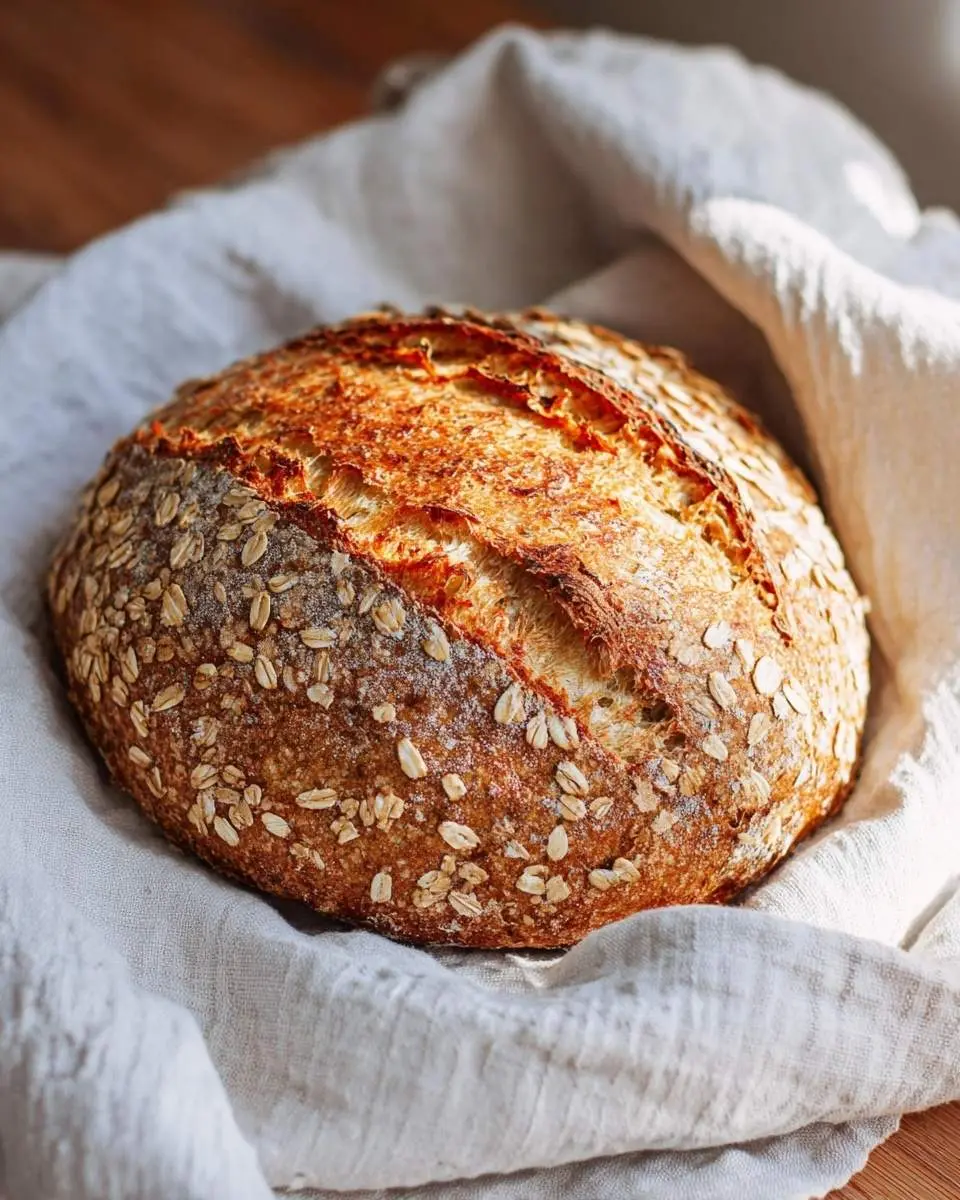
- After 30 minutes, carefully remove the lid from the Dutch oven. Continue to bake, uncovered, for another 15-20 minutes, or until the crust is a deep golden brown and the internal temperature reaches 200-210°F (93-99°C).
- Carefully remove the bread from the Dutch oven and place it on a wire rack to cool completely for at least 1-2 hours before slicing. Slicing too early will result in a gummy texture.
Notes
Sourdough baking involves long fermentation periods not included in the 'prep_time' or 'total_time' which represent active hands-on work. Ensure your sourdough starter is very active and healthy for best results. The timing for bulk fermentation is highly dependent on your kitchen temperature and starter strength; watch the dough, not just the clock. For added crunch, you can toast the rolled oats lightly before incorporating them into the dough.