
Ingredients
Equipment
Method
Day 1: Preparing the Dough
- Prepare the Levain (8-12 hours before mixing): In a small bowl, combine the active sourdough starter, bread flour, and warm water. Mix until no dry spots remain. Cover loosely and let it sit at room temperature (70-75°F / 21-24°C) until it is very active, bubbly, and passes the float test (a small spoonful floats in water), typically 8-12 hours.
- Mix the Dough (Autolyse - 30 minutes): In a large mixing bowl, combine the warm water and the ripe levain. Whisk gently to break up the levain. Add the bread flour and mix with a rubber spatula or your hand until all the flour is hydrated and no dry clumps remain. Cover the bowl with plastic wrap or a damp kitchen towel and let it rest for 30 minutes (autolyse). This step allows the flour to fully hydrate.
- Add Salt and Olive Oil (5 minutes): After the autolyse, sprinkle the fine sea salt over the dough. Pour 30 grams of olive oil over the salt. Using wet hands, gently work the salt and olive oil into the dough for 2-3 minutes until fully incorporated. The dough will feel shaggy initially but will come together.
- First Set of Stretch and Folds (10 minutes): Lightly wet your hands. Grab a portion of the dough from one side, stretch it upwards, and fold it over to the opposite side of the bowl. Rotate the bowl a quarter turn and repeat this process 3-4 more times, until the dough tightens up. Cover the bowl.
- Bulk Fermentation with Folds (3-4 hours): Let the dough rest for 30 minutes. Repeat the stretch and fold process (Step 4). Perform 3-4 sets of stretch and folds in total, every 30-45 minutes for the first 2-3 hours of bulk fermentation. After the final fold, the dough should be noticeably smoother, more elastic, and slightly increased in volume.
- Cold Proof (12-24 hours): After the last set of folds and about 3-4 hours of bulk fermentation at room temperature, lightly oil the inside of a 9x13 inch baking pan. Gently transfer the dough into the prepared pan, trying not to deflate it too much. Drizzle a little olive oil over the top of the dough. Cover the pan tightly with plastic wrap or a lid and refrigerate for 12-24 hours. This slow, cold proof develops complex flavors and makes the dough easier to handle.
Day 2: Baking the Focaccia
- Bring to Room Temperature (2-3 hours): Remove the focaccia pan from the refrigerator 2-3 hours before you plan to bake. Leave it covered at room temperature to allow it to warm up and continue its final proof. The dough should visibly rise and become bubbly.
- Preheat Oven and Prepare Topping (30 minutes): About 30-45 minutes before baking, preheat your oven to 425°F (220°C) with a rack in the middle position. Drizzle 2 tablespoons of extra virgin olive oil generously over the surface of the dough.
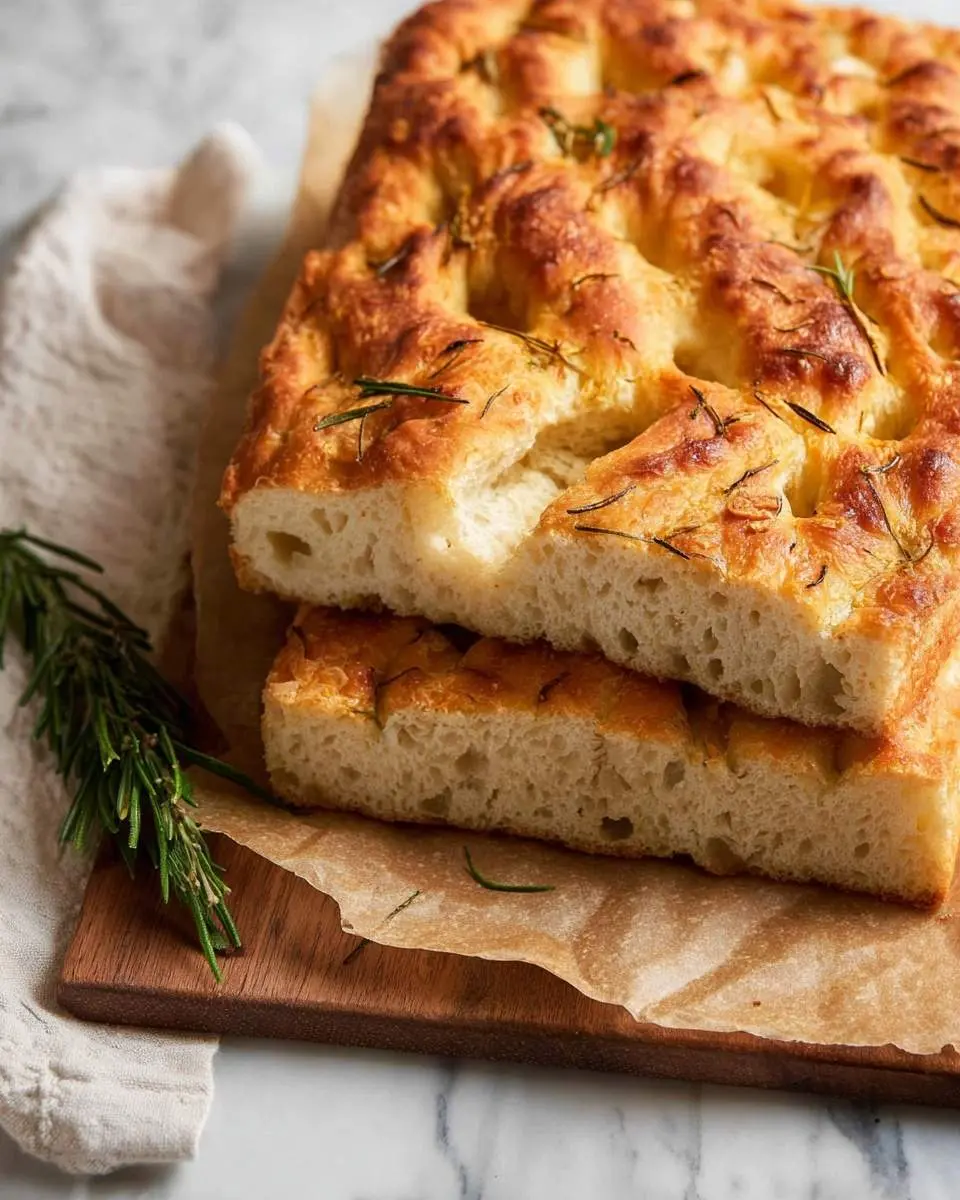
- Dimple and Top (5 minutes): With oiled fingertips, gently press down into the dough to create dimples, going all the way to the bottom of the pan without tearing the dough. Distribute the fresh rosemary leaves evenly over the surface, pressing some into the dimples. Sprinkle generously with flaky sea salt.
- Bake (25-30 minutes): Place the pan in the preheated oven. Bake for 25-30 minutes, or until the focaccia is golden brown on top and deeply golden on the bottom. If the top is browning too quickly, you can loosely tent it with aluminum foil.
- Cool (30 minutes): Carefully remove the focaccia from the pan and transfer it to a wire rack to cool completely for at least 30 minutes before slicing and serving. This prevents the bottom from getting soggy and allows the crumb to set.
Notes
For best results, use a high-protein bread flour (around 12-14%).
The float test for levain: Drop a small piece of levain into a cup of water. If it floats, it's ready. If it sinks, it needs more time.
Don't skip the cold proof! It significantly improves flavor and texture.
Storing: Sourdough focaccia is best enjoyed fresh on the day it's baked. Leftovers can be stored in an airtight container at room temperature for up to 2 days, or frozen for longer storage and reheated in the oven.
The float test for levain: Drop a small piece of levain into a cup of water. If it floats, it's ready. If it sinks, it needs more time.
Don't skip the cold proof! It significantly improves flavor and texture.
Storing: Sourdough focaccia is best enjoyed fresh on the day it's baked. Leftovers can be stored in an airtight container at room temperature for up to 2 days, or frozen for longer storage and reheated in the oven.