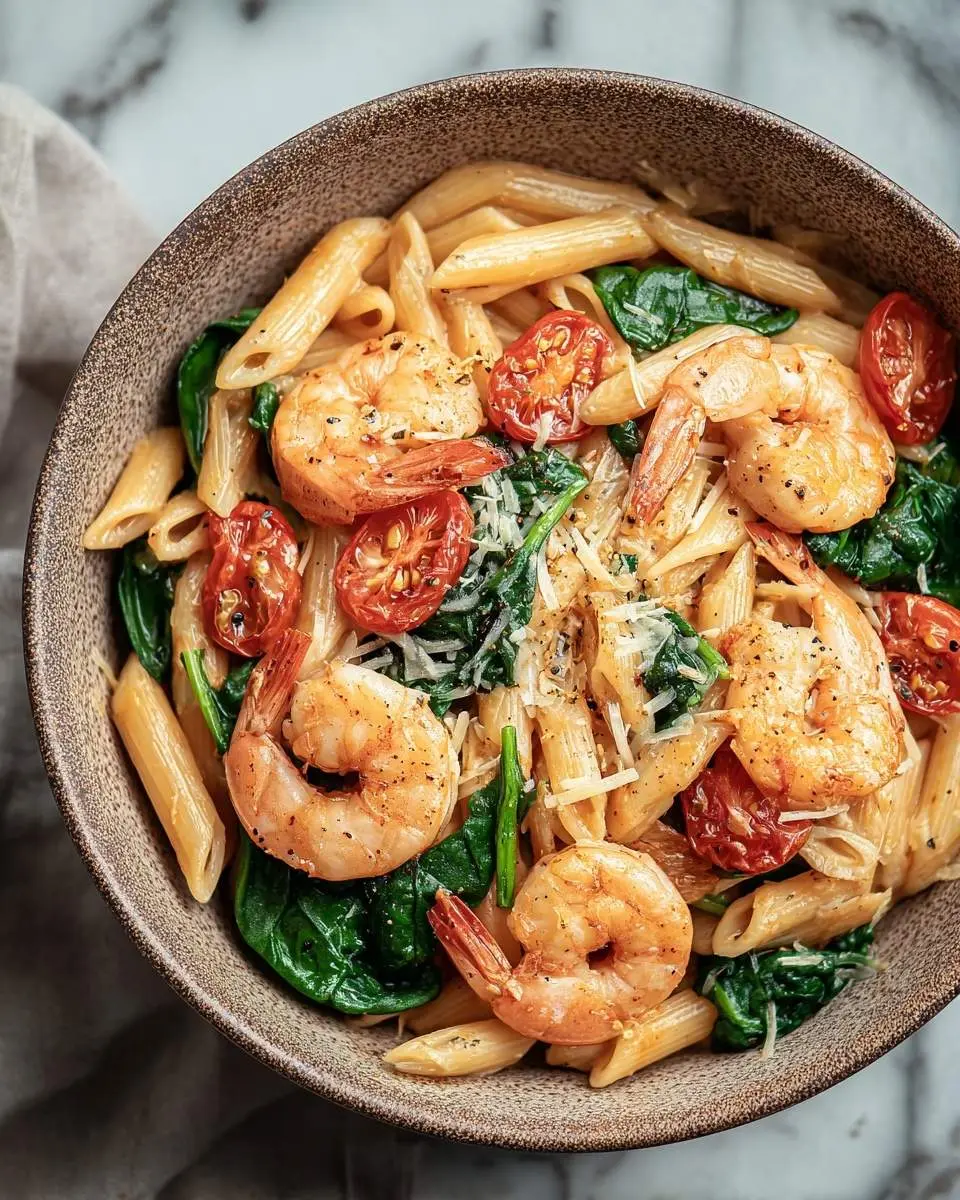

Ingredients
Equipment
Method
Prepare the Pasta
- Bring a large pot of salted water to a rolling boil. Add 1 tbsp olive oil to prevent sticking. Add the spaghetti and cook according to package directions until al dente. Reserve 1 cup of pasta water, then drain the pasta.
Cook the Shrimp
- While the pasta cooks, pat the shrimp dry with paper towels. In a medium bowl, toss the shrimp with 1 tbsp olive oil, garlic powder, red pepper flakes (if using), salt, and black pepper.
- Heat a large skillet over medium-high heat. Add the seasoned shrimp in a single layer and cook for 2-3 minutes per side, until pink and opaque. Do not overcrowd the pan; cook in batches if necessary. Remove the shrimp from the skillet and set aside.
Make the Sauce
- In the same skillet (no need to clean), add 2 tbsp olive oil and reduce heat to medium. Add the minced garlic and cook for 30 seconds until fragrant, being careful not to burn it.
- Add the halved cherry tomatoes to the skillet. Cook, stirring occasionally, for 5-7 minutes until they begin to soften and burst.
- Pour in the white wine (or chicken broth if omitting wine) and vegetable broth. Bring to a simmer and cook for 2-3 minutes, allowing the liquid to reduce slightly. Stir in the dried oregano and black pepper.
Combine and Finish
- Add the cooked and drained pasta to the skillet with the sauce. Toss to coat. If the sauce seems too thick, add a splash or two of the reserved pasta water until it reaches your desired consistency.
- Add the fresh spinach and cook, tossing constantly, until it wilts, about 1-2 minutes.
- Stir in the cooked shrimp, grated Parmesan cheese, and fresh lemon juice. Toss gently to combine and heat through for about 1 minute.
- Taste and adjust seasoning if needed.
Serve
- Divide the pasta among serving plates. Garnish with fresh chopped parsley and additional grated Parmesan cheese, if desired. Serve immediately.
Notes
For an extra layer of flavor, consider adding a squeeze of fresh lemon juice at the end. If you don't have fresh tomatoes, a can of diced tomatoes (drained) can be used, though fresh is preferred. Leftovers can be stored in an airtight container in the refrigerator for up to 2 days. Reheat gently to prevent shrimp from becoming rubbery.