Fried Cabbage and Sausage
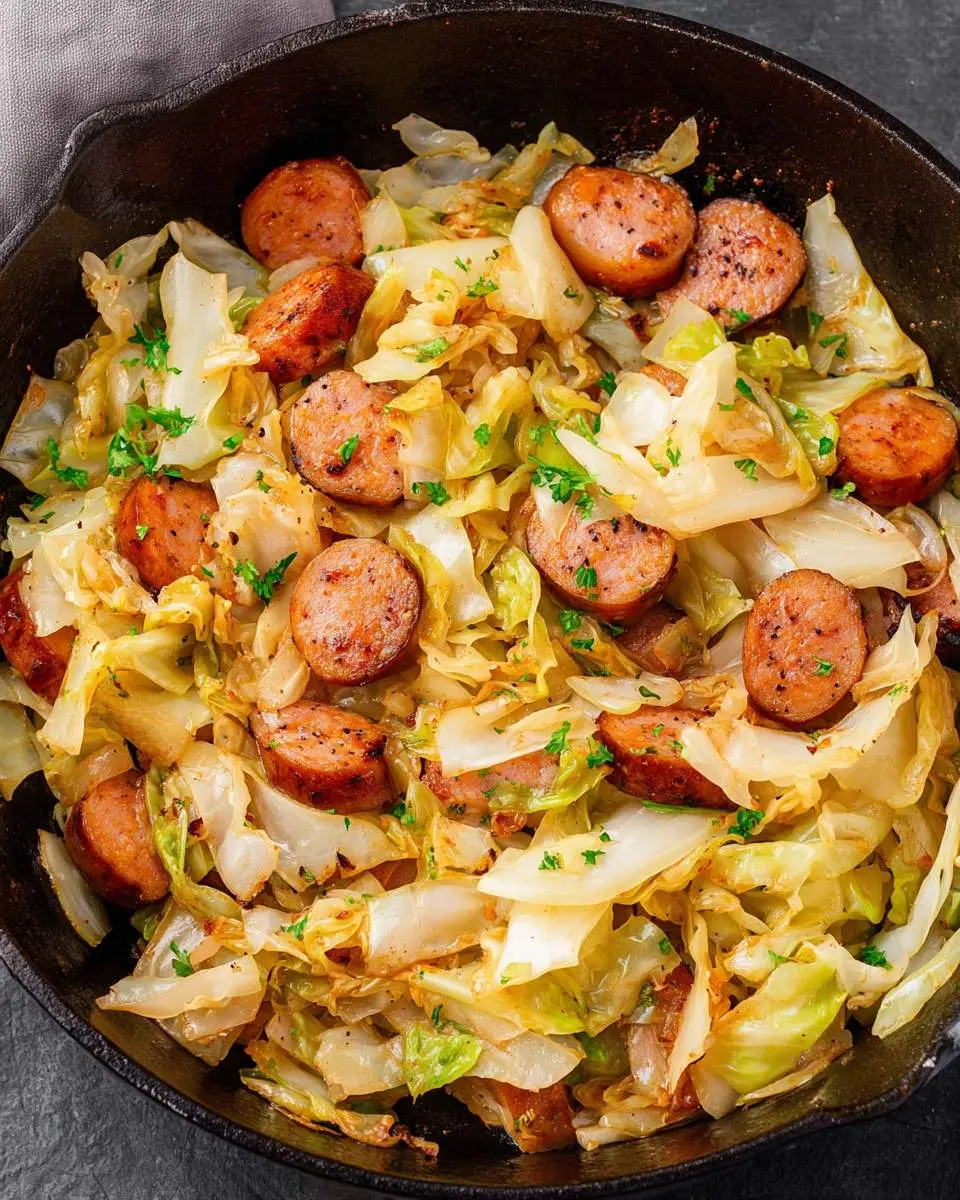
The smell of cabbage hitting a hot skillet takes me straight back to my grandmother’s kitchen in Ohio. That sizzle, that sweet-bitter edge turning golden — it’s the sound of dinner happening fast. I make Fried Cabbage and Sausage when I need something that feels like home but comes together in under thirty minutes.
Last Tuesday, I came home from a brutal rainstorm with nothing planned. The fridge held half a head of cabbage and some smoked sausage I’d forgotten about. Twenty minutes later, my husband walked in and said, “Whatever that is, I want it every week.”
This dish has that kind of power. Simple ingredients, big payoff. If you’re craving more comfort food with bold flavors, my piccata meatballs hit the same satisfying notes.
What You Need to Make This Recipe
Good cabbage matters more than you’d think. I grab a firm, heavy head — the outer leaves should snap, not bend. That density means it’ll hold up to high heat without turning to mush. The sausage is your flavor foundation, so I reach for smoked kielbasa or andouille, something with real character. A splash of apple cider vinegar at the end wakes everything up, cutting through the richness. For another weeknight winner built around ground meat and vegetables, try my Mediterranean ground beef and vegetables.
How to Make Fried Cabbage and Sausage
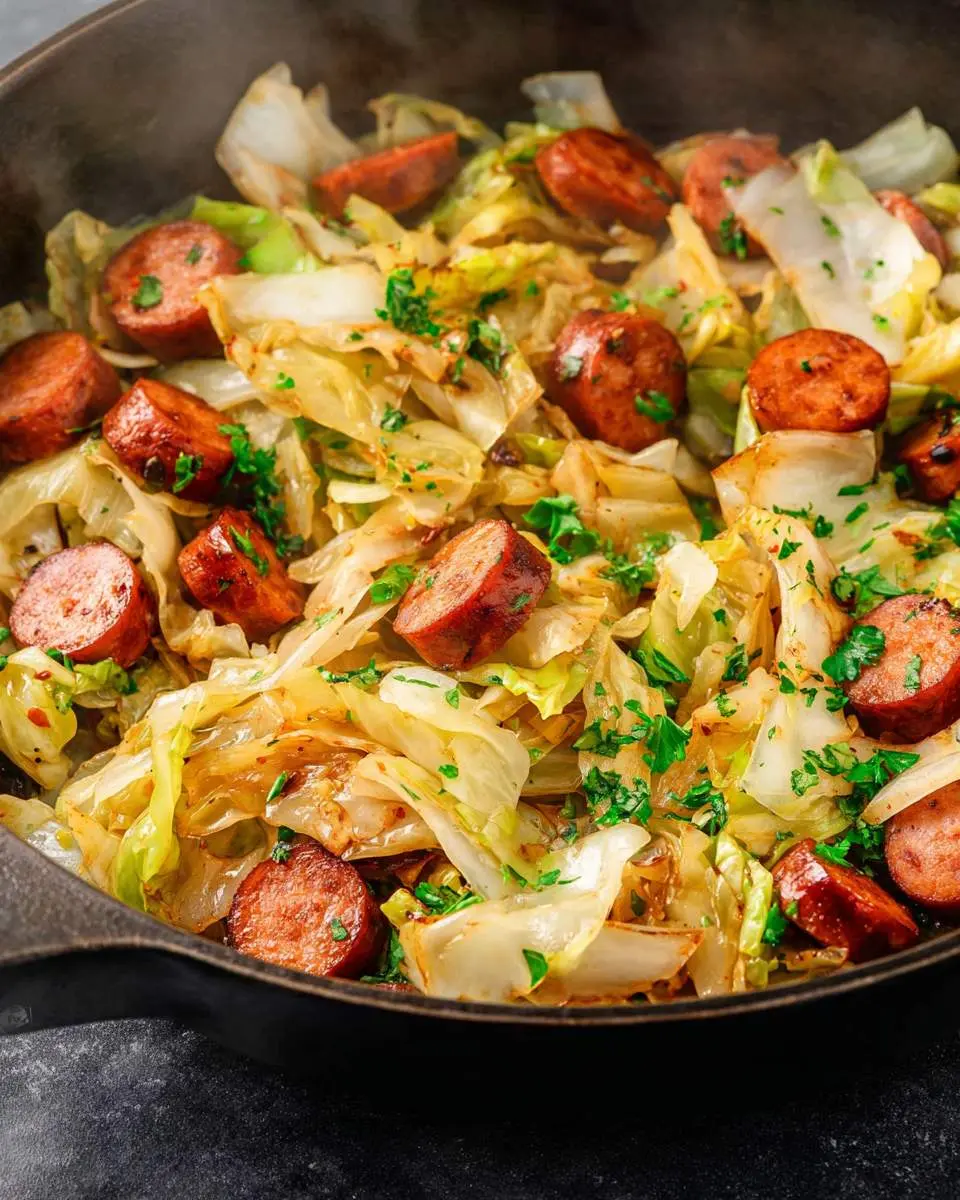
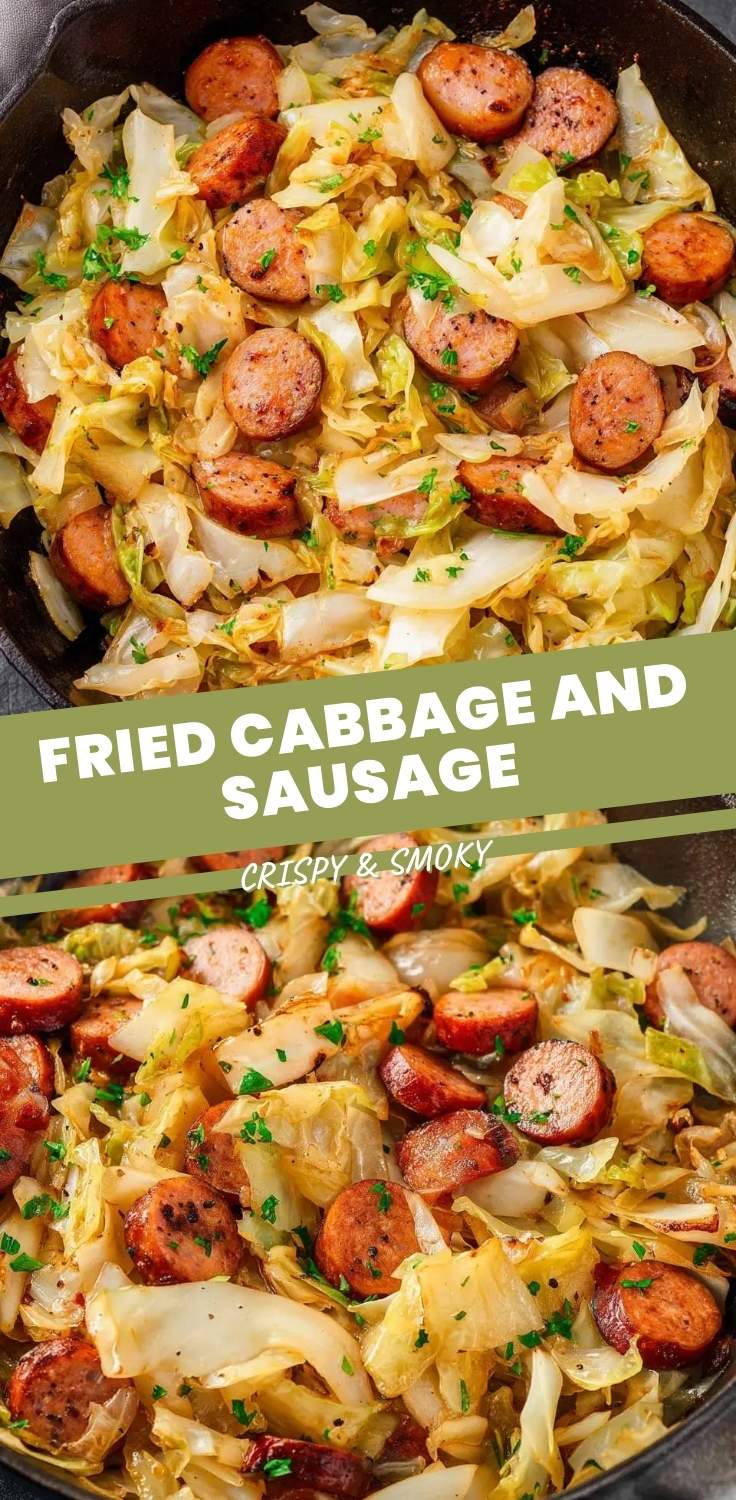
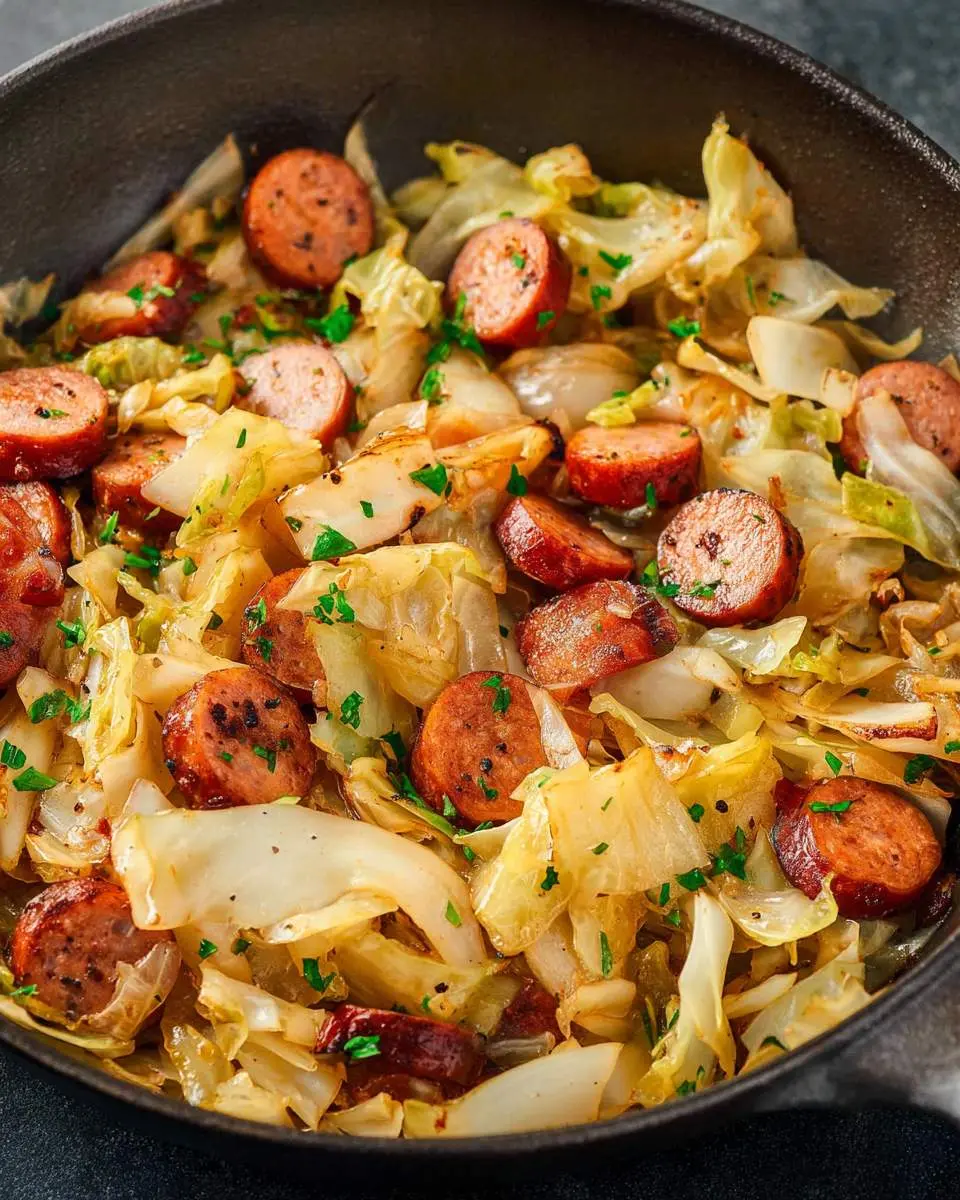
I start by slicing the sausage into thick coins and getting them searing in a heavy skillet. That fat renders out and becomes your cooking medium — don’t pour it off. Once the edges crisp and turn deep brown, I scoop the sausage out and let it rest. The cabbage goes in next, hitting that hot, seasoned fat. It sounds aggressive at first, loud and crackling, then softens into something quieter, sweeter. I stir occasionally, letting some pieces char while others stay tender. The sausage returns at the end, soaking up all those caramelized bits. If this one-pan approach speaks to you, my sausage and peppers follows the same philosophy.
Pro Tips
Don’t crowd the pan. Cabbage needs room to steam and then fry. Pile it too high and it simmers in its own moisture, turning gray and sad.
Cut against the core. Slicing perpendicular to that tough center gives you tender ribbons instead of chewy strips. The texture difference is dramatic.
Let it rest. Five minutes off the heat lets the flavors marry. The vinegar mellows, the sausage relaxes, and you get a more cohesive bite.
My Secret Trick: I save a tablespoon of the rendered sausage fat and drizzle it over the finished dish right before serving. That fresh hit of smoky fat makes everything taste like it just came off the fire.
How to Store Fried Cabbage and Sausage
- Refrigerate in an airtight container for up to 4 days. The flavors actually improve overnight.
- Freeze in portioned containers for up to 2 months. Thaw overnight in the refrigerator before reheating.
- Reheat in a skillet over medium heat with a splash of water to revive the texture. Microwave works in a pinch but softens the cabbage more.
Nutritional Benefits
Cabbage brings serious value to Fried Cabbage and Sausage — it’s loaded with vitamin C and fiber while staying low in calories. The fermented edge from the vinegar also supports digestion, making this feel lighter than you’d expect from such a satisfying plate.
FAQs
What kind of sausage works best?
Smoked kielbasa is my go-to for its deep flavor and firm texture. Andouille brings welcome heat. Avoid fresh breakfast sausage — it crumbles and doesn’t render the same rich fat.
Can I make this with pre-shredded cabbage?
You can, but the pieces are often too thin and dry out quickly. I prefer hand-slicing a fresh head for better control over thickness and moisture retention.
Why is my cabbage turning gray?
The pan was too crowded or the heat too low. Cabbage needs high heat and space to caramelize properly. Work in batches if your skillet is smaller than 12 inches.
Is Fried Cabbage and Sausage keto-friendly?
Absolutely. With roughly 8 grams of net carbs per serving, this fits comfortably into most low-carb approaches. The fat from the sausage keeps it satisfying without added starches.

Fried Cabbage and Sausage
Ingredients
Equipment
Method
- Dice the bacon, slice the sausage, chop the cabbage, and slice the onion. Keep them in separate piles - you'll add them at different times.
- Place a large cold skillet over medium heat. Add the diced bacon and cook until crisp and the fat has rendered, about 6-8 minutes. Use a slotted spoon to transfer the bacon to a paper towel-lined plate, leaving the fat in the pan. Add the sausage slices in a single layer and cook until deeply browned on both sides, about 4 minutes per side. Transfer to the plate with the bacon.
- Add the sliced onion to the skillet with the bacon-sausage drippings. Cook over medium heat, stirring occasionally, until softened and starting to turn golden at the edges, about 5 minutes. Add the minced garlic and cook for 30 seconds until fragrant.
- Pile in the chopped cabbage - it will look like too much but cooks down significantly. Add the smoked paprika, red pepper flakes if using, and a generous pinch of salt and pepper. Toss everything together and cook for 3 minutes until the cabbage begins to wilt.
- Pour in the chicken broth and apple cider vinegar. Scrape up any browned bits from the bottom of the pan. Cover and reduce heat to medium-low. Simmer for 8-10 minutes, stirring once halfway through, until the cabbage is tender but still has some bite.
- Uncover and increase heat to medium-high. Cook for 2-3 minutes to evaporate excess liquid. Return the bacon and sausage to the skillet, tossing to combine and warm through. Taste and adjust seasoning. Serve hot, sprinkled with fresh parsley, alongside crusty bread or over mashed potatoes to catch the flavorful juices.
Notes
Conclusion
Fried Cabbage and Sausage reminds me that the best dinners don’t require elaborate planning. They ask you to trust simple ingredients and pay attention while they transform. Make it once and you’ll find yourself reaching for cabbage and sausage without thinking. For another effortless one-pan meal, try my honey garlic kielbasa and veggies.