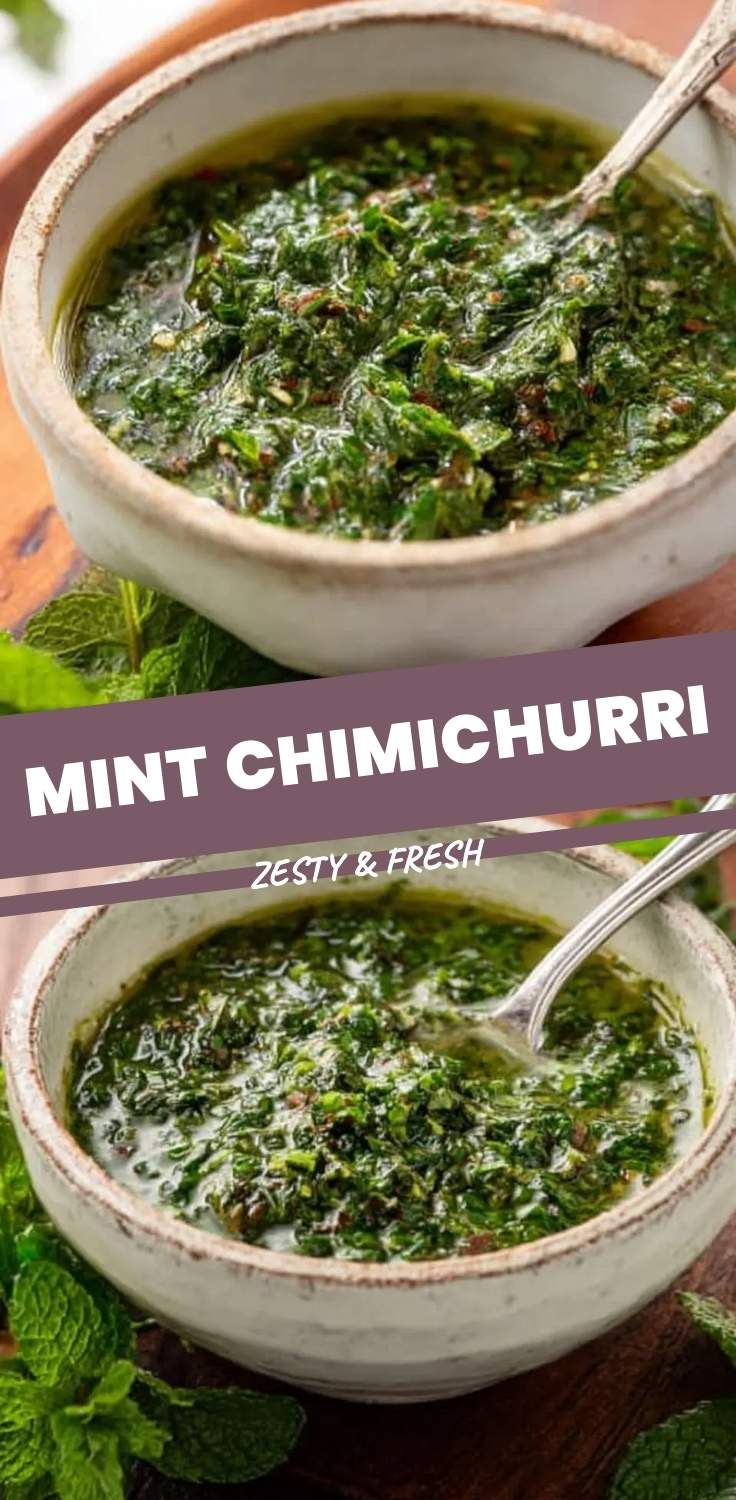
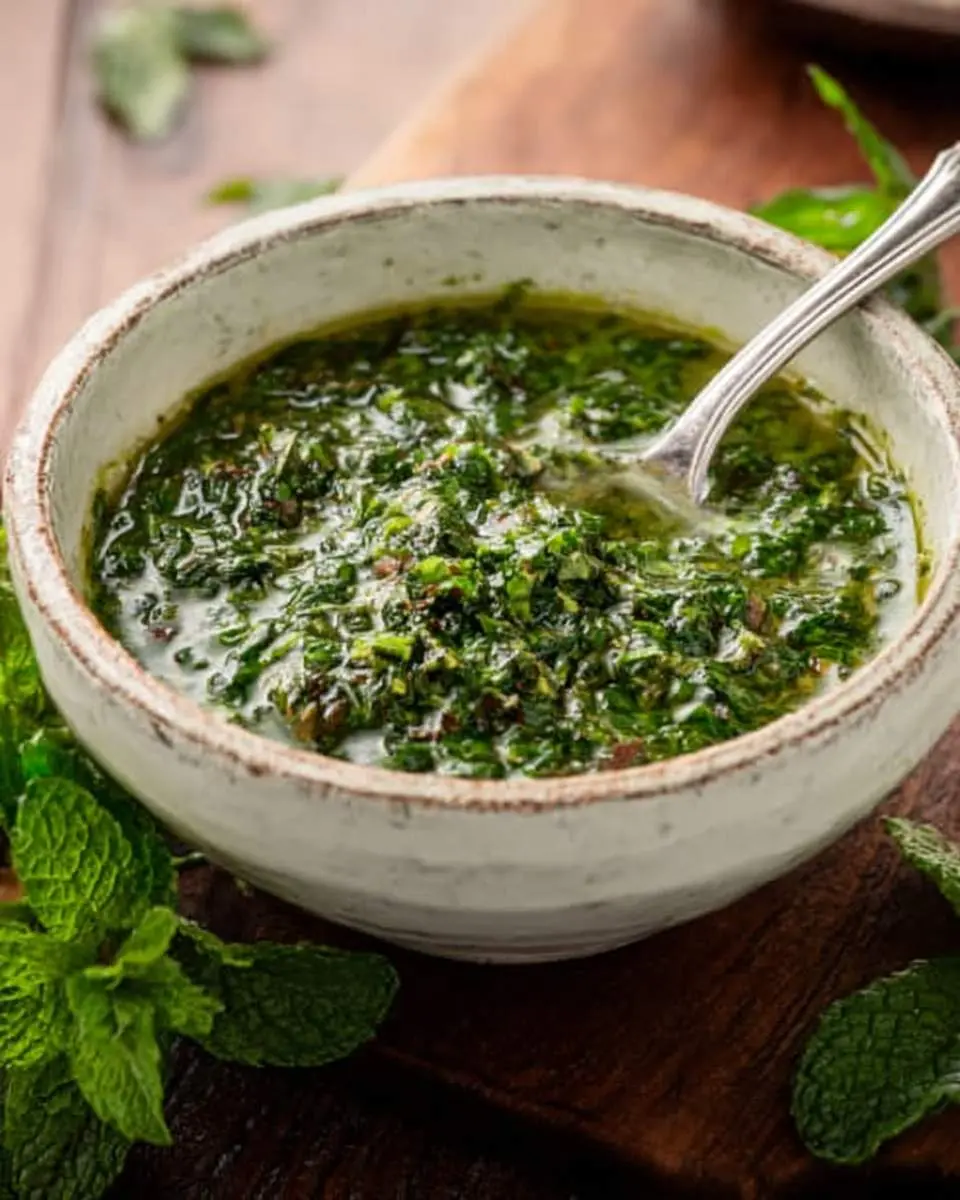
Mint Chimichurri
The first time I tasted something that made me stop mid-bite and just breathe, it was a green sauce in a tiny Buenos Aires parrilla. That bright, herbaceous punch changed how I thought about condiments forever. Years later, I still chase that feeling, and my mint chimichurri comes closer than anything else I’ve spooned onto grilled meat.
Last summer, my neighbor brought over a leg of lamb from her father’s farm. I had nothing planned, just a bunch of mint threatening to wilt in my crisper and some garlic I’d braided back in June. What happened next felt like accident and intention colliding in the best way. We ate on my porch until the mosquitoes won.
That night taught me that the best sauces aren’t fussy. They’re urgent, made from what you have, and they demand to be shared. If you want another bold sauce in your rotation, my red pepper pesto has that same improvisational energy.
What You Need to Make This Recipe
Fresh mint is non-negotiable here, and I mean the kind that still has dew on it from the farmer’s market, not the sad plastic clamshell that’s been sitting under fluorescent lights for a week. It brings a cool sweetness that balances the raw garlic’s bite. Speaking of garlic, I use four fat cloves, smashed with the side of my knife until they surrender completely. The red wine vinegar matters more than you’d think, it wakes everything up without making the sauce sour. I’ve also become devoted to a creamy cauliflower sauce when I want something milder, but mint chimichurri is what I reach for when I need courage on my plate.
How to Make Mint Chimichurri
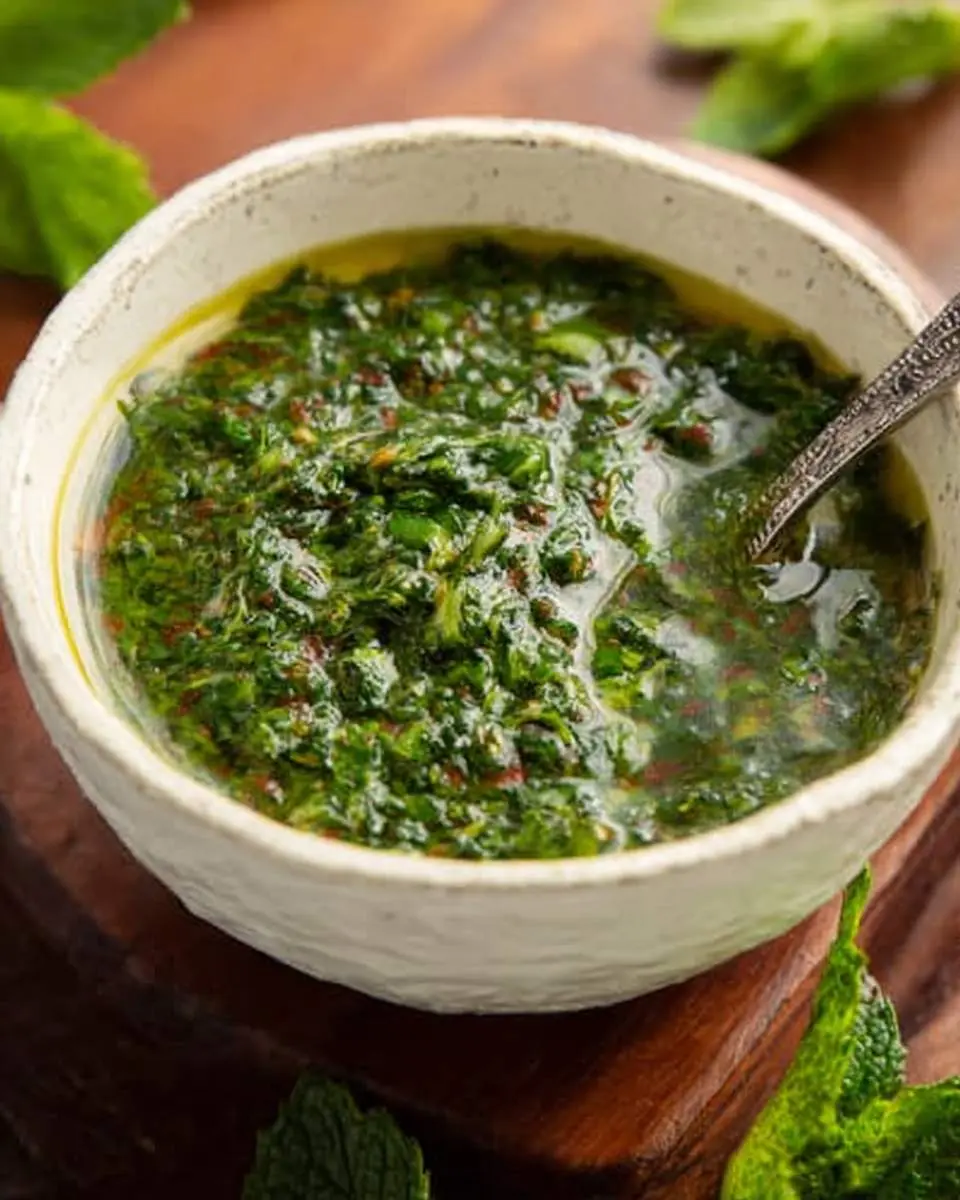
I start by stripping mint leaves from their stems, and I never rush this, the stems turn bitter fast if you’re careless. The parsley goes in too, roughly chopped, because this sauce wants texture, not a smooth puree. My food processor gets a workout here, pulsing just until everything looks like wet confetti, never a paste.
The garlic hits next, and I can smell it before I even lift the lid, that sharp, almost aggressive aroma that promises flavor. Olive oil streams in slowly while the motor runs, and I watch for the moment when the mixture turns glossy and clings to itself. The vinegar follows, and the whole thing brightens visibly, like someone turned up a dimmer switch.
I let it sit for ten minutes before tasting, because chimichurri needs that pause to become itself. Salt gets adjusted in tiny pinches. Sometimes I need more heat, so I add red pepper flakes by feel. If you want to understand where this sauce comes from, my classic chimichurri sauce recipe breaks down the traditional version I learned first.
Pro Tips
Chop your herbs by hand if you have the patience, the food processor bruises mint more than you’d expect, and those torn edges hold oil better. This matters because mint releases its oils differently than parsley, and you want both flavors distinct, not muddied.
Use room temperature oil, cold olive oil turns cloudy and doesn’t emulsify as smoothly with the vinegar. I learned this the hard way after a batch separated in the jar and looked like a science experiment gone wrong.
Toast your red pepper flakes in a dry pan for thirty seconds before adding them. The heat transforms them from one-note spicy to smoky and complex, and that depth carries through the fresh herbs.
My Secret Trick: I save the water from washing my herbs, about two tablespoons, and splash it in at the end. That chlorophyll-rich liquid keeps the color electric green for days instead of oxidizing to olive drab overnight.
How to Store Mint Chimichurri
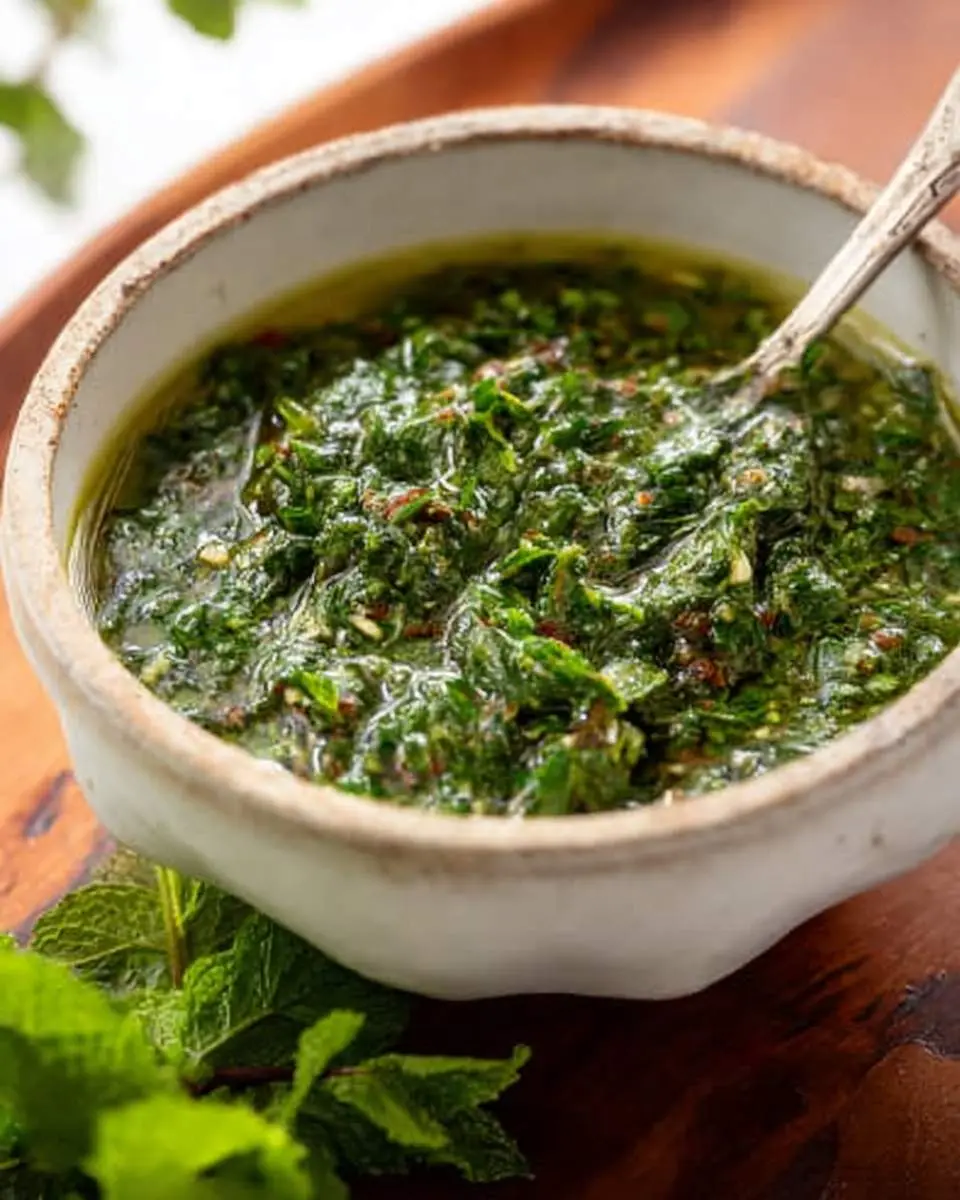
- Refrigerate in a glass jar with a tight lid for up to 5 days, the acid preserves it but the herbs fade after that
- Press plastic wrap directly onto the surface before sealing to prevent browning from air exposure
- Freeze in ice cube trays for up to 3 months, then transfer cubes to a freezer bag, each cube equals about 2 tablespoons
- Thaw overnight in the refrigerator, never microwave, the heat destroys the fresh flavor
- Stir well after storage as separation is natural, the oil and vinegar will have settled
Nutritional Benefits
This mint chimichurri delivers real value beyond flavor, the fresh mint contains rosmarinic acid that supports digestion, something I notice when I spoon it over heavier grilled meats. The raw garlic brings allicin, a compound that forms when garlic is chopped and left to rest, which is exactly why I let mine sit before blending. No supplement bottle matches what a few tablespoons of this green stuff contributes to a meal.
FAQs
Can I use dried mint instead of fresh?
Fresh mint is essential here, dried mint lacks the volatile oils that make this sauce bright and aromatic. The texture would also turn gritty and unpleasant.
How spicy is this sauce?
It depends entirely on your red pepper flakes, I use a modest pinch for warmth, but you can double it or omit completely based on your preference.
What meats pair best with mint chimichurri?
Lamb is traditional and magical, but I’ve loved it on grilled pork chops, roasted chicken, and even seared halloumi for a vegetarian option.
Can I make this mint chimichurri ahead for a party?
Yes, make it 24 hours ahead for the best flavor marriage, just store it properly and give it a vigorous stir before serving to reincorporate everything.

Mint Chimichurri
Ingredients
Equipment
Method
- Wash and thoroughly dry the parsley and mint - any water will dilute the sauce. Finely chop both herbs until you have about 1 cup packed parsley and 1/2 cup packed mint. Mince the garlic and shallot as finely as possible; you want them to almost melt into the sauce rather than deliver crunchy bites.
- In a medium bowl, combine the chopped parsley, mint, garlic, and shallot. Add the red wine vinegar and stir to combine. Let this mixture sit for 5 minutes - the vinegar will slightly soften the raw edge of the garlic and shallot while brightening the herbs.
- Whisk in the olive oil until the sauce is well combined but still slightly loose - it should look like a thin, vibrant green salsa. Stir in the oregano, red pepper flakes, salt, and black pepper. Taste and adjust: add more salt if it tastes flat, more vinegar if it needs brightness, or more red pepper for heat.
- Let the chimichurri rest at room temperature for at least 10 minutes before serving, or cover and refrigerate for up to 3 days. Bring to room temperature and stir well before using - the herbs will settle and the oil may solidify slightly when cold.
Notes
Conclusion
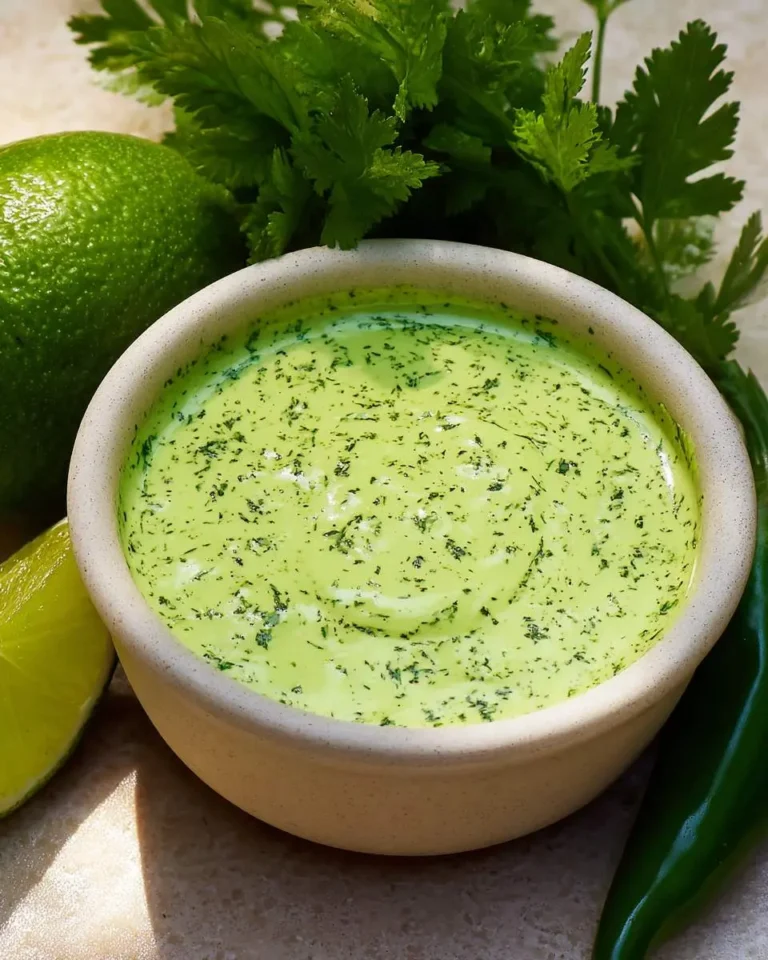
I keep a jar of this mint chimichurri in my fridge most weeks now, and it still surprises me how something so simple can rescue a plain Tuesday night. Make it your own, trust your hands, and don’t overthink it. For another fresh sauce that plays well with everything, my cilantro lime sauce has become a weeknight staple too.