Philly Cheesesteak Garlic Bread
The first time I pulled a tray of Philly cheesesteak garlic bread from my oven, the smell alone stopped my husband mid-conversation. He walked into the kitchen, sniffed the air like a cartoon character floating toward pie, and simply said, “Whatever that is, I need it now.” That combination of sizzling beef, caramelized onions, and garlic butter hitting hot bread creates something that makes people lose their manners entirely.
It reminded me of late nights in my twenties, grabbing cheesesteaks after concerts in Philly, standing on grimy sidewalks with foil-wrapped sandwiches dripping down my wrists. I never thought I could capture that same reckless joy in my own kitchen, let alone on something as humble as garlic bread. But here we are, and I am not mad about it.
This recipe came together on a Friday when I had leftover steak, a loaf of bread threatening to go stale, and zero interest in grocery shopping. If you are anything like me, you probably have a soft spot for swirled, cozy breads that feel like edible hugs, but sometimes you need something unapologetically savory and a little bit loud.
What You Need to Make This Recipe
The bread matters more than you might think. I use a sturdy Italian loaf with some real chew to it, something that can handle the weight of thinly sliced ribeye and melted provolone without turning to mush. The ribeye itself should be sliced paper-thin, almost shaved, so it cooks in seconds and stays tender rather than turning into rubber bands. Provolone gives you that proper Philly stretch, though I will not judge a whisper of Cheez Whiz if you are feeling nostalgic. For the garlic butter, I go heavy on fresh minced garlic and a pinch of red pepper flakes, because a good white bread base deserves to be treated with respect, even when we are piling it with meat and cheese. This Philly cheesesteak garlic bread comes together fast, but each component pulls serious weight.
How to Make Philly Cheesesteak Garlic Bread
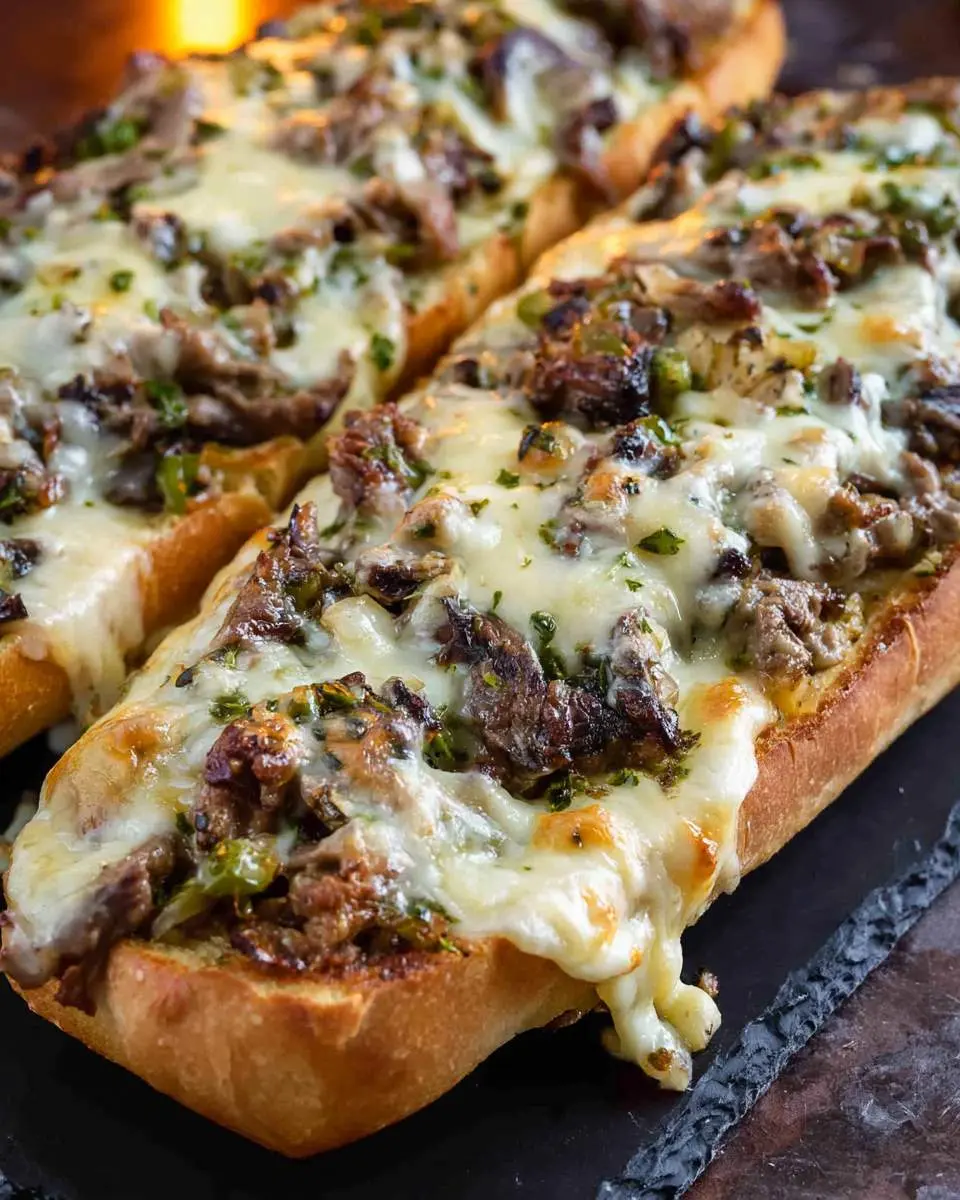
I start by melting butter in a wide skillet until it foams and smells nutty, then I pile in the garlic and let it sizzle just until fragrant, maybe thirty seconds, because burnt garlic ruins everything. The bread gets split lengthwise and toasted cut-side down in that same skillet, soaking up every bit of that garlicky butter while the edges turn golden and crisp. Meanwhile, I crank the heat and flash-cook the shaved ribeye with thin-sliced onions, watching the meat go from pink to brown in about ninety seconds, the onions softening and picking up all those caramelized bits from the pan.
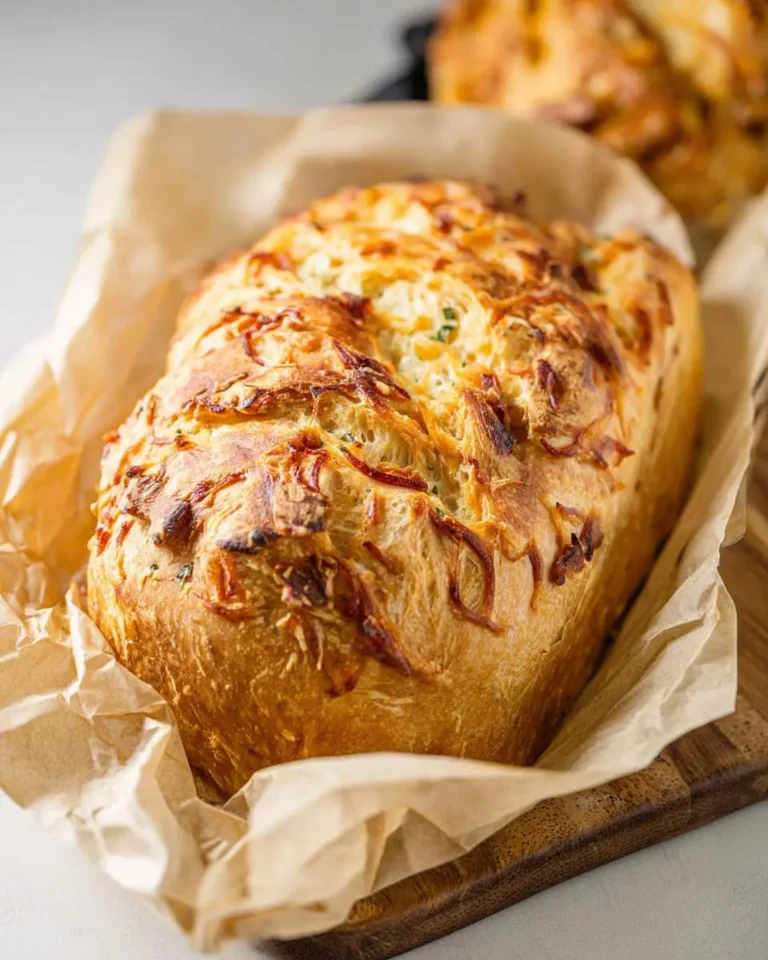
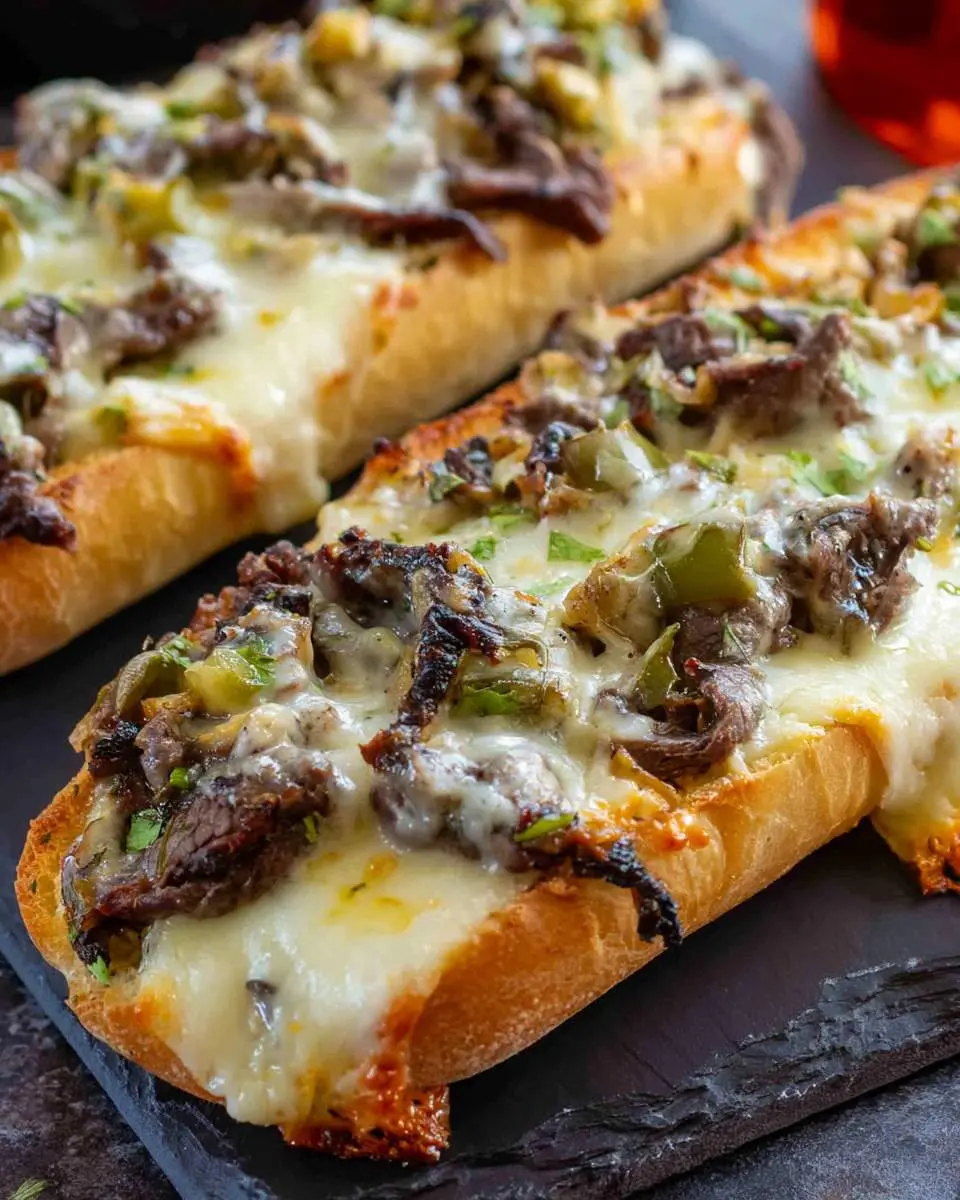
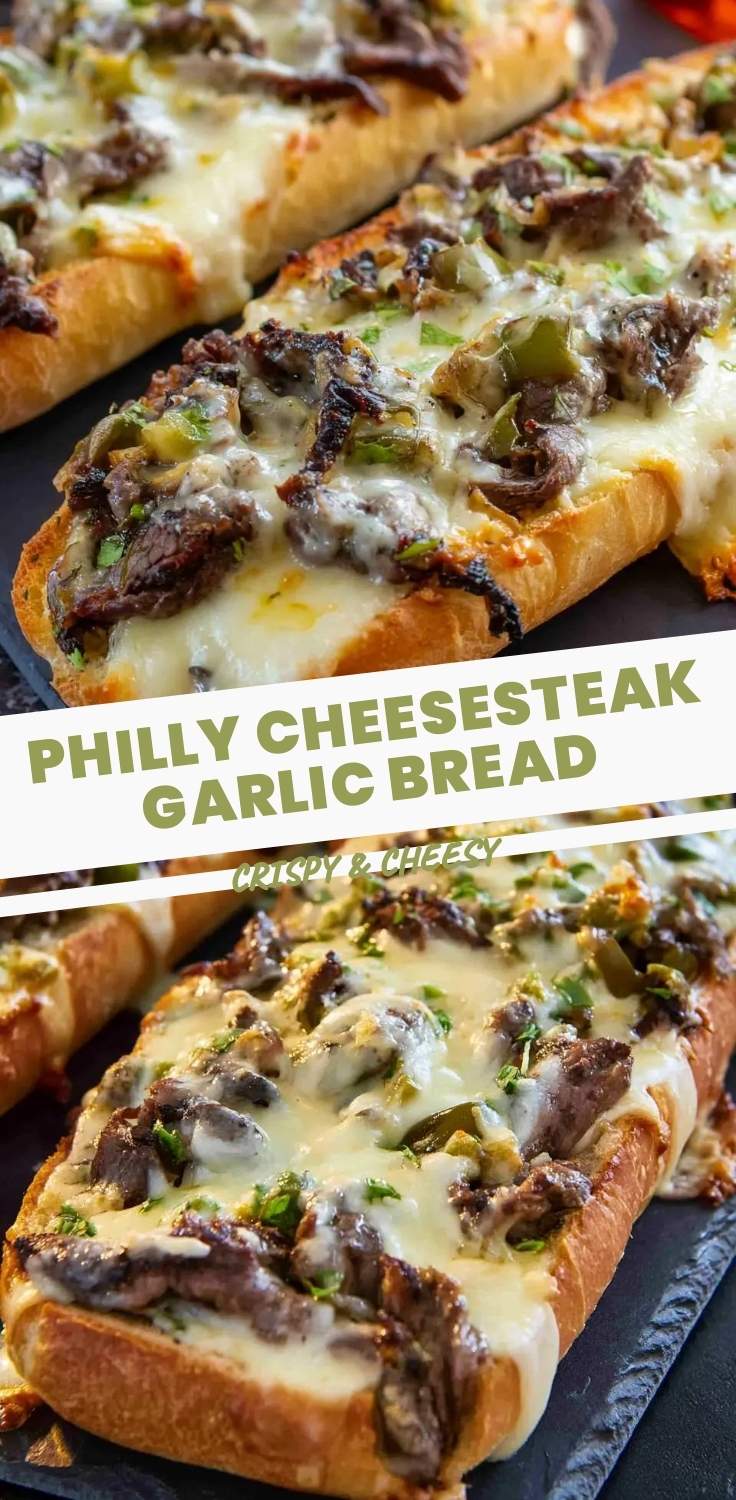
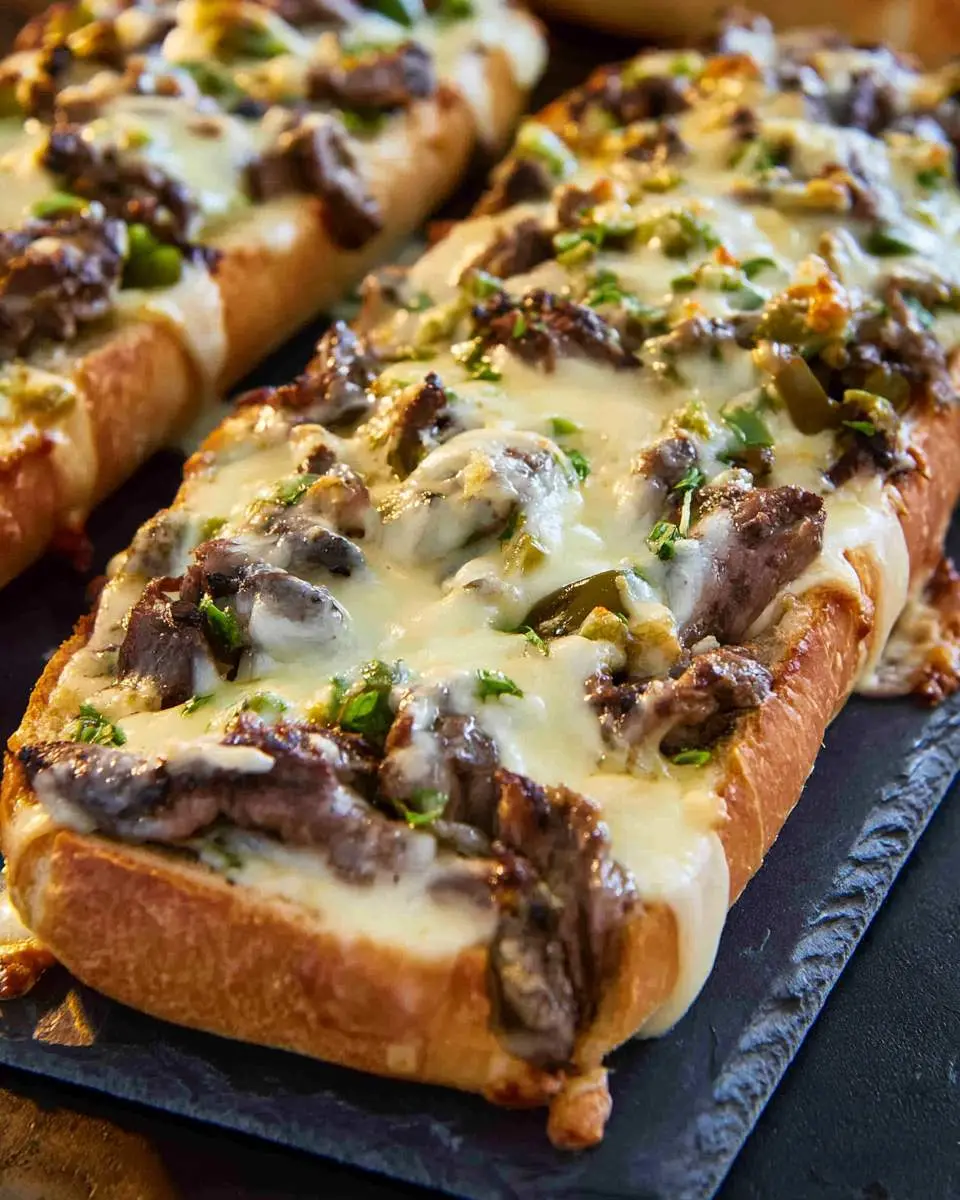
Here is where my obsession with properly built garlic bread pays off: you layer the hot meat and onions directly onto that toasted, butter-soaked bread, tuck slices of provolone into every crevice, and slide the whole thing under the broiler. The cheese bubbles and blisters, the edges of the bread get almost too dark in spots, and you have maybe a two-minute window to pull it before disaster strikes. The sound of that first cut, the crunch giving way to stretchy cheese and juicy meat, is genuinely therapeutic.
Pro Tips
Freeze the ribeye for twenty minutes before slicing. This firms up the meat just enough that you can shave it paper-thin with a sharp knife, which makes all the difference between tender bites and chewy struggle. Thick slices turn tough when they hit the hot pan.
Toast the bread cut-side down in butter, not under the broiler first. The skillet gives you an even, golden crust with actual flavor from the garlic butter, whereas the broiler dries out the bread before the cheese even melts. Philly cheesesteak garlic bread needs that contrast of crisp exterior and slightly yielding center.
Layer cheese both under and over the meat. The bottom layer acts like glue holding everything to the bread, while the top layer gets that gorgeous broiler-charred blister. Without the bottom layer, your meat slides right off with the first bite.
My Secret Trick: I save a spoonful of the rendered beef fat and onion drippings and brush it onto the bread right before adding the meat. It sounds excessive, but that extra layer of savory fat soaks into the toasted crumb and makes every bite taste like it came from a decades-old Philly griddle.
How to Store Philly Cheesesteak Garlic Bread
- Refrigerate leftovers in an airtight container within two hours of cooking, and eat within three days for best texture.
- Wrap individual slices tightly in foil, then place in a freezer bag; freeze up to two months at zero degrees Fahrenheit.
- Reheat refrigerated slices in a 375-degree oven for ten minutes directly on the rack to restore crispness, or use a skillet over medium heat with a lid to trap steam and melt the cheese.
- Avoid the microwave if possible, as it turns the bread chewy and the cheese rubbery within sixty seconds.
Nutritional Benefits
This Philly cheesesteak garlic bread delivers a solid dose of protein from the ribeye, which keeps me full far longer than carb-heavy snacks ever do, and the fresh garlic brings actual allicin compounds that have been studied for their immune-supporting properties. I am not calling it health food by any stretch, but there is genuine nourishment here amid the indulgence, especially if you load up the beef and go lighter on the bread.
FAQs
What cut of beef works best for Philly cheesesteak garlic bread?
Ribeye is traditional and ideal because of its fat content, but sirloin works in a pinch if you slice it very thin. Avoid lean cuts like round steak, which turn tough and dry during quick cooking.
Can I make this ahead for a party?
You can prep the meat and onions up to a day ahead and refrigerate, but assemble and broil just before serving. The bread loses its crispness within an hour of topping, so timing matters for the best texture.
What cheese is most authentic for this recipe?
Provolone is my go-to for that proper melt and mild sharpness, though American cheese or even Cheez Whiz has its place in Philadelphia tradition. Sharp cheddar overwhelms the other flavors here.
How do I keep the bread from getting soggy?
Toast the cut side in butter until genuinely golden before adding toppings, and do not overload with meat juices. This Philly cheesesteak garlic bread stays crisp only when the bread gets its due attention first.

Philly Cheesesteak Garlic Bread
Ingredients
Equipment
Method
- In a small bowl, mash together softened butter, minced garlic, and oregano until well combined. Set aside at room temperature.
- Place ribeye in the freezer for 15 minutes to firm up - this makes it much easier to slice paper-thin. Slice against the grain into strips no thicker than 1/8 inch.
- Heat oil in a large skillet over high heat until just smoking. Add half the beef in a single layer, season with salt and pepper, and let it sear undisturbed for 90 seconds until browned. Toss quickly, cook 30 seconds more, then transfer to a plate. Repeat with remaining beef.
- Reduce heat to medium. Add onion and pepper to the same skillet with a pinch of salt. Cook 6-8 minutes, stirring occasionally, until softened and caramelized at the edges. Return beef to pan, add Worcestershire, toss everything together, and remove from heat.
- Preheat oven to 425F. Spread garlic butter evenly over both bread halves, working it into all the crevices. Place on a baking sheet and bake 8 minutes until edges are lightly toasted.
- Remove from oven. Distribute half the provolone across both halves, then pile the hot beef and vegetable mixture on top. Cover with remaining cheese. Return to oven for 5-7 minutes until cheese is fully melted and bubbling with light brown spots. Switch to broil for 1-2 minutes if you want more color - watch closely.
- Let rest 2 minutes, then slice into thick pieces with a serrated knife. Serve immediately while the cheese is still stretchy.
Notes
Conclusion
I have made this Philly cheesesteak garlic bread for game days, for quiet Tuesdays when I needed comfort, and once at midnight when nothing else sounded right. It never fails to make people stop talking and start eating, which might be the highest praise I can give any recipe. If you are looking for another bread project with serious payoff, my homemade burger buns have saved many cookouts from store-bread mediocrity. Give this one a try, trust the process, and do not skip that secret trick.