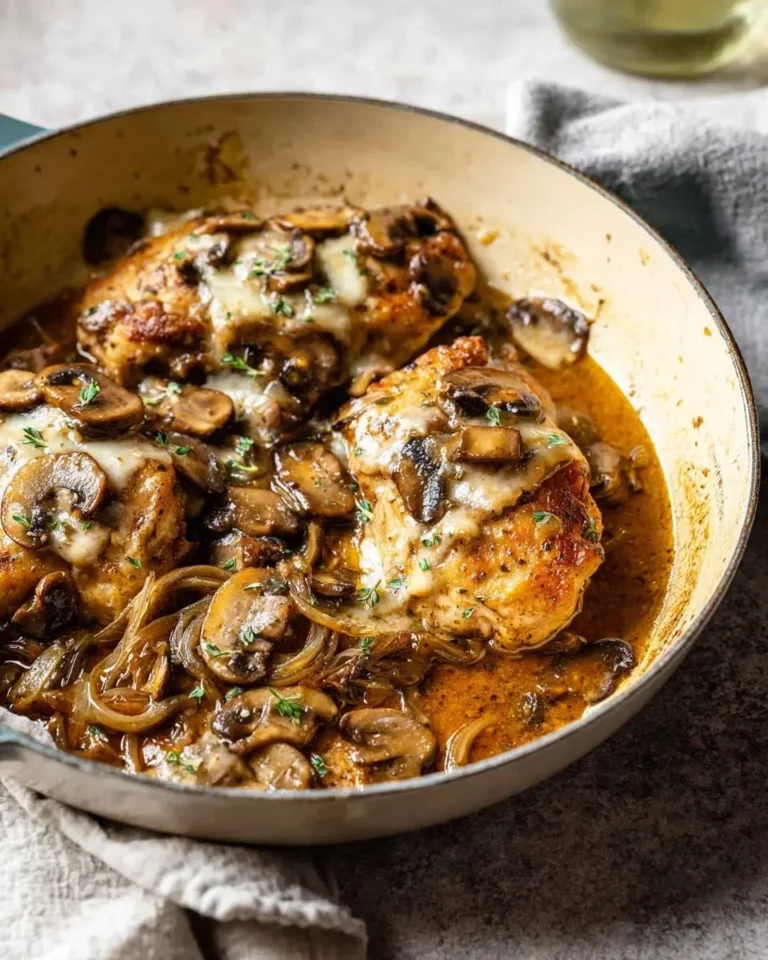
Chicken Saltimbocca
There’s a specific aroma that instantly transports me back to a tiny trattoria on a side street in Rome: the intoxicating scent of fresh sage crisping in butter. That memory is captured in every bite of this Classic Chicken Saltimbocca. It’s more than just a recipe for me; it’s a taste of that perfect evening, a dish that balances salty prosciutto, earthy sage, and tender chicken in the most beautiful way. It shares that same beautiful, rustic simplicity I adore in dishes like my Chicken Scarpariello.
Why This Dish is a Go-To in My Kitchen
What I adore most about this recipe is its incredible return on investment. With just 15 minutes of prep and 20 minutes of cook time, I can create a meal that feels deeply special and elegant. It’s my secret weapon for busy weeknights when I’m craving something comforting but don’t have hours to spend in the kitchen. The key ingredients—prosciutto di Parma, fresh sage, and a splash of white wine—are simple, yet they come together to create a symphony of savory, sophisticated flavors.
Ingredient Notes for Classic Chicken Saltimbocca with Sage and Prosciutto
For this dish, I always insist on two things: Prosciutto di Parma for its unparalleled salty-sweet flavor and fresh sage leaves. The prosciutto crisps up beautifully, and fresh sage provides an earthy aroma that dried herbs simply can’t replicate. Using fresh herbs is non-negotiable for me, whether it’s in this recipe or in more unexpected pairings like my Blueberry Thyme Chicken.


Classic Chicken Saltimbocca with Sage and Prosciutto
Ingredients
Equipment
Method
- Place each chicken cutlet between two pieces of plastic wrap or in a zip-top bag. Using the flat side of a meat mallet or a rolling pin, gently pound the chicken to an even 1/4-inch thickness. Season both sides of each cutlet lightly with salt and pepper.
- Place 2 sage leaves on top of each chicken cutlet. Drape 2 slices of prosciutto over the sage to cover the surface of the chicken. Use toothpicks to secure the prosciutto and sage to the chicken, if needed.
- Spread the all-purpose flour on a shallow plate or dish. Lightly dredge each assembled chicken cutlet in the flour, shaking off any excess. Make sure to coat both sides.
- In a large (12-inch) skillet over medium-high heat, add the olive oil and 1 tablespoon of butter. Once the butter is melted and foaming, carefully place two of the chicken cutlets in the pan, prosciutto-side down. Be careful not to overcrowd the pan.
- Sear for 3-4 minutes per side, until the prosciutto is crisp, the chicken is golden brown, and cooked through (internal temperature reaches 165°F / 74°C). Transfer the cooked chicken to a clean plate and tent with foil to keep warm. Repeat with the remaining chicken.
- Reduce the heat to medium. Pour off any excess fat from the skillet, leaving the browned bits (fond). Add the white wine to the hot skillet to deglaze, scraping up all the flavorful browned bits from the bottom of the pan with a wooden spoon.
- Allow the wine to simmer and reduce by about half, which should take about 2-3 minutes. Pour in the chicken broth and bring to a simmer. Let it cook for another 3-4 minutes, until the sauce has slightly thickened.
- Remove the skillet from the heat. Whisk in the remaining 1 tablespoon of cold, cubed butter and the fresh lemon juice until the butter is melted and the sauce is smooth and glossy. Taste and adjust seasoning with salt and pepper if necessary.
- Remove the toothpicks from the chicken. To serve, place the chicken cutlets on a platter or individual plates and pour the warm pan sauce over the top. Garnish with fresh chopped parsley, if desired. Serve immediately with pasta, polenta, or roasted vegetables.
Notes
- Don't Overcook the Chicken: Pounding the chicken thin means it cooks very quickly. Keep a close eye on it to ensure it stays tender and juicy.
- Wine Substitute: If you prefer not to cook with wine, you can substitute it with an equal amount of additional chicken broth plus a teaspoon of white wine vinegar or lemon juice for acidity.
- Storage: Store leftovers in an airtight container in the refrigerator for up to 3 days. Reheat gently in a skillet or microwave.
Let’s Get Cooking: My Method
I always start by preparing the chicken, pounding it to an even thinness so it cooks quickly and evenly. After seasoning and layering on the sage and prosciutto, I give it a quick dredge in flour. The next step is my favorite: cooking the chicken. The kitchen fills with the most incredible aroma as the prosciutto gets crispy. I then use those delicious browned bits left in the pan to build a rich, flavorful pan sauce. This technique is my secret to so many flavorful sauces, just like in my classic Chicken Piccata.

My Tips for the Perfect Outcome
- Pound the chicken to an even ¼-inch thickness for tender, quick-cooking results.
- Secure the prosciutto and sage to the chicken with a toothpick to prevent it from curling up.
- Don’t overcrowd the pan; cook the chicken in batches if needed.
How I Serve and Store This Dish
My favorite way to serve this chicken saltimbocca is over a bed of creamy polenta or with a simple side of lemon-dressed arugula, which cuts through the richness of the sauce beautifully. For leftovers, I store the chicken and sauce in an airtight container in the refrigerator for up to two days. A gentle reheat in a skillet with a splash of chicken broth brings it right back to life without overcooking the chicken.
Frequently Asked Questions
Can I make this recipe with chicken thighs?
Absolutely! I’ve found that boneless, skinless chicken thighs work wonderfully. You’ll just need to adjust the cooking time slightly to ensure they are cooked through. Pound them to an even thickness just as you would with the chicken breasts for the best results.
What is the best white wine for the pan sauce?
I recommend using a dry white wine that you would enjoy drinking, as its flavor will concentrate in the sauce. My go-to choices are Pinot Grigio or Sauvignon Blanc. If you prefer to cook without alcohol, you can substitute additional low-sodium chicken broth.
How do I keep the prosciutto from falling off?
The key is to press the prosciutto firmly onto the chicken breast. For extra insurance, I often use a toothpick to pin the prosciutto and sage leaf to the chicken. Just be sure to remove the toothpicks before serving the dish to your guests!
Can I prepare any parts of this dish ahead of time?
Yes, to save time, you can prepare the chicken ahead. I often pound the chicken and layer the sage and prosciutto on top, then cover and refrigerate it for up to 4 hours before I’m ready to cook. This makes the final cooking process even faster.
Conclusion
This recipe holds a special place in my heart, and I truly hope it brings as much joy to your table as it does to mine. If you try it, I’d absolutely love to hear what you think! And if you enjoy this classic, I have a feeling you’ll also fall for my rich and comforting Chicken Marsala.