cottage cheese chicken salad
I stood at my kitchen counter last Tuesday, staring down a container of cottage cheese that was about to expire, and I had zero interest in another boring bowl with fruit. That’s when I remembered my grandmother’s trick for creamy chicken salad without the heavy mayo coating your mouth, and suddenly I was pulling apart leftover rotisserie chicken with my hands, the steam still rising. Cottage cheese chicken salad was born from desperation that afternoon, and I’ve made it three times since.
My grandmother kept a jar of pickle juice in her fridge for exactly this kind of rescue mission. She believed every leftover deserved a second life with proper dressing, and I can still smell her kitchen — dill, black pepper, something tangy cutting through the richness. I texted my sister a photo of my finished bowl, and she replied, “That’s weird and I want it.”
What I love most is how this recipe doesn’t pretend to be something it’s not. It’s not trying to replicate mayo-based salad; it’s doing something entirely its own. If you’re also avoiding mayonnaise these days, you might appreciate my no-mayo potato salad with green beans that got me through last summer’s potluck season.
What You Need to Make This Recipe
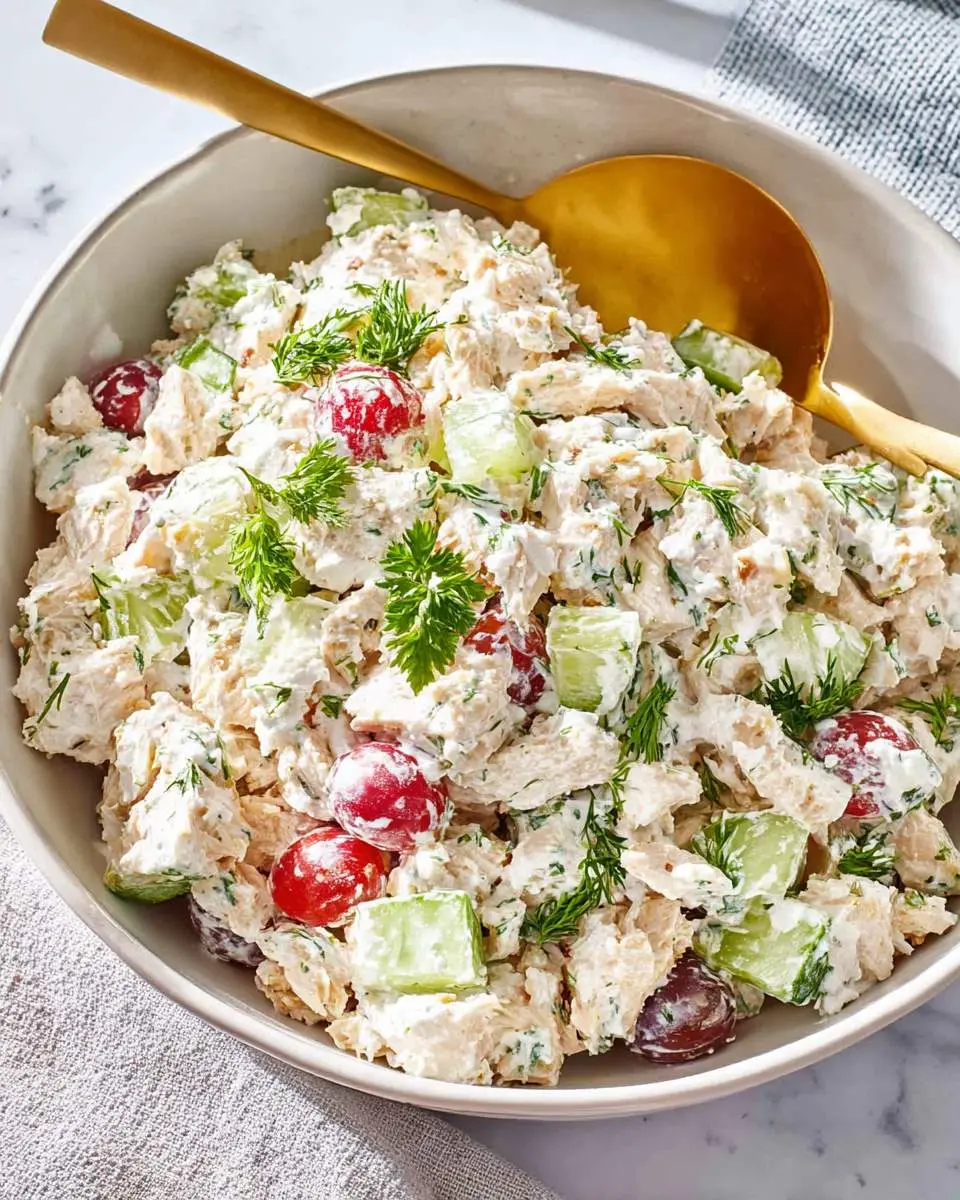
The cottage cheese is non-negotiable, and I beg you to use full-fat here — the low-fat versions separate into watery curds that ruin the creamy coating you’re after. I prefer small-curd cottage cheese because it blends more smoothly with the chicken, though large-curd works if you want more texture. Fresh dill is the herb that makes this taste intentional rather than like a fridge-cleaning exercise; dried simply doesn’t have the brightness. For the chicken, rotisserie is my weeknight shortcut, but poached thighs give you silkier meat that shreds beautifully. The celery must be chopped small enough that you get crunch in every bite without feeling like you’re eating rabbit food. I discovered the perfect smashed potato companion for this salad in my chili crisp smashed potato salad that shares the same bold, unapologetic energy.
How to Make cottage cheese chicken salad
I start by shredding the chicken while it’s still slightly warm — something about the heat helps it absorb the cottage cheese better, creating that cohesive texture rather than separate chunks floating in dressing. The cottage cheese goes into a bowl first, and I mash it against the side with my spoon to break down those curds into something more spreadable, almost like a rustic ricotta. The smell of fresh dill hitting the bowl is the moment I know this is going to work.
The celery and red onion get folded in next, and I can hear the crisp snap as my wooden spoon cuts through them. I add the pickle juice last, standing back to taste and adjust — too much and it becomes a sandwich spread, too little and the richness overwhelms. Twenty minutes in the fridge transforms everything; the flavors marry, the cottage cheese tightens slightly, and what seemed like an odd combination becomes something I genuinely crave. For another unexpected cottage cheese victory, my cottage cheese and veggie pasta salad convinced my mayo-loyal husband to switch teams.
Pro Tips
Don’t drain the cottage cheese. That liquid is whey protein that helps bind everything together; removing it leaves you with a dry, crumbly salad that falls apart on your fork.
Chill your mixing bowl first. Cold temperatures keep the cottage cheese from warming and separating while you work, maintaining that luxurious texture from first bite to last.
Save your pickle brine. The liquid from a jar of dill pickles provides acidity and salt in one pour, plus subtle fermentation complexity that lemon juice simply cannot replicate.
My Secret Trick: I reserve a tablespoon of the cottage cheese and stir it in right before serving — this “fresh” addition restores the creamy coating that gets absorbed during chilling, giving you that just-made texture even on day three.
I’ve learned that cottage cheese chicken salad rewards patience in ways other salads don’t.

How to Store cottage cheese chicken salad
- Refrigerate in an airtight glass container for up to 4 days; plastic absorbs the onion and dill odors permanently
- Keep temperature at 40°F or below; cottage cheese is highly perishable and develops off-flavors quickly if warmed
- Do not freeze; the curds separate into grainy, watery texture upon thawing that cannot be rescued
- Stir before serving to redistribute any liquid that may have separated; add a fresh spoonful of cottage cheese if needed
- Pack in a thermos with ice pack for lunch transport; consume within 6 hours of removing from refrigeration
Nutritional Benefits
What surprised me most about this cottage cheese chicken salad was discovering it delivers 28 grams of protein per serving without any powder or supplements — the cottage cheese and chicken work together in a way that keeps me full through afternoon meetings when other salads leave me rummaging for snacks. The live cultures in cultured cottage cheese also support gut health in a way mayo-based versions simply cannot match, something my stomach has genuinely thanked me for during busy weeks.

FAQs
Can I use Greek yogurt instead of cottage cheese?
Greek yogurt works but creates a completely different experience — tangier, smoother, less protein per serving. You’ll lose the signature curd texture that makes this recipe distinctive. If you try it, reduce the pickle juice by half since yogurt carries more acidity already.
What type of chicken works best?
Rotisserie chicken offers convenience and seasoning, but poached thighs yield the most tender, shreddable meat. Avoid breast meat if possible; it dries quickly and fights against the creamy dressing rather than melting into it.
How do I make this cottage cheese chicken salad less salty?
Omit the added salt entirely and use unsalted pickle juice or replace it with fresh lemon juice. The cottage cheese and chicken both contribute sodium naturally, so taste before seasoning — you’ll likely need less than you expect.
Can I add grapes or apples like traditional chicken salad?
Sweet fruits clash with the tangy, savory profile here. If you want variation, try diced cucumber for extra crunch or chopped hard-boiled egg for richness. Save the fruit additions for your curry chicken salad where the spice balance welcomes sweetness.

Cottage Cheese Chicken Salad
Ingredients
Equipment
Method
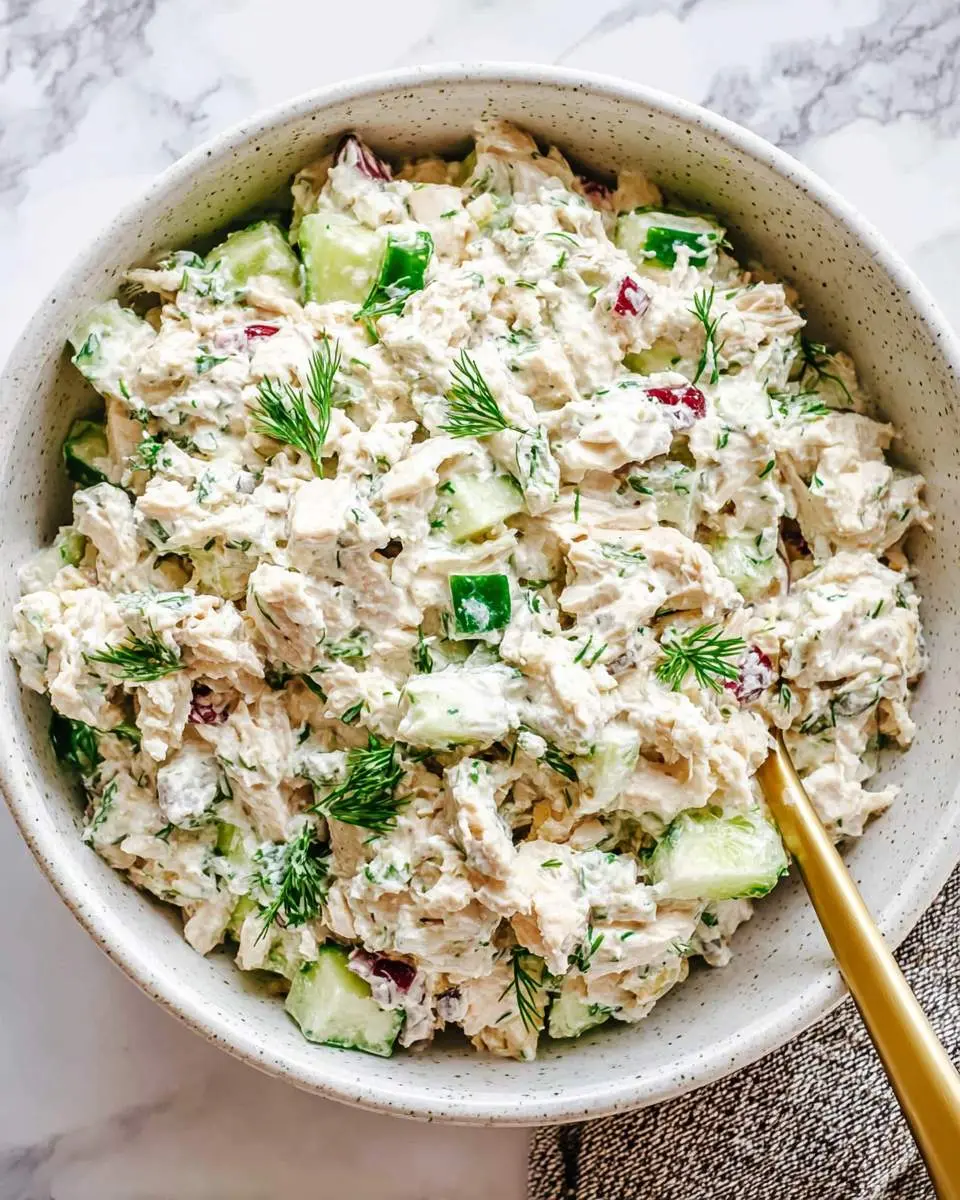
- Finely dice the celery and red onion. Chop the dill pickles and fresh dill. Keep everything in similar small pieces so the texture stays consistent throughout.
- In a large mixing bowl, stir together the cottage cheese, Dijon mustard, pickle brine, black pepper, and salt. The brine adds brightness and helps thin the cottage cheese into a creamy dressing.
- Add the diced chicken, celery, red onion, pickles, and fresh dill to the bowl. Fold gently until everything is evenly coated. Taste and adjust salt or pepper as needed.
- Let the salad rest for 10 minutes at room temperature, or refrigerate up to 4 hours to let the flavors meld. Serve cold on lettuce cups, with crackers, or stuffed into a tomato.
Notes
Conclusion
I never expected to become someone who actively craves cottage cheese chicken salad, yet here I am, planning my next batch before this one disappears. Some of my best kitchen discoveries started with an expiration date and an open mind. Make this once, trust the process, and let me know if you find yourself standing at the counter, eating it straight from the bowl with a spoon — no judgment here.