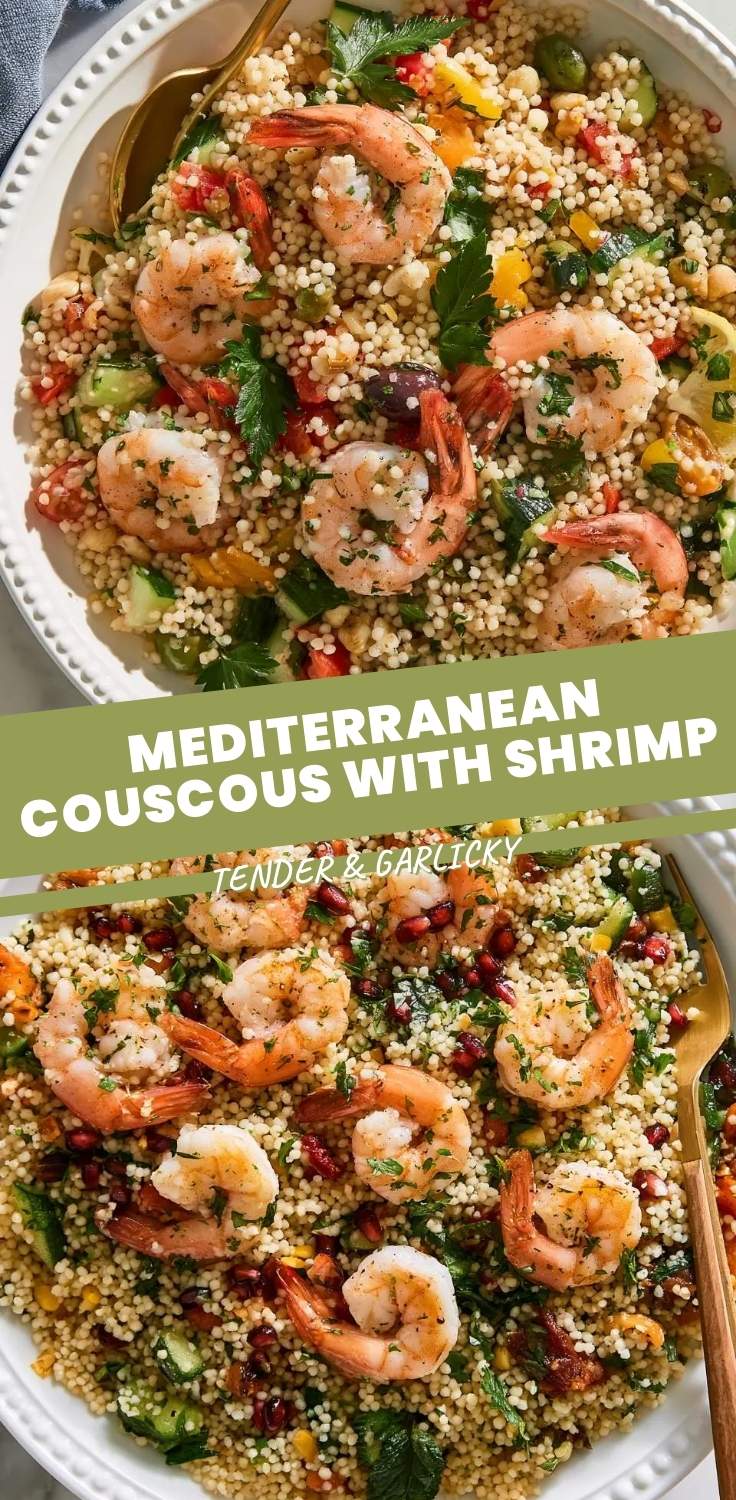
Mediterranean Couscous with Shrimp
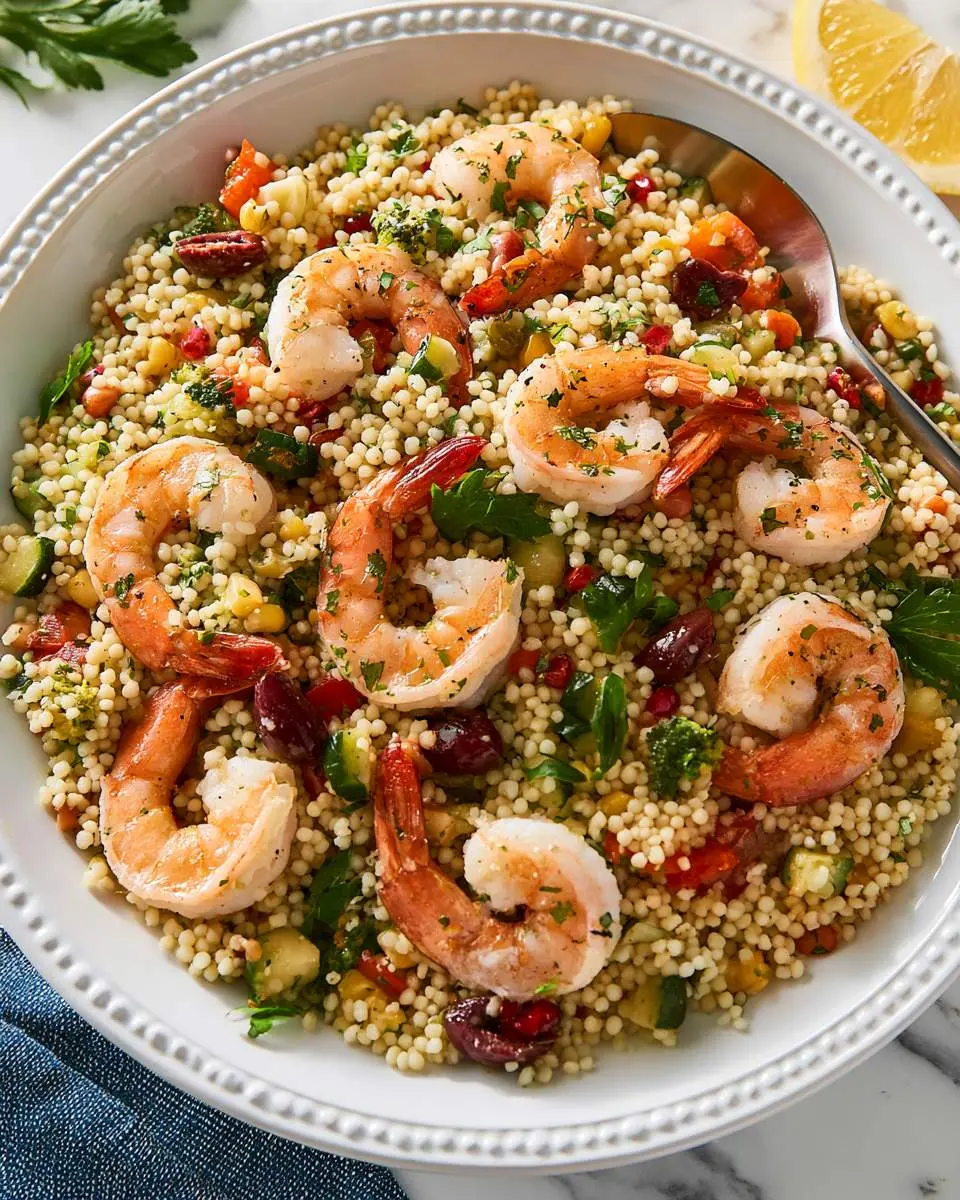
The first time I tasted something like this, I was sitting on a sun-bleached terrace in Greece, watching fishing boats bob in water so blue it looked unreal. A woman named Eleni brought me a bowl of fluffy couscous studded with plump shrimp, and the smell of lemon and garlic hit me before the dish even touched the table. That memory lingered for years until I finally cracked my own version of Mediterranean Couscous with Shrimp in my cramped apartment kitchen last spring.
My daughter walked in while I was testing the third batch, and she just stopped in the doorway. She didn’t say anything for a solid minute, which for a teenager basically means you’ve achieved culinary sainthood. We ate it straight from the pan, standing at the counter, not bothering with plates.
This is the kind of recipe that feels effortless but tastes like you spent all day coaxing flavors together. If you’re in the mood for another shrimp adventure, my shrimp stuffed poblano peppers have that same weeknight-meets-special-occasion energy.
What You Need to Make This Recipe
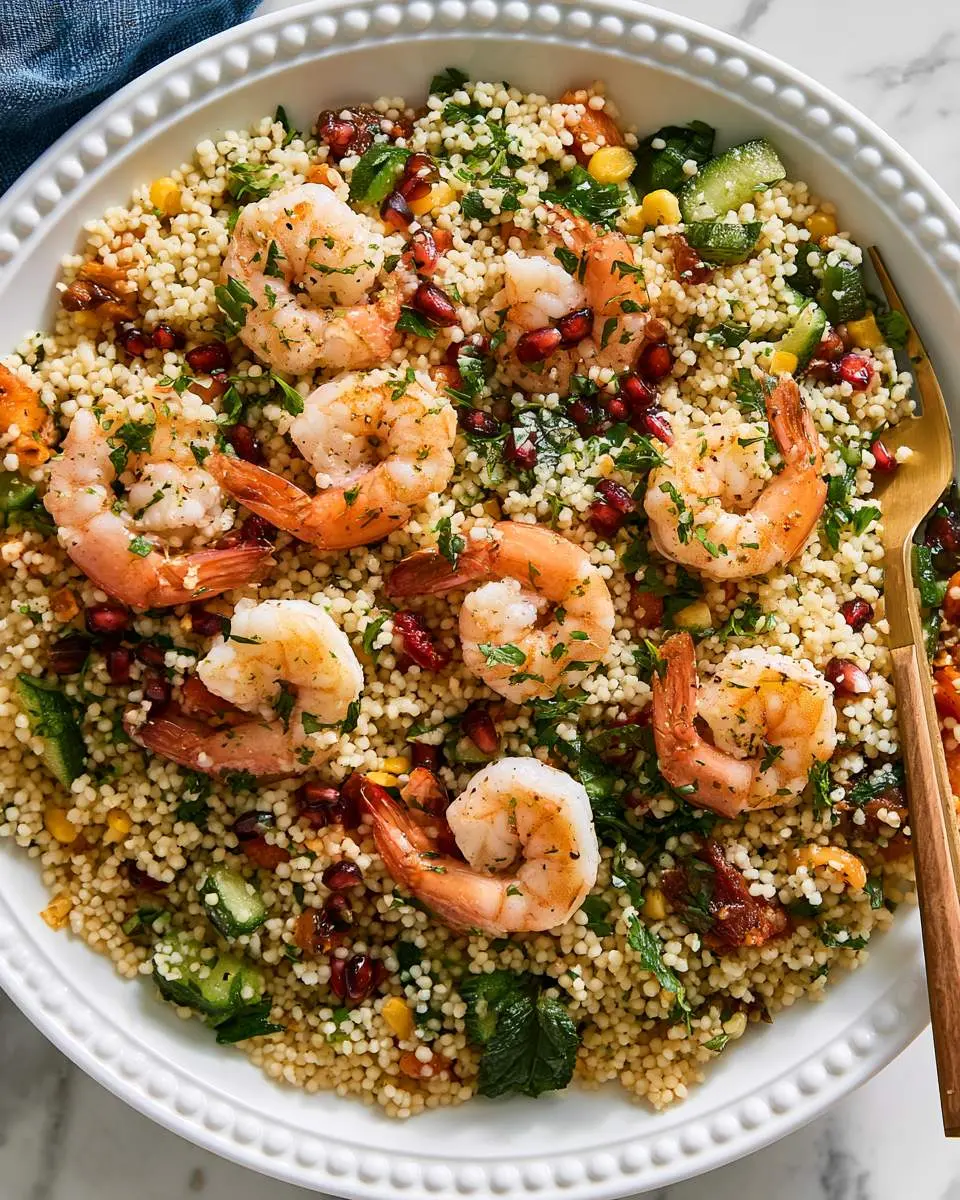
The pearl couscous is non-negotiable here, its little round grains soaking up every drop of the lemony broth until they’re plump and almost creamy. I use large shrimp, not jumbo, because they nestle perfectly between the couscous pearls and cook in exactly the time it takes everything else to come together. The harissa paste is my quiet hero, a North African chili blend that adds warmth without masking the sweet brine of the seafood. Good olive oil matters too, the peppery kind that makes you cough slightly when you taste it straight. For another hands-off shrimp dinner, these garlic shrimp and sausage foil packs have saved my camping trips and my lazy Tuesdays.
How to Make Mediterranean Couscous with Shrimp
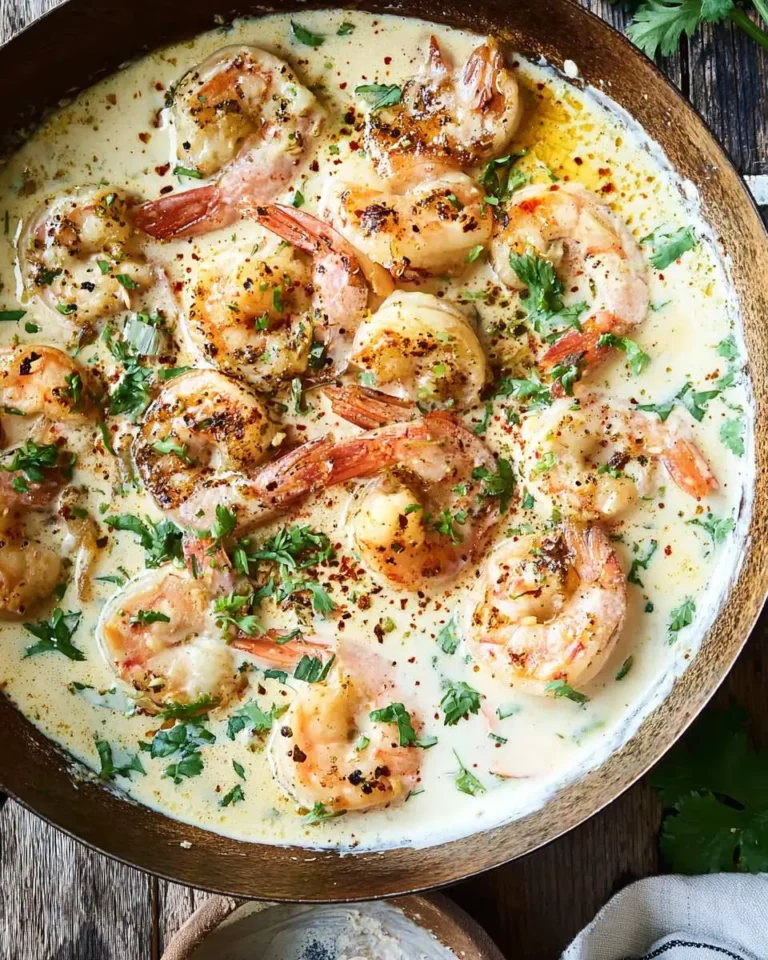
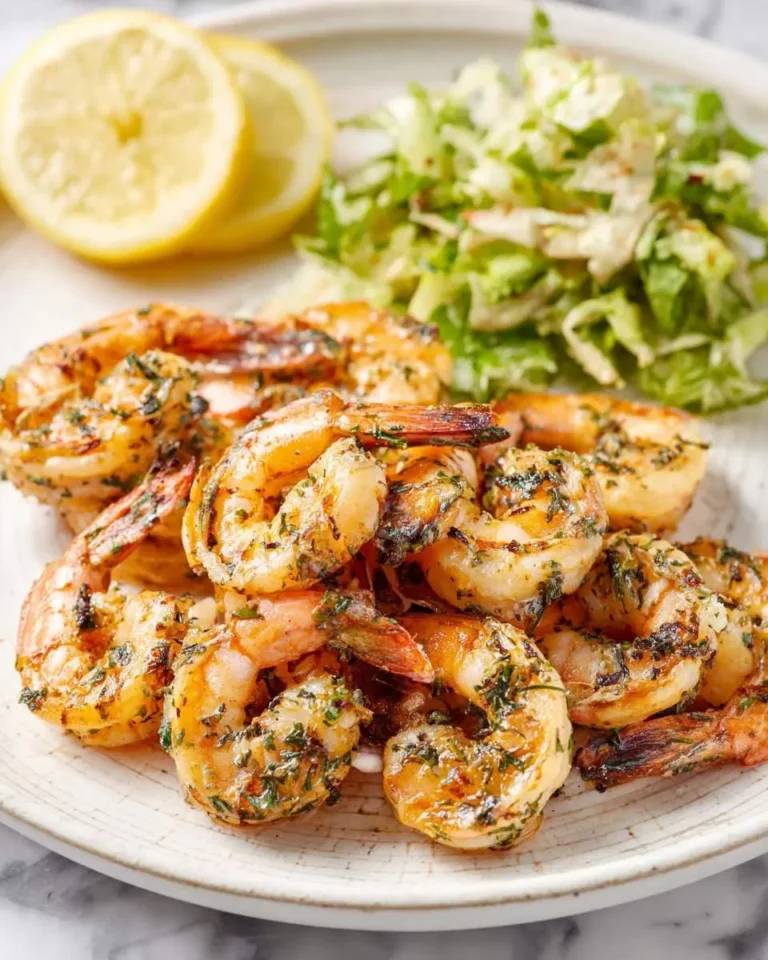
I start by warming olive oil in my widest skillet until it shimmers like a mirage, then I lay the shrimp in a single layer and resist every urge to move them. That sizzle, that gorgeous crackling hiss, tells me the Maillard reaction is doing its magic, and when I flip them after ninety seconds, they’ve got this lacquered coral crust. Out they come, and in goes diced shallot and garlic, softening until the whole kitchen smells like a coastal village at dinner time. The couscous follows, toasted briefly in those fragrant oils until it turns the color of pale sand, then I pour in warm broth and let it simmer with a lid cocked slightly askew. The steam carries lemon zest and cumin through the air, and I find myself hovering, peeking, unable to wait. When the liquid’s nearly gone, the shrimp tumble back in along with chopped parsley and crumbled feta, and everything finishes together for just a moment, the cheese barely melting at the edges. If skillet cooking is your love language too, my Mediterranean shrimp skillet uses a similar build but with entirely different results.
Pro Tips
Toast the couscous dry before adding liquid. This step, borrowed from risotto technique, creates a nutty foundation that makes the finished dish taste far more complex than the effort suggests. The grains seal slightly and won’t clump together later.
Pat your shrimp aggressively dry. I mean it, paper towels until they feel almost tacky. Wet shrimp steam instead of sear, and that caramelized exterior is what gives the whole bowl depth. The fond left in the pan becomes the flavor base for everything else.
Finish with cold feta, not room temperature. The contrast of warm couscous against cool, barely-softening cheese creates these little pockets of creamy resistance that make every bite interesting. Room temperature feta just disappears.
My Secret Trick: I zest my lemon directly over the pan, then squeeze the juice into a separate bowl and only add half of it to the cooking liquid. The rest gets drizzled over each portion at the table, so the bright acidity hits fresh instead of cooking into something muddled.
How to Store Mediterranean Couscous with Shrimp
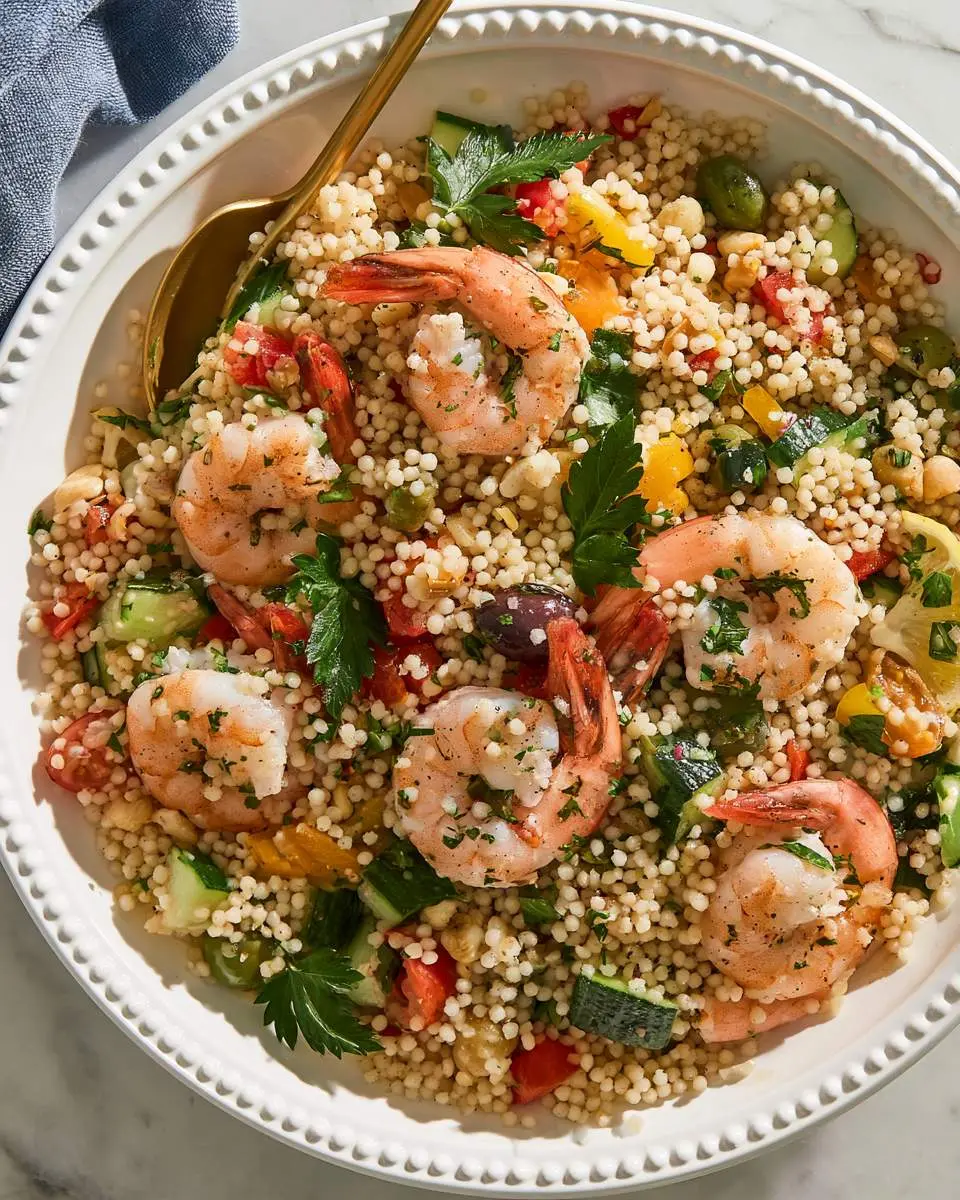
- Refrigerate in airtight glass containers for up to 3 days at 40°F or below. The couscous continues absorbing moisture, so expect a softer texture upon reheating.
- Freeze individual portions in freezer-safe containers with tight lids for up to 2 months at 0°F. Thaw overnight in the refrigerator before reheating.
- Reheat gently in a covered skillet with 2 tablespoons of water or broth per portion over medium-low heat, stirring occasionally until warmed through, about 5-7 minutes. Avoid microwave reheating, which toughens the shrimp.
Nutritional Benefits
Mediterranean Couscous with Shrimp delivers a genuinely satisfying balance without weighing you down. The shrimp contribute lean protein and selenium, that trace mineral we rarely think about but that supports thyroid function, while the whole wheat pearl couscous provides steady-release carbohydrates and more fiber than you’d expect from something so delicate. The olive oil and lemon work together here too, the healthy fats helping your body absorb the vitamin C and any fat-soluble compounds from the herbs.
FAQs
Can I use instant couscous instead of pearl couscous?
Instant couscous cooks too quickly and turns mushy in this preparation. Pearl couscous, also called Israeli couscous, holds its shape and absorbs the broth without falling apart. The texture difference is dramatic and worth seeking out.
How do I keep shrimp from getting rubbery?
Remove them from heat the moment they turn opaque and curl into a loose C shape. They’ll continue cooking slightly from residual heat when you add them back to the warm couscous. Overcooked shrimp tighten into an O shape and become unpleasantly bouncy.
What can I substitute for harissa paste?
A teaspoon of smoked paprika plus a pinch of cayenne approximates the warmth and complexity, though you’ll miss the subtle caraway and coriander notes. Calabrian chili paste works beautifully if you prefer Italian-leaning heat instead.
Is this recipe gluten-free?
Traditional pearl couscous contains wheat, so Mediterranean Couscous with Shrimp is not gluten-free. Substitute certified gluten-free Israeli-style couscous made from corn or potato starch, or use rinsed quinoa for a similar small-grain texture with comparable cooking time.

Mediterranean Couscous with Shrimp
Ingredients
Equipment
Method
- Heat 1 tablespoon olive oil in a medium saucepan over medium heat. Add the Israeli couscous and toast, stirring frequently, until golden and nutty-smelling, about 3-4 minutes. Pour in the chicken broth and 1/2 teaspoon salt, bring to a boil, then reduce heat to low, cover, and simmer until tender and liquid is absorbed, 10-12 minutes. Fluff with a fork and set aside.
- While the couscous cooks, pat the shrimp completely dry with paper towels - this is crucial for browning. Heat 1 tablespoon olive oil in a large skillet over medium-high heat until shimmering. Add half the shrimp in a single layer, season lightly with salt, and cook undisturbed until pink and just opaque, about 2 minutes per side. Transfer to a plate and repeat with remaining 1 tablespoon oil and shrimp.
- Reduce heat to medium. Add the minced garlic to the same skillet and cook until fragrant, about 30 seconds, scraping up any browned bits. Add the cherry tomatoes and cook until they start to soften and release their juices, 3-4 minutes. Remove from heat.
- Add the cooked couscous, shrimp, diced cucumber, lemon juice, and lemon zest to the skillet with the tomatoes. Toss gently to combine and warm through. Fold in the fresh dill and half the feta. Taste and adjust seasoning with salt and plenty of black pepper. Transfer to a serving dish and top with remaining feta and a drizzle of olive oil. Serve immediately while warm or at room temperature.
Notes
Conclusion
I make this Mediterranean Couscous with Shrimp when I need to feel like I’ve traveled without leaving my zip code. It’s forgiving enough for Wednesday, special enough for Saturday, and the leftovers somehow taste even better the next day. For another lemon-kissed shrimp dinner, my lemon garlic shrimp orzo hits a similar craving with a completely different comfort. I hope this lands on your table soon.