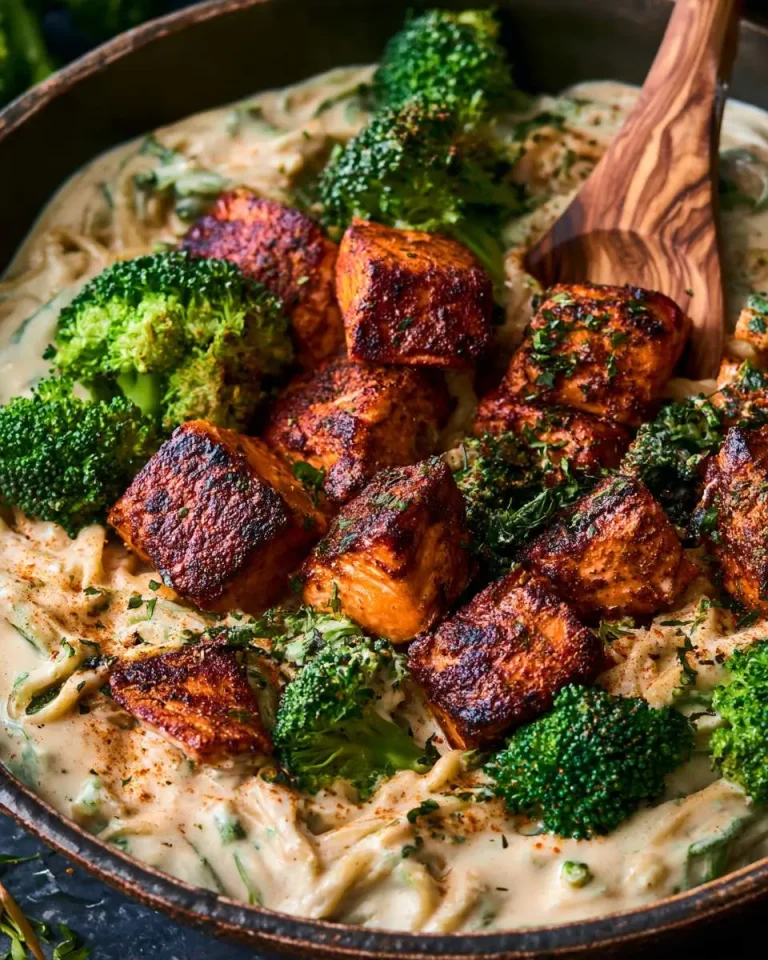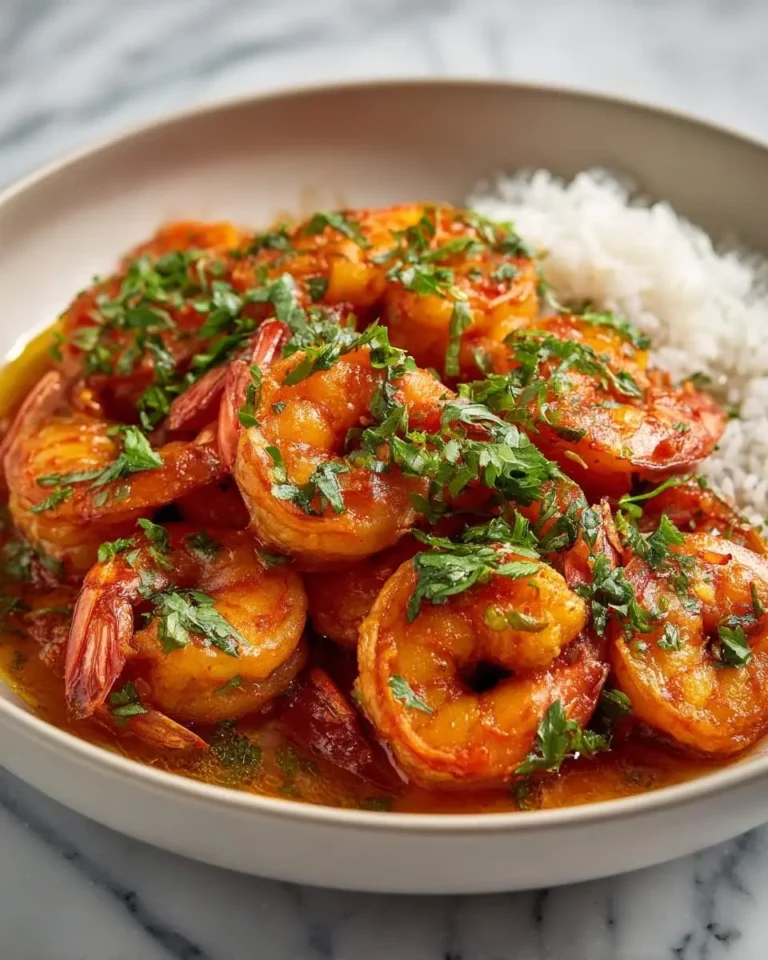
Mediterranean Shrimp Skillet
The first time I made a Mediterranean shrimp skillet, it was a Tuesday night and I was standing in my kitchen with a bag of frozen shrimp, a half-empty jar of sun-dried tomatoes, and absolutely zero patience for anything complicated. Twenty minutes later, my house smelled like garlic and oregano and lemon, and I was eating straight from the pan with crusty bread in my other hand. That combination of briny shrimp, sweet tomatoes, and that bright hit of feta still stops me mid-bite every single time.
My grandmother never cooked shrimp , she was a Midwestern meat-and-potatoes woman through and through , but she did teach me that the best meals come from whatever’s already in your kitchen. I think about her when I throw this together on nights when the fridge looks bare but somehow produces olives, a wilting bell pepper, and that block of feta I forgot about. It feels like magic every time.
This dish has become my reliable rescue dinner, the one I make when friends drop by unexpectedly or when I just need something that feels like summer on a plate. If you’re craving more easy seafood inspiration, my broiled pesto salmon comes together with the same kind of low-effort, high-reward energy.
What You Need to Make This Recipe
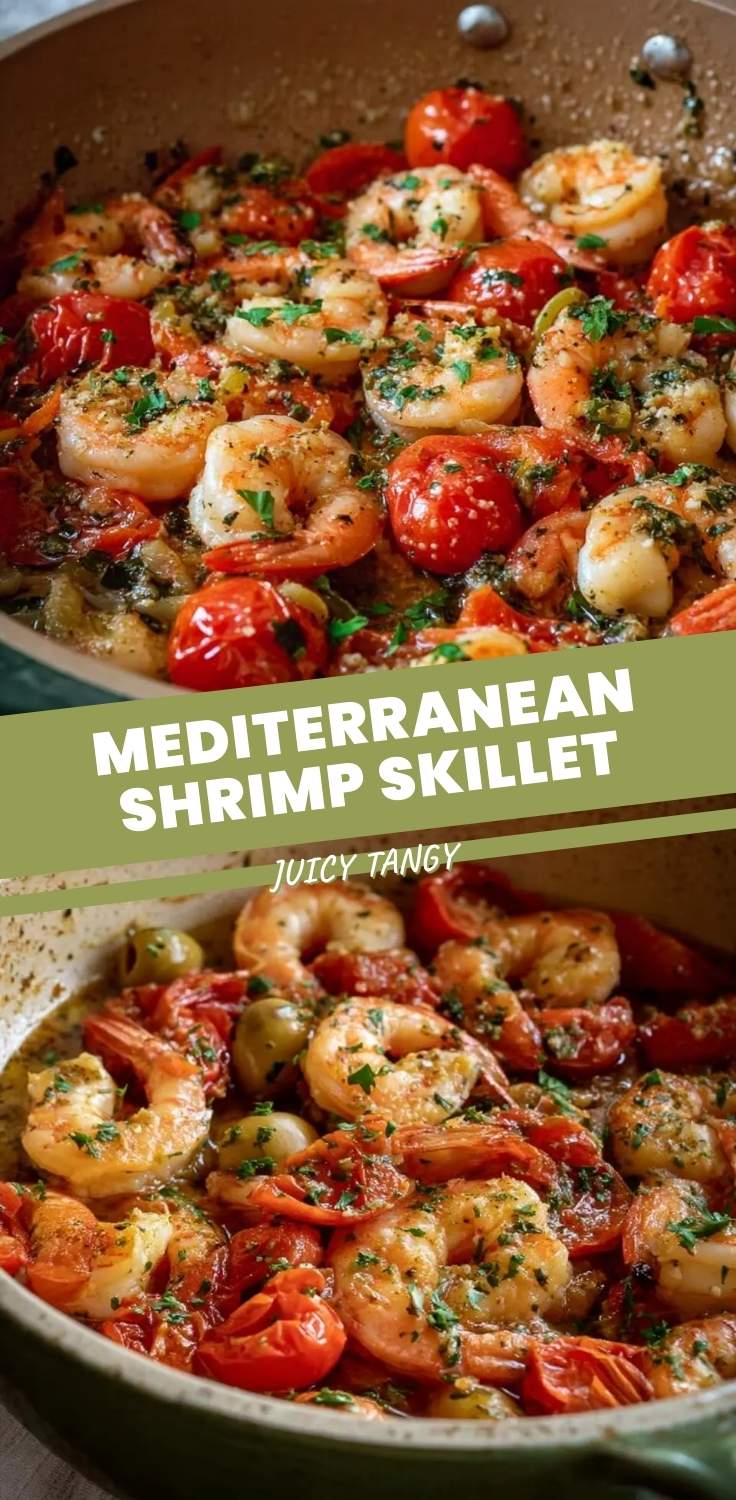
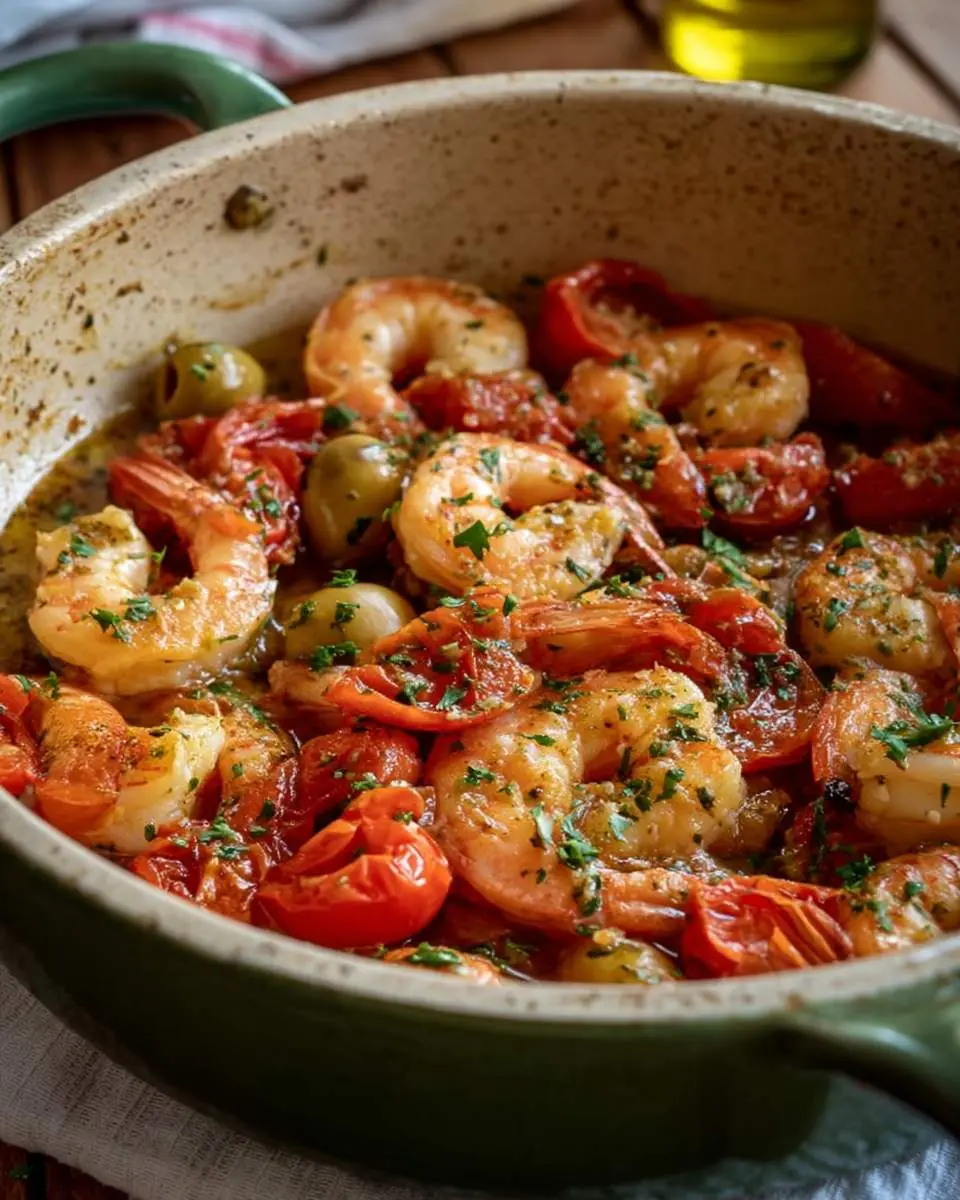
The shrimp matter more than you’d think , I always grab the biggest ones I can find, the kind that curl into perfect C-shapes and turn that gorgeous coral-pink when they hit the heat. Sun-dried tomatoes are the real secret weapon here; they bring this concentrated sweetness and chewy texture that fresh tomatoes simply can’t replicate, and they practically melt into the olive oil to build the sauce. Good kalamata olives make everything taste like you actually planned this meal, and a generous crumble of feta at the end turns the whole thing creamy and salty in the best possible way. I first learned the power of simple Mediterranean pantry staples from my avocado and tuna tapas recipe, and this Mediterranean shrimp skillet follows that same philosophy.
How to Make Mediterranean Shrimp Skillet
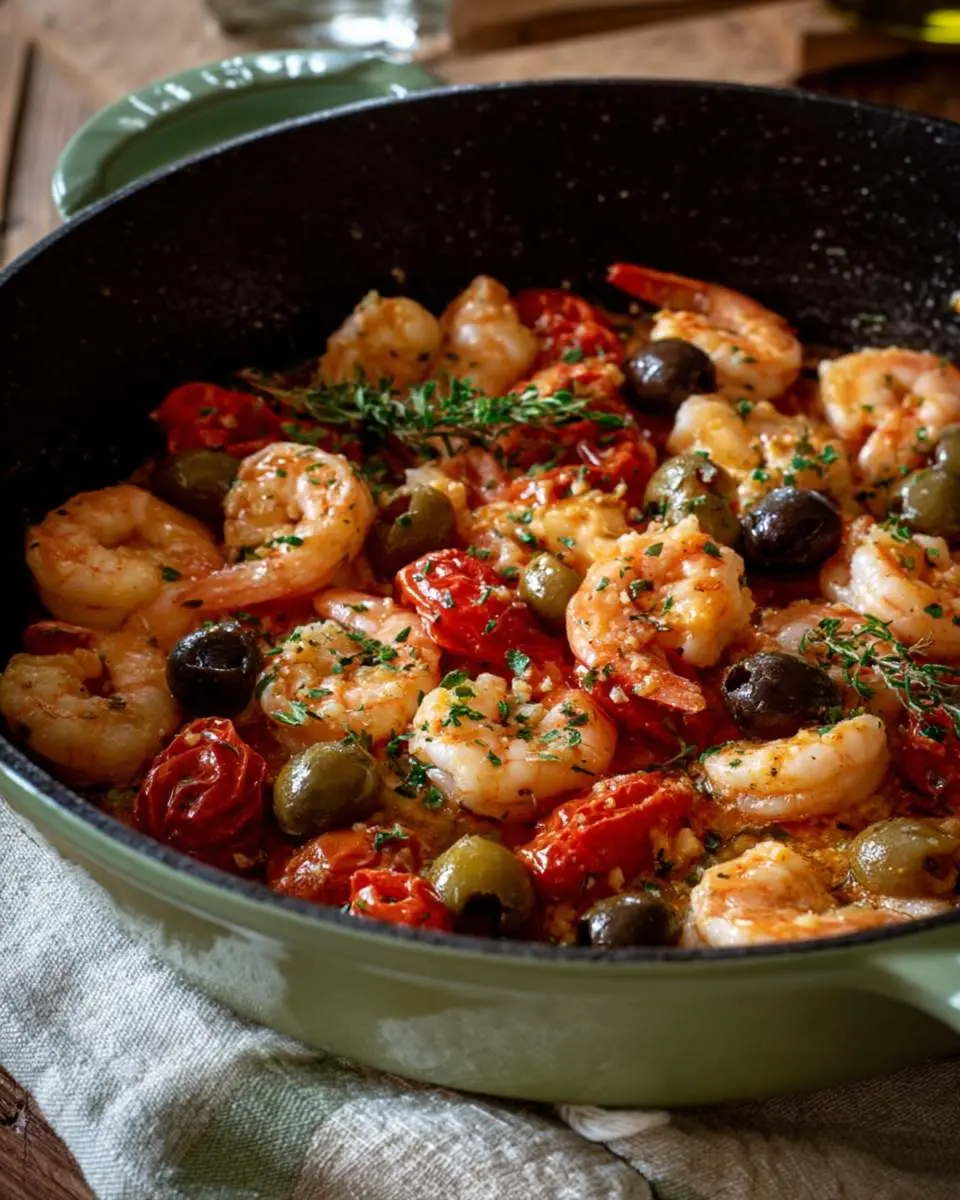
I start by warming a generous pour of olive oil in my biggest skillet , the cast iron one that’s already seasoned from years of use , and I toss in the sun-dried tomatoes first so they can soften and release their sweetness into the oil. The garlic goes in next, and I stand right there, wooden spoon in hand, because thirty seconds too long and it turns bitter and ruins everything; you want that moment when your whole kitchen suddenly smells like an Italian grandmother’s house. The shrimp hit the pan with a satisfying sizzle, and I watch for that precise instant when they turn opaque and curl, which happens faster than you expect, maybe two minutes per side if your pan’s hot enough.
Then everything else tumbles in , the olives, the roasted peppers, a splash of the tomato oil if I’m feeling indulgent , and I let it all bubble together for just a minute so the flavors marry without the shrimp turning rubbery. The feta goes on at the very last second, off the heat, so it stays in creamy chunks rather than disappearing completely. For another shrimp dish that masters this same quick-cooking technique, my lemon garlic shrimp orzo uses nearly identical timing.
Pro Tips
Pat those shrimp bone-dry before they hit the pan. Any moisture steams them instead of searing, and you lose that gorgeous caramelized edge that makes each bite taste like it came from a restaurant kitchen. I lay mine on paper towels and press gently while the oil heats.
Save the oil from your sun-dried tomato jar. It’s already infused with tomato essence and carries way more flavor than plain olive oil. I use two tablespoons of it to start the dish, then add regular olive oil only if I need more to coat the pan.
Buy shrimp with the shell on if you can find them. The shells protect the meat and keep it sweeter during cooking, and the brief extra effort of peeling pays off in texture you simply can’t get from pre-peeled. I peel them myself while the oil warms.
My Secret Trick: I keep a small ramekin of the tomato oil mixed with a pinch of smoked paprika and lemon zest, and I drizzle it over the finished dish right before serving , it adds this subtle warmth and brightness that makes people ask what your secret is.
How to Store Mediterranean Shrimp Skillet
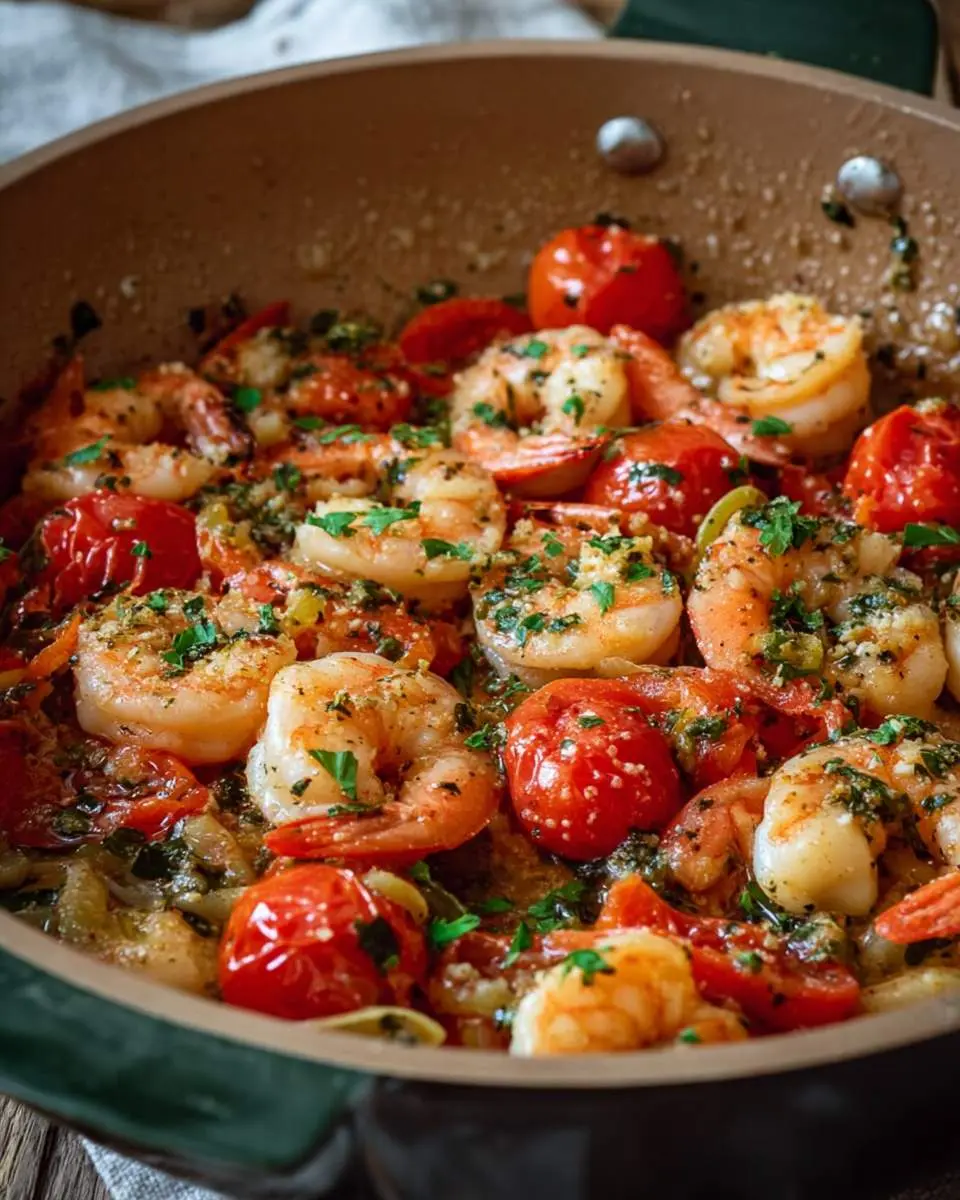
- Refrigerate in an airtight glass container for up to 2 days , the shrimp deteriorate quickly and day three gets that unfortunate rubbery texture.
- Store at 40 degrees Fahrenheit or below, and place the container on a shelf rather than the door where temperature fluctuates.
- Freeze only if absolutely necessary: cool completely, transfer to a freezer bag with all air pressed out, and use within 1 month. The texture suffers, so I rarely do this.
- Reheat gently in a skillet over medium-low with a splash of water or broth, stirring constantly, just until warmed through , about 3 minutes. The microwave makes the shrimp tough and the feta rubbery.
Nutritional Benefits
This Mediterranean shrimp skillet delivers serious protein without heaviness , a single serving packs roughly 25 grams from the shrimp alone, which keeps me full without that post-dinner slump. The olive oil and olives bring genuine heart-healthy fats, the kind that sustained Mediterranean communities long before anyone counted macros, and I always feel genuinely good after eating this rather than just satisfied.
FAQs
Can I use frozen shrimp for this recipe?
Absolutely , that’s what I use nine times out of ten. Thaw them overnight in the refrigerator, or place in a colander under cold running water for about fifteen minutes. Pat completely dry before cooking to get that proper sear.
What can I substitute for feta cheese?
Goat cheese works beautifully and melts slightly more into the warm skillet. I’ve also used a good ricotta salata when I wanted something less tangy. Avoid mozzarella , it gets stringy and doesn’t have the necessary salt punch.
How do I keep the shrimp from getting rubbery?
Pull them from the heat the instant they turn pink and opaque , they continue cooking from residual heat. For a Mediterranean shrimp skillet this quick, there’s no walking away from the stove. Set your table first, then cook.
Can I make this dish ahead for a dinner party?
Prep all your vegetables and aromatics earlier in the day, but cook the shrimp absolutely last minute. The actual cooking takes under ten minutes, and your guests will taste the difference between freshly seared and held-over seafood.

Mediterranean Shrimp Skillet
Ingredients
Equipment
Method
- Pat shrimp dry with paper towels. Toss with 1 tablespoon olive oil, smoked paprika, and a generous pinch of salt. Set aside at room temperature while you prep the vegetables.
- Heat remaining 1 tablespoon olive oil in a large skillet over medium heat. Add onion and cook until softened and just starting to turn golden at the edges, about 5 minutes. Stir in garlic and cook until fragrant, 30 seconds.
- Add cherry tomatoes, white wine, oregano, and red pepper flakes if using. Increase heat to medium-high and cook until tomatoes begin to burst and release their juices, 4 to 5 minutes, pressing some with the back of your spoon to help them break down.
- Stir in olives, then nestle shrimp into the sauce in a single layer. Reduce heat to medium-low, cover, and cook until shrimp turn pink and opaque throughout, 3 to 4 minutes. Do not overcook - they will continue cooking off heat.
- Remove from heat. Scatter feta over the top, then sprinkle with parsley, lemon zest, and a squeeze of lemon juice. Serve straight from the skillet with crusty bread, orzo, or over greens.
Notes
Conclusion
I hope this Mediterranean shrimp skillet lands on your table soon, ideally on a night when you need something wonderful without the work. Make it once and it becomes muscle memory , the kind of recipe that frees you up to actually enjoy your evening. For another shrimp favorite that never fails to impress, try my lemon herb grilled shrimp the next time you fire up the grill.