pasta puttanesca
The aroma of garlic and anchovies sizzling in olive oil always takes me back to my tiny apartment kitchen, where I first discovered the magic of pasta puttanesca. It was a revelation—a dish that proved you don’t need a long list of fancy ingredients to create something truly extraordinary. It’s a sensory experience from start to finish, filling the house with a fragrance that is simultaneously rustic, comforting, and exciting.
The bold, punchy flavors of olives, capers, and tomatoes come together in a symphony of taste that’s both deeply savory and wonderfully bright. This classic pasta puttanesca is a simple masterpiece, much like a perfect Spaghetti Aglio e Olio, and a true testament to the beauty of Italian cooking. It’s more than just a meal; it’s a celebration in a bowl.
Why This Dish is a Go-To in My Kitchen
This recipe is my absolute weeknight hero. With just 10 minutes of prep and 20 minutes of cooking, I can have a deeply flavorful, satisfying meal on the table in half an hour. It’s one of those brilliant dishes that relies almost entirely on pantry staples, which is a lifesaver on busy days when I haven’t had a moment to plan for dinner. It feels resourceful and clever every time I make it.
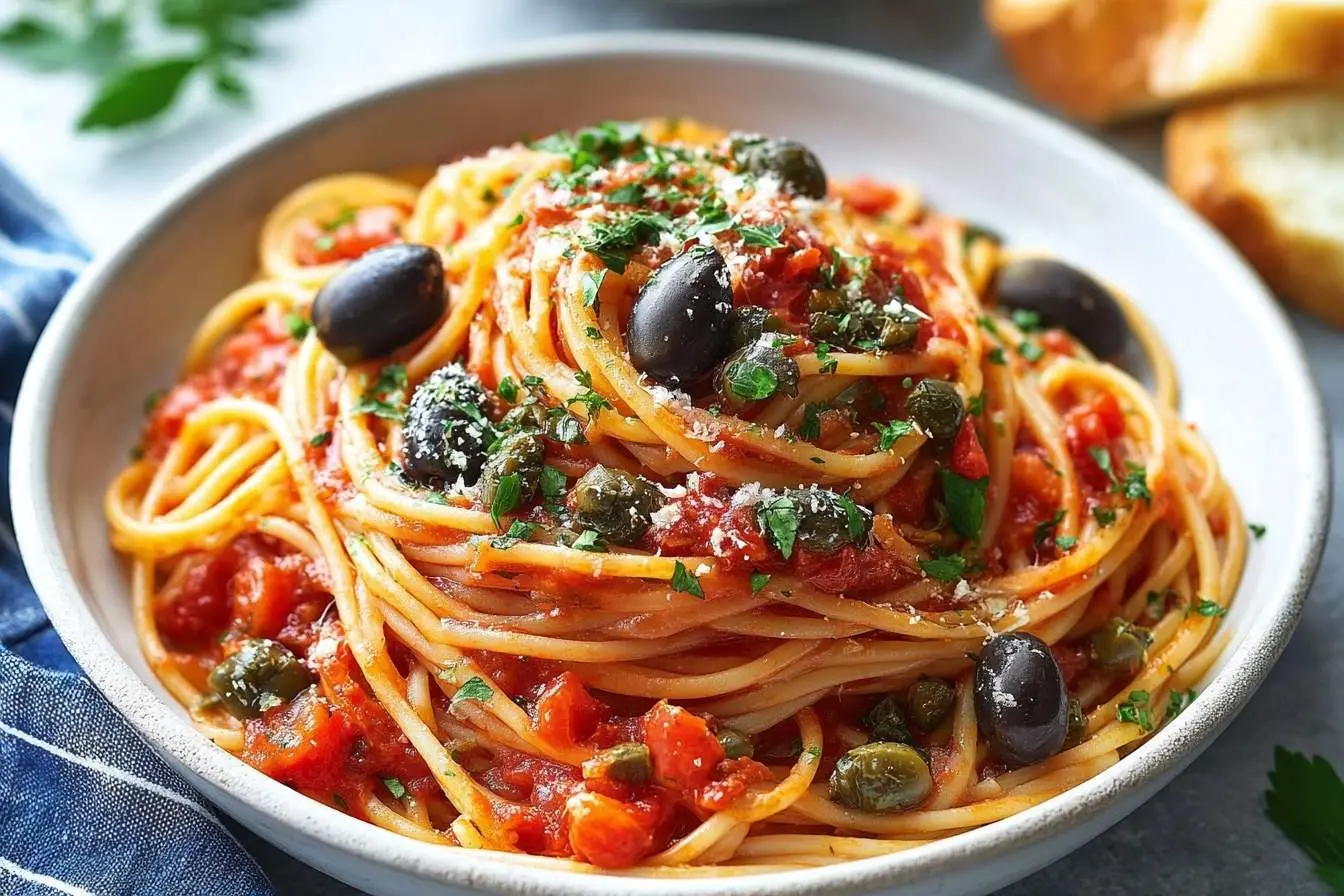
What I adore most is how a few humble ingredients create such incredible complexity. The anchovies melt away, providing a savory umami backbone, while the briny Kalamata olives and sharp capers add bursts of bright, salty flavor that cut through the richness of the tomato sauce. It’s a dish with confidence and character, delivering a gourmet experience with truly minimal effort.
Ingredient Notes for Classic Pasta Puttanesca: A Taste of Naples
I always insist on anchovies packed in oil; they melt seamlessly into the sauce, leaving behind a rich, savory depth. For the tomatoes, I use whole peeled ones that I crush by hand. This gives the sauce a wonderful, rustic texture, a technique I also use for my creamy tomato pasta.


Classic Pasta Puttanesca: A Taste of Naples
Ingredients
Equipment
Method
- Bring a large pot of generously salted water to a boil for the pasta. While waiting for the water to boil, begin the sauce.
- In a large skillet or sauté pan, heat the olive oil over medium heat. Add the sliced garlic and cook, stirring frequently, until it becomes fragrant and lightly golden, about 1-2 minutes. Be careful not to burn it.
- Add the finely chopped anchovies and the red pepper flakes to the skillet. Use a wooden spoon to break up the anchovies, stirring them into the oil until they dissolve completely. This should take about 2 minutes and will create a deeply savory base for your sauce.
- Stir in the chopped olives and rinsed capers. Cook for one minute more, allowing their flavors to bloom in the hot oil.
- Pour in the hand-crushed tomatoes with their juices and add the dried oregano. Stir everything together. Bring the sauce to a gentle simmer, then reduce the heat to low. Let it cook uncovered for 15-20 minutes, stirring occasionally, until the sauce has thickened slightly and the flavors have melded.
- While the sauce is simmering, add the spaghetti to the boiling water. Cook according to package directions until al dente (firm to the bite).
- Just before draining the pasta, reserve about 1 cup of the starchy pasta water. Drain the pasta well in a colander.
- Add the drained pasta directly to the skillet with the puttanesca sauce. Add the chopped fresh parsley and toss vigorously to coat the pasta completely. If the sauce seems too thick, add a splash or two of the reserved pasta water to achieve a silky consistency that clings to the noodles.
- Taste and season with freshly ground black pepper. It will likely not need much, if any, salt due to the briny ingredients. Serve immediately, garnished with a sprinkle of extra fresh parsley.
Notes
How I Make Classic Pasta Puttanesca: A Taste of Naples Step-by-Step
I always begin by creating a fragrant foundation of flavor. I gently sauté finely chopped garlic and anchovies in shimmering extra virgin olive oil, watching as the anchovies magically dissolve and perfume my entire kitchen. This simple step is the soul of the sauce. Once that base is ready, I stir in the crushed tomatoes, briny olives, capers, oregano, and a pinch of red pepper flakes. I let this simmer gently, allowing all the flavors to meld together into something truly special.
While the sauce is bubbling away, I cook my spaghetti until it’s just shy of al dente. This method is as wonderfully straightforward as making my favorite Penne all’Arrabbiata. The final, crucial step is to unite the pasta with the sauce right in the skillet, tossing everything vigorously with a splash of starchy pasta water to create a perfectly emulsified coating.

My Tips for the Perfect Outcome
- Don’t be shy with the anchovies; they’re the heart of the dish’s umami flavor.
- Toast the garlic gently to infuse the oil without burning it.
- Reserve about a cup of the starchy pasta water to help bind the sauce.
How I Serve and Store This Dish
I serve this pasta steaming hot, finished with a generous handful of fresh parsley and a final drizzle of extra virgin olive oil. It truly needs nothing else. If I have leftovers, I store them in an airtight container in the refrigerator for up to three days. It reheats wonderfully on the stovetop with a splash of water, making it an excellent meal prep option, much like a big batch of Bolognese pasta.
Frequently Asked Questions
Can I make this dish without anchovies?
You can, but the anchovies provide that classic savory depth. For a vegetarian option, try substituting them with a teaspoon of miso paste or some finely chopped Kalamata olives to add a salty, umami kick, though the final flavor will be different.
Is pasta puttanesca supposed to be very spicy?
Traditionally, it has a gentle warmth from red pepper flakes, but the heat level is entirely up to you. I start with a small pinch for a subtle kick and add more if I’m in the mood for something spicier.
What kind of pasta works best for this recipe?
I always reach for long pasta shapes like spaghetti or linguine, as they are perfect for capturing the rustic, chunky sauce. However, feel free to use whatever you have on hand; penne or rigatoni would also be delicious choices.
Can I use green olives instead of Kalamata?
While Kalamata olives offer a distinct richness, you can certainly use other brined olives. A firm, flavorful green olive like Castelvetrano would be a lovely substitute, offering a slightly milder, buttery flavor to the finished pasta puttanesca dish.
Conclusion
This recipe is a cherished part of my cooking repertoire, and I truly hope it brings as much warmth and satisfaction to your kitchen as it does to mine. If you give it a try, I would be thrilled to hear how it went in the comments below!