Pasta with Portobello Mushroom
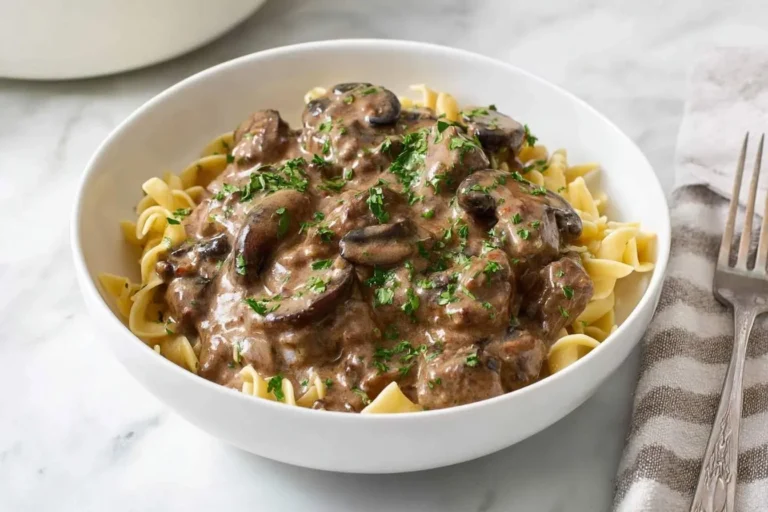
The first time I made pasta with portobello mushroom, I was standing in my kitchen at 8 PM with nothing but a half-empty wine bottle and three giant mushrooms that were about to turn. I had no plan. But twenty minutes later, the smell of garlic and thyme hitting those meaty portobello slices had me leaning against the counter, fork in hand, wondering why I had ever bothered with complicated weeknight dinners.
My grandmother would have called this “making do,” but I call it magic. She kept a wooden box of dried pasta in her pantry that smelled like wheat fields, and whenever mushrooms were on sale, she’d build entire meals around them. I think of her every time the mushrooms hit the hot pan and that deep, earthy scent fills my apartment.
This dish has become my reset button — the one I make when I need comfort without complexity. If you are craving something similar but lighter, my low-carb lo mein with kielbasa and peppers hits that same satisfying note without the pasta.
What You Need to Make This Recipe
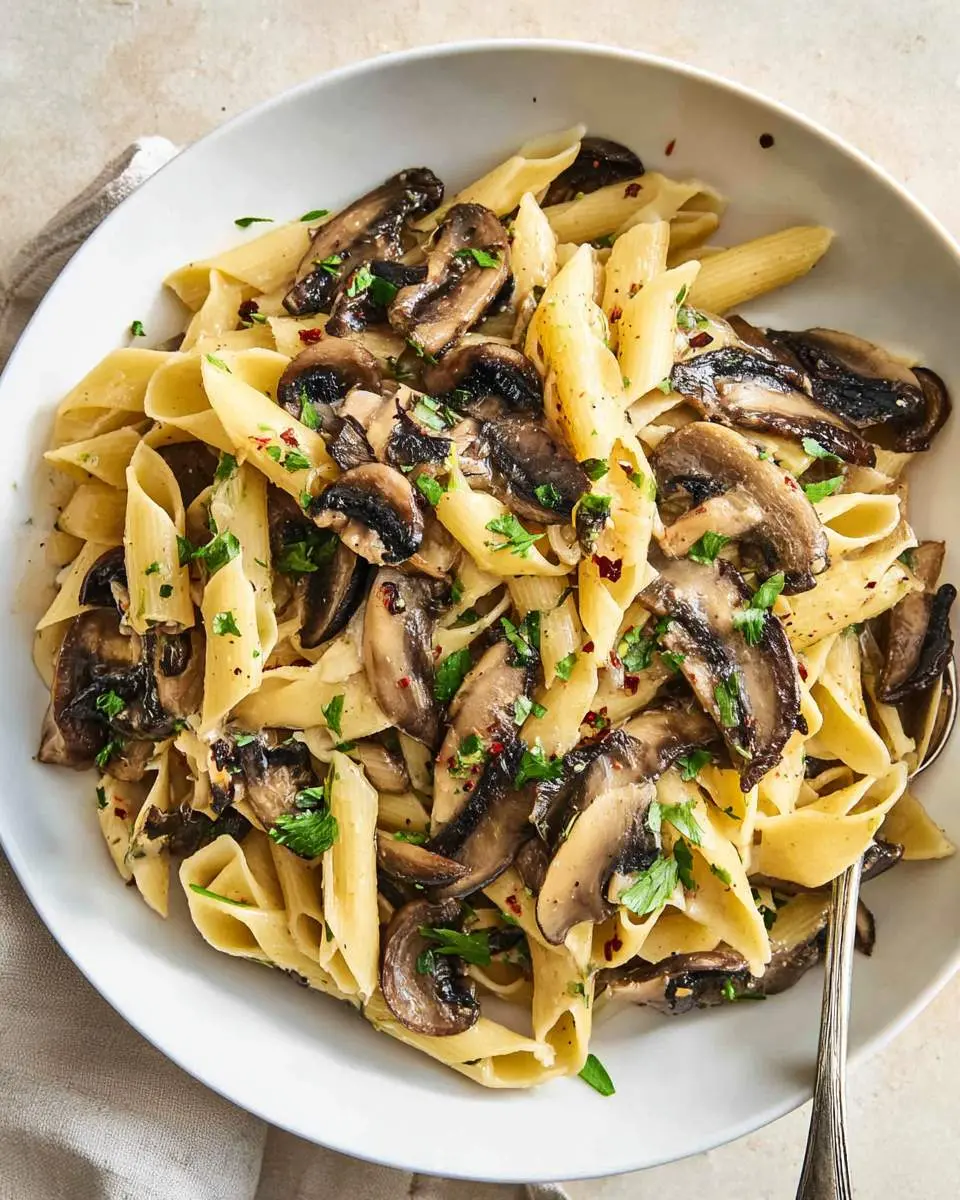
The portobellos are the star here, and I always grab the ones that feel heavy for their size — that density means they will hold up to slicing and sautéing without turning to mush. I use dried thyme because it blooms beautifully in hot butter, releasing something almost floral that fresh thyme never quite achieves. For the pasta, I reach for something with ridges or holes — penne, rigatoni, even orecchiette — because those crannies catch the mushroom juices and any bits of garlic that cling to the pan. If you want another weeknight pasta that leans on hearty add-ins, my pasta with sausage and veggies uses the same philosophy of building flavor fast.
How to Make Pasta with Portobello Mushroom
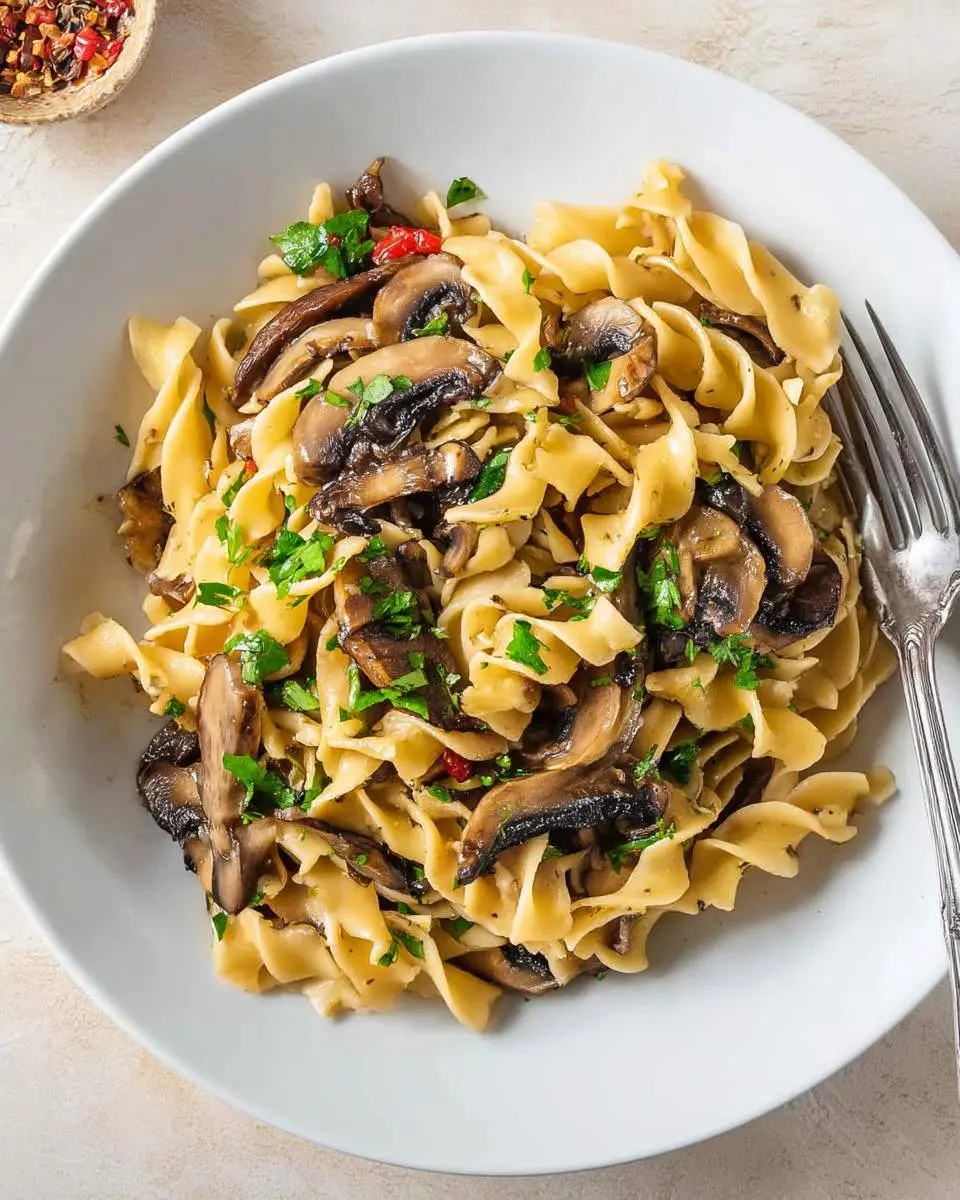
I start the pasta water first, always, because the mushrooms cook fast and I want them waiting for the noodles, not the other way around. While the water comes up, I slice the portobellos thick — about half-inch planks — so they sear instead of steam. The sound when they hit the hot butter is the sound of dinner going right: that aggressive sizzle that means the pan is hot enough.
The garlic goes in after the mushrooms have some color, never before, because burned garlic ruins everything. I toss in the thyme and let it get fragrant, maybe thirty seconds, then I start ladling in that starchy pasta water. It sounds wrong, adding water to a pan, but it creates this silky, almost creamy coating that clings to everything. When the pasta finally tumbles in, I turn off the heat and let the residual warmth do the final marrying. The mushrooms relax into the noodles, the sauce tightens just enough, and I stand there sneaking bites directly from the pan. For a different mushroom pasta approach, my mushroom and garlic spaghetti lets the fungi shine with a lighter touch.
Pro Tips
Scrape the gills: Those dark brown gills under the portobello caps will turn your whole dish muddy gray. I use a spoon to scrape them out in about ten seconds — the mushrooms look cleaner and the final plate stays golden and appetizing.
Save more pasta water than you think: I ladle out a full cup before draining, because this sauce tightens as it sits. Having extra starchy water on standby means you can revive leftovers or loosen a plate that got too clumpy.
Finish with cold butter: Swirling in one last tablespoon of cold butter off the heat creates that restaurant-level sheen and rounds out the acidity from any wine or lemon you added.
My Secret Trick: I toast the dried thyme in the dry pan for ten seconds before adding any fat — it wakes up the essential oils and makes the whole kitchen smell like somewhere I want to be.
How to Store Pasta with Portobello Mushroom
- Refrigerate in an airtight container for up to 3 days — the mushrooms will continue to release moisture, so expect the sauce to loosen slightly
- Freeze in individual portions for up to 1 month, though the texture of the mushrooms will soften upon thawing
- Reheat gently in a skillet over medium-low heat with 2-3 tablespoons of water or broth to revive the sauce
- Microwave reheating works in 60-second bursts with a damp paper towel over the container to prevent drying
Nutritional Benefits
Pasta with portobello mushroom delivers real substance without heaviness — those portobellos bring more potassium than a banana and a surprising dose of selenium, which my body seems to crave in winter. The combination of complex carbohydrates from whole wheat pasta (when I use it) and the meaty satisfaction of mushrooms means I stay full through an evening of writing or a long walk with the dog.
FAQs
Can I use baby bella mushrooms instead of portobellos?
Baby bellas work, but you will need more of them and the texture will be softer. I buy about twelve ounces to replace four large portobellos, and I slice them slightly thicker to help them hold their shape in the hot pan.
What wine pairs best with this dish?
I reach for a medium-bodied red like Chianti or a dry Pinot Noir — nothing too tannic that will fight the earthiness. If I am in a white mood, an unoaked Chardonnay with some minerality complements the mushrooms without overwhelming.
How do I keep the mushrooms from getting rubbery?
High heat and minimal stirring. I let them sit undisturbed for a full three minutes per side so they develop that golden crust. Moving them too early causes them to release moisture and steam instead of sear.
Is pasta with portobello mushroom good for meal prep?
It works better than most cream-based pastas because the sauce is olive oil and pasta water, not dairy that separates. I prep the mushrooms ahead and cook fresh pasta when I am ready to eat — the components hold beautifully for three days.
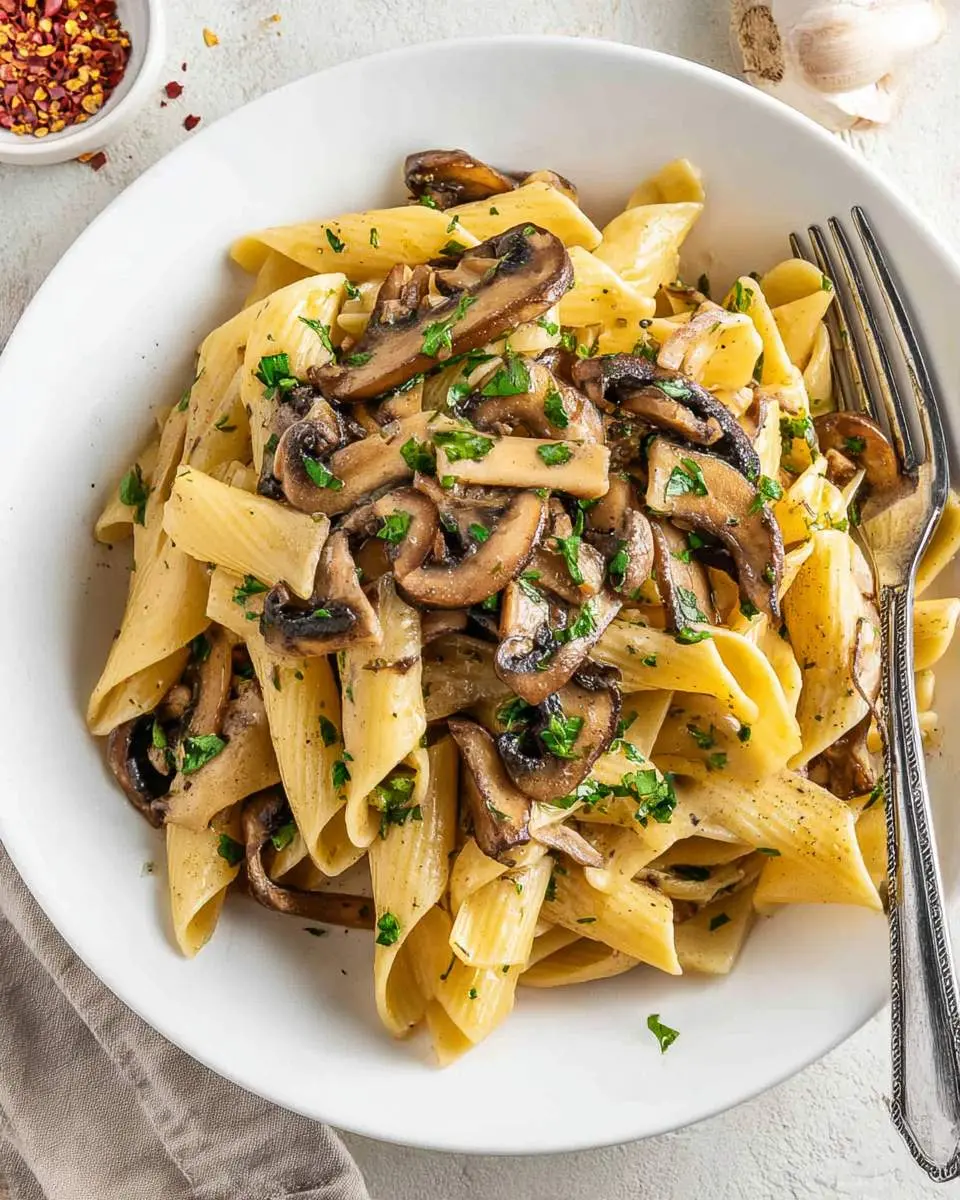

Pasta with Portobello Mushroom
Ingredients
Equipment
Method
- Bring a large pot of water to a boil. Add 2 tablespoons kosher salt, then the pasta. Cook 2 minutes less than package directions for al dente. Reserve 1 cup pasta water, then drain.
- Heat 2 tablespoons olive oil in a large skillet over medium-high heat until shimmering. Add half the mushrooms in a single layer. Cook undisturbed until deeply browned on the bottom, about 4 minutes. Flip and cook 3 minutes more. Transfer to a plate. Repeat with remaining mushrooms.
- Reduce heat to medium. Add butter and remaining 1 tablespoon olive oil to the skillet. Add garlic and cook until golden at the edges, about 2 minutes. Stir in thyme and red pepper flakes, then pour in wine. Simmer until reduced by half, about 3 minutes.
- Return mushrooms and any juices to the skillet. Add drained pasta, 1/2 cup reserved pasta water, and Parmesan. Toss vigorously over medium heat until a creamy sauce coats the pasta, about 2 minutes. Add more pasta water if needed. Remove from heat and stir in parsley. Season with black pepper.
- Divide among warm bowls. Top with additional Parmesan and a drizzle of olive oil if desired.
Notes
Conclusion
This pasta with portobello mushroom has saved more of my evenings than I can count — the kind of recipe that reminds me that good food does not need a long ingredient list or hours of effort. It just needs attention, a hot pan, and the willingness to trust that simple things, done well, are enough. For another mushroom-forward pasta that feels like a hug, try my spinach mushroom pasta — it carries the same spirit with a little extra green.