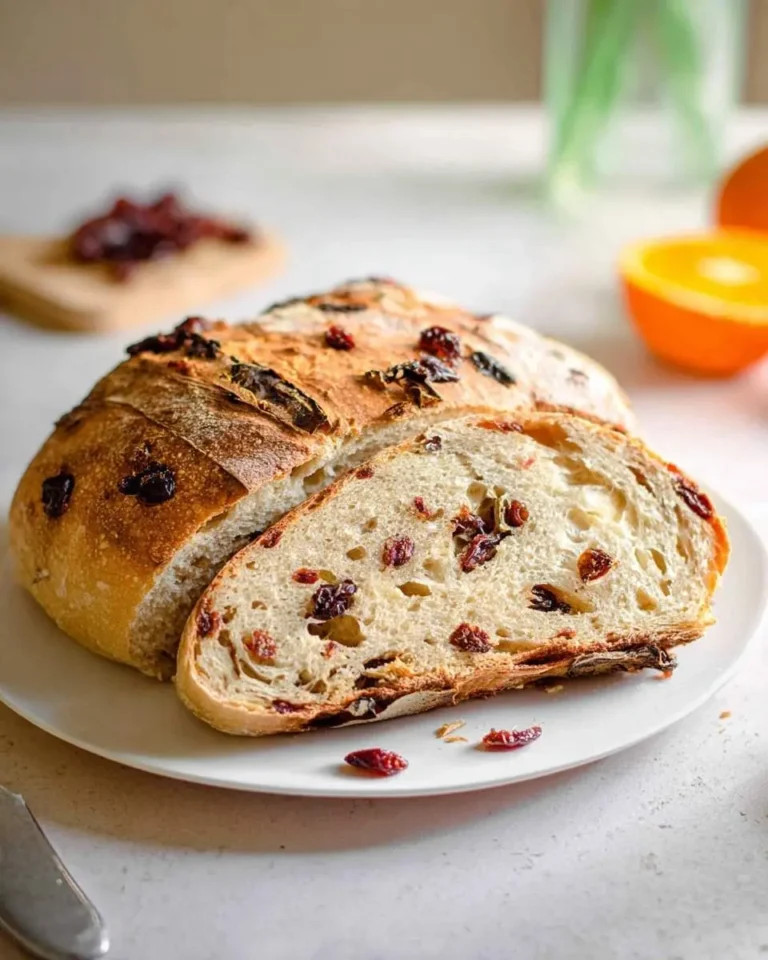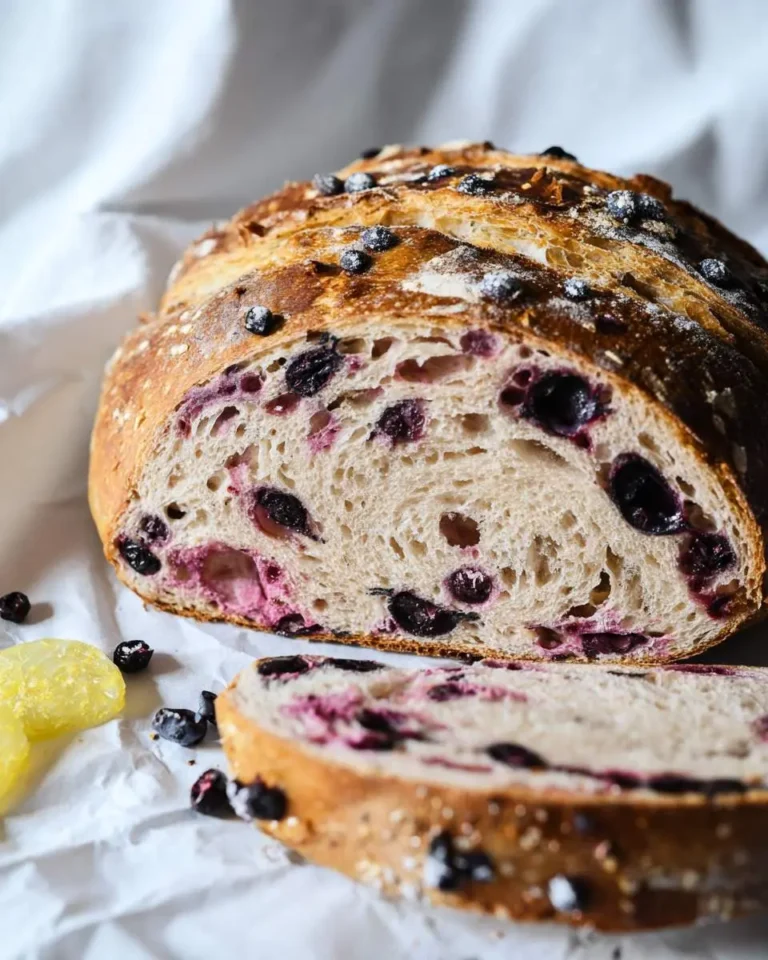
Sourdough Bread
There’s something truly magical about the aroma of freshly baked bread filling my kitchen. It’s more than just a loaf; it’s a warm hug, a promise of comfort, and a testament to the simple joy of creating something beautiful with your own hands. This classic artisan Sourdough Bread, with its chewy interior and gloriously crisp crust, reminds me of the simple pleasures, much like a slice of our family’s Rhubarb Bread.
I fondly remember my grandmother’s kitchen, always bustling with the smells of yeast and flour. While she didn’t bake sourdough, her dedication to homemade goodness deeply inspired me to explore the art of bread making. It became a cherished ritual, a way to connect with that feeling of home.
Making this recipe might seem daunting, but I promise you, it’s incredibly rewarding and surprisingly low-stress once you get into the rhythm. My secret is patience and trusting the process; the dough truly does most of the work for you.
What You Need to Make This Recipe
Crafting a beautiful Sourdough Bread starts with an active sourdough starter, hearty bread flour, and fine sea salt, giving it depth, much like the unexpected delight in my pineapple zucchini bread. The full list is in the recipe card below.

How to Make Sourdough Bread
Making classic Sourdough Bread at home involves a few key steps. We prepare the levain, autolyse, mix, then perform stretch and folds during bulk fermentation. After shaping, a cold proof leads to baking, creating a truly satisfying loaf, much like my 3-ingredient artisan bread but with deeper character.
Pro Tips for Making This Sourdough Bread
I’ve learned a few things over the years that truly make a difference when crafting a magnificent sourdough loaf.
- Understanding Your Starter: My top tip is to know your starter. A truly active starter, one that doubles in size within a few hours and passes the float test, is crucial. If it’s sluggish, feed it a few times before starting. I always make sure my starter is at its peak activity, bubbling with life, before I even think about mixing dough for this special bread.
- Don’t Rush Bulk Fermentation: This is where flavor develops. I always recommend paying attention to the dough, not just the clock. It should be visibly gassy, jiggly, and show signs of growth. My kitchen temperature can vary, so I adjust fermentation time accordingly.
- My Secret Trick: I always use a slightly damp cloth to cover my dough during bulk fermentation to prevent a skin from forming. This keeps the surface supple and makes shaping so much easier, leading to a much better oven spring for your homemade Sourdough Bread.
- The Cold Proof Advantage: Don’t skip the cold proof! It deepens the flavor and makes the dough much easier to handle for scoring and baking. I usually proof mine overnight for 12-18 hours in the fridge.

How to Store Sourdough Bread
Once you’ve baked a beautiful Sourdough Bread, you’ll want to enjoy every last crumb! For short-term storage, up to two days, I simply keep my loaf cut-side down on a cutting board or wrapped loosely in a clean linen towel at room temperature. For longer storage, I slice the cooled loaf and freeze the slices in an airtight bag.
To reheat, I love to pop a frozen slice into the toaster for a few minutes; it brings it back to life with a wonderful crispness. A whole loaf can be refreshed by misting it lightly with water and reheating in a preheated oven at 350°F (175°C) for about 10-15 minutes until the crust crisps up again. My personal tip: Reheating slowly brings the dish back to life and truly enhances the aroma!
Nutritional Benefits
Beyond incredible taste, homemade Sourdough Bread offers wonderful nutritional benefits. The long fermentation helps break down phytic acid, making nutrients more bioavailable. It’s a hearty choice I feel good serving my family, providing wholesome goodness.

FAQs
How do I know my sourdough starter is ready to use?
Your sourdough starter is ready when it has doubled or even tripled in size after feeding, showing lots of bubbles, and passes the “float test.” To perform this, drop a small piece of starter into a glass of water; if it floats, your active sourdough bread starter is good to go!
Can I make this sourdough bread recipe without a Dutch oven?
Yes, you can! While a Dutch oven provides excellent steam for a crispy crust, you can mimic the effect. Place a pan of boiling water on the bottom rack of your oven and bake the Sourdough Bread on a baking steel or stone, using the steam to achieve a similar result.
Why is my sourdough bread dense?
A dense Sourdough Bread can often be due to a few factors: an inactive starter, under-proofing or over-proofing the dough, or insufficient gluten development during mixing and stretching. Ensure your starter is very active and observe your dough for proper fermentation cues.
How long does it take to bake a classic sourdough loaf?
Once your oven is preheated, the baking process for this classic Sourdough Bread takes approximately 45 minutes. I start with a covered bake for the first 20-25 minutes to create steam, then uncover it to achieve that beautiful, golden-brown crust.


Classic Artisan Sourdough Loaf
Ingredients
Equipment
Method
- In a small jar or bowl, combine the active sourdough starter, warm water, and bread flour. Mix well until no dry spots remain.
- Cover loosely and let it sit at room temperature (70-75°F / 21-24°C) for 4-6 hours, or until it has doubled in size, is very bubbly, and passes the float test (a small dollop floats in water).
- In a large mixing bowl, combine the 350g warm water, 450g bread flour, and 50g whole wheat flour. Mix with your hands or a Danish dough whisk until no dry flour remains and a shaggy dough forms. Do not add the levain or salt yet.
- Cover the bowl with a clean kitchen towel or plastic wrap and let it rest for 30 minutes. This process, called autolyse, allows the flour to fully hydrate and gluten to begin developing.
- After the autolyse, add the 100g active levain to the dough. Squeeze and fold the dough to fully incorporate the levain.
- Once the levain is well integrated, sprinkle the 10g fine sea salt over the dough. Work the salt into the dough by squeezing and folding for another 5-7 minutes. The dough will feel sticky initially.
- Cover the bowl and let it rest for 30 minutes.
- This phase will last 3-4 hours, depending on your room temperature (warmer temps = faster fermentation). You will perform 4 sets of stretch and folds.
- First Set (30 minutes after salt incorporation): With wet hands, gently grab a portion of the dough from the edge, stretch it upwards, and fold it over to the center. Rotate the bowl and repeat this 3-4 more times until you've gone around the entire dough. Cover and rest for 30 minutes.
- Second Set (30 minutes later): Repeat the stretch and fold process. Cover and rest for 30 minutes.
- Third Set (30 minutes later): Repeat the stretch and fold process. Cover and rest for 30 minutes.
- Fourth Set (30 minutes later): Repeat the stretch and fold process. Cover and rest for 1 hour.
- After the fourth set, let the dough rest undisturbed for the remainder of the bulk fermentation, usually another 1-1.5 hours. The dough should look visibly gassy, slightly puffy, and have increased in volume by about 20-30%.
- Lightly flour your work surface. Gently turn the dough out onto the surface.
- Using a bench scraper, gently shape the dough into a loose round or rectangle. Be careful not to degas it too much.
- Let the dough rest, uncovered, for 20-30 minutes. This allows the gluten to relax.
- Prepare your proofing basket (banneton) by dusting it generously with rice flour (this prevents sticking better than wheat flour).
- Lightly flour the top of your pre-shaped dough. Gently flip it over so the floured side is down.
- Perform your final shaping: gently stretch one side of the dough out and fold it towards the center, then repeat with the opposite side. Then, take the bottom and fold it up to meet the top. Finally, roll the dough seam-side up to create tension on the top surface. You can also use a stitching method to create tension.
- Carefully transfer the shaped dough, seam-side up, into the floured banneton.
- Cover the banneton with plastic wrap or a shower cap and place it in the refrigerator for 12-18 hours (or up to 24 hours). This cold proof develops flavor and makes the dough easier to score.
- Preheat your oven to 500°F (260°C) with your Dutch oven inside for at least 30-60 minutes. This ensures the Dutch oven is scorching hot.
- While the oven preheats, take your dough out of the fridge.
- Carefully remove the hot Dutch oven from the oven.
- Gently invert the cold dough onto a piece of parchment paper or directly into the hot Dutch oven.
- Score the top of the dough with a sharp razor blade or knife. Create a single deep slash or a decorative pattern.
- Carefully place the lid back on the Dutch oven and bake for 20 minutes.
- After 20 minutes, remove the lid from the Dutch oven. Reduce the oven temperature to 450°F (230°C).
- Continue baking for another 25-30 minutes, or until the crust is a deep golden brown and the internal temperature reaches 200-210°F (93-99°C).
- Carefully remove the loaf from the Dutch oven (using the parchment paper if you used it) and transfer it to a wire rack.
- Let the bread cool completely for at least 1-2 hours before slicing. Slicing too early can result in a gummy texture.
Notes
Sourdough baking is highly dependent on ambient temperature. Warmer rooms will speed up fermentation; cooler rooms will slow it down. Adjust bulk fermentation times accordingly.
Using good quality bread flour (high protein content) is recommended for better gluten development. Whole wheat flour adds complexity and helps feed the starter.
Don't skip the cold proof! It significantly improves flavor, crust development, and makes the dough much easier to handle and score.
Store cooled sourdough bread at room temperature in a bread bag or a sealed container for 3-4 days. For longer storage, slice and freeze.
Feel free to experiment with inclusions like seeds (sesame, poppy, sunflower), herbs (rosemary, thyme), or cheese during the final shaping stage.
Conclusion
Baking your own classic Sourdough Bread is incredibly satisfying, filling your home with warmth and delicious aromas. It’s a rewarding journey, delivering a wholesome, comforting loaf for your family. I hope this guide inspires you to embrace the art of baking this wonderful Italian bread at home. The taste of homemade is simply unparalleled, and you’ll love having this staple on your table.