Turkey Skewers
The first time I threaded cubes of marinated turkey onto soaked wooden sticks, I had no idea I was about to stumble onto my family’s most-requested summer dinner. These turkey skewers changed everything for me , the way the edges char just enough while the centers stay impossibly juicy, the way the marinade caramelizes into sticky, savory lacquer. I still remember standing at my grill, spatula in hand, watching my neighbors’ heads turn as that smoky-sweet smell drifted over the fence.
My grandmother never grilled. She was an oven woman, a roaster, a believer in brown-and-baste. But she did teach me that turkey deserves more respect than the Thanksgiving table gives it. When I finally broke free from her butter-and-herb tradition, I felt like I was honoring her spirit of experimentation more than her exact recipes. These skewers became my rebellion, my signature, the thing my kids now request for every birthday dinner.
What I love most is how weeknight-friendly this feels despite tasting like something I’d order at a backyard restaurant. If you’ve never worked with turkey outside of a whole bird, my turkey steaks post will get you comfortable with the cut before you thread your first cube.
What You Need to Make This Recipe
The marinade is where the magic lives, and it hinges on three things: good olive oil that carries fat-soluble flavors deep into the meat, fresh lemon juice that tenderizes without turning mushy, and a heavy hand of garlic that almost burns on the hot grates in the best possible way. I use boneless turkey breast cut into generous one-inch cubes , anything smaller dries out, anything larger cooks unevenly. The yogurt in my marinade comes straight from my obsession with Moroccan lamb meatballs; it creates that subtle tang and helps the spice blend cling to every surface of these turkey skewers.
How to Make Turkey Skewers
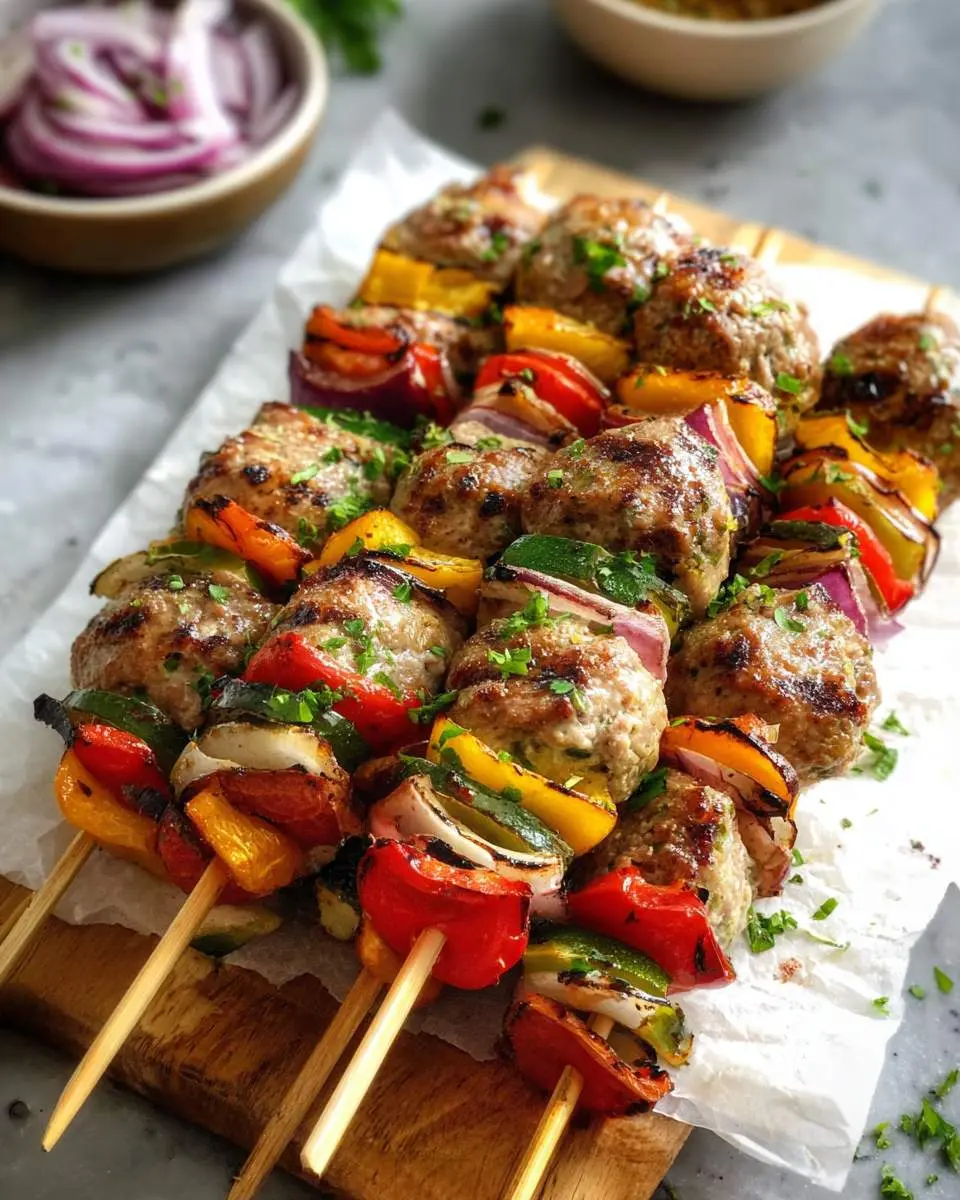
I start the night before, though you can rush it in four hours if patience isn’t your virtue. The turkey cubes go into a bowl with yogurt, lemon, garlic, smoked paprika, and a whisper of cinnamon , yes, cinnamon, trust me on this. I massage everything together with my hands, cover the bowl with plastic wrap, and let it sit in the coldest corner of my fridge.
The next evening, I thread the meat onto skewers that have been soaking in water for at least thirty minutes. This matters more than you’d think , dry skewers flare up, char black, and sometimes actually catch fire on my gas grill. I leave tiny gaps between each cube so heat can circulate; crowded meat steams itself sad and gray.
My grill gets screaming hot, then I dial it back to medium-high right before the turkey skewers hit the grates. The sound is immediate and satisfying , that aggressive sizzle that tells you caramelization is already beginning. I resist the urge to move them for a solid four minutes. When I finally flip, the underside carries these beautiful dark stripes and the smell has shifted from raw garlic to something toasted and complex. Another three to four minutes, a quick rest under foil, and we’re eating. If you’re into other stick-based dinners, my sausage kabobs use a similar technique with completely different flavors.
Pro Tips
Cut against the grain: Turkey breast has subtle grain lines running through it. I always cut perpendicular to these lines, which shortens the muscle fibers and makes each bite tender rather than stringy. It’s a thirty-second step that transforms the texture entirely.
Rest on a wire rack, not a plate: After grilling, I let my turkey skewers rest on a cooling rack set over a baking sheet. This stops the bottom from steaming in its own juices and keeps that crust I worked so hard to build.
Don’t skip the yogurt: Even if it feels weird marinating poultry in dairy, the lactic acid is gentler than straight citrus and creates a subtle barrier that helps the meat retain moisture. I’ve tested with and without , the difference is undeniable.
My Secret Trick: I save a quarter cup of the marinade before adding the raw turkey, then brush it onto the skewers during the final minute of grilling. This fresh layer caramelizes into a glossy, intensely flavored shell that makes people think I basted for hours.
How to Store Turkey Skewers
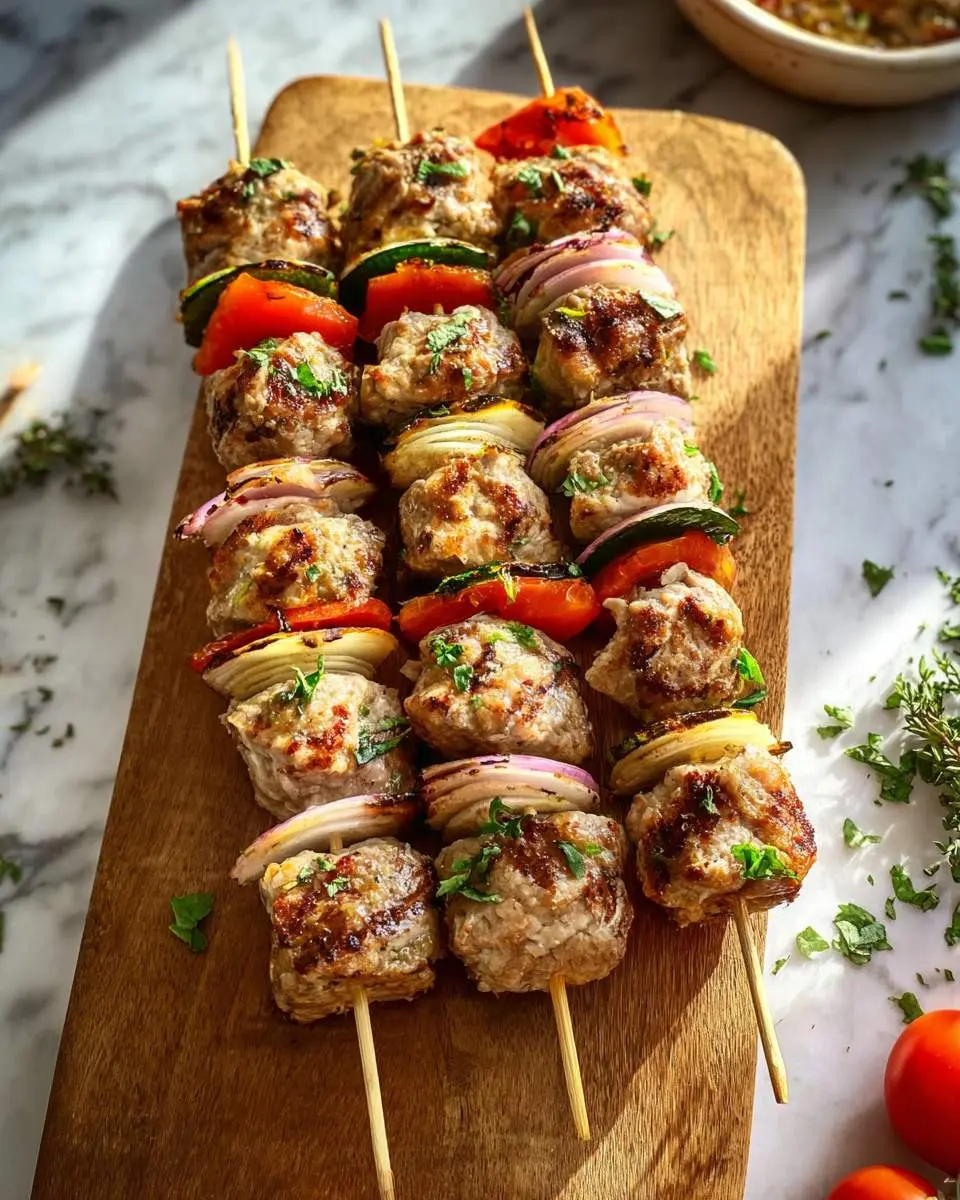
- Refrigerate cooled skewers in an airtight container within two hours of cooking; they stay moist and safe for up to 3 days at 40°F or below.
- Remove meat from skewers before freezing , wooden sticks get brittle and can splinter; frozen turkey keeps well for 2 months in a freezer bag with air pressed out.
- Reheat gently in a 325°F oven on a wire rack for 8-10 minutes; the microwave turns the exterior rubbery and sad, so I avoid it entirely.
- Leftover cold turkey from these skewers makes exceptional next-day salad topping , I slice it thin and never bother reheating at all.
Nutritional Benefits
These turkey skewers deliver serious protein without the saturated fat load that comes with my usual grilling favorites , each serving packs roughly 30 grams of lean protein that keeps me full through evening walks and late kitchen cleanup. The lemon and garlic aren’t just flavor workhorses; they bring actual compounds that support immune function and circulation, which feels like a bonus I didn’t have to work for.
FAQs
Can I use turkey thighs instead of breast?
Absolutely , thighs have more fat and stay even juicier, though they take slightly longer to cook through. I trim excess sinew and cut them a bit smaller, about three-quarter-inch cubes, to ensure even cooking without drying the exterior.
Why did my turkey skewers turn out dry?
Almost always overcooking or too-small cubes. Turkey breast has almost no fat to protect it, so those extra two minutes matter enormously. Pull them when the center hits 160°F; carryover cooking finishes the job during resting.
Can I make these in the oven instead of on a grill?
Yes , I broil them on a foil-lined baking sheet about 6 inches from the flame, turning once, for roughly 12 minutes total. You miss some smoky depth, but a pinch of smoked paprika in the marinade compensates surprisingly well.
What sides pair best with turkey skewers?
I gravitate toward bright, acidic contrasts: lemony orzo, charred cucumber salad, or flatbread with thick yogurt. The marinade’s warmth loves to play against cool, crisp elements rather than competing with more heavy, spiced dishes.
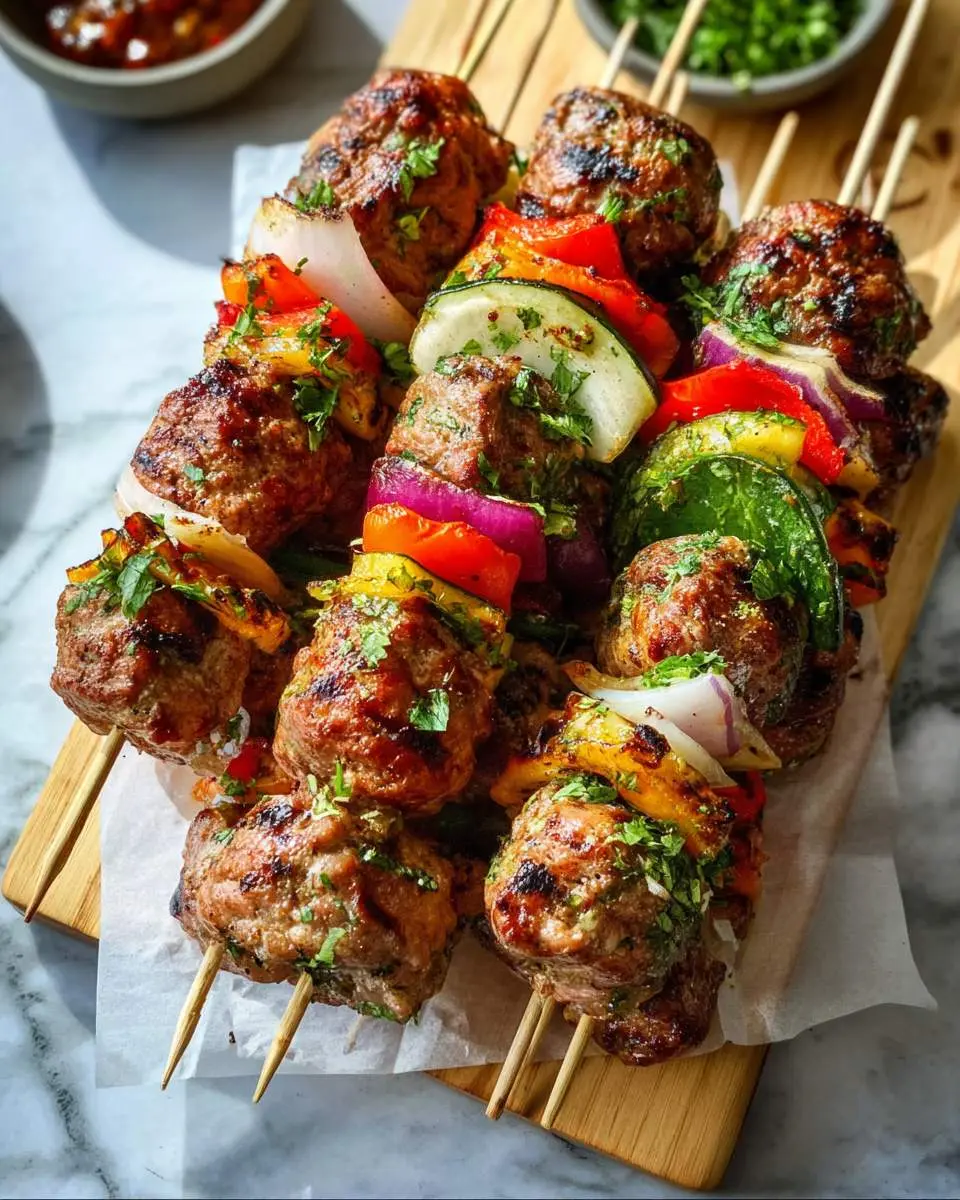

Turkey Skewers
Ingredients
Equipment
Method
- In a large bowl, whisk together olive oil, lemon juice, garlic, oregano, smoked paprika, salt, and pepper until well combined.
- Add turkey cubes to the marinade and toss to coat evenly. Cover and refrigerate for at least 30 minutes or up to 4 hours. Do not marinate longer or the acid will toughen the meat.
- Preheat your grill or grill pan to medium-high heat (about 400 degrees F). Thread turkey, bell pepper, and onion onto skewers, alternating pieces and leaving small gaps between them for even cooking.
- Grill skewers for 10-12 minutes total, turning every 3-4 minutes, until turkey is cooked through (internal temperature reaches 165 degrees F) and vegetables are charred at the edges.
- Transfer skewers to a plate and let rest for 3 minutes. Sprinkle with chopped parsley and serve with lemon wedges for squeezing over top.
Notes
Conclusion
I still get a little thrill every time I set a platter of these turkey skewers on my table , that moment when everyone reaches at once, when the first bite makes someone close their eyes and exhale. If turkey has felt like a holiday obligation to you, let this be the recipe that changes your mind. And when you’re ready to explore more ways to love this underappreciated bird, my Greek turkey meatballs with lemon herb rice are waiting to become your next obsession.