Watermelon Gazpacho
The first time I tasted watermelon gazpacho, I was standing in my sweltering kitchen in July, convinced nothing could cool me down. I’d been skeptical — cold soup felt like an oxymoron, and fruit in savory dishes always made me nervous. But one spoonful of that shocking pink liquid, bright with lime and humming with jalapeño, and I understood why Spaniards have been perfecting this for centuries.
My grandmother would have called it “fancy,” but she also thought iced tea was exotic. I made this for her 82nd birthday anyway, served it in her chipped ceramic bowls, and watched her go back for thirds. She died that winter, and now every August when the watermelons get heavy and sweet, I find myself reaching for the blender.
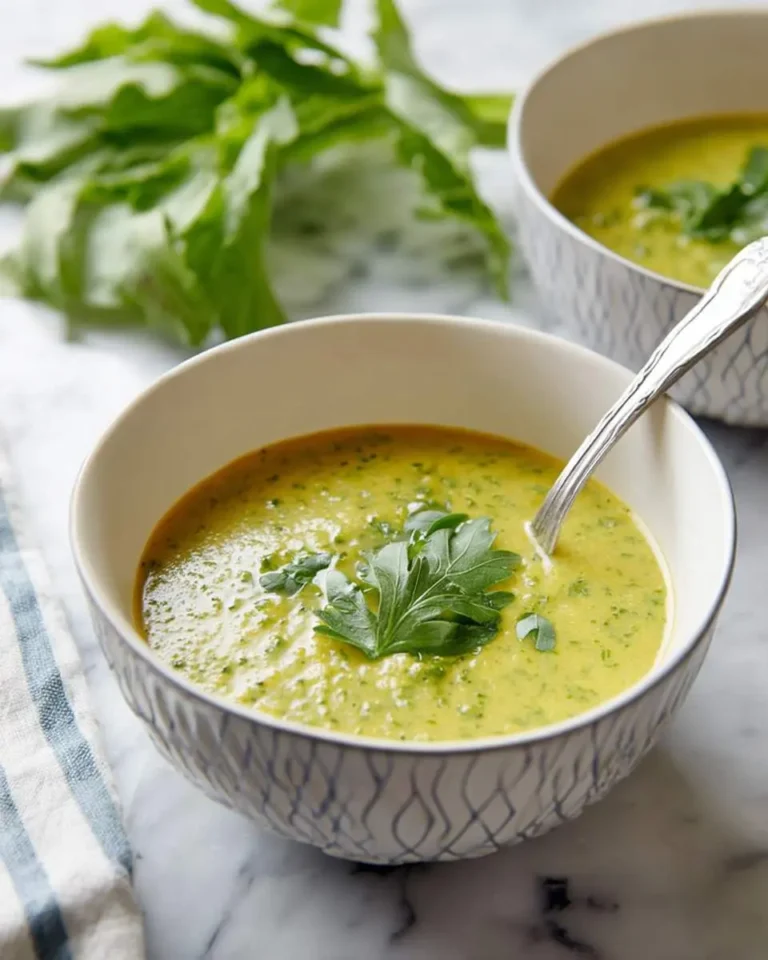
This soup has become my summer religion. If you’re new to cold soups, you might also love my dandelion soup recipe — it’s another unexpected favorite that converted my entire family.
What You Need to Make This Recipe
The watermelon matters more than you’d think. I learned this the hard way after using a bland, underripe melon that tasted like disappointment. You want one that sounds hollow when you thump it and smells sweet at the stem end — that’s where the sugar concentrates. Cucumber brings the cooling backbone; I prefer English or Persian varieties because their skins are tender enough to blend without peeling. The sherry vinegar is non-negotiable — it adds that subtle funk that makes watermelon gazpacho taste sophisticated rather than like a smoothie gone wrong. For another soup that plays with unexpected ingredients, check out my Reuben soup.
How to Make Watermelon Gazpacho
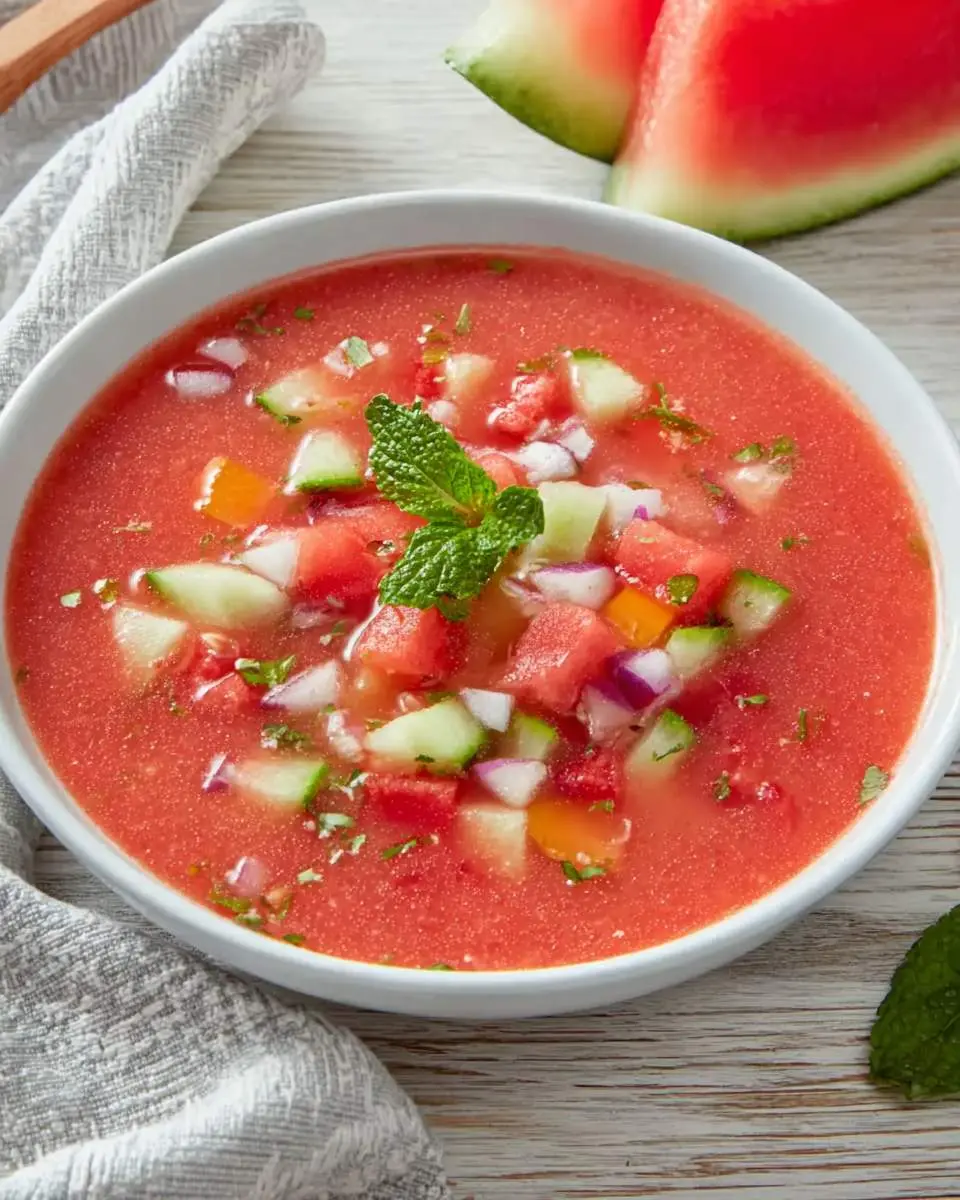
I start early, before the kitchen heats up. The watermelon gets chunked into rough pieces — no precision needed, the blender will finish the job. I taste a cube first, always, because this soup is only as good as its fruit. The cucumber, bell pepper, and onion follow, along with a fat clove of garlic that I sometimes roast if I’m feeling patient. Everything tumbles into the blender with sherry vinegar, olive oil, and a pinch of salt.
The machine whirs, and the color shifts from pale pink to something almost neon. I blend in batches, never filling more than halfway — hot liquid explosions are bad enough, but cold soup on the ceiling is somehow more insulting. The texture should be silky but not completely smooth; I like a little body, a hint of pulp that catches on your spoon. I strain half and leave half rustic, then recombine them.
The crucial step comes after blending: patience. This soup needs at least two hours in the refrigerator, preferably four. The flavors knit together, the harshness of raw garlic mellows, and that bright acidity settles into something complex. I stir in a final drizzle of olive oil right before serving, watching it marble across the surface. For a completely different cold soup approach, my roasted tomato basil soup uses similar techniques with very different results.
Pro Tips
Chill your bowls. I learned this from a restaurant in Seville — ten minutes in the freezer transforms the eating experience. The soup stays cold to the last spoonful, and there’s something deeply satisfying about that temperature contrast against your palms.
My Secret Trick: I freeze a cup of the blended base into ice cubes, then use those to chill the finished soup instead of regular ice. No dilution, just intensifying flavor as they melt. I’ve started keeping a bag of these cubes in my freezer all summer.
Toast your spices. If you’re adding cumin or smoked paprika — and I often do — bloom them in a teaspoon of hot oil first. The heat unlocks fat-soluble compounds that raw spices can’t access, adding depth that makes people ask what your secret is.
Balance with heat. Watermelon gazpacho can skew too sweet. I keep a jar of pickled jalapeño brine in my refrigerator and add it by the teaspoon when tasting. The acidity and gentle heat correct sweetness without adding more salt.
How to Store Watermelon Gazpacho
- Refrigerate in airtight glass containers for up to 4 days — the flavor actually improves after 24 hours as the garlic mellows
- Store at 40°F or below, keeping the container toward the back of the refrigerator where temperature stays most consistent
- Freezing is not recommended — the watermelon separates upon thawing, creating an icy, grainy texture
- If separation occurs during storage, whisk vigorously or re-blend for 10 seconds to restore emulsion
- Serve directly from cold storage; this soup should never be warmed
Nutritional Benefits
Watermelon gazpacho delivers serious hydration — one bowl contains nearly a cup of water from the melon and cucumber alone, plus electrolytes like potassium and magnesium that actually help your cells absorb it. The lycopene in ripe watermelon, that pigment responsible for its red flesh, becomes more bioavailable when blended with a small amount of fat like olive oil, meaning your body can actually use this powerful antioxidant rather than just passing it through.
FAQs
Can I make this without a blender?
A food processor works in batches, though the texture will be coarser. I’ve also used an immersion blender directly in a deep bowl, which requires more patience but produces acceptable results. Avoid attempting this in a standard smoothie bottle blender — the volume is too large and the motor will overheat.
Why does my gazpacho taste bitter?
Usually the culprit is the watermelon rind or cucumber skin. I trim at least half an inch of white pith from my melon and peel conventional cucumbers entirely. English cucumbers solve this problem since their skins are naturally mild and thin.
What can I substitute for sherry vinegar?
Red wine vinegar works in a pinch, though it’s more aggressive — start with half the amount and taste. Champagne vinegar is lovely and delicate. Avoid balsamic, which overwhelms, and white distilled vinegar, which tastes harsh and chemical.
How do I make this watermelon gazpacho ahead for a party?
Blend completely and refrigerate up to 48 hours ahead. The flavor actually improves with time. Prepare all garnishes separately — diced cucumber, herbs, olive oil — and add them just before serving to maintain their fresh texture and appearance.

Watermelon Gazpacho
Ingredients
Equipment
Method
- Working in batches if needed, blend the watermelon, tomatoes, cucumber, bell pepper, and shallot until completely smooth, about 1 minute. The mixture should look like a thin pink smoothie with no visible chunks.
- With the blender running on low, stream in the lime juice, sherry vinegar, and olive oil. Add the salt and Aleppo pepper, then blend on high for 30 seconds until the soup looks slightly creamy and well combined.
- Pour the soup through a fine-mesh strainer into a large bowl, pressing gently with the back of a spoon to extract all the liquid. Discard the solids. You should have about 5 cups of smooth, vibrant soup. Taste and adjust salt or lime if needed - it should taste bright and slightly salty since chilling dulls flavors.
- Cover and refrigerate for at least 2 hours, preferably 4, until the soup is very cold. The flavors will meld and deepen as it chills.
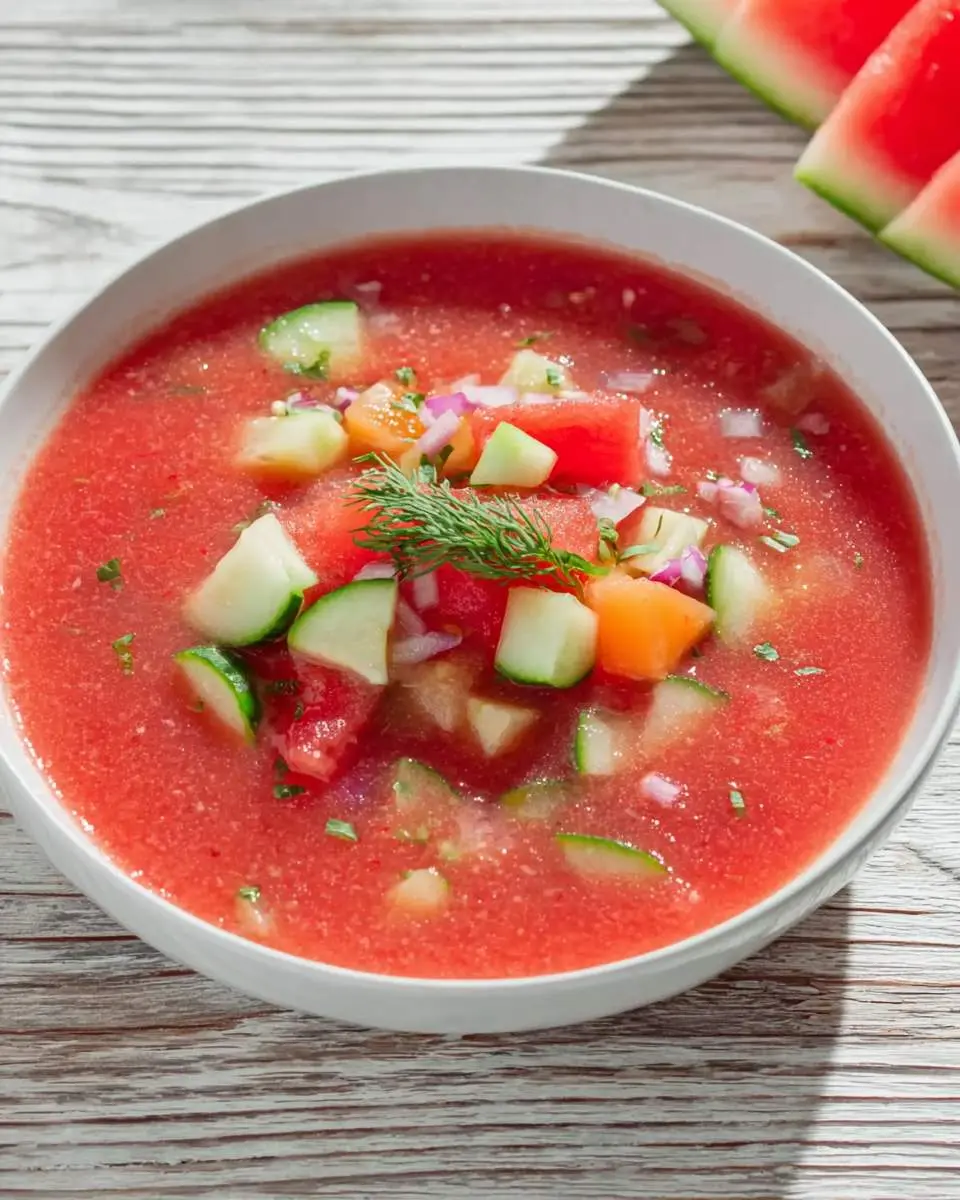
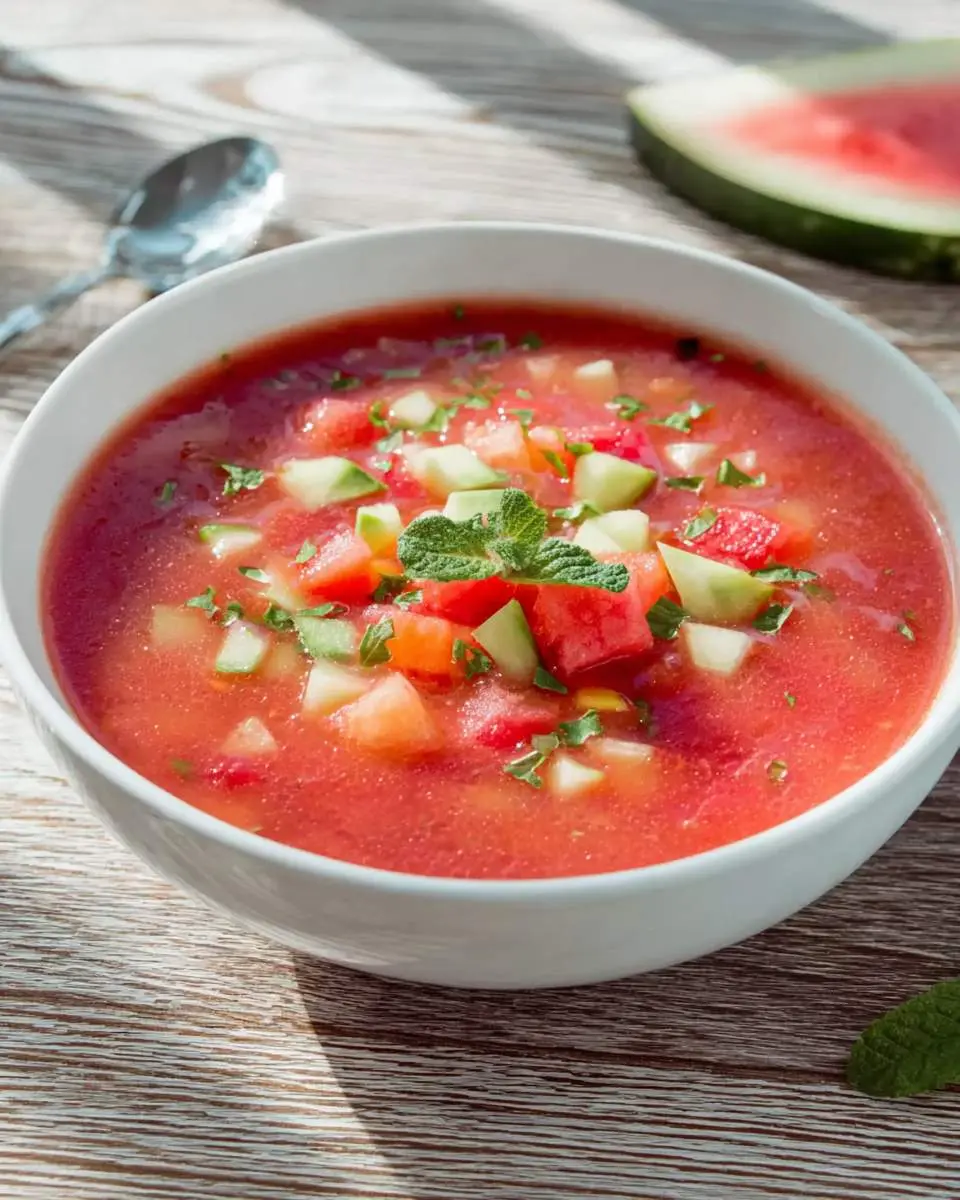
- Just before serving, stir the soup well (it may separate slightly). Ladle into chilled bowls and top with the diced watermelon, cucumber, mint, and crumbled feta if using. Finish with a drizzle of olive oil and an extra pinch of Aleppo pepper.
Notes
Conclusion
I used to think summer cooking meant standing over a hot grill, sweating and swatting mosquitoes. Watermelon gazpacho changed that — now I celebrate the season by not cooking at all, by letting ripe fruit and good olive oil do the work while I sit on my porch with a cold glass. Make this once, and you’ll understand. For another soup that proves simple ingredients create magic, try my tomato soup — it’s the one that started my obsession.