
Ingredients
Equipment
Method
Step 1: Prepare the Sauce and Guanciale
- In a medium bowl, whisk together the 4 egg yolks, 1 whole egg, the finely grated Pecorino Romano, and a generous amount of coarsely ground black pepper. Mix until it forms a thick, smooth, golden paste. Set aside.
- Place the cubed guanciale in a large, cold sauté pan or skillet. Turn the heat to medium-low and let the fat render out slowly. Cook for 10-12 minutes, stirring occasionally, until the guanciale is golden brown and crispy. Turn off the heat and let the pan cool slightly.
Step 2: Cook the Pasta
- While the guanciale is rendering, bring a large pot of water to a rolling boil. Salt the water generously (it should taste like the sea). Add the pasta and cook according to package directions until al dente (firm to the bite).
- Just before draining the pasta, reserve at least 1 cup of the starchy pasta water.
Step 3: Combine and Create the Sauce
- Using tongs, transfer the cooked pasta directly from the pot to the skillet with the rendered guanciale and its fat. Ensure the pan is OFF THE HEAT. Toss the pasta vigorously to coat it completely in the flavorful fat.
- Pour the egg and cheese mixture over the pasta. Immediately begin tossing everything together quickly and continuously. The residual heat from the pasta and the pan will cook the eggs gently, creating a creamy sauce.
- Add a splash (about 1/4 cup) of the reserved hot pasta water and continue to toss. The starch in the water will help emulsify the fat and egg, preventing it from scrambling and creating the signature creamy texture. Add more pasta water, a tablespoon at a time, until the sauce reaches your desired consistency. It should be creamy and glossy, not watery or clumpy.
Step 4: Serve Immediately
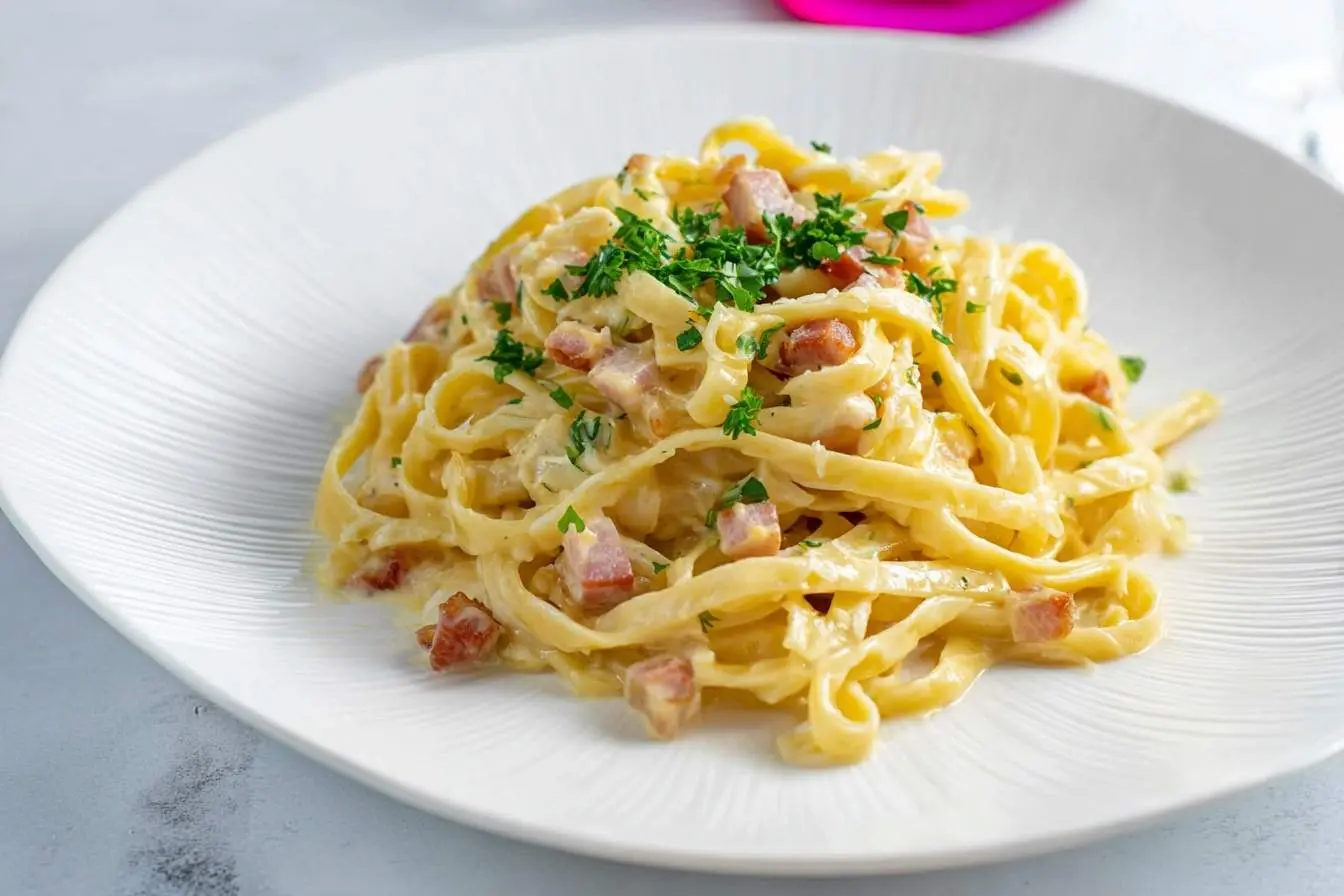
- Serve the carbonara immediately in warm bowls. Garnish with another sprinkle of Pecorino Romano and a final grind of black pepper. Enjoy straight away.
Notes
The Key to Creaminess: The magic happens off the heat. Do not add the egg mixture to the pan while it's on the stove, or you'll get scrambled eggs. The residual heat from the pasta and the pan is all you need.
Pasta Water is Liquid Gold: Don't forget to reserve at least a cup of the starchy pasta water. It's essential for emulsifying the sauce and achieving the perfect consistency.
Guanciale vs. Pancetta: For the most authentic flavor, use guanciale (cured pork jowl). If you can't find it, thick-cut, unsmoked pancetta is the next best choice.
Serving: Carbonara is best enjoyed immediately after it's made. It does not reheat well as the sauce can break.
Pasta Water is Liquid Gold: Don't forget to reserve at least a cup of the starchy pasta water. It's essential for emulsifying the sauce and achieving the perfect consistency.
Guanciale vs. Pancetta: For the most authentic flavor, use guanciale (cured pork jowl). If you can't find it, thick-cut, unsmoked pancetta is the next best choice.
Serving: Carbonara is best enjoyed immediately after it's made. It does not reheat well as the sauce can break.