
Ingredients
Equipment
Method
Make the Dough
- In a small bowl, combine warm milk, yeast, and 1 tablespoon of the sugar. Let sit until foamy, about 5 minutes. If it doesn't foam, your yeast is dead - start over with fresh yeast.
- In a large bowl or stand mixer fitted with the dough hook, combine flour, remaining sugar, eggs, softened butter, salt, and the yeast mixture. Mix on low until a shaggy dough forms, then knead on medium-low for 8-10 minutes until smooth and elastic. The dough will be soft and slightly sticky - resist adding extra flour.
- Transfer dough to a lightly oiled bowl, cover with plastic wrap, and let rise in a warm spot until doubled, 1 to 1.5 hours. The dough should hold a gentle fingerprint when pressed.
- Turn dough onto a lightly floured surface and press into a 1-inch thick rectangle. Use a 3-inch round cutter to cut 12 circles, re-rolling scraps once. Place on parchment-lined baking sheets, cover loosely, and let rise until puffy and nearly doubled, 45-60 minutes. They should look pillowy and jiggle slightly when you shake the pan.
Fry the bomboloni
- Heat oil in a heavy pot to 350°F. Working in batches of 3-4, carefully lower dough rounds into oil. Fry for 2-3 minutes per side until deep golden brown, adjusting heat to maintain temperature. Transfer to a wire rack set over paper towels and let cool 5 minutes before coating.
Coat and fill
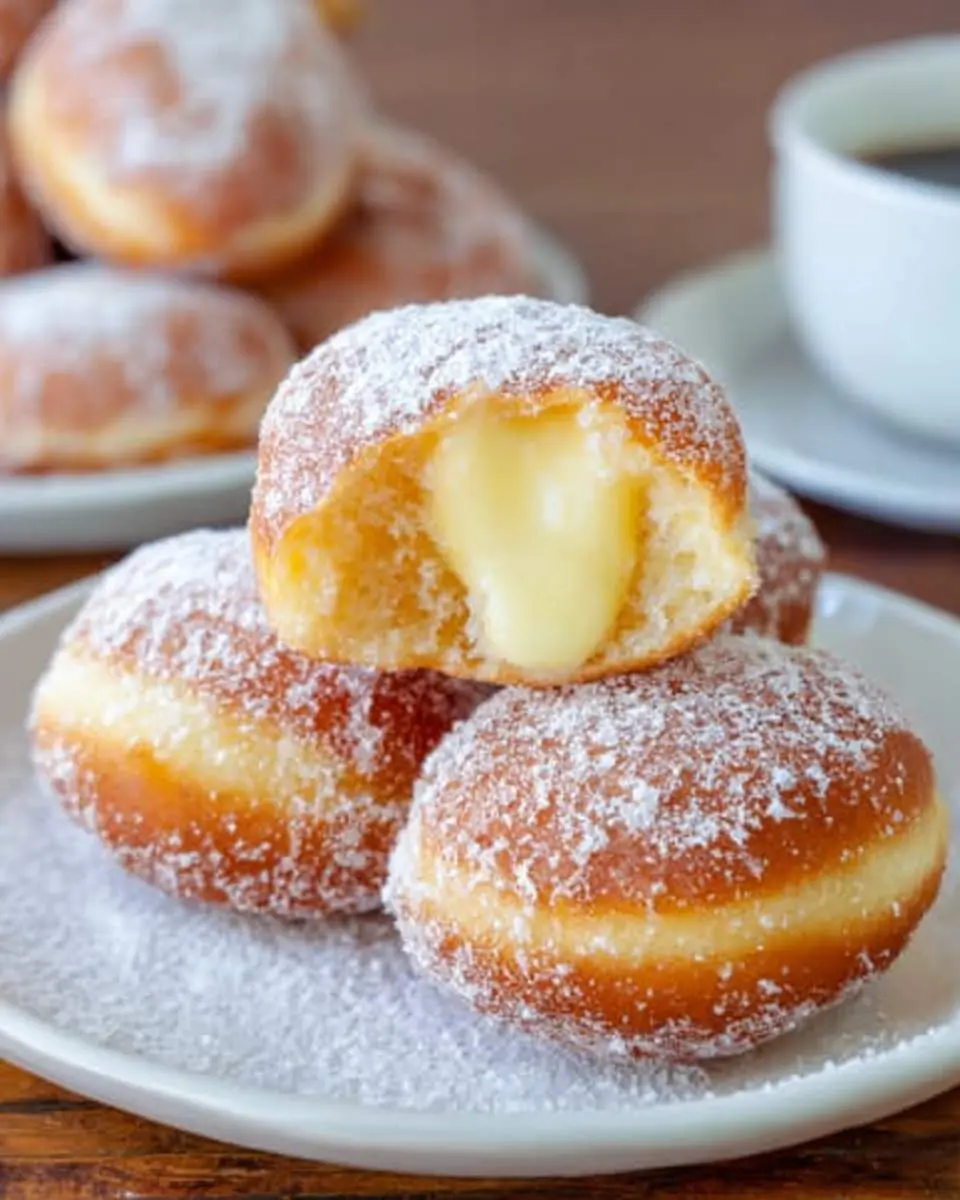
- While still warm, roll each bombolone in granulated sugar until evenly coated. Let cool completely on the rack, about 30 minutes.
- Fit a piping bag with a small round tip and fill with chilled pastry cream. Poke a small hole in the side of each bombolone with a paring knife or skewer, then pipe in cream until you feel slight resistance and the donut feels heavy. Serve immediately or within 4 hours for best texture.
Notes
For the lightest texture, do not rush the second rise - underproofed bomboloni will be dense and greasy. If you don't have a thermometer, test oil with a small dough scrap: it should bubble immediately and turn golden in about 60 seconds. Pastry cream can be made 2 days ahead; the dough can be refrigerated overnight after the first rise, then shaped and proofed the next morning.