Bomboloni Italian Donuts
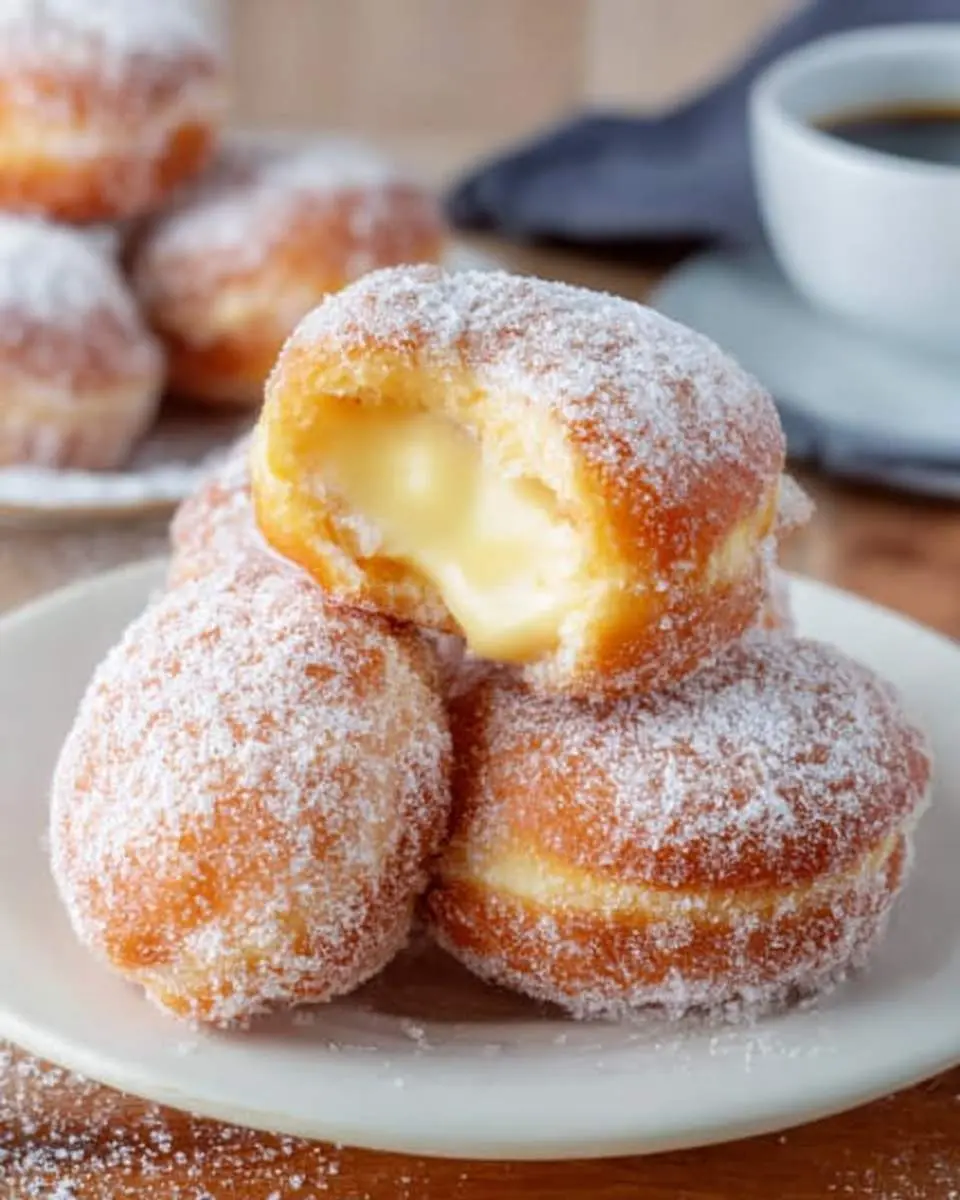
The first time I bit into a still-warm bomboloni, I was standing in a tiny bakery in Florence at 7 AM, jet-lagged and slightly delirious. The pastry crackled between my teeth, then gave way to a cloud of yeasted dough and a sudden rush of vanilla custard that made me actually close my eyes. That moment is why I spent three years trying to recreate Bomboloni Italian Donuts in my own kitchen, and why I finally nailed it last Saturday.
My grandmother would have called them “fancy fried dough,” but there’s nothing fancy about the way my kitchen smelled last weekend. The yeast woke up around dawn, that sweet fermentation smell drifting down the hall while my coffee brewed. I stood at the counter in my slippers, watching the dough double like a living thing, and thought about that Florentine bakery owner who winked at me when I came back for a second one.
This isn’t a quick weeknight project, and that’s exactly the point. Some Saturdays deserve a slow, flour-dusted morning that ends in something extraordinary. If you’re craving a different donut adventure, my peppermint mocha donuts are what I make when December hits and I need something festive.
What You Need to Make This Recipe
The dough needs bread flour, not all-purpose , the higher protein content builds that chewy, structured crumb that holds up to frying without turning greasy. Whole milk, warmed to exactly 110°F, wakes the yeast without killing it; I’ve learned the hard way that too-hot milk means dead yeast and flat, sad Bomboloni Italian Donuts. For the filling, I splurge on real vanilla bean scraped into my pastry cream, because those tiny black specks are how you know someone cared enough to do it right. If you’re more of a baked donut person, my baked cinnamon crumb donuts skip the oil entirely but still deliver that cozy weekend feeling.
How to Make Bomboloni Italian Donuts
I start the night before, mixing the dough just until it comes together, shaggy and sticky, then letting it rest in the fridge. The cold slow-fermentation develops flavor you can’t rush , by morning, the dough smells like wine and warm bread had a baby. I roll it out thick, about half an inch, and punch rounds with a biscuit cutter, then the real waiting begins. The shaped rounds puff on parchment for another hour, and I find myself checking them every ten minutes like they’re sleeping infants.
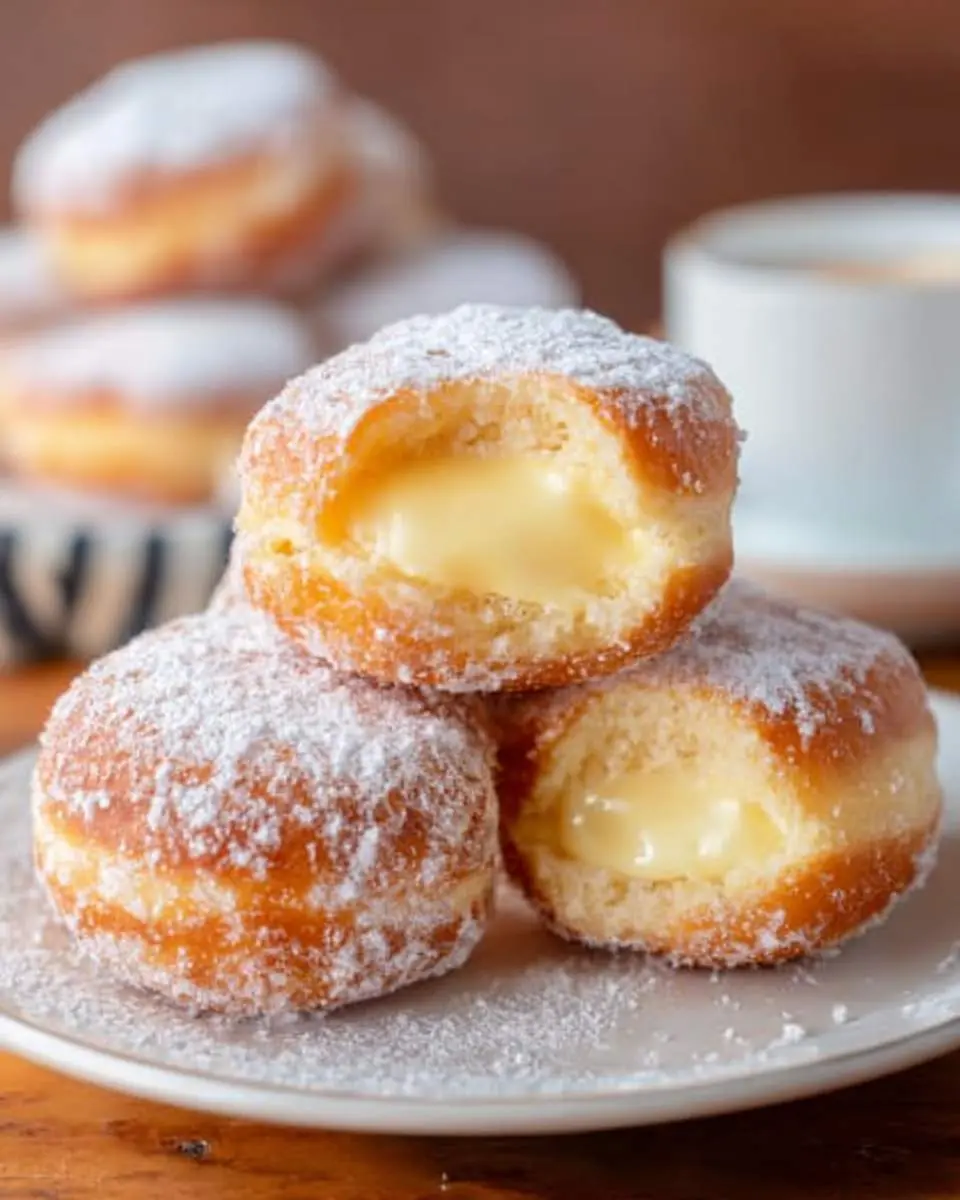
The fry is where your senses take over. I use a heavy Dutch oven with a thermometer clipped to the side, and when the oil hits 350°F, I slide in two at a time. They sink, then immediately bob and sizzle, the surface bubbling into that pale gold you want. Thirty seconds per side, no more , flip too early and they deflate like disappointed balloons. The smell is ridiculous, that sweet fried-dough perfume that clings to your hair and makes the neighbors curious. I drain them on a wire rack, not paper towels, which keeps the bottom from steaming itself soggy. Once they’re cool enough to handle but still warm inside, I pipe in the vanilla cream through a small hole, feeling the weight shift as they fill. My glazed donuts follow a totally different rhythm if you want something simpler to fry.
Pro Tips
Chill your pastry cream before you pipe. I learned this the messy way , warm cream oozes out the sides and turns your beautiful bomboloni into a sad, leaking situation. Cold cream holds its shape and gives you that clean, full center.
Don’t crowd the oil. More than two bomboloni at once drops the temperature fast, and they soak up grease instead of frying crisp. I use a thermometer and patience, which sounds boring until you taste the difference.
Roll the dough on a barely-floured surface. Too much flour and the rounds seal themselves shut, preventing that gorgeous interior puff. I use a bench scraper to prevent sticking instead.
My Secret Trick: I save a tablespoon of the warm milk from the dough and stir it into my sugar before rolling the finished bomboloni , the sugar clings in a thin, crackly layer that shatters when you bite, nothing like the heavy coating you get from rolling in plain sugar.
How to Store Bomboloni Italian Donuts
- Store unfilled bomboloni in an airtight container at room temperature for up to 24 hours , they stale quickly because of the low sugar in the dough itself.
- Fill only what you’ll eat same-day; filled bomboloni soften within 4 hours as the cream hydrates the interior crumb.
- Refrigerate filled bomboloni in a single layer, uncovered, for up to 2 days , the cold firms the cream and prevents weeping.
- Freeze unfried dough rounds on a baking sheet until solid, then transfer to a freezer bag for up to 1 month; thaw overnight in the fridge, let come to room temperature for 30 minutes, then fry as usual.
- Reheat day-old unfilled bomboloni in a 325°F oven for 4 minutes to restore the exterior crispness; never microwave, which turns them rubbery.
Nutritional Benefits
I’m not going to pretend these are health food, but Bomboloni Italian Donuts do carry some genuine nutritional value from real ingredients. The eggs in the dough and pastry cream provide complete protein and choline, and the whole milk contributes calcium and vitamin D in forms your body actually absorbs. The yeast fermentation also partially breaks down the wheat’s phytic acid, making the minerals in the flour more bioavailable than in an unfermented quick bread.

FAQs
Why did my bomboloni deflate after frying?
Your oil was probably too hot, causing the exterior to set before the interior fully expanded, or you flipped them too early and broke the delicate structure. Wait until the bottom is truly golden before turning, and maintain steady 350°F oil.
Can I make the dough without a stand mixer?
Absolutely , I did for my first two years. Mix with a wooden spoon until shaggy, then knead by hand for 8-10 minutes until smooth and elastic. The dough is sticky, so use the slap-and-fold technique rather than adding extra flour.
What can I use if I don’t have a piping bag for filling?
A zip-top bag with one corner snipped works in a pinch, though I find it harder to control pressure. Cut a small opening, insert into your poke hole, and squeeze gently , too much force splits the seam.
How do I know when the bomboloni are fully proofed and ready to fry?
They should look puffy and jiggle slightly when you shake the pan gently , underproofed Bomboloni Italian Donuts fry up dense and heavy, while overproofed ones collapse in the oil. The poke test helps: a gentle press should leave a slow-recovering indentation.
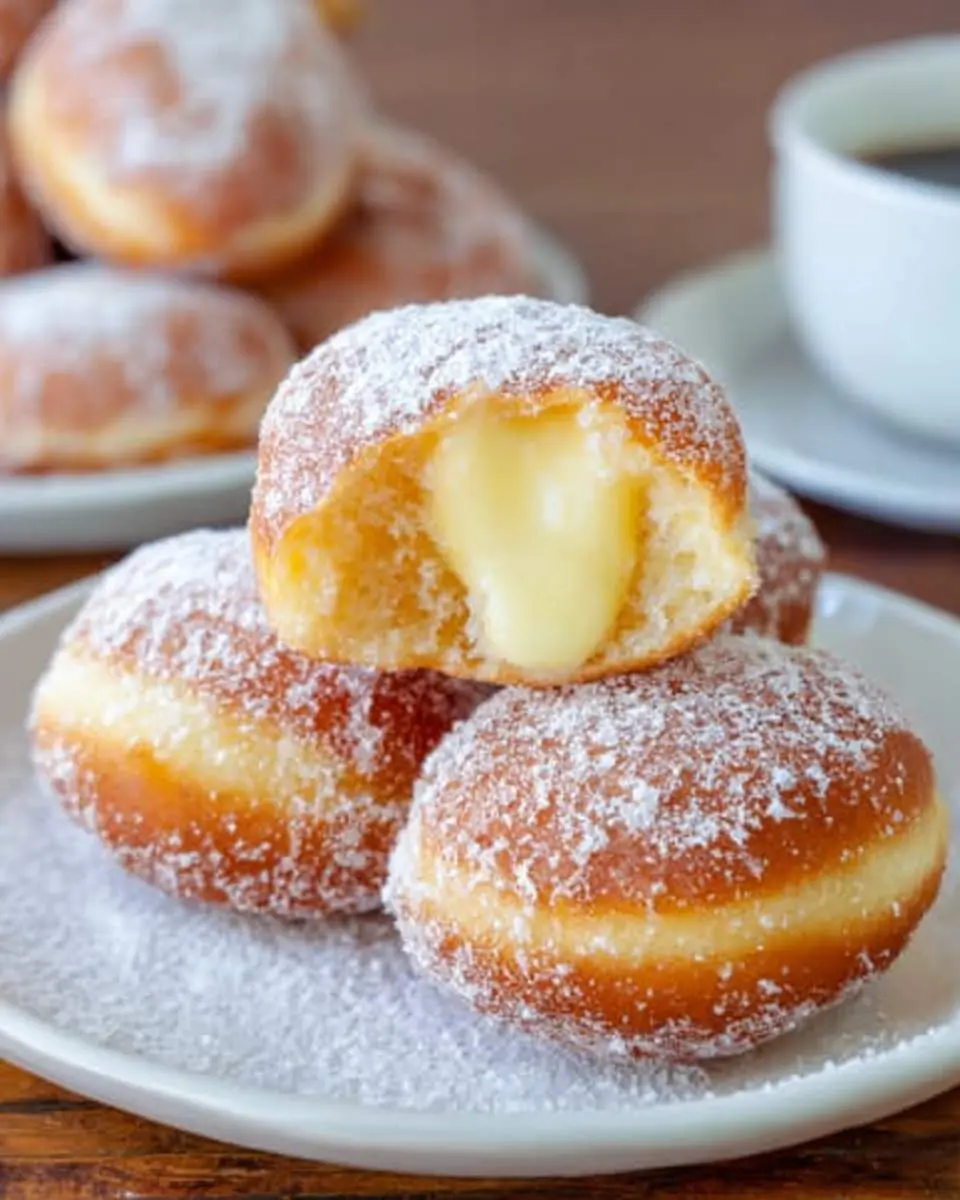

Bomboloni Italian Donuts
Ingredients
Equipment
Method
- In a small bowl, combine warm milk, yeast, and 1 tablespoon of the sugar. Let sit until foamy, about 5 minutes. If it doesn't foam, your yeast is dead - start over with fresh yeast.
- In a large bowl or stand mixer fitted with the dough hook, combine flour, remaining sugar, eggs, softened butter, salt, and the yeast mixture. Mix on low until a shaggy dough forms, then knead on medium-low for 8-10 minutes until smooth and elastic. The dough will be soft and slightly sticky - resist adding extra flour.
- Transfer dough to a lightly oiled bowl, cover with plastic wrap, and let rise in a warm spot until doubled, 1 to 1.5 hours. The dough should hold a gentle fingerprint when pressed.
- Turn dough onto a lightly floured surface and press into a 1-inch thick rectangle. Use a 3-inch round cutter to cut 12 circles, re-rolling scraps once. Place on parchment-lined baking sheets, cover loosely, and let rise until puffy and nearly doubled, 45-60 minutes. They should look pillowy and jiggle slightly when you shake the pan.
- Heat oil in a heavy pot to 350°F. Working in batches of 3-4, carefully lower dough rounds into oil. Fry for 2-3 minutes per side until deep golden brown, adjusting heat to maintain temperature. Transfer to a wire rack set over paper towels and let cool 5 minutes before coating.
- While still warm, roll each bombolone in granulated sugar until evenly coated. Let cool completely on the rack, about 30 minutes.
- Fit a piping bag with a small round tip and fill with chilled pastry cream. Poke a small hole in the side of each bombolone with a paring knife or skewer, then pipe in cream until you feel slight resistance and the donut feels heavy. Serve immediately or within 4 hours for best texture.
Notes
Conclusion
Last weekend, I made a second batch of Bomboloni Italian Donuts and drove half to my neighbor, who texted me a photo of her kitchen table covered in powdered sugar and happiness. That’s what this recipe is for , not perfection, but the kind of messy, generous joy that comes from slow mornings and shared food. If chocolate is more your love language, my baked chocolate glazed donuts are what I make when I need to win over a crowd fast. You should make these soon. Your kitchen deserves that smell.