
Ingredients
Equipment
Method
Prepare the Roast
- Remove the prime rib roast from the refrigerator 3-4 hours before cooking. This allows it to come closer to room temperature for more even cooking. Pat the entire roast thoroughly dry with paper towels.
- In a small bowl, combine the Kosher salt, freshly ground black pepper, garlic powder, crushed dried rosemary, and dried thyme. Whisk or stir well to combine.
- Rub the entire surface of the prime rib roast with olive oil, then generously coat with the herb-garlic seasoning mix. Ensure all sides are well covered.
Slow Roasting (Reverse-Sear Method)
- Preheat your oven to 250°F (120°C). Place the seasoned prime rib roast, bone-side down, on a wire rack set inside a roasting pan.
- Insert the probe of your digital instant-read meat thermometer into the thickest part of the roast, avoiding touching any bones.
- Roast in the preheated oven until the internal temperature reaches 120-125°F (49-52°C) for medium-rare. This typically takes 2.5 to 3.5 hours, depending on the roast's size and your oven's calibration.
- Once the desired internal temperature is reached, remove the roast from the oven. Tent it loosely with aluminum foil and let it rest on your countertop for at least 20-30 minutes. This resting period is crucial for the juices to redistribute and for even cooking.
The Searing Finish
- While the roast is resting, increase your oven temperature to 500°F (260°C). If using a cast-iron skillet for searing, place it on the stovetop over high heat until it begins to smoke lightly.
- Carefully transfer the rested prime rib roast to the hot cast-iron skillet (you may add an additional tablespoon of high smoke point oil like grapeseed or avocado oil to the skillet if desired, but often the roast fat is enough).
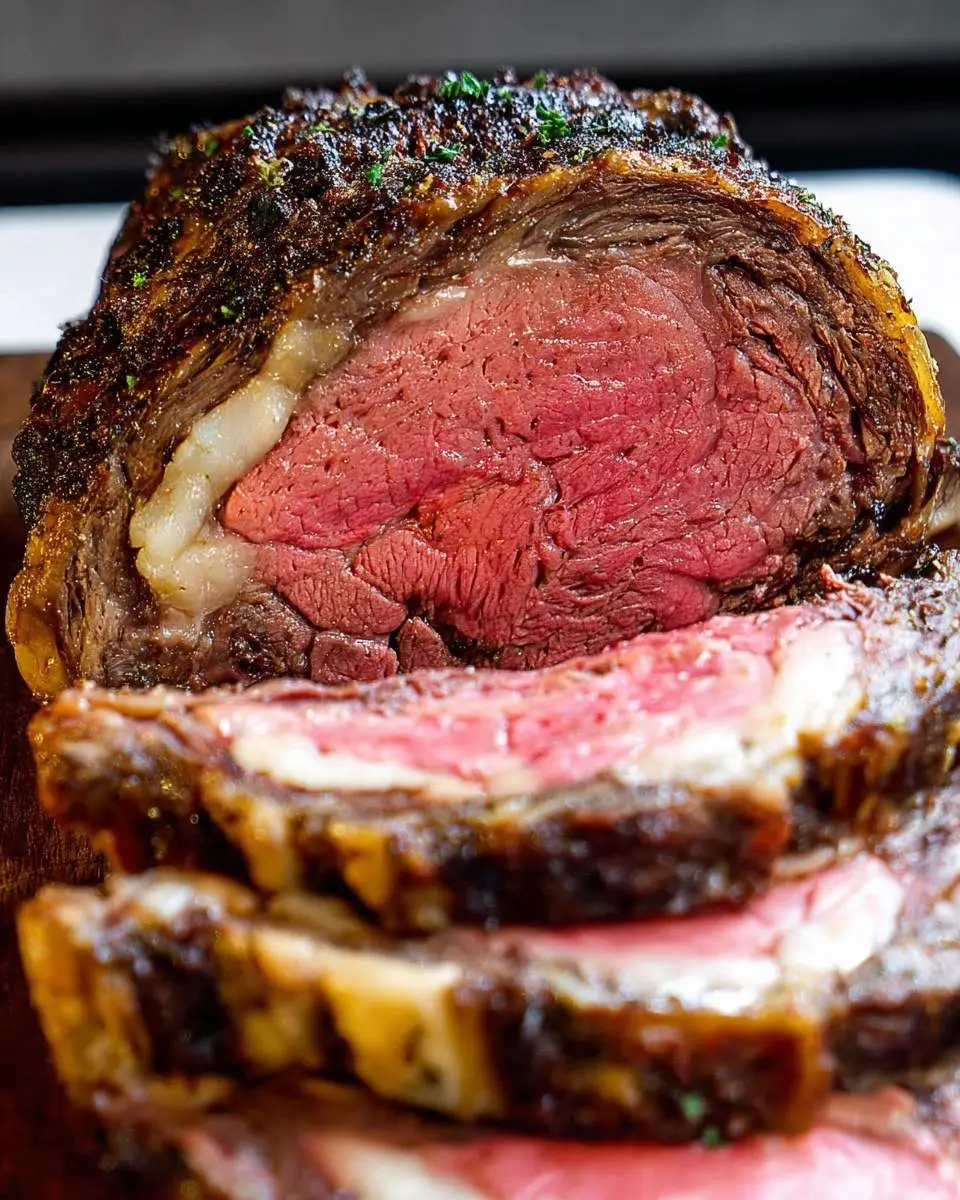
- Sear all sides of the roast, including the ends, for 2-3 minutes per side, until a deep golden-brown and crispy crust forms. Alternatively, if you don't have a large skillet, you can place the roast back into the 500°F oven for 10-15 minutes until a crust forms.
Final Rest & Serve
- Transfer the seared prime rib roast to a clean cutting board. Let it rest for another 10-15 minutes before carving. During this final rest, the internal temperature will likely rise slightly to 130-135°F (54-57°C) for a perfect medium-rare.
- Carve the roast by separating the bones (if bone-in) and then slicing against the grain into desired thickness. Serve immediately.
Notes
Doneness Guide: For a medium-rare roast, aim for an internal temperature of 120-125°F (49-52°C) before searing. For medium, target 130-135°F (54-57°C). For medium-well, aim for 140-145°F (60-63°C). Remember that the temperature will rise by 5-10 degrees during the resting periods.
Au Jus/Gravy: The drippings in the roasting pan and skillet are packed with flavor. You can use these to make a delicious au jus or gravy to accompany your prime rib.
Storage: Leftovers can be stored in an airtight container in the refrigerator for up to 3-4 days.
Au Jus/Gravy: The drippings in the roasting pan and skillet are packed with flavor. You can use these to make a delicious au jus or gravy to accompany your prime rib.
Storage: Leftovers can be stored in an airtight container in the refrigerator for up to 3-4 days.