Reverse-Sear Prime Rib Roast
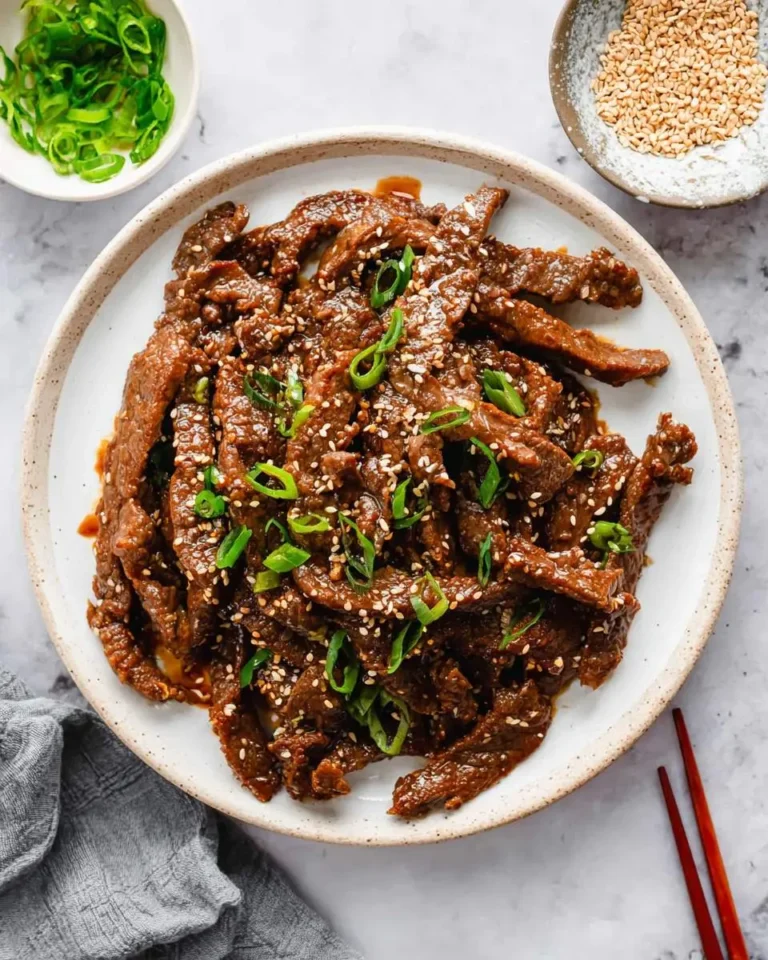
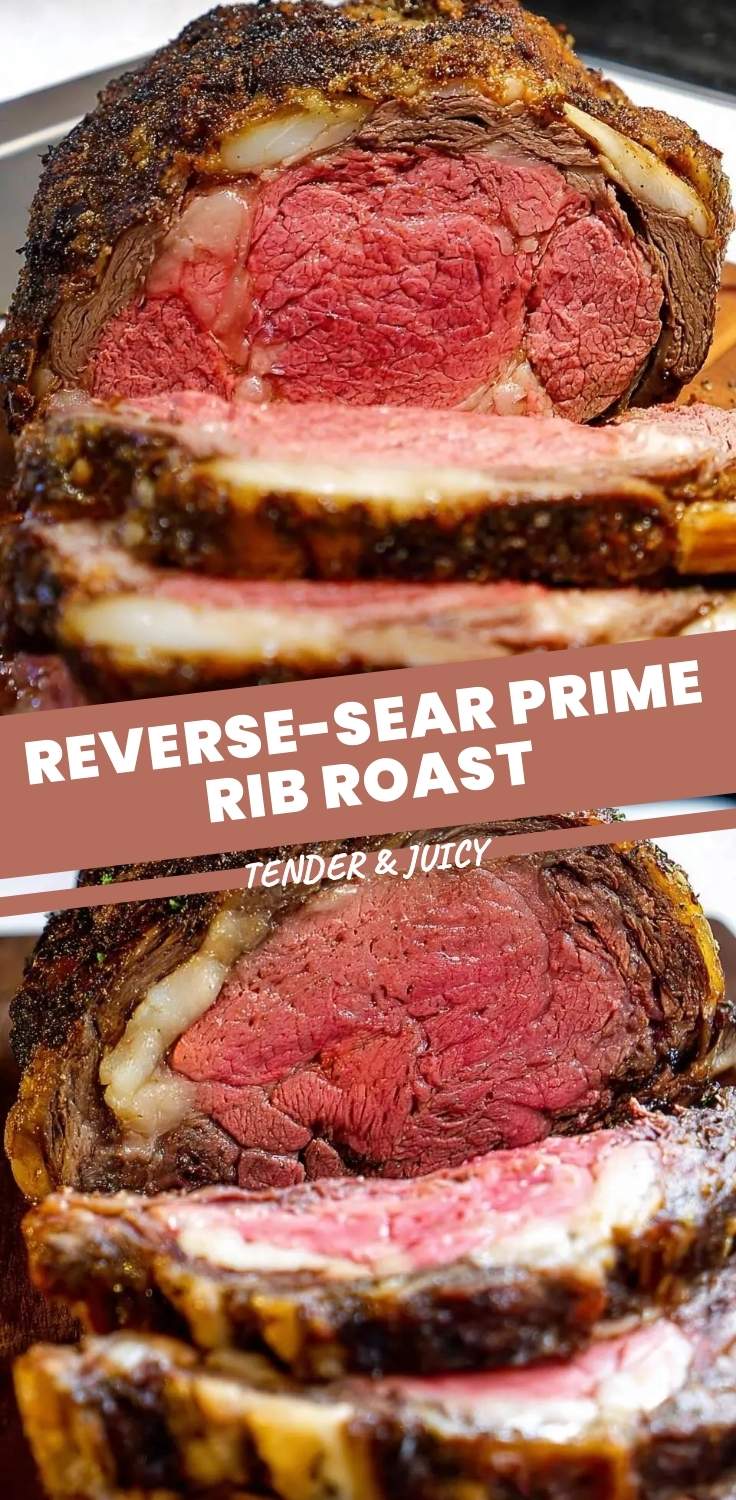
Mastering a Reverse-Sear Prime Rib Roast truly transforms a meal. That deep, savory crust giving way to tender, juicy meat is truly a masterpiece, and it always makes me think of happy gatherings. It’s a dish that elevates any occasion into a celebration, much like how a good Teriyaki Beef can elevate a simple weeknight.
I remember holidays at my grandmother’s house, the kitchen filled with laughter and the rich scent of roasting meat. While her method was traditional, my journey led me to discover the magic of the reverse-sear, a technique that consistently delivers unparalleled results.
This method ensures an incredibly tender interior and a glorious crust without the stress. It’s my secret to impressing guests with minimal fuss, turning any occasion into a truly special event with a show-stopping main course.
What You Need to Make This Recipe
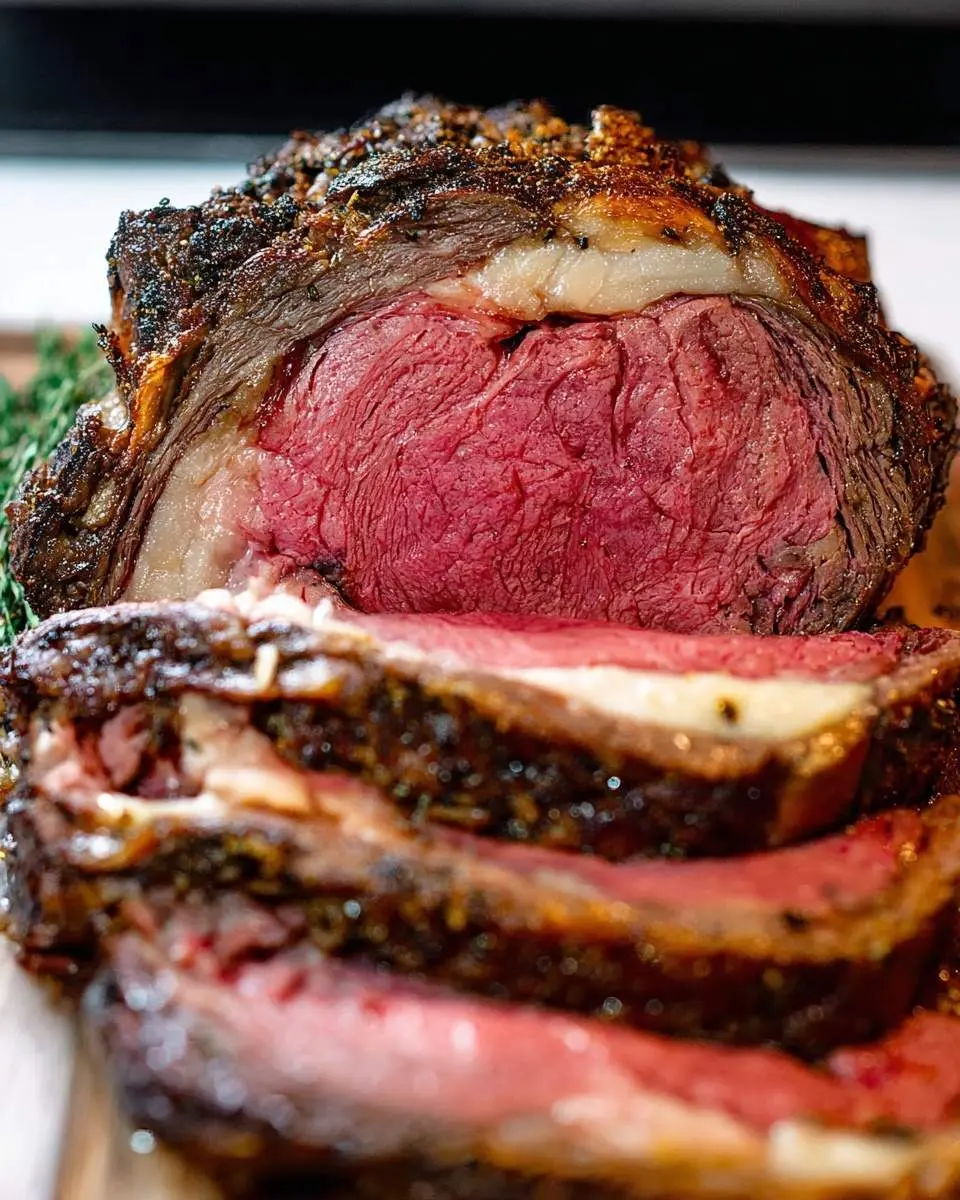
For this magnificent dish, we focus on a quality prime rib roast, good olive oil, and a fragrant herb-garlic blend. It’s amazing how simple ingredients create such depth of flavor, much like the comforting richness of a Beef Pot Pie. The full list and exact measurements are in the recipe card below.
How to Make Reverse-Sear Prime Rib Roast
Making a Reverse-Sear Prime Rib Roast is simpler than it sounds. We start with a low, slow roast for tender perfection, then finish with a high-heat sear for that glorious, crispy crust. It’s a beautifully simple process, much like the comforting ease of a One-Pot Beef Giouvetsi. A final rest ensures every slice is incredibly juicy.
Pro Tips for Making This Reverse-Sear Prime Rib Roast
Achieving that restaurant-quality Reverse-Sear Prime Rib Roast at home is absolutely within your reach with a few of my tried-and-true tricks. I always make sure to let my roast come to room temperature for at least an hour before it goes into the oven; this promotes more even cooking from edge to center.
My Secret Trick: My personal game-changer is patting the roast extremely dry before applying the herb-garlic crust. This allows for a truly incredible sear and a crispy, crackling exterior that simply can’t be beat. Don’t skip this step! Another tip I swear by is using a reliable meat thermometer to ensure you hit that perfect internal temperature. For medium-rare, I aim for about 120-125°F before the final sear, knowing it will rise during the rest. Trust your thermometer, not just the clock.
How to Store Reverse-Sear Prime Rib Roast
Properly storing your leftover Reverse-Sear Prime Rib Roast means you can enjoy its deliciousness for days! Once completely cooled, I always carve the remaining roast into individual slices. This makes reheating much easier and faster, preventing the meat from drying out. Store these slices in an airtight container in the refrigerator for up to 3-4 days.
For longer storage, wrap individual slices tightly in plastic wrap, then foil, and place them in a freezer-safe bag or container. It will keep beautifully in the freezer for up to 2-3 months. When reheating, my personal tip is to do so gently. I prefer warming slices in a low oven or a covered skillet with a splash of beef broth to bring back their tenderness and flavor, never in the microwave if I can help it!
Nutritional Benefits
This Reverse-Sear Prime Rib Roast is not just delicious; it’s a wonderful source of high-quality protein, crucial for energy and muscle health. It also provides essential iron and B vitamins, making it a truly nourishing and satisfying meal for my family.
FAQs
What is the ideal internal temperature for a Reverse-Sear Prime Rib Roast?
For a perfect medium-rare Reverse-Sear Prime Rib Roast, I recommend pulling it from the oven when it reaches an internal temperature of 120-125°F during the slow roast. It will continue to cook slightly during the rest and searing process, reaching an ideal 130-135°F. Always use a reliable meat thermometer.
Can I prepare the herb-garlic crust ahead of time?
Absolutely! I often mix the herb-garlic crust a day or two in advance, storing it in an airtight container. Just bring it to room temperature before applying it to your Reverse-Sear Prime Rib Roast for best adhesion and flavor. This simplifies meal prep beautifully.
What kind of prime rib roast should I buy?
I always choose a bone-in prime rib roast for the best flavor and even cooking. Ask your butcher to “chine” the bones, cutting them free but leaving them attached. This makes carving your Reverse-Sear Prime Rib Roast much easier later, ensuring a beautiful presentation.
How can I get an extra crispy crust on my roast?
For an extra crispy crust on your Reverse-Sear Prime Rib Roast, ensure the meat surface is extremely dry before seasoning. After seasoning, let it sit uncovered in the refrigerator for a few hours. This extra step removes surface moisture, guaranteeing maximum crispiness during that final, glorious sear.
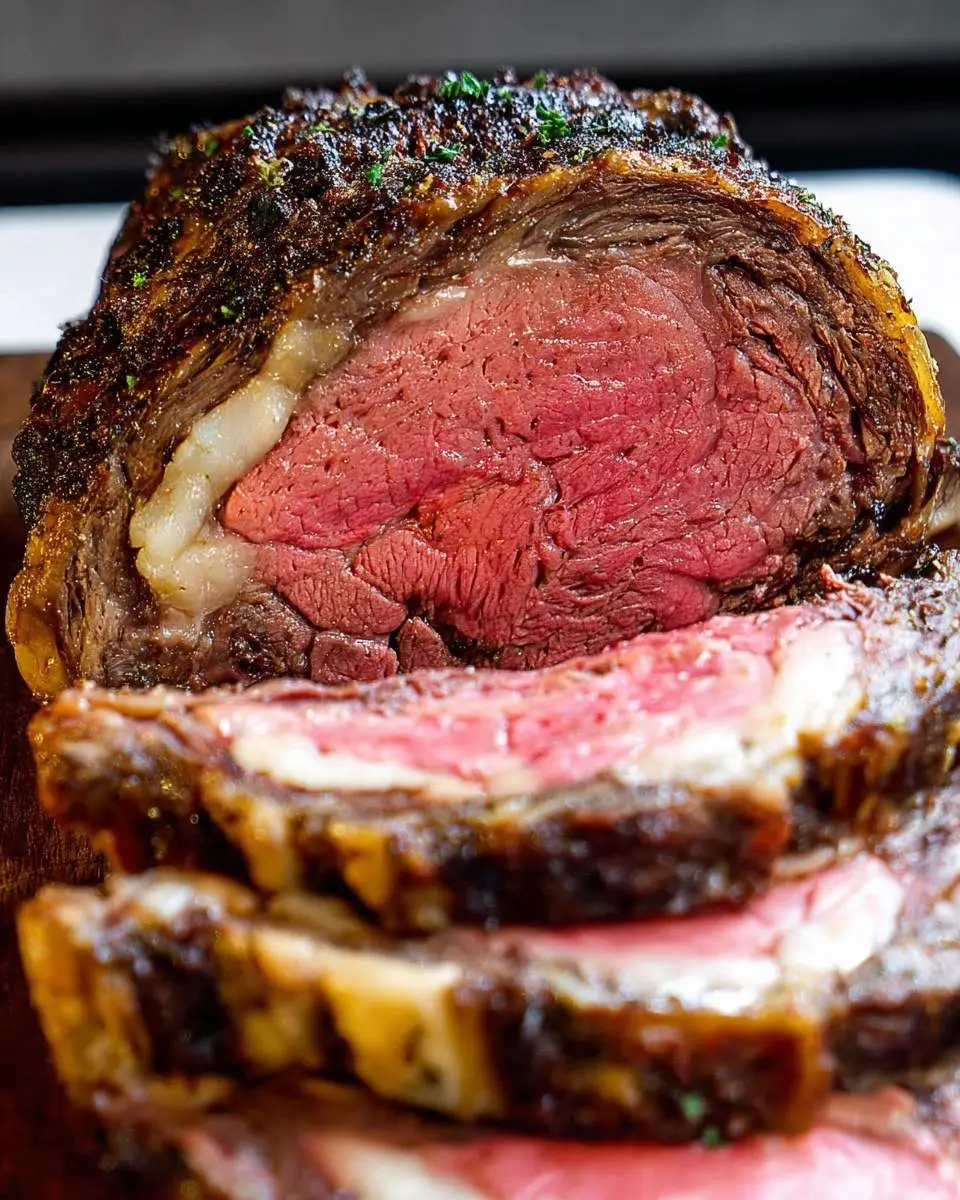

The Ultimate Reverse-Sear Prime Rib Roast with Herb-Garlic Crust
Ingredients
Equipment
Method
- Remove the prime rib roast from the refrigerator 3-4 hours before cooking. This allows it to come closer to room temperature for more even cooking. Pat the entire roast thoroughly dry with paper towels.
- In a small bowl, combine the Kosher salt, freshly ground black pepper, garlic powder, crushed dried rosemary, and dried thyme. Whisk or stir well to combine.
- Rub the entire surface of the prime rib roast with olive oil, then generously coat with the herb-garlic seasoning mix. Ensure all sides are well covered.
- Preheat your oven to 250°F (120°C). Place the seasoned prime rib roast, bone-side down, on a wire rack set inside a roasting pan.
- Insert the probe of your digital instant-read meat thermometer into the thickest part of the roast, avoiding touching any bones.
- Roast in the preheated oven until the internal temperature reaches 120-125°F (49-52°C) for medium-rare. This typically takes 2.5 to 3.5 hours, depending on the roast's size and your oven's calibration.
- Once the desired internal temperature is reached, remove the roast from the oven. Tent it loosely with aluminum foil and let it rest on your countertop for at least 20-30 minutes. This resting period is crucial for the juices to redistribute and for even cooking.
- While the roast is resting, increase your oven temperature to 500°F (260°C). If using a cast-iron skillet for searing, place it on the stovetop over high heat until it begins to smoke lightly.
- Carefully transfer the rested prime rib roast to the hot cast-iron skillet (you may add an additional tablespoon of high smoke point oil like grapeseed or avocado oil to the skillet if desired, but often the roast fat is enough).
- Sear all sides of the roast, including the ends, for 2-3 minutes per side, until a deep golden-brown and crispy crust forms. Alternatively, if you don't have a large skillet, you can place the roast back into the 500°F oven for 10-15 minutes until a crust forms.
- Transfer the seared prime rib roast to a clean cutting board. Let it rest for another 10-15 minutes before carving. During this final rest, the internal temperature will likely rise slightly to 130-135°F (54-57°C) for a perfect medium-rare.
- Carve the roast by separating the bones (if bone-in) and then slicing against the grain into desired thickness. Serve immediately.
Notes
Au Jus/Gravy: The drippings in the roasting pan and skillet are packed with flavor. You can use these to make a delicious au jus or gravy to accompany your prime rib.
Storage: Leftovers can be stored in an airtight container in the refrigerator for up to 3-4 days.
Conclusion
Mastering the Reverse-Sear Prime Rib Roast elevates any meal, offering a spectacular centerpiece that’s surprisingly approachable. I hope my tips empower you to create unforgettable moments around your table, whether for a holiday or a special Sunday supper. It’s about warmth and comfort, much like the hearty satisfaction I find in preparing something like Ground Beef and Potatoes. Dive in and enjoy the process – your taste buds and family will thank you!