German Chocolate Cake
The first time I smelled toasted pecans and coconut bubbling together on my stove, I knew something magical was happening. That caramelized, nutty sweetness filled my kitchen like a promise, and I couldn’t wait to stack those tender chocolate layers with that glossy, gooey frosting. This German chocolate cake has become my signature celebration dessert, the one my family requests for birthdays, anniversaries, and honestly, random Tuesdays when we need something extraordinary.
My grandmother never made this cake. She was a pie person, through and through. I discovered German chocolate cake at a tiny bakery in Fredericksburg, Texas, where an elderly woman named Hilda pressed a slice into my hands and said, “You look like you need this.” She was right. I sat on her porch swing and ate the whole thing, licking coconut off my fork, wondering how something so simple could taste so deeply of comfort.
Now I make it my own way, slightly less sweet than the original, with more toasted nuts and a touch of espresso in the batter to deepen the chocolate. If you’re craving more chocolate layer cake inspiration, my black forest cake has that same dramatic, towering presence that makes any occasion feel special.
What You Need to Make This Recipe
German chocolate cake demands a few specific players, and skimping on any of them changes everything. The German’s sweet chocolate is non-negotiable — it’s milder and sweeter than semisweet, creating that distinctive flavor you can’t replicate with cocoa powder alone. I use Baker’s brand, melting it slowly with water until it turns silky and fragrant. For the legendary coconut-pecan frosting, you need unsweetened coconut flakes, not the sugary shredded stuff from the baking aisle. The toasting step transforms them from waxy to nutty, almost caramel-like. And please, buy whole pecans and chop them yourself; the pre-chopped ones taste dusty and flat. For another dessert that celebrates coconut in all its glory, my low carb raspberry cheesecake proves you don’t need sugar to create something luxurious.
How to Make German Chocolate Cake
I start early, usually the night before, because this cake actually improves with time. The chocolate melts in a double boiler while I separate eggs, beating the whites until they hold stiff peaks that gleam like fresh snow. Folding them into the batter feels almost meditative — gentle turns of the spatula, preserving that airy structure that gives the layers their tender crumb.
The cakes bake low and slow, filling the house with that deep, earthy chocolate scent that makes my dog wander into the kitchen hopefully. I watch for the moment when the centers spring back, not a second longer. Overbaked German chocolate cake turns tragically dry, and there’s no frosting thick enough to save it.
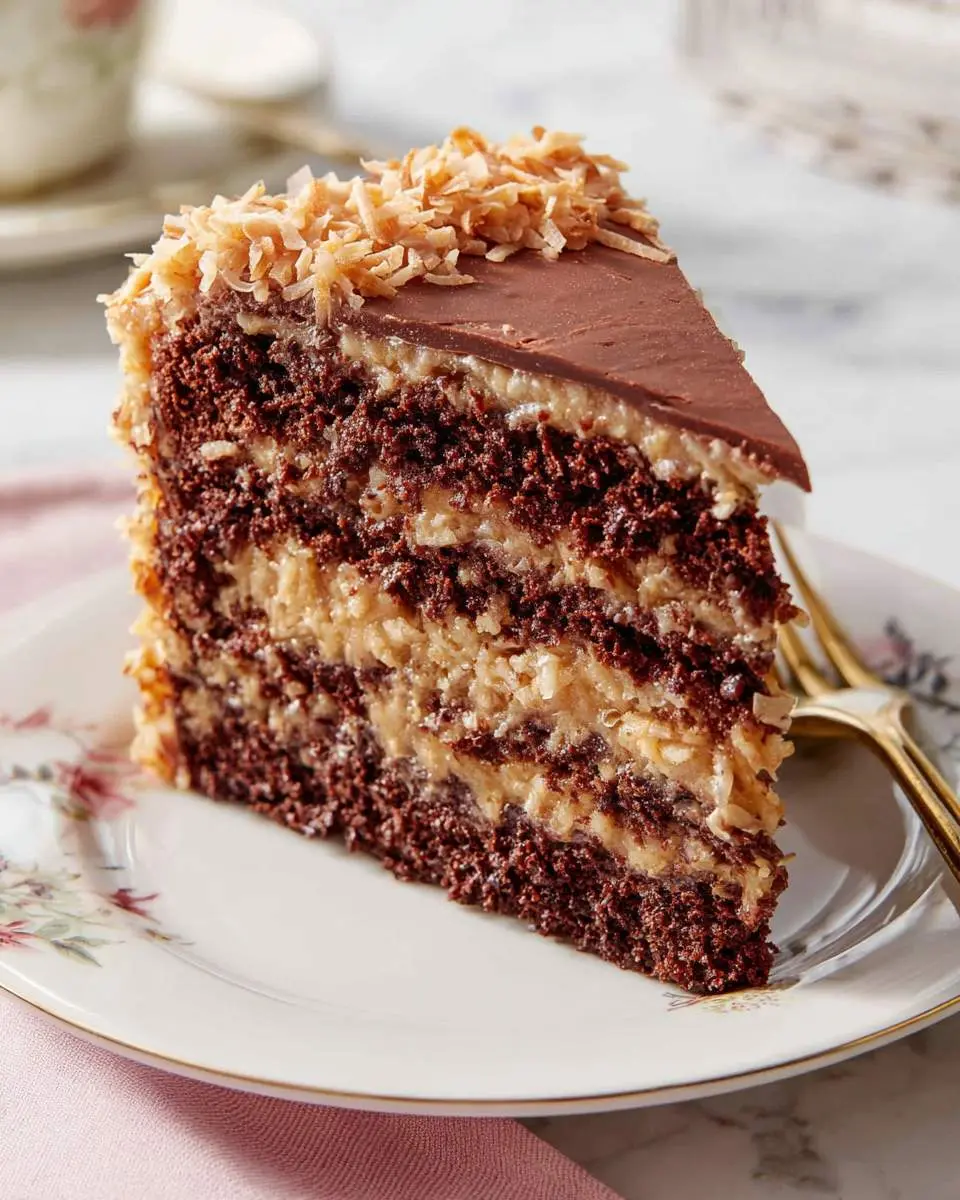
While the layers cool, I stand at the stove for the frosting, stirring constantly as the egg yolks, evaporated milk, sugar and butter thicken into something resembling liquid gold. The moment it coats the back of my spoon, I pull it off the heat and fold in those toasted coconut and pecans. The texture should be pourable but substantial, spreading like soft fudge between layers. If you love coconut desserts as much as I do, my coconut cake uses a completely different technique but delivers that same tropical comfort.
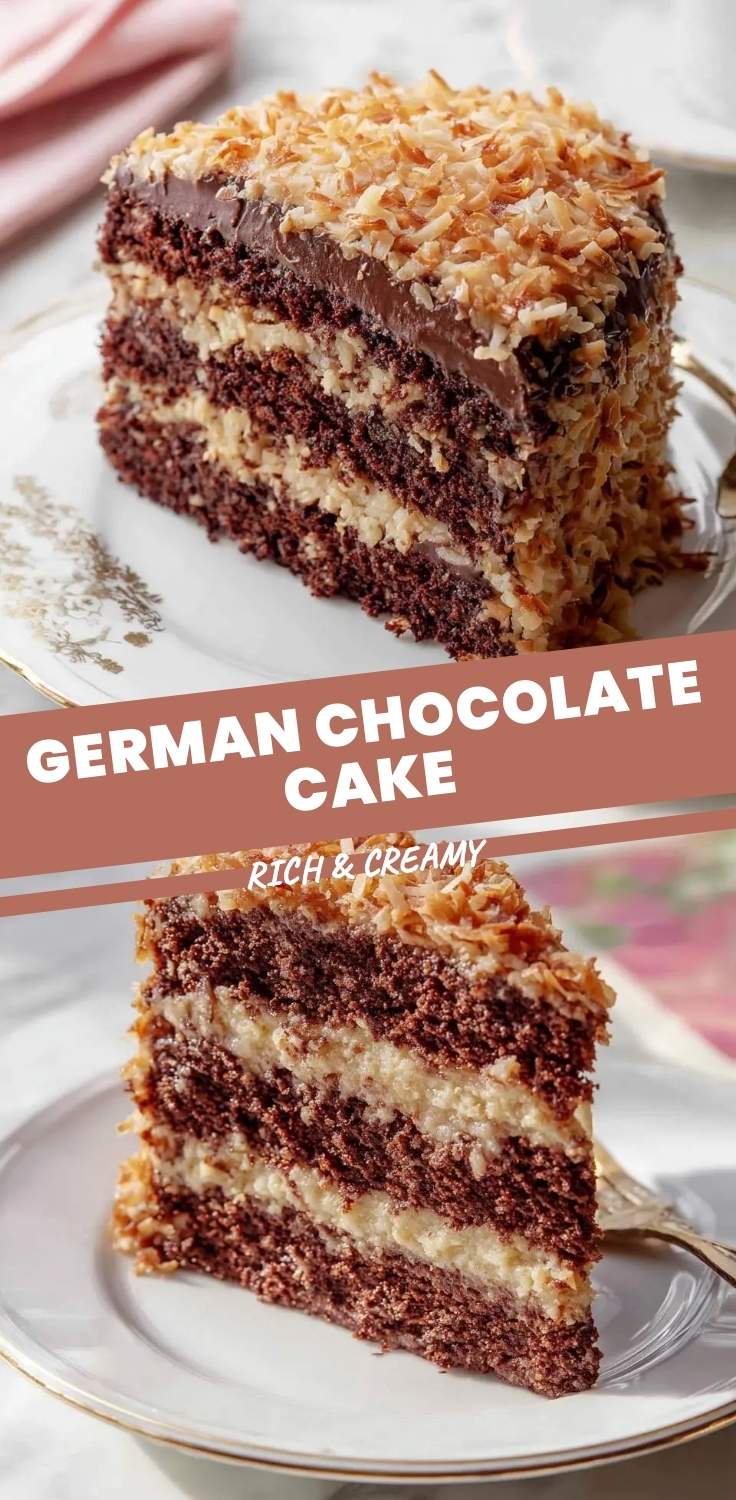
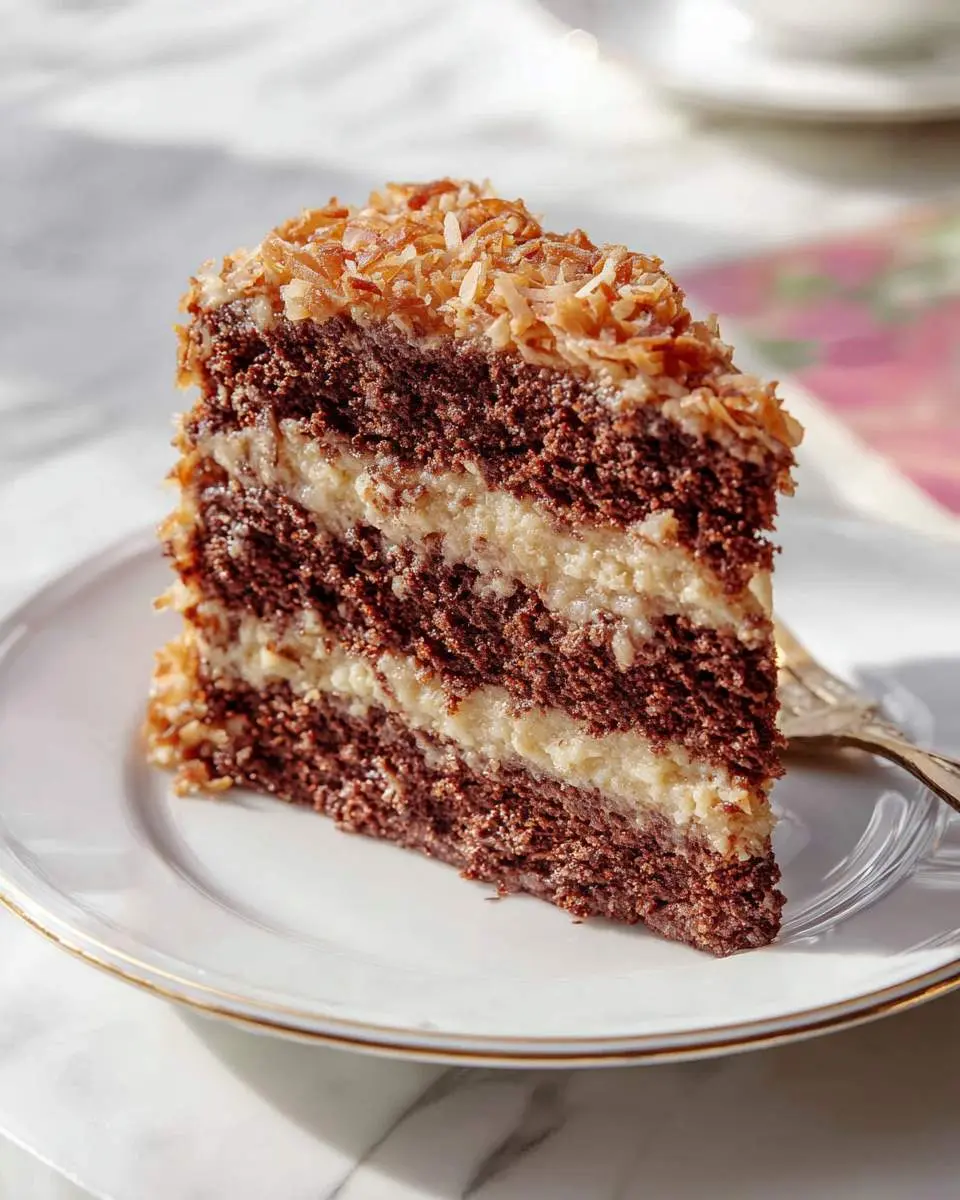
Assembly happens on my grandmother’s cake stand, the one with the chipped edge I never try to hide. I place the first layer, spread frosting almost to the edge, then repeat, watching the cake grow taller and more magnificent. The sides stay naked — that’s the tradition, and honestly, I love seeing those striated layers when I slice.
Pro Tips
Toast your coconut and pecans separately. Coconut burns faster than nuts, and bitter coconut ruins the entire frosting. I spread coconut on one baking sheet, pecans on another, and pull the coconut out after six minutes while the nuts go for ten. The difference in depth of flavor is extraordinary.
Let your egg whites come to room temperature before beating. Cold whites whip slower and never achieve the same volume. I leave mine on the counter for thirty minutes, and they triple in size, creating that cloud-like texture that makes each bite melt on your tongue.
Don’t rush the frosting. The temptation to crank the heat and thicken faster is real, but you’ll scramble the yolks and end up with grainy, eggy disaster. Medium-low heat, constant stirring, patience. The frosting tells you when it’s ready — it suddenly turns glossy and thick, like satin.
My Secret Trick: I brush each cooled cake layer with a thin coat of warm apricot jam before adding frosting. It adds a subtle tartness that cuts through the sweetness, and more importantly, it creates a moisture barrier so the cake stays impossibly tender for days. Nobody can identify the secret ingredient, but everyone notices something special happening.
How to Store German Chocolate Cake
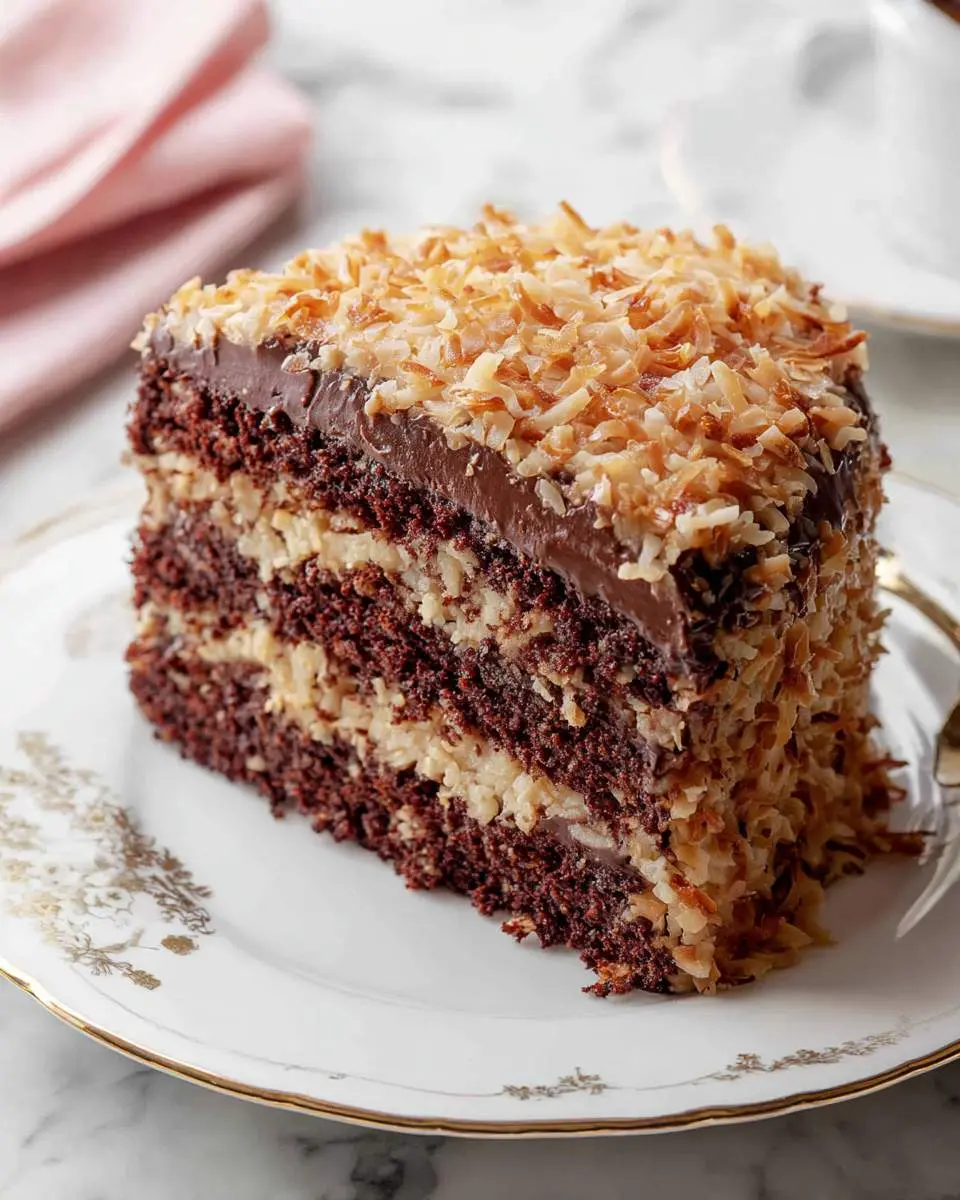
- Refrigerate covered loosely with a cake dome or inverted bowl for up to 5 days — the frosting sets firm and protects the layers from drying
- Bring to room temperature for 45 minutes before serving; cold German chocolate cake loses its flavor complexity and tender texture
- Freeze individual slices wrapped tightly in plastic then foil for up to 3 months; thaw overnight in the refrigerator
- Never store in an airtight container — trapped moisture makes the coconut frosting weep and turn soggy
- To refresh day-old cake, warm individual slices in a 300°F oven for 8 minutes; the frosting softens and the chocolate layers taste freshly baked
Nutritional Benefits
I won’t pretend this German chocolate cake is health food, but there are genuine nutritional gifts hidden among the indulgence. The pecans deliver heart-healthy monounsaturated fats and more than nineteen vitamins and minerals, including manganese and copper that support bone health. Unsweetened coconut contributes lauric acid, a medium-chain fatty acid that research suggests may support metabolism and immune function. The modest portion of chocolate brings flavonoids and a small caffeine boost that somehow makes the afternoon slice feel almost productive.
FAQs
Why is it called German chocolate cake if it’s not from Germany?
The name comes from Samuel German, an English-American chocolate maker who created a specific sweet baking chocolate for Baker’s Chocolate Company in 1852. The cake recipe first appeared in a Dallas newspaper in 1957, using his chocolate, and the possessive form somehow disappeared over time.
Can I make this cake without nuts for allergies?
You can omit pecans entirely, though the frosting loses its signature crunch and complexity. I substitute toasted pumpkin seeds for a similar texture, or simply double the coconut. The cake itself contains no nuts, so the base recipe remains safe for nut-free households.
Why did my coconut pecan frosting turn out runny?
Undercooking is almost always the culprit. The mixture must reach approximately 170°F internally, coating the back of a spoon thickly before you add coconut and pecans. If it’s runny, return to low heat and stir constantly for another three to five minutes until it thickens properly.
Can I use Dutch process cocoa instead of German’s sweet chocolate?
Please don’t. German chocolate cake relies specifically on the mild, sweet flavor profile of German’s chocolate, which contains sugar and cocoa butter. Dutch process cocoa creates a completely different, darker, more bitter cake that lacks the original’s gentle, nostalgic character.

German Chocolate Cake
Ingredients
Equipment
Method
- Heat oven to 350F. Butter two 9-inch round cake pans and line bottoms with parchment. Melt the chocolate with water in a small saucepan over low heat, stirring until smooth. Set aside to cool slightly.
- Whisk flour, baking soda, and salt in a medium bowl. In a large bowl, beat butter and sugar on medium-high until light and fluffy, about 3 minutes. Beat in egg yolks one at a time, then the melted chocolate and vanilla.
- Reduce mixer to low. Add flour mixture in three additions, alternating with buttermilk in two additions, beginning and ending with flour. Mix just until combined.
- In a clean bowl, beat egg whites to stiff peaks. Fold one-third into the batter to lighten, then fold in the rest until no white streaks remain. Divide between pans and bake 30-35 minutes, until a toothpick comes out clean. Cool in pans 10 minutes, then turn out onto racks to cool completely.
- Combine evaporated milk, sugar, butter, and egg yolks in a medium saucepan over medium heat. Cook, stirring constantly, until thickened and golden brown, about 10-12 minutes. It should coat the back of a spoon and leave a trail when you drag your finger through it.
- Remove from heat and stir in vanilla, coconut, and pecans. Cool to room temperature, stirring occasionally, until thick enough to spread. This takes about 1 hour.
- Place one cake layer on a serving plate. Spread with half the frosting. Top with second layer and spread remaining frosting over the top, leaving sides bare. The frosting sets as it sits, so serve at room temperature.
Notes
Conclusion
This German chocolate cake has witnessed my highest joys and comforted my lowest moments. There’s something about building those layers, watching the frosting cascade down the sides, that reminds me celebration is always possible. Make it for someone you love, or simply for yourself on an ordinary day that deserves sweetness. If chocolate is your love language, my chocolate ganache cake offers a completely different but equally transcendent experience.