Fudgy German Chocolate Cookies
The first time I smelled toasted coconut and dark chocolate melting together in my oven, I knew something dangerous was happening. I had been craving that classic German chocolate cake flavor for weeks, but I wanted something I could hold in my hand , something with edges that crack and centers that surrender. These Fudgy German Chocolate Cookies were born from that very specific hunger, and I still can’t believe how perfectly they delivered.
My grandmother kept a stained index card for her German chocolate cake taped inside her pantry door. I used to stand on her step stool, reading that card like a sacred text, watching her fold egg whites into batter with the patience I never inherited. When I bit into my first warm cookie from this batch, I tasted her kitchen , the pecans she always toasted a minute too long, the sweet coconut she bought in bulk.
This recipe bridges those memories with my current reality: I need desserts faster now, with fewer dishes and no layer-cake anxiety. If you’re in a similar season of craving something nostalgic without the fuss, my vegan pumpkin cookies follow that same philosophy of simple, soul-satisfying baking.
What You Need to Make This Recipe
The chocolate here matters more than you’d think , I use a 60% cacao baking bar chopped roughly so some shards melt into pockets while others hold their shape. Sweetened shredded coconut isn’t just for texture; it caramelizes against the hot baking sheet and creates these chewy, almost-burnt edges that make people fight over the last cookie. The pecans must be toasted first, never raw, because that quick trip to the skillet wakes up their oils and keeps them crunchy through baking. I keep coming back to these Fudgy German Chocolate Cookies because the ingredient list feels humble but behaves like something far more sophisticated. For another cookie that treats mix-ins with similar respect, my red velvet Oreo cookies use the same principle of strategic ingredient placement.
How to Make Fudgy German Chocolate Cookies
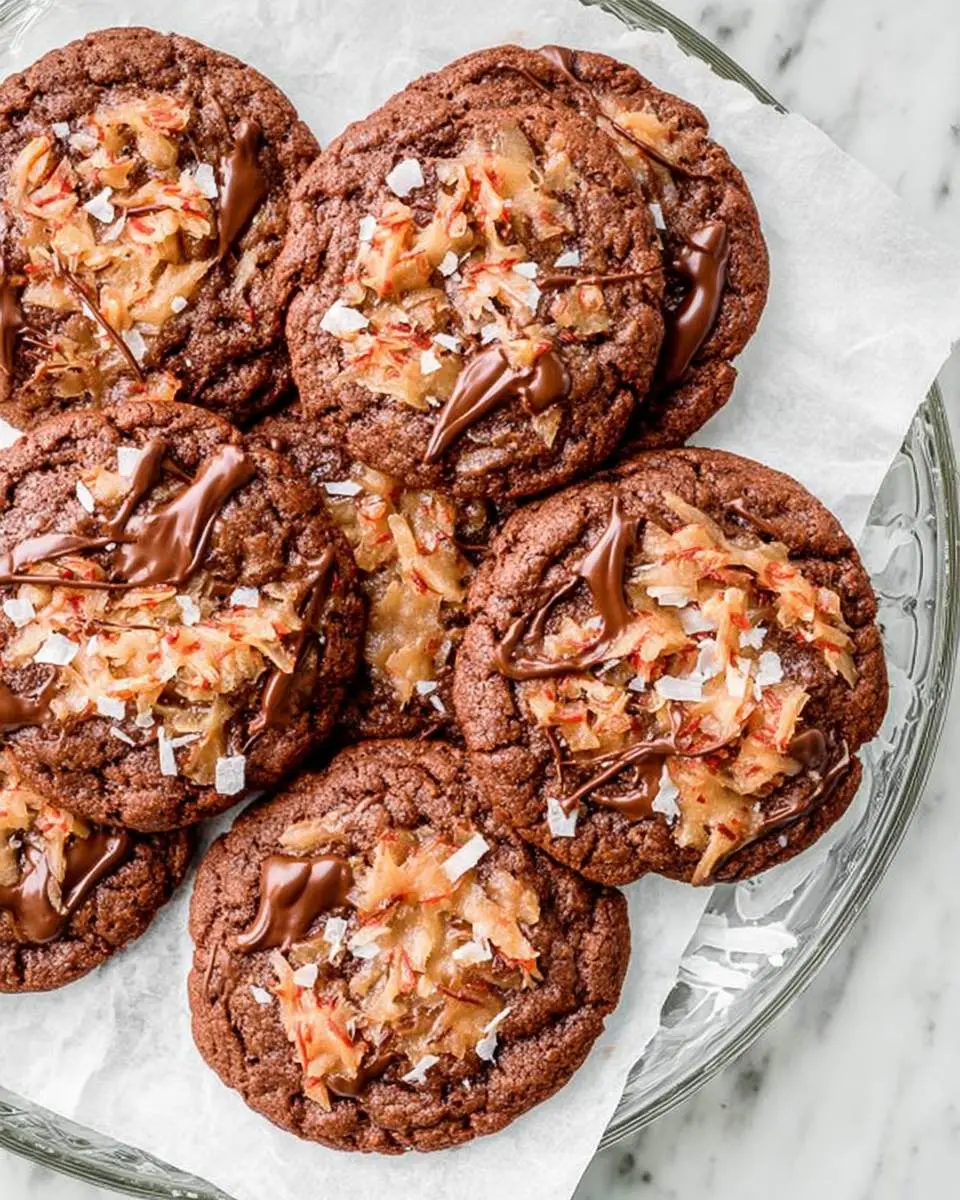
I start by melting butter with half the chocolate, stirring until the mixture looks like glossy pond water , this takes longer than microwaving but the texture reward is worth every minute of standing at the stove. The sugar goes in next, and I whisk aggressively for a full two minutes because that friction dissolves the granules and builds the crackly surface I crave. When the eggs hit the warm chocolate, the batter tightens and turns almost fudge-like, pulling away from the bowl in thick ribbons that fall slowly back on themselves.
The dry ingredients disappear in quick, confident strokes , overmixing here is the enemy, so I stop when a few flour streaks remain. Folding in the coconut and pecans feels like adding treasure to a chest; the dough becomes heavy and studded, barely holding together. I scoop with a generous hand and chill the mounds for exactly forty minutes, long enough for the butter to firm but not so long that the dough becomes unworkable stone.
The oven does its transformation in twelve minutes flat. I watch through the glass as the cookies spread and the coconut at the edges begins to toast , that moment smells like brown butter and caramelized sugar having a conversation. They emerge puffed and vulnerable, collapsing into crinkled perfection as they cool. The centers stay molten for longer than you’d expect, so I learned to wait those painful seven minutes before my first bite. If coconut-forward baking speaks to you, my coconut cookies explore that same ingredient with a lighter, crisper approach.
Pro Tips
Chill the dough twice: I do an initial thirty-minute chill after mixing, then another ten minutes after scooping. This double chill prevents the coconut oil from causing excessive spread while keeping that fudgy interior intact.
Underbake deliberately: Pull these when the centers still look slightly underdone and shiny. The residual heat continues baking for several minutes, and this is what creates the brownie-like texture that defines Fudgy German Chocolate Cookies.
Toast coconut separately for garnish: I reserve two tablespoons of coconut and toast it darker than the batch inside the cookies. Sprinkling this on top before serving adds visual contrast and a deeper, almost-bitter coconut note that balances the sweetness.
My Secret Trick: I press a single pecan half into the center of each warm cookie immediately after baking, while the surface is still soft. The heat from the cookie toasts the pecan from underneath while the top stays pale and pretty, creating a two-texture nut experience that looks bakery-professional.
How to Store Fudgy German Chocolate Cookies
- Room temperature: Store in an airtight container with a slice of bread for up to 4 days , the bread keeps the centers soft without adding moisture directly to the cookies.
- Refrigerator: Not recommended for these cookies; cold temperatures harden the coconut and dull the chocolate flavor profile.
- Freezer: Layer between parchment paper in a rigid container, freeze up to 3 months. Thaw uncovered at room temperature for 2 hours to prevent condensation from softening the crackly tops.
- Reheating: Warm frozen or room-temperature cookies in a 300°F oven for 4 minutes, or microwave individual cookies for 12 seconds , the center should feel soft but not hot to preserve the fudgy texture.
Nutritional Benefits
Dark chocolate brings actual cacao antioxidants to these indulgent treats, and I use enough to make it meaningful , that 60% cacao content delivers flavonoids that support heart health in ways milk chocolate simply cannot match. The pecans contribute more than crunch; they’re one of the few nuts with significant omega-3 fatty acids, specifically alpha-linolenic acid that helps reduce inflammation. These Fudgy German Chocolate Cookies will never be health food, but I find genuine comfort in knowing the ingredients carry some nutritional intention beyond empty sweetness.
FAQs
Can I use Dutch-process cocoa instead of melted chocolate?
I don’t recommend it , the melted chocolate creates those fudgy pockets and helps bind the coconut. Dutch-process cocoa would make a drier, cake-like cookie that misses the whole point of this texture.
Why did my cookies spread too thin and get crispy?
Your butter was likely too warm or your chill time too short. The coconut oil in sweetened coconut also contributes to spread, so that double chill I mentioned isn’t optional , it’s essential for structure.
Can I make the dough ahead and bake later?
Absolutely, and I often do. The dough keeps refrigerated for 72 hours, and actually improves as the flavors meld. Scoop and bake straight from cold for the tallest, crackliest Fudgy German Chocolate Cookies.
Is there a substitute for the sweetened shredded coconut?
Unsweetened coconut works but changes the sweetness balance , you’ll want to add two extra tablespoons of sugar. The texture also differs; unsweetened coconut is drier and won’t caramelize at the edges the same way.
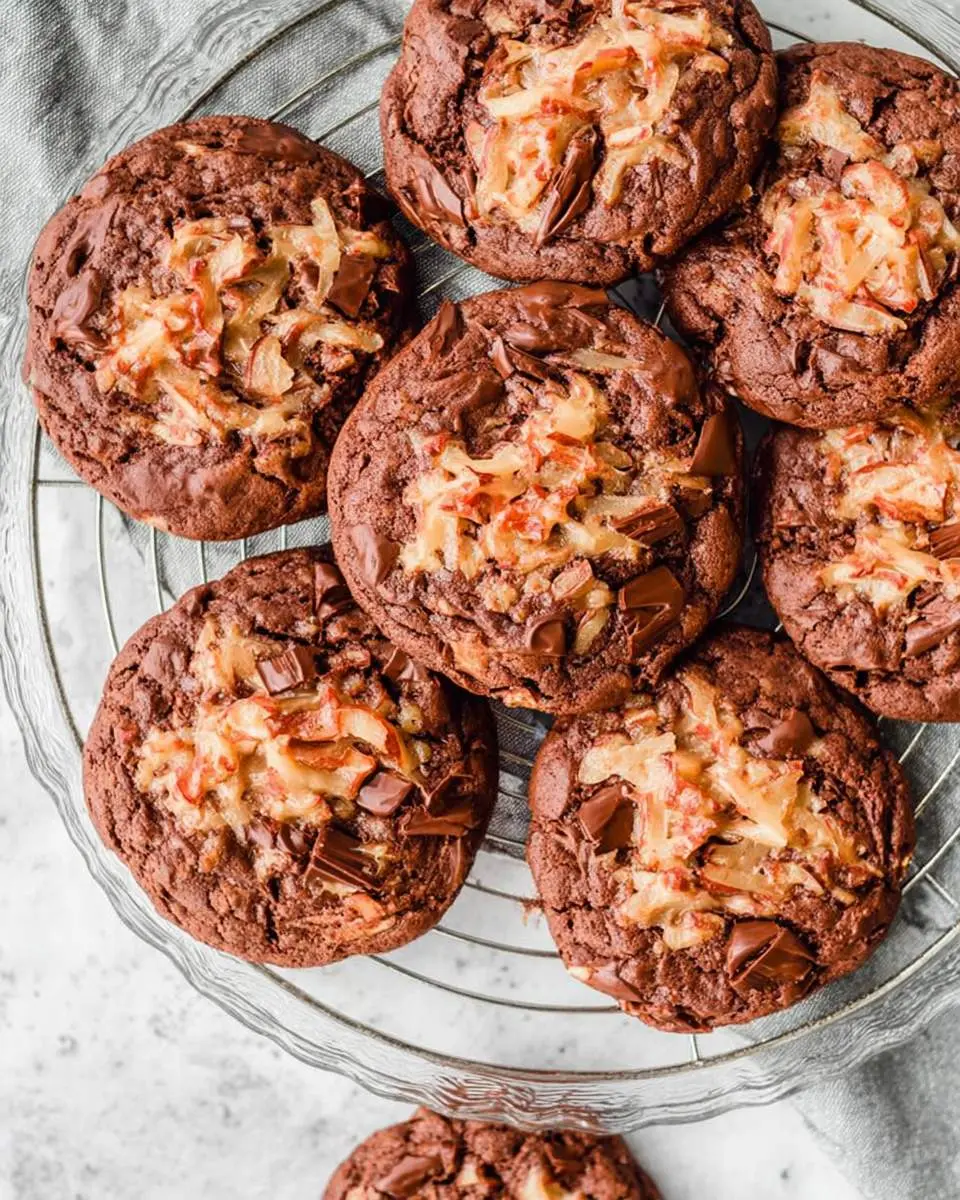

Fudgy German Chocolate Cookies
Ingredients
Equipment
Method
- Spread pecans on a baking sheet and toast at 350F for 6-8 minutes until fragrant. Let cool, then chop roughly. Line two baking sheets with parchment paper.
- In a medium saucepan over low heat, melt butter and semisweet chocolate together, stirring constantly until smooth. Remove from heat and whisk in cocoa powder until no lumps remain. Let cool 5 minutes so it won't cook the eggs.
- Whisk both sugars into the warm chocolate mixture until combined. Add eggs one at a time, whisking well after each, then stir in vanilla. The mixture should look glossy and thick.
- In a separate bowl, whisk flour, baking powder, and salt. Fold into the chocolate mixture with a spatula until just combined - do not overmix. The dough will be soft and sticky, almost like brownie batter.
- Gently fold in toasted pecans and shredded coconut until evenly distributed throughout the dough.
- Using a cookie scoop or tablespoon, drop dough 2 inches apart onto prepared sheets - these spread. Bake at 350F for 10-12 minutes until tops look set and crackled but centers still feel slightly soft. They will look underdone; that's what makes them fudgy.
- Let cookies rest on the baking sheet for 8 minutes - they need this time to firm up. Then transfer to a wire rack to cool completely. The centers will sink slightly as they cool, creating that signature fudgy texture.
Notes
Conclusion
I made three batches of these Fudgy German Chocolate Cookies in one week, supposedly for “testing purposes,” but mostly because I couldn’t stop wanting that first warm bite. Some recipes earn their place in your permanent rotation through sheer comfort, and this is absolutely one of mine. If chocolate intensity is your love language, my double chocolate chunk cookies speak it fluently too. Bake these soon, and tell me if your kitchen smells like mine did , like something worth waiting for.