Cabbage Lasagna
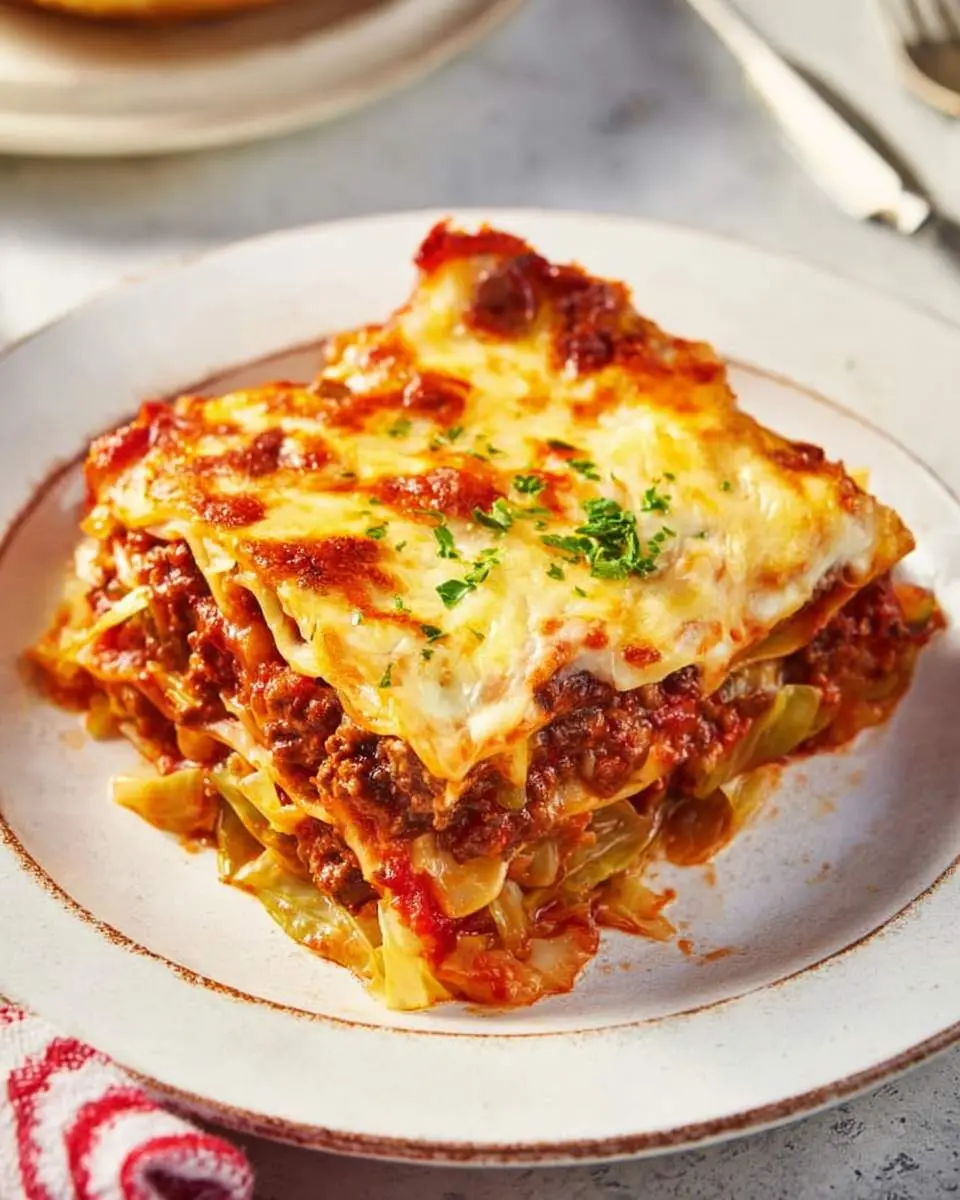
The first time I pulled a bubbling cabbage lasagna from my oven, my kitchen smelled like Sunday at my grandmother’s house—tomatoes and herbs and something earthy I couldn’t quite name. I stood there for a moment, breathing it in, surprised by how right it felt. Cabbage had no business being this comforting, yet here we were.
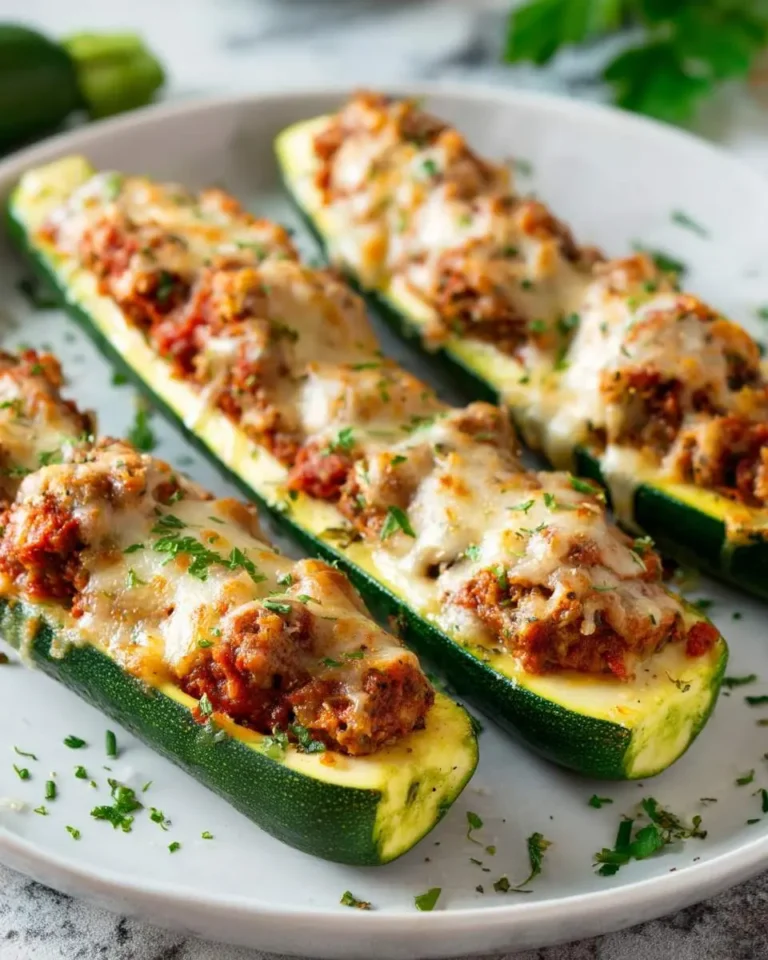
My husband walked in, sniffed the air, and asked what was for dinner. When I told him, he looked skeptical. That look—I know it well. It’s the same one he gave me when I made vegetarian stuffed zucchini last summer. He sat down, took one bite, and went quiet. That’s how I know I’ve won.
This dish came from necessity. I had a head of cabbage threatening to wilt, no pasta in the pantry, and a craving for something layered and saucy. What emerged was better than the original.
What You Need to Make This Recipe
The cabbage is everything here—not just a substitute, but the star. I use green cabbage, sliced into thin ribbons that soften into silky, noodle-like layers. Ricotta brings that essential creaminess, and I always add a handful of fresh basil at the end because it wakes everything up. For the sauce, I simmer crushed tomatoes with garlic until my wooden spoon leaves trails. If you’re into vegetable-forward appetizers, my bell pepper nachos use a similar slow-simmer technique that builds deep flavor.
How to Make Cabbage Lasagna
I start by salting my cabbage ribbons and letting them weep in a colander—this is non-negotiable. Twenty minutes later, I squeeze out handfuls of water and watch the volume shrink by half. The cabbage goes into a hot skillet with olive oil, sizzling and wilting until it smells sweet and slightly caramelized.
While that happens, I mix ricotta with egg, parmesan, and nutmeg. The nutmeg is my grandmother’s touch; she put it in everything creamy. I layer in a deep dish: sauce, cabbage, cheese mixture, repeat. The top gets extra sauce and a blanket of mozzarella that bubbles and browns in a 375-degree oven.
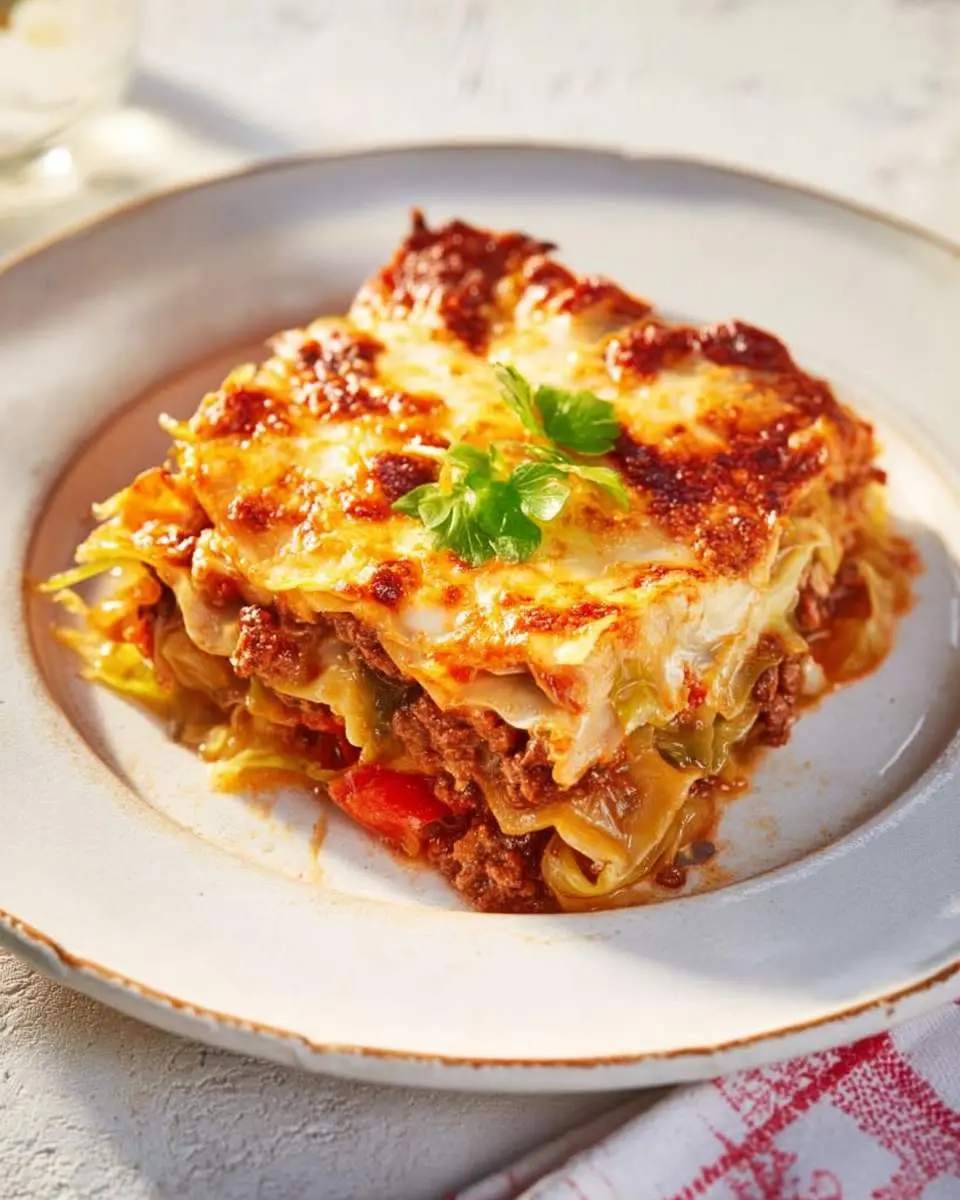
The hardest part is waiting. Thirty minutes, then the broiler for two minutes to get those spotty brown bubbles. I made a similar layered sweet potato lasagna last fall, and the patience required is identical. Good things happen when you let layers meld.
Pro Tips
Don’t skip the salting step. Raw cabbage holds surprising water, and without this, your lasagna swims in liquid instead of holding its shape. I learned this the hard way on my third attempt.
Slice against the core. The ribbons hold together better and create more stable layers. With-the-grain slicing leaves you with stringy pieces that slide apart when you serve.
Let it rest. Twenty minutes out of the oven feels like eternity, but the cheese sets and the layers become sliceable. I’ve rushed this and served beautiful chaos instead of clean squares.
My Secret Trick: I save a few outer cabbage leaves intact and use them to line the bottom of my baking dish. They create a natural, edible barrier that prevents sticking better than any parchment paper.
How to Store Cabbage Lasagna
- Refrigerate in an airtight container for up to 4 days. The flavors actually improve on day two.
- Freeze individual portions wrapped in parchment, then foil, for up to 3 months. Thaw overnight in the refrigerator before reheating.
- Reheat at 350 degrees covered with foil for 20 minutes, then uncovered for 5 minutes to restore the top. The microwave works in emergencies but softens the texture.
Nutritional Benefits
This cabbage lasagna delivers serious vegetable density without the heaviness of traditional pasta versions. Cabbage brings vitamin C and gut-friendly fiber, while the ricotta contributes protein and calcium that keeps me satisfied for hours. I notice I don’t need the post-dinner nap that regular lasagna demands.
FAQs
Does the cabbage taste strong or bitter?
Not after salting and sautéing. The cooking process mellows cabbage into something sweet and mild that carries sauce beautifully. My kids don’t even question it.
Can I use red cabbage instead?
You can, but your entire dish turns purple-pink. The flavor works fine, though slightly earthier. I stick with green for classic lasagna aesthetics.
How do I prevent watery cabbage lasagna?
Salt and drain the cabbage thoroughly, then squeeze hard. Sauté until most moisture evaporates. This cabbage lasagna holds together when you treat the vegetable with respect.
Can I make this vegan?
Absolutely. I swap ricotta for blended soaked cashews with lemon and nutritional yeast. The texture differs but still satisfies that creamy layer craving.
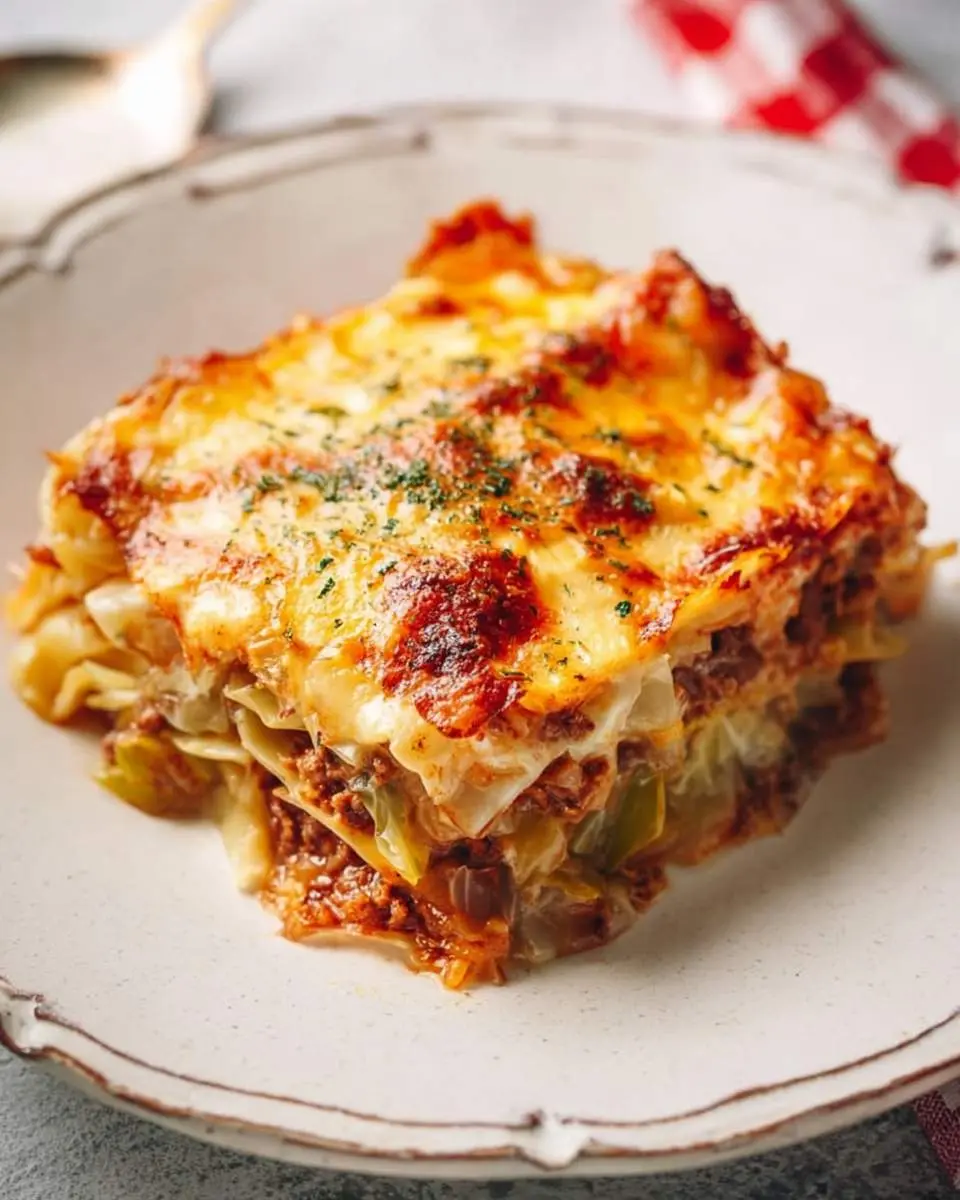

Cabbage Lasagna
Ingredients
Equipment
Method
- Bring a large pot of salted water to a boil. Core the cabbage and carefully peel off 12-14 large leaves. Blanch 3-4 leaves at a time for 2-3 minutes until pliable and bright green. Transfer to an ice bath, then drain on paper towels. Pat completely dry - wet leaves make watery lasagna.
- Heat a large skillet over medium-high heat. Add beef and sausage, breaking into small pieces. Cook until browned and no pink remains, about 8 minutes. Drain excess fat, leaving about 1 tablespoon in the pan.
- Add onion to the skillet and cook until softened, 4-5 minutes. Stir in garlic and cook 30 seconds until fragrant. Add tomato paste and cook 1 minute, stirring constantly. Pour in crushed tomatoes, oregano, red pepper flakes, and 1/2 teaspoon salt. Simmer 15 minutes until slightly thickened. Taste and adjust seasoning.
- In a medium bowl, combine ricotta, 1 cup mozzarella, Parmesan, egg, and chopped basil. Stir until well blended. Season lightly with salt and pepper.
- Preheat oven to 375F. Spread 1 cup meat sauce in the bottom of a 9x13 baking dish. Arrange 4 cabbage leaves to cover, overlapping as needed. Spread half the ricotta mixture, then 1.5 cups sauce. Repeat with 4 more cabbage leaves, remaining ricotta, and 1.5 cups sauce. Top with final 4-6 cabbage leaves, remaining sauce, and 1 cup mozzarella.
- Cover tightly with foil and bake 30 minutes. Remove foil and bake 15-20 minutes more until cheese is golden and edges are bubbling. Let rest 15 minutes before slicing - this sets the layers so they hold together when you serve.
- Sprinkle with fresh basil and extra Parmesan. Serve warm with a simple green salad and crusty bread if desired.
Notes
Conclusion
This cabbage lasagna taught me that limitations breed creativity. What started as a pantry-emptying experiment became a requested regular. If you’re exploring more meatless comfort food, my vegan stuffed shells carry that same spirit of surprising substitution. Trust your vegetables. They know more than we give them credit for.