Thai Red Duck Curry
The first time I smelled red curry paste hitting hot coconut oil, I was standing in a cramped Bangkok kitchen with a fan that barely worked. That aroma , funky, bright, almost aggressive , hooked me instantly. Years later, Thai Red Duck Curry still transports me back to that exact moment, sweat and all.
My grandmother would have been horrified by duck in curry. She kept her Thai recipes rigid, faithful to the versions her mother taught her. But I broke the rules one rainy Tuesday, staring at a leftover duck leg and a jar of Maesri paste, and something magical happened. The fat rendered slowly, the skin turned lacquered and crisp, and the curry clung to every shred of meat like it had always belonged there.
This dish has become my comfort ritual when I need something that feels both luxurious and deeply homey. If you are craving more weeknight inspiration, my air fryer meatloaf recipe has saved me on plenty of chaotic evenings too.
What You Need to Make This Recipe
The duck itself matters more than you’d think , I always grab bone-in legs with the skin fully intact, because that fat renders into the curry and creates a silkiness you simply cannot fake. Thai red curry paste from a quality brand like Maesri or Mae Ploy beats homemade most days unless you have a mortar and a free afternoon; the complexity is already built in, layers of galangal and shrimp paste and dried chilies that would take hours to replicate. Full-fat coconut milk is non-negotiable here , the light stuff separates and never achieves that luscious, spoon-coating consistency that makes Thai Red Duck Curry so addictive. For another one-pan dinner that leans on pantry staples, I love this sausage and white bean skillet when I need something hearty without the fuss.
How to Make Thai Red Duck Curry
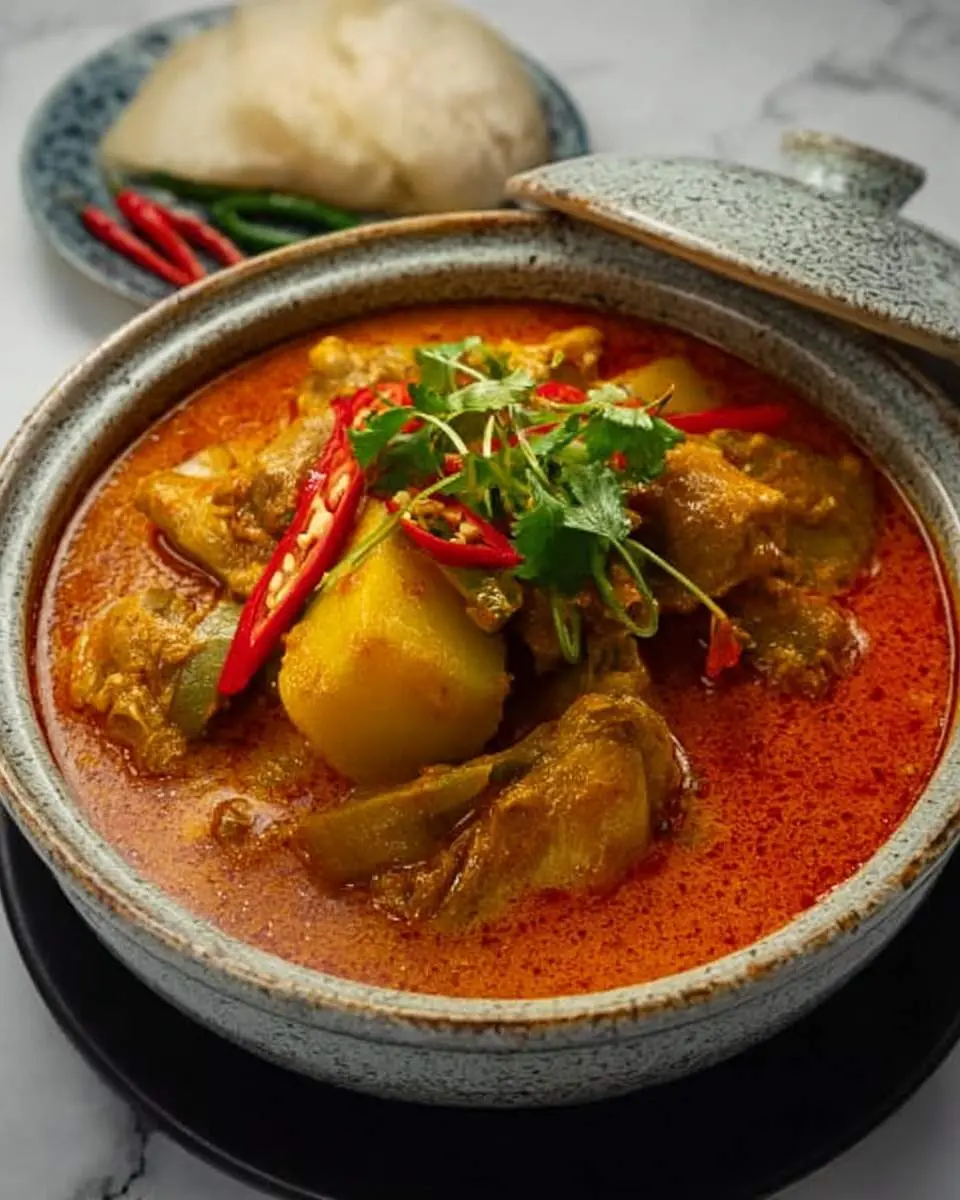
I start by scoring the duck skin deeply, almost to the meat, then laying those legs skin-side down in a cold Dutch oven , no oil, no preheating, just patience as the fat slowly melts and the kitchen fills with this rich, almost bacon-like sizzle that makes my dog pace the hallway. Once the skin turns deeply golden and the fat pool glistens, I flip them briefly, then set the legs aside and pour off all but a thin layer of that liquid gold.
The curry paste goes into that duck fat next, and the sound changes immediately , from gentle bubbling to an aggressive fry that demands your attention. I stir constantly for about two minutes, watching the paste darken at the edges, smelling the raw edge cook off and something deeper emerge. Coconut milk follows, and I scrape every browned bit from the pot bottom because that’s where the soul lives. The duck nestles back in, skin proud above the liquid, and the whole thing simmers covered until the meat threatens to fall off the bone at the lightest touch.
Thai eggplant goes in last, those tiny green globes that soften in minutes but never dissolve, plus a handful of torn Thai basil that wilts dramatically and perfumes the entire house. I always taste at this stage, adjusting with fish sauce and palm sugar, chasing that perfect balance I once thought was mythical. For a completely different weeknight direction, my tofu veggie stir fry comes together in the time this curry spends simmering.
Pro Tips
Score the skin in a crosshatch pattern, not just slashes. This creates more surface area for fat to render and gives you those craggy, crispy edges that stay crunchy even after bathing in curry.
Save the rendered duck fat. I pour the excess into a jar and use it for roasting potatoes later that week , the curry-infused fat is ridiculous on breakfast hash.
Add the coconut cream separately from the thin milk. I crack open the can without shaking, scoop the thick cream to fry the paste, then pour the thinner liquid for the braise , this builds more intensity than dumping it all at once.
My Secret Trick: I rest the cooked duck legs on a wire rack set over a baking sheet while the curry simmers, then blast them under the broiler for three minutes right before serving , the skin stays shatteringly crisp against that silky sauce, and Thai Red Duck Curry becomes something genuinely restaurant-worthy.
How to Store Thai Red Duck Curry
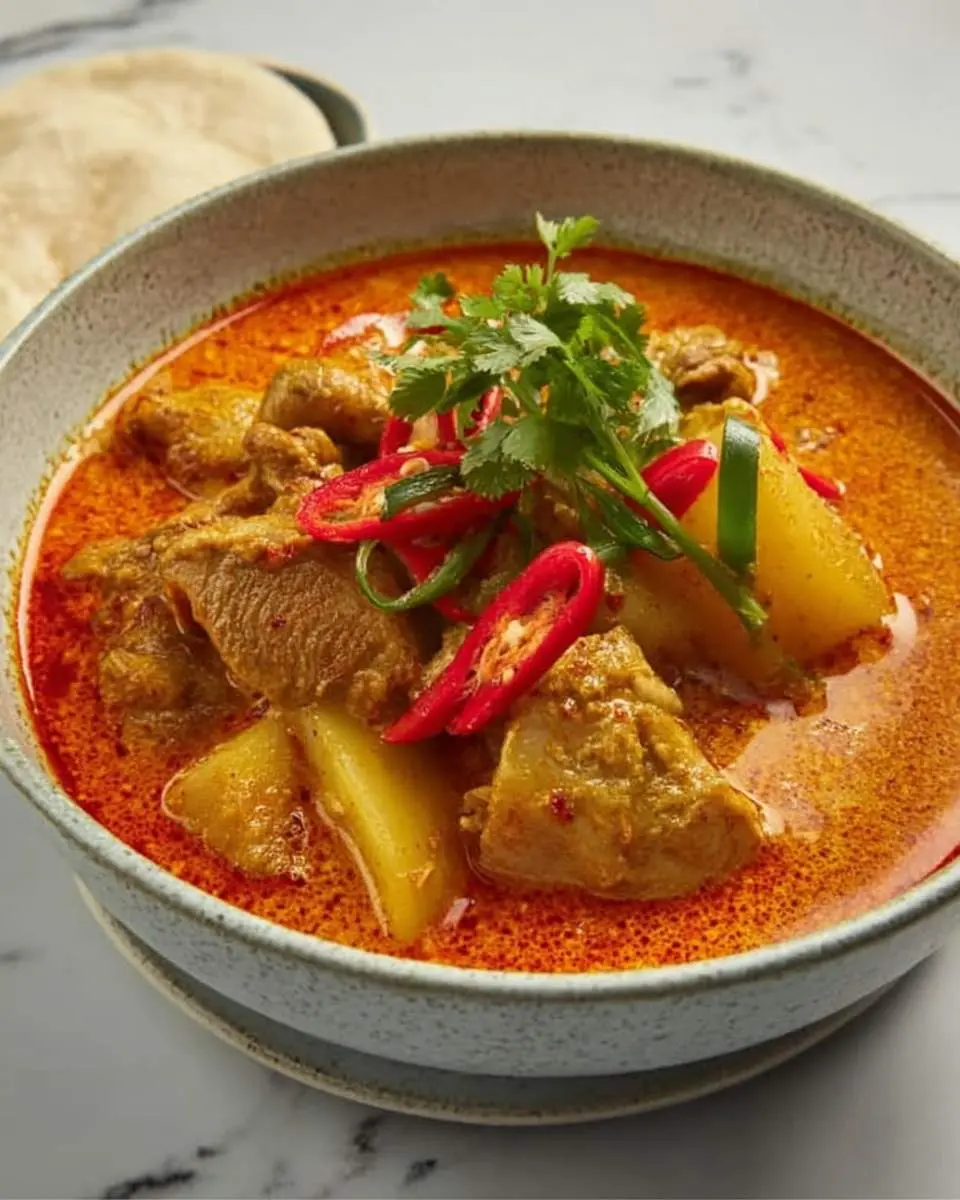
- Refrigerate in an airtight glass container for up to 4 days at 40°F or below , the flavors actually improve after 24 hours as the curry paste fully blooms.
- Freeze without the Thai basil and eggplant for up to 3 months in a freezer-safe container with minimal headspace; add fresh vegetables when reheating.
- Reheat gently in a covered saucepan over medium-low heat, adding a splash of water or coconut milk to restore consistency , the microwave makes the duck skin rubbery and sad.
Nutritional Benefits
Thai Red Duck Curry delivers meaningful nutrition beyond its indulgent reputation , duck itself provides heme iron and B12 in far more bioavailable forms than plant sources, while the galangal and kaffir lime leaves in authentic curry paste contain compounds with genuine anti-inflammatory properties that have been studied, not just marketed. The coconut milk offers lauric acid, a medium-chain fatty acid that metabolizes differently than long-chain saturated fats, plus the dish naturally avoids the refined sugar overload of many takeout versions when you control the palm sugar yourself.

FAQs
Can I use chicken instead of duck?
Chicken thighs work beautifully , use skin-on, bone-in for the closest texture, though you’ll get less rendered fat for frying the paste. Add a tablespoon of neutral oil to compensate, and reduce simmering time by about fifteen minutes since chicken cooks faster than duck.
What can I substitute for Thai eggplant?
Japanese eggplant cut into one-inch rounds holds up best, or use small zucchini in summer , both release less water than standard globe eggplant and won’t turn your curry muddy. Add them in the last ten minutes regardless of substitute.
How do I make this less spicy?
Reduce the curry paste by one-third and increase coconut milk by half a cup , the fat and sweetness tame heat effectively. You can also seed fresh Thai chilies if using them as garnish, or skip them entirely without losing authenticity.
Is this recipe authentic Thai?
Thai Red Duck Curry adapts traditional red curry technique with a protein swap , duck appears in some Northern Thai and royal Thai preparations, though chicken and pork remain more common. The method and flavor base stay true to classic gaeng phet.
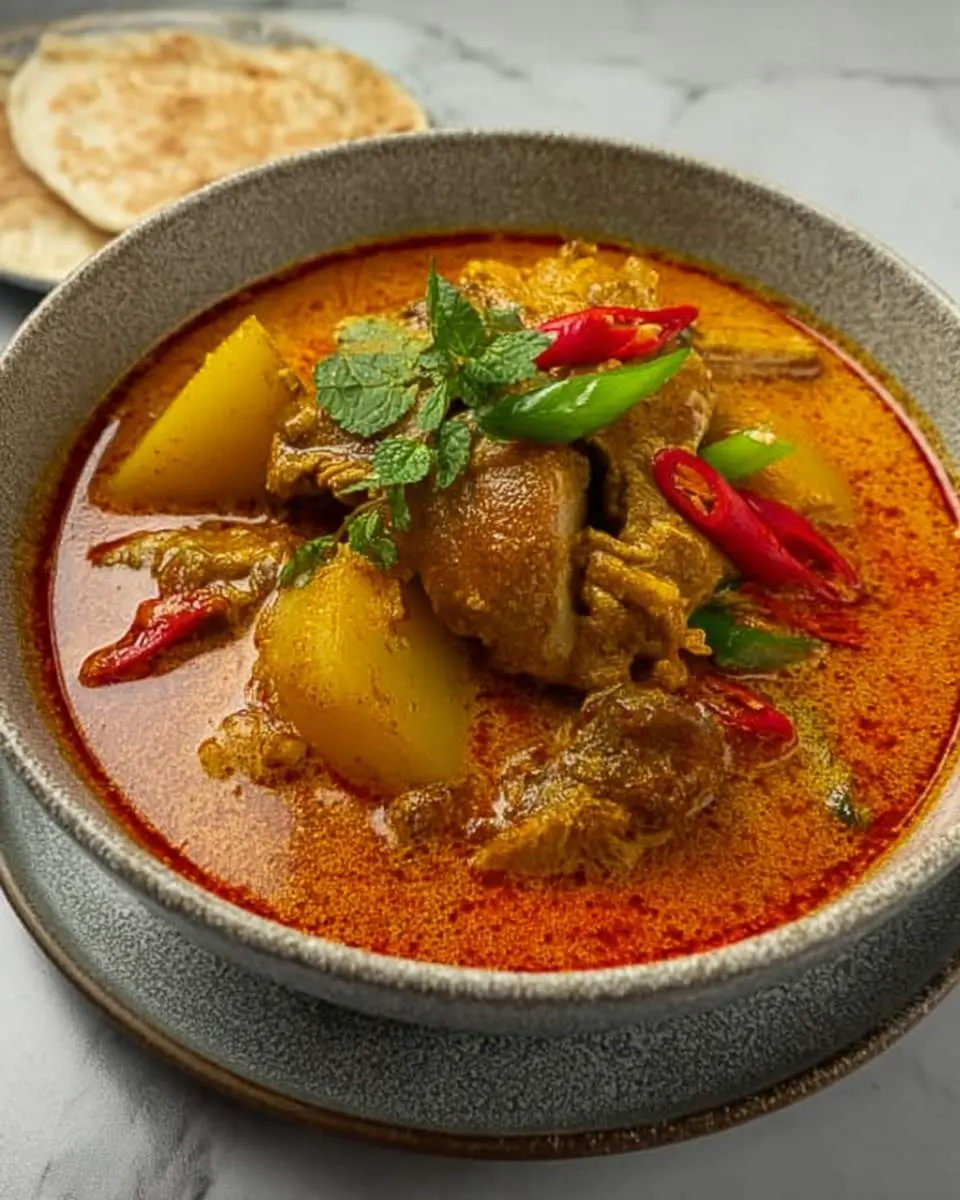

Thai Red Duck Curry
Ingredients
Equipment
Method
- Pat duck breasts completely dry with paper towels. Use a sharp knife to score the skin in a crosshatch pattern, cutting just through the fat without piercing the meat. Season both sides generously with salt. Let sit at room temperature while you prep the remaining ingredients.
- Place duck breasts skin-side down in a cold large skillet. Turn heat to medium-low and cook undisturbed for 12-14 minutes, pouring off excess fat as it renders, until the skin is deep golden and crispy. Flip and cook 3-4 minutes more for medium-rare (130F internal). Transfer to a plate, tent with foil, and rest 10 minutes. Pour off all but 1 tablespoon fat from the pan.
- Return the skillet to medium heat. Add the red curry paste and fry for 1-2 minutes, stirring constantly, until fragrant and the oil begins to separate and sizzle at the edges.
- Pour in the coconut milk and chicken stock, scraping up any browned bits. Add the palm sugar and fish sauce. Bring to a gentle simmer and cook 8-10 minutes, stirring occasionally, until the sauce thickens enough to coat the back of a spoon.
- Stir in the Thai basil and sliced chile if using. Slice the duck breasts crosswise into 1/4-inch pieces. Arrange over steamed jasmine rice, spoon the curry sauce generously over top, and garnish with extra basil leaves and lime wedges.
Notes
Conclusion
Some nights I still can’t believe I get to eat this in my own kitchen, that same transportive aroma filling a Minnesota house in February. Thai Red Duck Curry rewards the small extra steps , the scoring, the resting, the broiler finish , with something that tastes like you spent all day at it. For another noodle-heavy comfort dinner, my lo mein with mushrooms and bell peppers hits that same satisfying note when curry feels like too much. You should make this soon. Your kitchen deserves it.