White Pizza Sauce
I still remember the first time I ditched the red sauce. It was a rainy Tuesday, I had zero tomatoes in the house, and suddenly this craving hit me for something creamy and rich on my pizza dough. That night, white pizza sauce changed everything for me. I scraped together what I had—garlic, butter, cream—and twenty minutes later I was eating the most luxurious slice of my life.
My grandmother would have called it “making do,” but I call it revelation. She taught me that the best cooking happens when you’re forced to get creative with what’s staring back at you from the fridge. That desperate Tuesday became my signature move for pizza nights.
If you’re curious about other creamy sauces that started as happy accidents, this Japanese steakhouse white sauce has a similar origin story in my kitchen. Now let’s make this one yours.
What You Need to Make This Recipe
The magic here lives in three players. Good butter—not margarine, never margarine—creates that silky foundation that coats your tongue just right. Fresh garlic minced fine, not pressed, because pressing makes it bitter and we want sweet, mellow warmth blooming in the cream. And whole milk or heavy cream, depending on how decadent you’re feeling; the fat carries flavor in a way that half-and-half simply cannot. I learned that last part the hard way during a failed “light” version that tasted like disappointment. If you’re into bold flavor pairings, this strawberry jalapeño salsa taught me how contrast makes everything better.
How to Make White Pizza Sauce
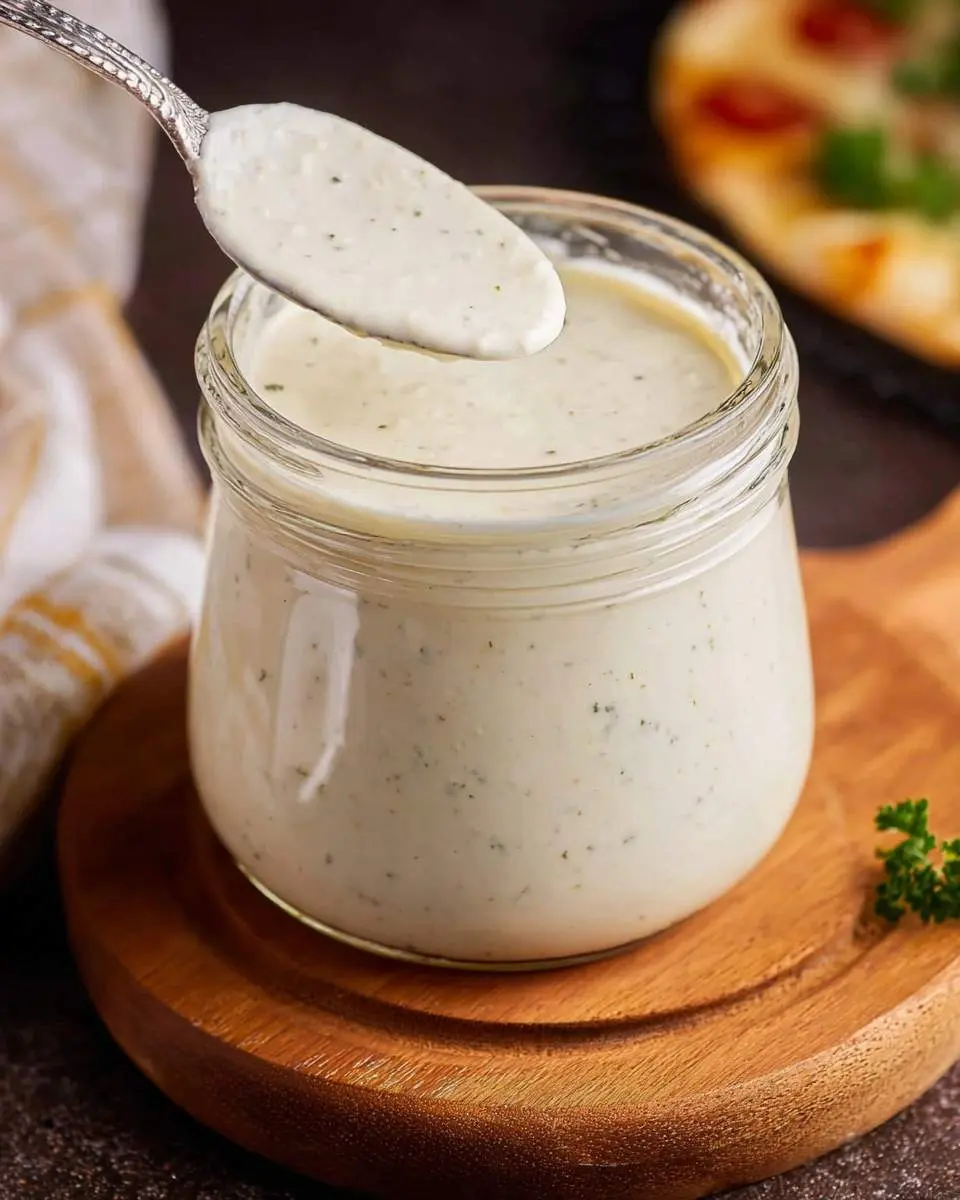
You start with the butter melting in a small saucepan, that gentle sizzle when it hits the heat, the way it goes from yellow foam to nutty gold if you’re patient. That’s your window—thirty seconds of golden, not brown—toss in your garlic and let it whisper rather than shout. The smell should make you lean in, not back away.
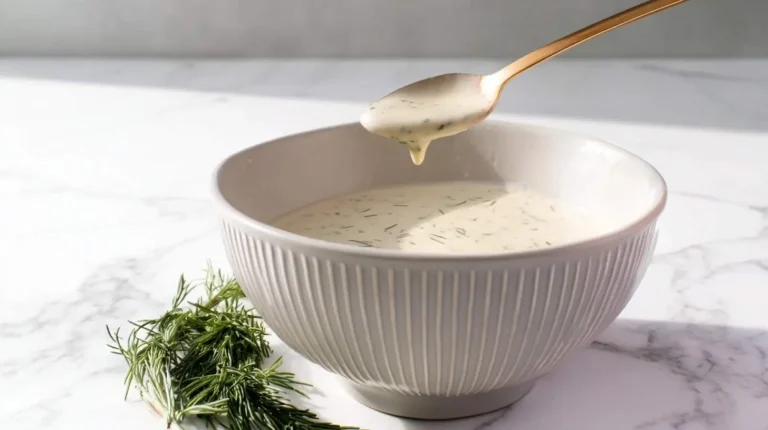
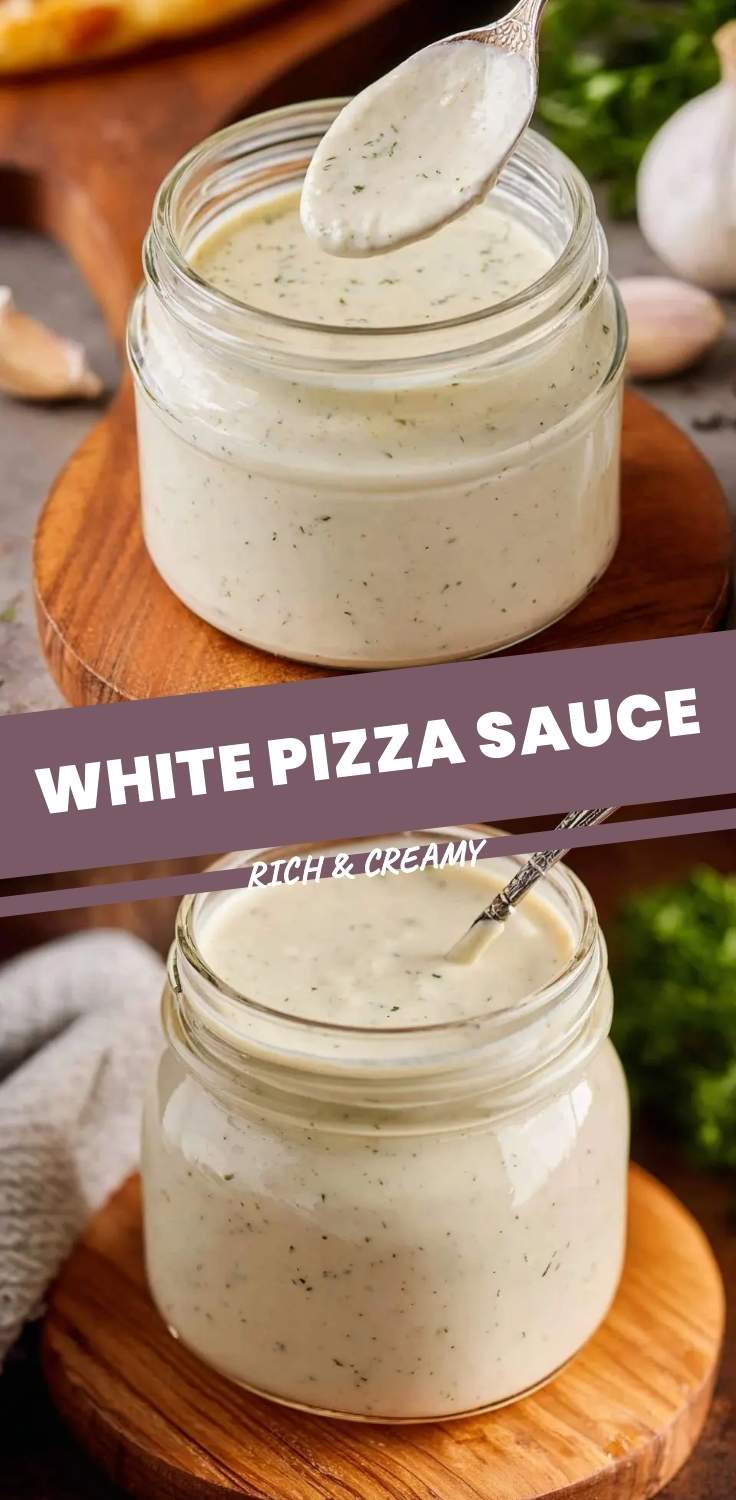
Then the flour, whisked fast so it doesn’t clump, cooking just long enough to lose that raw taste. This is where I always slow down. The cream follows in a steady stream, whisking constantly, and suddenly you’re watching liquid silk happen before your eyes. It thickens at its own pace—don’t rush it, don’t crank the heat—until it coats the back of a spoon and you run your finger through to make that clean line that holds.
Off heat, the Parmesan goes in, melting into ribbons of savory depth. I taste, I adjust, I taste again. If you’re building a whole pizza night around this, my San Marzano pizza sauce is the red alternative I reach for when the mood swings back.
Pro Tips
Grate your own Parmesan. The pre-grated stuff has cellulose that prevents smooth melting, and you’ll end up with grainy sauce no matter how carefully you whisk. I learned this after three batches that separated on me.
Let your dairy come to room temperature first. Cold cream hitting hot roux shocks the mixture and can cause curdling. I set mine out when I start prepping everything else.
My Secret Trick: I save a few tablespoons of the starchy pasta water—or in this case, the water from par-baking my pizza crust—and whisk it in at the end. The starch emulsifies everything into something that clings to dough like it was made for it.
White pizza sauce demands patience with salt. The Parmesan brings plenty, so I season in layers, tasting as I go, finishing with a tiny pinch of white pepper for warmth without black specks marring that beautiful pale color.
How to Store White Pizza Sauce
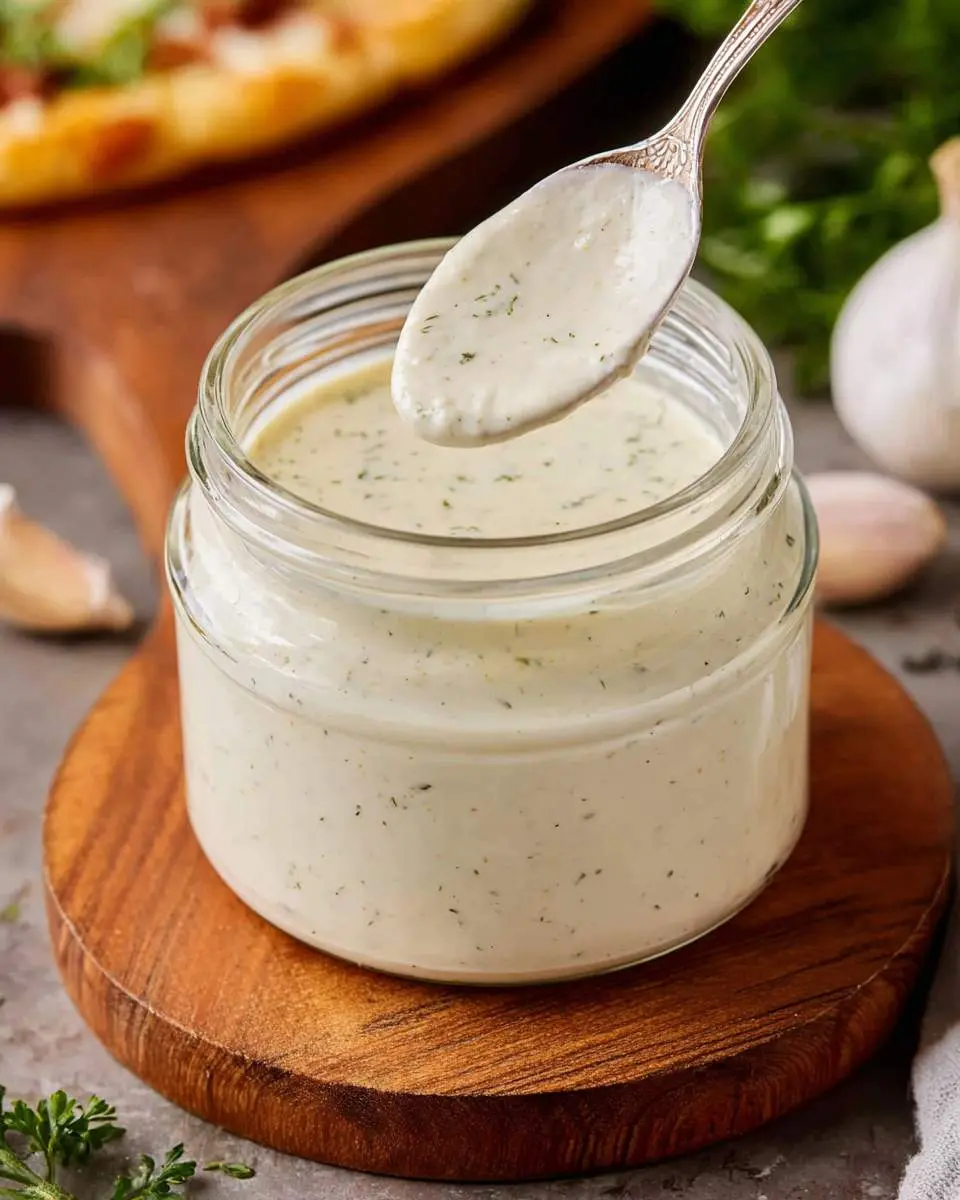
- Refrigerate in an airtight glass container for up to 4 days—plastic holds garlic odors forever
- Press plastic wrap directly onto the surface before sealing to prevent a skin from forming
- Freeze in ½-cup portions in freezer bags, laid flat; thaw overnight in refrigerator
- Reheat gently over low heat, whisking constantly; add splash of milk if thickened too much
- Do not microwave—separation is nearly guaranteed and cannot be fixed
Nutritional Benefits
White pizza sauce delivers real calcium from that cream and Parmesan combination, plus the allicin in fresh garlic that my nutritionist friend keeps telling me about. It’s not health food, exactly, but it’s honest food—no hidden sugars, no mysterious stabilizers, just ingredients you can pronounce that happen to carry genuine nutritional weight. I feel better serving this to my family than anything from a jar.
FAQs
Can I make white pizza sauce without flour?
Yes, though it won’t thicken the same way. Reduce the cream longer over low heat until it coats a spoon, or stir in softened cream cheese at the end for body without the roux.
Why did my sauce separate and look oily?
Heat was too high or dairy went in cold. Start over low, temper your cream by warming it slightly first, and whisk constantly during the critical first minute of combining.
How much white pizza sauce do I need per pizza?
About ½ cup for a 12-inch pizza, spread thin. This recipe makes enough for 3-4 pizzas, which is perfect for my family’s pizza night rotation.
Can I use milk instead of heavy cream?
You can, but the sauce will be thinner and less rich. If you must, use whole milk and increase the flour by one teaspoon, or accept a more delicate coating.

White Pizza Sauce
Ingredients
Equipment
Method
- Melt butter in a small saucepan over medium heat. Add minced garlic and cook for 30 seconds until fragrant but not browned. You want to smell the garlic, not see it turn golden.
- Whisk in the flour and cook for 1 minute, stirring constantly, until the mixture looks like wet sand and no raw flour smell remains. This prevents a pasty taste in your finished sauce.
- Slowly pour in the warm milk while whisking vigorously to prevent lumps. Add the cream and continue whisking until the mixture is smooth. The warmth of the milk helps the roux incorporate without clumping.
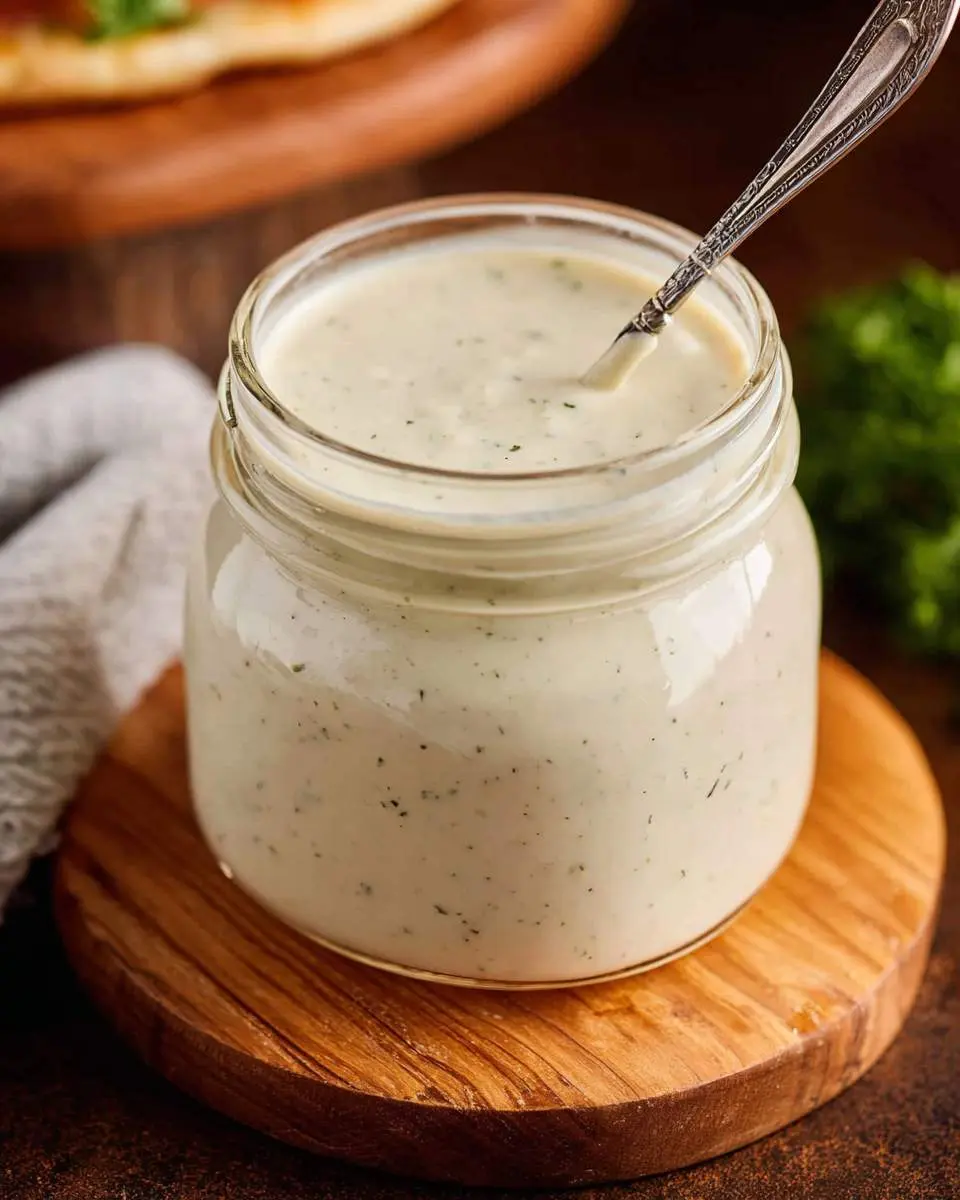
- Cook over medium-low heat, whisking occasionally, for 3 to 4 minutes until the sauce thickens enough to coat the back of a spoon. It should look like thin pancake batter - it will thicken more as it cools.
- Remove from heat and immediately stir in the Parmesan, oregano, red pepper flakes if using, salt, and pepper. Stir until the cheese is fully melted and the sauce is silky. Taste and adjust salt as needed.
- Let the sauce cool for 5 to 10 minutes before spreading on pizza dough. It should be warm but not hot - this prevents it from sliding off the dough and helps it set into a creamy layer during baking.
Notes
Conclusion
Some of my best kitchen discoveries started with empty cupboards and low expectations. White pizza sauce is that kind of gift—simple ingredients transformed into something that feels special every single time. Make it once, and I suspect you’ll find yourself reaching for cream instead of tomatoes more often than you planned. For another sauce that punches above its weight, my garlic parmesan sauce waits patiently in the wings.