Walnut Romesco Sauce
The first time I tasted romesco, I was standing in a cramped Barcelona tapas bar, juggling a glass of vermouth and a piece of grilled bread dripping with this rusty, nutty, impossibly complex sauce. I remember thinking: what IS this? Years later, I finally cracked my own version at home. This Walnut Romesco Sauce has become my quiet obsession — the thing I make when I want to feel like I know what I’m doing in the kitchen, even if I don’t.
My grandmother kept walnuts in a tin on her porch, and I used to sneak them by the handful, already half-rancid from the summer heat. She’d slap my wrist and tell me they’d ruin my appetite. Now I buy the good ones from the bulk bin, still warm from the store’s roaster, and think of her every time I toast them in my own kitchen. Some flavors just stick to your bones.
This sauce has saved my weeknight dinners more times than I can count. It transforms leftover roasted vegetables, makes plain chicken feel intentional, and turns a simple white pizza into something worth talking about. Let me show you how I make it.
What You Need to Make This Recipe
The walnuts matter more than you’d think — I use raw ones and toast them myself because pre-roasted often taste flat and oily. Smoked paprika is non-negotiable; it’s what gives this Walnut Romesco Sauce its depth and that faint campfire whisper. Jarred roasted red peppers work beautifully here, though I won’t stop you if you want to char your own over a gas flame. The creamy white sauces I grew up with taught me that emulsification is everything, and this recipe follows that same logic — olive oil, nuts, and patience.
How to Make Walnut Romesco Sauce
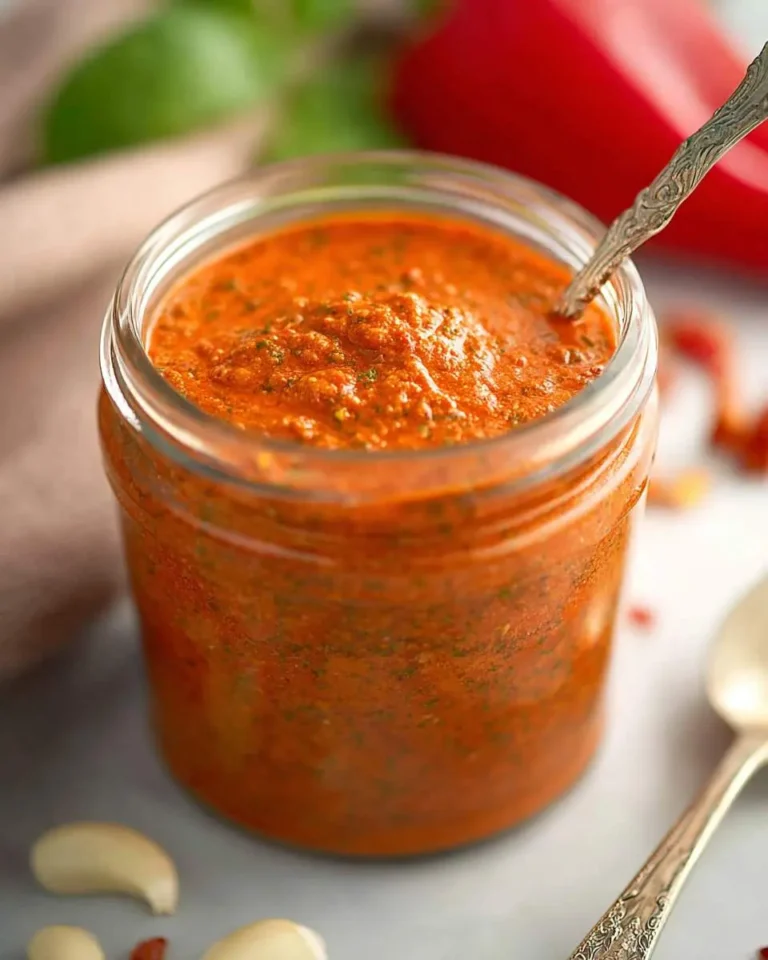
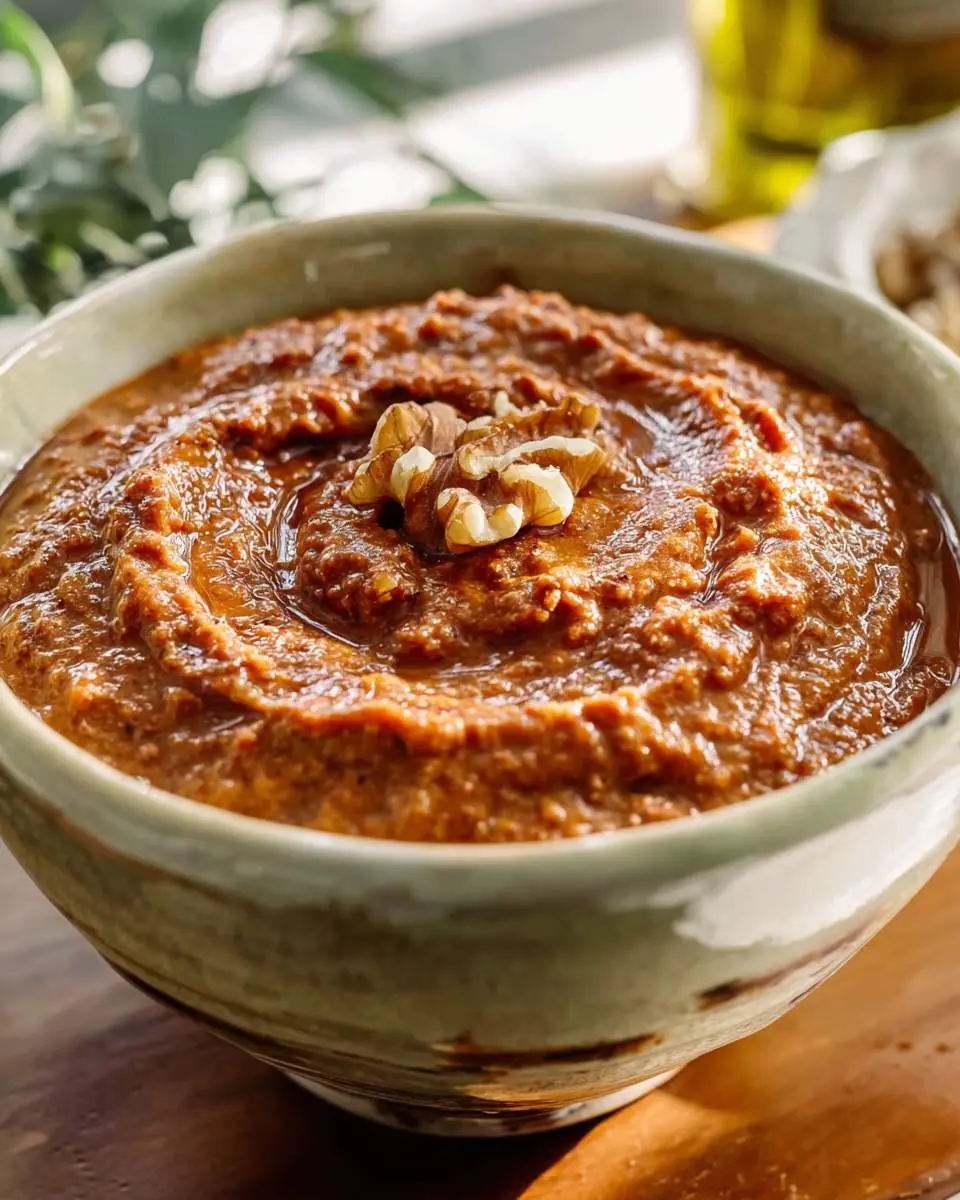
I start by toasting the walnuts in a dry skillet until they smell like warm bread and butter — about five minutes, shaking the pan often so they don’t scorch. That smell is my signal to start the blender. The peppers, tomato paste, garlic, and sherry vinegar go in first, pulsing until they form a rough, bright orange paste. Then I add the walnuts and stream in the olive oil while the motor runs, watching it transform from grainy to silky.
The sound changes when it’s ready — from chunky thumps to a smooth, almost purring whir. I taste it still warm from the friction, usually standing right there at the counter, and adjust: more vinegar for brightness, more paprika for smoke, a pinch of salt to wake everything up. Other pepper-based sauces I’ve tried can be one-note, but this one keeps revealing itself — nutty, then tangy, then faintly sweet.
Pro Tips
Toast your own nuts. Pre-roasted walnuts often carry stale oil flavors that no amount of paprika can mask. Five minutes in a dry skillet makes them taste like you planned this all along.
Use sherry vinegar, not red wine. The aged, slightly oxidative quality of sherry vinegar bridges the gap between the sweet peppers and earthy walnuts in a way that sharper vinegars can’t manage.
Let it rest. This sauce improves dramatically after thirty minutes at room temperature. The garlic mellows, the flavors marry, and what tasted good becomes something you can’t stop eating.
My Secret Trick: I save a tablespoon of the oil from the jar of roasted red peppers and use it to finish the sauce instead of plain olive oil. That concentrated pepper essence makes the final flavor taste deeper and more intentional.
How to Store Walnut Romesco Sauce
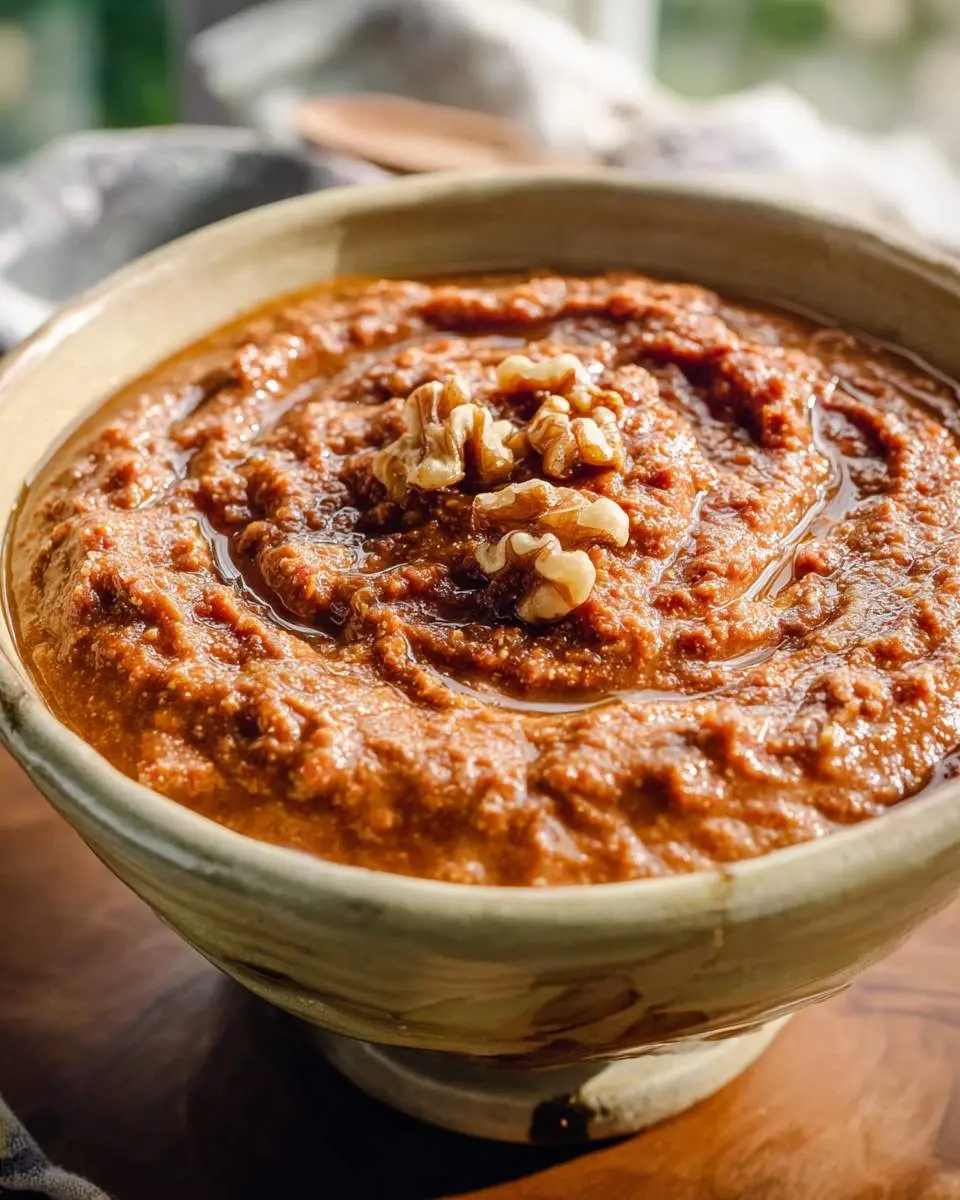
- Refrigerate in a glass jar with a tight lid for up to 5 days. The oil may solidify slightly — this is normal and melts at room temperature.
- Freeze in ice cube trays for individual portions, then transfer to a freezer bag. Keeps for 2 months. Thaw overnight in the refrigerator.
- Do not microwave to reheat. Bring to room temperature naturally, or warm gently in a small pan over low heat, stirring constantly.
- Stir before each use, as natural separation occurs.
Nutritional Benefits
This Walnut Romesco Sauce delivers real substance beyond its bold flavor. Walnuts contribute omega-3 fatty acids and polyphenols that support heart health, while roasted red peppers provide concentrated vitamin C and carotenoids. I make this when I want something that tastes indulgent but still respects my body — no compromises, no apologies.
FAQs
Can I use almonds instead of walnuts?
Yes, traditional romesco often uses almonds or hazelnuts. Walnuts create a softer, more buttery texture, while almonds yield something crisper and more structured. Both work — it depends on your preference.
Why does my sauce taste bitter?
Bitterness usually comes from over-toasted nuts or the paprika seeds. Toast walnuts gently until fragrant but not dark, and use high-quality smoked paprika without bitter additives.
Is this sauce spicy?
Not inherently, though you can add a pinch of cayenne or use hot smoked paprika. As written, it’s mild, nutty, and tangy — accessible to most palates.
What should I serve with Walnut Romesco Sauce?
Grilled vegetables, roasted chicken, crusty bread, or spooned over fried eggs. It also transforms simple pasta into something restaurant-worthy with minimal effort.

Walnut Romesco Sauce
Ingredients
Equipment
Method
- Heat a small skillet over medium heat. Add the walnuts and toast, stirring frequently, until fragrant and lightly golden, about 4-5 minutes. Watch closely - they burn fast. Transfer to a plate to cool.
- Position a rack 6 inches from the broiler and heat to high. Place the tomato halves cut-side up and the smashed garlic on a baking sheet. Broil until the tomato is charred and collapsed and the garlic is deeply golden, about 8-10 minutes. Let cool slightly.
- In a food processor, combine the toasted walnuts, roasted red peppers, broiled tomato, garlic (remove any overly charred bits if bitter), smoked paprika, and sherry vinegar. Pulse until a coarse paste forms, scraping down the sides as needed.
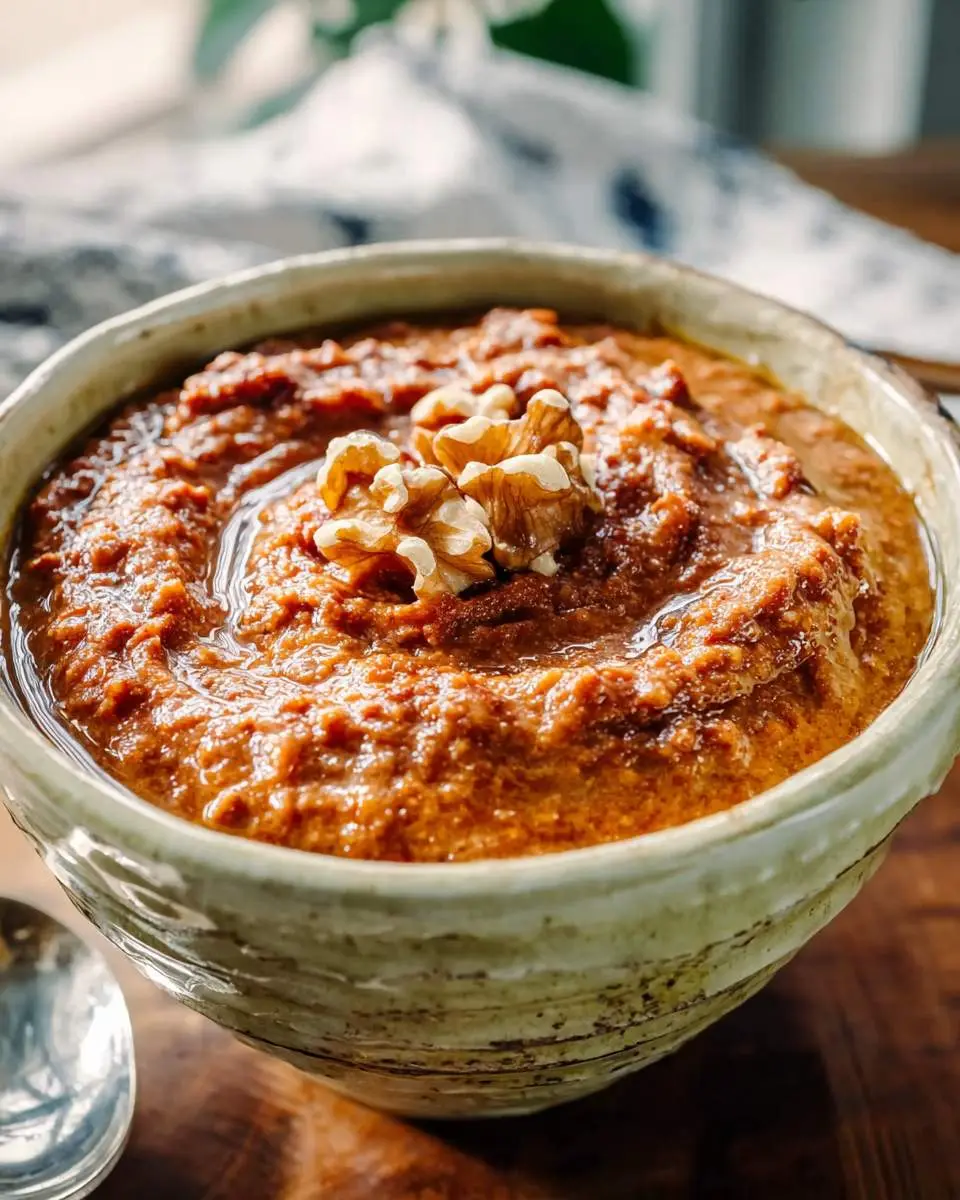
- With the processor running, slowly stream in the olive oil until the sauce is smooth and creamy but still has some body - you're aiming for the texture of loose hummus. Add the salt and cayenne if using, then pulse to combine. Taste and adjust salt or vinegar as needed.
- Transfer to a bowl and let sit at room temperature for at least 15 minutes before serving, or refrigerate for up to 5 days. Bring to room temperature and stir before using - the oil may separate slightly.
Notes
Conclusion
This Walnut Romesco Sauce has earned its place in my permanent rotation — the recipe I reach for when I want to feel capable and well-fed. Make it once, and I suspect you’ll start finding excuses to make it again. For another bold, spoonable condiment, try my sun-dried tomato and garlic olive oil dip — it carries that same generous, feed-a-crowd energy.